Townhomes: A Smart Solution for Today’s First-Time Buyers

Townhomes: A Smart Solution for Today’s First-Time Buyers

Real Estate Agent · Virginia, Maryland and North Carolina · Member since 2023 · 179 posts · 33 votes

Buying your first home in today’s market can feel tough. Between high home prices and mortgage rates, affordability is still a big challenge. And some buyers are making one simple trade-off that’s getting them in the door faster: square footage.

According to the National Association of Home Builders (NAHB), of buyers are willing to purchase something smaller to make homeownership happen. And one place you can usually find a smaller footprint (and sometimes better affordability) is in townhomes.

Why Townhomes Are Gaining Popularity

Townhomes typically cost less than single-family homes due to their more limited size. And that’s a big plus for today’s budget-conscious buyer. As Realtor.com says:

So, if you’re trying to buy but feeling stuck because of rising prices, shifting your focus to townhomes could be one way to get into homeownership without maxing out your budget.

Builders Are Responding to the Demand

Builders have seen buyers’ appetite shift to smaller homes, and they’re adjusting to meet the demand. As Joel Berner, Senior Economist at Realtor.com, explains:

And the numbers back it up. According to data from Realtor.com, townhomes now make up a bigger share of new construction listings than they did just a couple of years ago (see graph below):
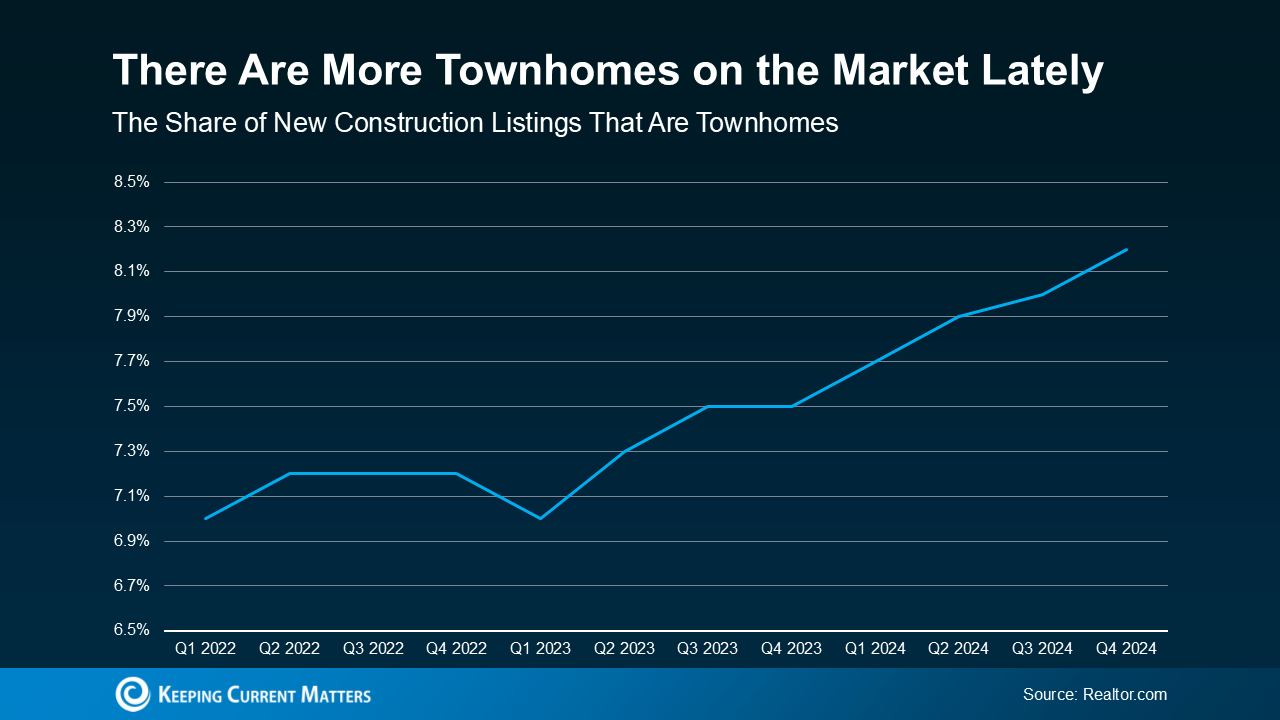
a graph of a growing graph

That means, if you’re interested in this type of house, you have more choices than you would have had over the last few years. And more options that are potentially more affordable are definitely a good thing. It should make your search for your first home a bit easier.

Is a Townhome Right for You?

If you’ve been focused only on more traditional homes with their own yards, an agent can help you explore whether a townhome could work for you. Who knows, you may find out you love the lifestyle. A lot of people do. As an article from the National Association of Realtors (NAR) explains:

That’s because they’re lower maintenance, they can provide a sense of community with other residents, and they have their own unique amenities. Not to mention, they give you the chance to start building wealth through homeownership without the upkeep that comes with having your own detached, single-family home. And that can be great for first-time buyers who are a bit worried about the maintenance anyway.

But they also come with some other considerations, like dealing with noise through shared walls. If you’re a renter right now, maybe you’re used to that already. But these are the types of things you’ll want to think about. And that’s where an agent’s expertise comes in. They’ll help you weigh the pros and cons, so you understand how a townhome fits into your lifestyle and long-term goals before making your decision.

Bottom Line

If you're struggling to find a home within your budget, it may be time to expand your search and consider options you haven’t before, like townhomes. Sometimes, compromising a little bit on space is worth it to get your foot in the door.

What matters most to you — space, location, or budget? Connect with an agent to figure out where you can flex to make homeownership happen.
0Reply
26 views

4 Replies

Jump to latestLatest
  • Michael K GallagherBusiness Member
    Real Estate Agent · Columbus OH · Member since 2018 · 1k+ posts · 1k+ votes
    1y

    @Desiree Rejeili thanks for writing this up.  I'm a big fan of townhomes in general and a popular thing in my market is to convert older small multis into condos or townhomes as a way for force apreciate.  The issue we run into here especially with new build townhomes is that the general price point of the townhomes are not much less than a single family, and the "burbs" are not all that far in many areas, so there tends to be a very specific person here that goes for the town home in my experience, and its not always price driven.  But we do need to figure out something here for housing density and I'm a townhome fan.

  • Real Estate Agent · Virginia, Maryland and North Carolina · Member since 2023 · 179 posts · 33 votes
    1y

    Hi Michael thank you so much for sharing your feedback very much appreciate that ! If I may ask what area do you work in .

    To your point I am in the DMV area depending on area, townhomes can be very expensive, depending on what area you want to live in, I sell a lot in Loudoun County VA , prices are super high , townhomes now selling in 600,s and up and affordability here is very stressful for my buyers for sure let alone single family homes ! They have to either buy at a very high price or move further out and have a commuter nightmare everyday ! It's a very tough market over here for us . On the flip side appreciation of their investments go much higher & faster for example in Loudoun County I have noticed much more than other areas .

    I also sell in Maryland , homes are more affordable, townhouses selling in mid $400’s huge difference, it just depends where you want to be at the end of the day and the sacrifices the buyer is willing to make . 

  • Eric FernwoodBusiness Member
    Realtor · Las Vegas, NV · Member since 2014 · 995 posts · 1k+ votes
    1y

    Hello @Desiree Rejeili,

    The problem with selecting a property type first is that you don't know which tenant segment will be attracted to it. Properties don't pay rent—tenants do. So before buying a property, you need to understand the performance of the tenant segment it attracts. The success of any property depends on whether it attracts a tenant segment with a high concentration of high-performing tenants. A high-performing tenant is someone who stays many years, pays rent on schedule, and takes good care of the property.

    For example, in Las Vegas, the tenant segment we target stays over five years on average. Out of a tenant population of over 1,000, we have had only seven evictions in over 17 years.

    In Las Vegas (it will be different in most cities), this tenant segment mostly consists of families with elementary school children and a gross annual income between $60,000 and $85,000. Children lock the family in place for extended periods. Our target tenant segment typically only rents single-family homes that meet a significant set of conditions.

    Below are brief descriptions of what our target segment is willing and able to rent.

    • Type: Single-family
    • Configuration: 3+ bedrooms, 2+ baths, 2+ car garages, 1,100 to 2,400 SF, one or two stories, lot size 3,000 SF to 6,000 SF.
    • Rent range: $1,900/Mo to $2,300/Mo
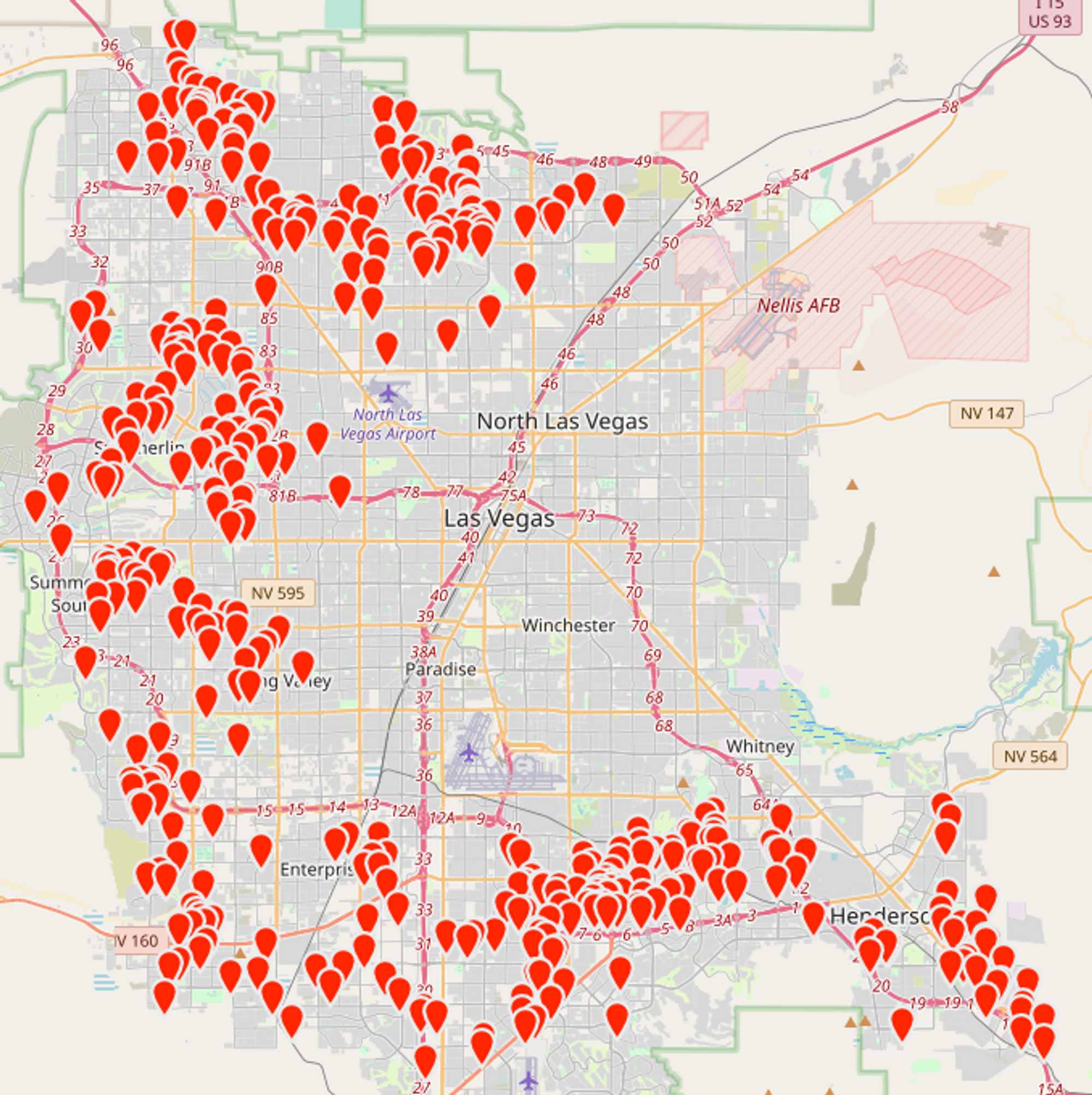
    • Location: See the map below for the general areas

    Any property that does not meet all the above conditions (and over 30 more) may not attract a high-performing tenant.

    You can identify a high performing tenant segment for your city through property manager interviews. Let me know if you'd like specifics on how to interview property managers to obtain this information.

    The difference between selecting a property type first and hoping it will attract high-performing tenants, versus selecting the tenant first and buying what they are willing and able to rent, can best be illustrated with two examples.

    1. You might decide to place a baby clothes store in a specific area because you like that area. However, what if that area happens to be surrounded by a giant 55+ community? The assumption on the location resulted in the business failing.
    2. If families with babies are your customer base, you can use demographics research to determine the location with the highest quality and density of your target customers and place your store there.

    As always, follow the money, not feelings and opinions.

    FERNWOOD Team, KW VIP Realty520 Reviews
  • Member since 2024 · 8 posts · 4 votes
    1y

    Thank you Eric, that was a great insight especially for new investors who are learning about rental dynamics. Would you mind sharing any data source to understand rental pool in a certain region? What I'm interested in learning is understanding rental demand, avg. tenure, days on market etc.
    Again, BP had been a great source to learn from a varied group of people across states.
    Jack Nedunuri

Join the conversationCreate a free account to reply, vote on answers and follow this thread.