

Doing the Heavy Lifting
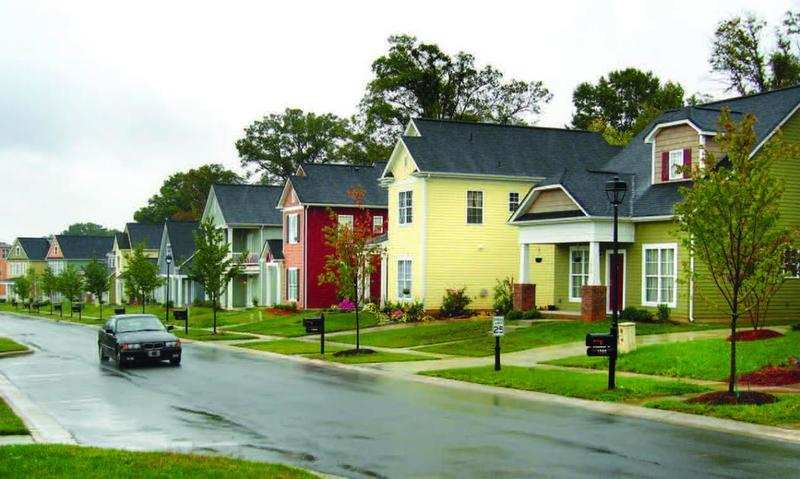
The property was built in the mid-70’s. You could see it was neglected. There was broken fencing, a couple of boarded units. It was very ugly, a high crime report. When you see the financials, it was 50% vacant, and there was a money loss month after month after month. The owner had a mortgage on it as well, so it was a negative cash flow. So when people say, “what cap rate do you buy out?” When there’s negative cash flow, there’s no cap rate.
The property was run by a local slumlord. She ran the property very, very poorly and was cannibalizing units, taking refrigerators from one unit and put it in the other. Eventually, she ran out of inventory. You can only take from yourself so long, and you ran out of inventory. She was in a downward spiral. The other issue we have with that property when we bought it was the chiller system was aging, and there was water leakage underground. And we could tell, because if you know chiller systems, I don’t want to get too granular, but there’s a meter that if the meter is moving, there’s a water leak. It’s a sealed system. It was moving slowly. So, we’re concerned about that during our due diligence, so I said, “hey, let’s go look at that one again. Look at the chiller system and kind of analyze it. Figure out what’s going on.” When we were there, the onsite manager was repairing 17 feet of underground pipe under two units and said that the pipe had burst underground. And when we looked at it, we see when a pipe is broken and you patch it, wherever you patch it, it’s going to break again and again and again. And you’re chasing this issue, and you’ll never resolve it. So, we said, “okay, we got to replace the whole piping system.” We went in for a $250,000 seller credit, which she agreed to, because this property was a sinkhole purchase running out of options. And so, we ended up re-plumbing the chiller system on the exterior of the building, underneath the walkways. It looks modern, and it turned out really nice, because to go underground would’ve been nearly cash-prohibited to re-pipe it underground. And so, that was our value added there. As well the units themselves were pretty rough, so we stripped many of them down to the studs, new dry wall, new cabinets, new flooring, new plumbing fixtures.
There’s something extremely satisfying to see the impact it has on the community. When we go ahead and there’s high crime and there’s a lot of 911 calls, and when the police department asked that, “why are you buying this property? You know, we get a lot of calls in here.” And then three to six months later, they say, “you know what? I don’t really like what you’re doing.” Somebody’s properties are getting 90 to 100 911 calls a month, and they might run into nine a month after a few short months of us loaning it. So, I have a theory that I actually borrow from a guy that I met in Dallas, Texas that says, “If you clean up the trash, the rats will leave.” It’s kind of a colorful analogy, but we do. We clean up the defective problems. And mostly, criminals do not want – they’re not confrontational unless you confront them in aggression. We’re passive on how we approach them and ask them to leave. We clean up the place, and eventually they don’t feel comfortable there anymore. But when you drive by a property and if it’s boarded and ugly, we go, “hey, there’s a Bakerson special. We want this. We want this asset.” We’re not afraid of the heavy lifting, and we’re not scared of that at all.
Listen to full podcast episode: https://lifebridgecapital.com/2019/09/ws336-doing-the-heavy-lifting-with-bruce-wuollett/



Comments