

Common Sense Due Diligence with David Young
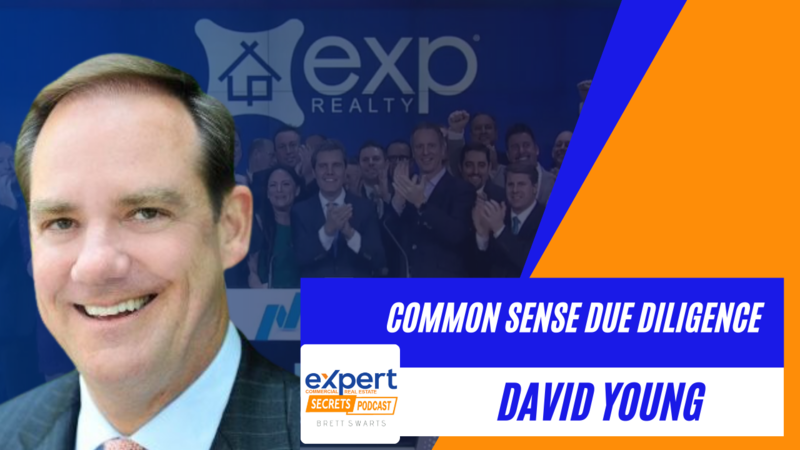
David Young is the Founder and Chief Executive Officer of Anfield Capital Management, LLC. With over 30 years of investment experience, David has worked with many of the largest and most sophisticated institutional and private investors in investment strategy, portfolio management, and asset allocation.
At the end of 2008, he retired as Executive Vice President with Pacific Investment Management Company to rejoin the U.C. Irvine Merage School of Business as Adjunct Professor of Finance and created Anfield Capital Management, LLC. From 1999 to 2006, David was head of PIMCO’s account management group in London where he built a team of 25 investment professionals managing over 200 client accounts and approximately $50 billion in assets across the UK, Europe, the Middle East, and Africa.
Watch the episode here
Brett:
I'm excited about our repeat guest. He is in Southern California. He's the former VP at a really well-known place that you might know about called PIMCO, one of the most respected wealth groups in the world. He spent a number of years there with a guy named Bill Gross and learned a lot and help grow PIMCO to one of the largest and most respected firms in the world. He's now with Anfield Capital, where he focuses and helps financial advisors, institutions and endowments, and manage their money or help financial advisors be a money manager for them. Please welcome the show with me, David Young. David, how are you, sir?
David:
Doing great, Brett, thank you so much. Appreciate the opportunity to be with you all again. And I guess I'm officially now a repeat participant or contributor. So that's great. You did give me a material demotion. I started at PIMCO as a VP. But when I took the PIMCO retirement, as we call it, which is a good thing. I was the Executive Vice President, but that's okay.
Brett:
Okay, I got to get those titles. Thank you for that correction. So, for our listeners, who want to get to know you for the first time, although there are previous episodes, you can go back, and I highly encourage you to go check those out. We talked about overcoming false beliefs at the deferred sales trust. And we go through a number of different things. But for those who are getting ready for the first time, would you give them a little bit more about your story and your current focus?
David:
Sure, happy to do so. Yeah, the long and the short of it is, and actually, before we dive into that, Brett, I am reminded by my compliance team that I should read a brief disclosure, it's now a good time for that.
Brett:
It's a great time, go for it.
David:
All right. So apologies here, I will read. We have lawyers and compliance folks that make sure that we do the very best job we can for our clients and are able to work with people at the highest stature like Brett and with that comes you know in the modern world. Anfield Capital Management LLC is a registered investment advisor with the SEC. Registration as an investment advisor does not imply a certain level of skill or training, and no inference to the contrary should be made. This interview is for informational purposes only and does not constitute investment advice, an offer to sell, or a solicitation of an offer to buy any securities. While many of the thoughts expressed in this podcast are stated in a factual manner. The discussion reflects only Anfield Capitals’ beliefs about the financial markets in which you invest portfolio assets at this time and may change at any time. Well, that was a long one I need to take a breath in there. The descriptions I make are in summary form, are incomplete, and do not include all the information necessary to evaluate any prospective investment partner who prospective investors are referred to our form add to a for a more detailed discussion of risk factors which can be(a) found on the SEC's Investment Adviser Public Disclosure website at: http://adviserinfo.sec.gov, or (b) provided upon request.
Brett:
Thank you for sharing that. David is gonna bring the wisdom right now. So we are talking about common sense due diligence with David Young. We're gonna dive into that. By the way, Anfield Capital, you can find them at anfieldcapital.com. But David, would you give us a little bit more about your story and your current focus before we dive into the subject today?
David:
Sure, happy to do so. So I've been in the business now for GE ways we just get did it all the BIOS in the marketing materials. It's 35 years going on where the time went, but it's been a crazy time to be in the markets over that very long period of time. So, I'm starting off on the really like, I would call it the private financial advisory side. That was way back in the 80s. I went to business school, went to what we call the buy-side, which is where you have a pool of assets and you're managing money on behalf of institutions, or endowments or foundations work for a boutique firm. I think I mentioned got the MBA there, went on to PIMCO, which we discussed briefly earlier, for sort 15 years I met my current colleagues here at Anfield had the opportunity to move overseas and help build pinkos business in Europe, Middle East Africa, came back here sort of in the 2006, seven timeframes. You still with PIMCO saw an opportunity to take a form of early retirement with the Express goal of returning to the finance faculty at the University of California at Irvine Merage School of Business. Currently, I'm on extended hiatus, if you will, the business is all-consuming in a good way. But then also to create a firm that allowed us to work with networks of financial advisors and trustees and other financial intermediaries and advisors like Brett and his group. And yeah, maybe just you know, kind of the goal of the mission was to rediscover our passion for the art and science of managing money. The very big firms are great, they're wonderful PIMCO wonderful, firm, love them, good friends and all that. But at that point in our career, it felt like we just wanted to go in a somewhat different direction. So that was 10, 12 years ago. And since then, we've been working with financial intermediaries, and then in turn their underlying clients trying to bring that institutional quality to a market that maybe didn't have such easy access to it before. Before and feel capital.
Brett:
Amazing, so much. Yes, so much there, and so much wisdom to share with our audience say, so thank you so much for being on the show. So let's dive right into common sense due diligence. What would be the first question or step or process for you, David, as you're looking at something that requires some due diligence, whether it be a stock, whether it be maybe real estate, maybe just a general asset? What would be the first common sense thing to do for you?
David:
For me, and lots of people will have different views on it. It really comes down to understanding the people if it's a registered stock of IBM, or Apple or whatever, it's understanding management, I think management matters. You don't notice them in good times. You might notice them more in bad times. But good management can get companies through tough times. We've just seen some tough times herewith with COVID. Certainly. So to me, I tried to look through the wrapper of Is it a stock or a bond or a private placement or a pooled? You know, real estate Limited Partnership? Or is it up to 40, sales trust type of instrument, and look inside and say, Who are the people behind it? What is their experience? What is their credibility? What are their credentials, if they are relevant credentials are always part of the mix? You know, can I trust in this management team? Are they transparent, so for me, people are big, because numbers tell a certain story? Numbers can be manipulated, unfortunately, it happens. So we always want to be on the lookout for that. But to me, it's about management and our sponsors, depending on the nature of the instrument, get to know them, get to understand them, check them out thoroughly. And I think you're a big step towards being where you want to be. So that's job one for us.
Brett:
Excellent. So the people, right, the background, how transparent their numbers, their credentials, getting to really understand their management style, how they've done things, what they're doing. So start with the people. So that's step one, which would be step number two.
David:
I think if we're talking about maybe we'll just focus on looking at like a mutual fund or a listed company if there's a little more sort of right down the middle of the things that most of your listeners might be looking at. And this is germane because these are the things that would go inside of a deferred sales trust, which I know is also a topic we'll touch on for today. You know, then we want to look at you know, we want to look at certainly at past performance is always relevant, although for me, not the number one item. You know, it's really I always look at what I call the four or five P's people we talked about I look at their overall business philosophy, do they have a clearly stated business model? Are they you know, competitive, maybe even dominant in their segment, right their industry, right. So you take a little bit of a look at the competitors. And then, as I mentioned before, a third point, there would be the past performance, past performance is relevant, it is not indicative of future performance, past performance could stop at any moment in time. However success tends to be I believe, the outcome of smart people working hard and doing the right things, on average, over time, bumps in the road, for sure. Look at the performance of a stock look at the performance of a mutual fund and the team managing the mutual fund. I would look at the performance of you know, of a team that was creating different sales trusts and other forms of installment sales to get a sense of is there a track record that I can look at and I can measure it, and I can see consistency? You know, strong periods of outperformance are great, we all like them. Periods of underperformance not so great. We don't like them. They're often understandable. But for me in performance, I'm looking more at the consistency of results. High fliers are great, we all love it my this stocks up on our end at 4%. Well, that's fantastic. But if it can be up 104, it can be down Well, it can't be done. 104. That's mathematically not possible. But you know what I mean? Right? So for me, it's really about the consistency of performance. But I would say past performance is probably the second thing I would be looking at.
Brett:
Excellent. Yeah, that makes sense. And I like the way you say that success is the right people working hard, consistently, and doing the right thing over time. Right. And it's really that we're the character. And you see the leaks, right? Or I think Warren Buffett says it well. When the tide goes out, you see who has been skinny dipping, right? It's easy to perhaps have some good performance. And when everything is going really well. You choose you truly see the character and the consistency over time when the tide does go out. Is that a fair summary?
David:
Yeah, and maybe I got it from Warren Buffett, I don't know he's a pretty, pretty smart guy. So maybe I just tend to say that when the water level goes down, then you see the old tires and the beer cans and the random tennis shoes and how they got in there, I don't know, but the truth that will out over time. But we also have to understand that in a competitive world in a volatile global environment, global economic environment, volatile markets. You know, I've never shied away from an investment or our investment thesis, or an investment management team that has had periods of weak performance, that is oftentimes a buy signal. I'll give you a little story on that, if I may. I, amongst my duties at the University of California, Irvine, and one of the courses I have taught for a number of years, is a course in portfolio management. And I always start off with number one we'll Okay, let's talk about due diligence. And these are MBA students. So they're 25, 30, 35 years old. By the time they get to either second year, finance track electives, so they're full-on gearheads and proud of it, right, and then they've chosen a career path and they're on, they tend to come from engineering, physics, math, or other hard science backgrounds, maybe a finance background. Anyway. So I always start off with here are five or seven things that you should be looking at when assessing investment management or investment. They're the things we're talking about now. And I want you to rank them in order of importance, they always put performance number one, it's funny, because it's really not number one, it's number three or four as we have discussed. But then we do another game. It's kind of like a pick the manager game. So I give them it's usually from a past mutual fund, kind of ranking service, maybe like a Morningstar or something like that. And show them these 20 or 30 different mutual funds. Here are the one-year, three-year, five-year performance track record other sets relevant things, and we say a little bit more information so so pick, I would say 60%-70% of the class will pick the one with the best recent performance one or three years. I know what's happened because I'm looking back in time, they don't know. Me, so okay, great. I usually pick the one that is the third quartile, not the top one. Not the second quarter, not the bottom quarter, but just below the median, right? If they, that would be my typical pick, and I beat them almost every time without fooling around with numbers. The point is that a high-flying manager isn't probably going to stay a high-flying manager or that high-flying stock probably isn't going to stay a high-flying stock forever, it will have its absent flows. And oftentimes is picking the manager or the style or the investment that's right now slightly out of favor, where you can see a consistent pattern of success, they're there, there's a pretty good chance they're going to come back up to the top of that, that distribution over time.
Brett:
Yeah, very well said. It makes me think of a question back when you said when the tide goes out, the water goes down. And those tires and the old shoes are showing up. What maybe tires are old shoes, do you maybe anticipate showing up in the next 6, 12, 24 months that folks should be aware of?
David:
Oh, well, that's a big question, a broad question. Let me take one, one slice of it, and then we can broaden out from there. The water in this case is a government stimulus. Which is, if we'll continue on with this vehicle, really a tidal wave, this is a tsunami of money and liquidity and stimulus, it's in the form of low-interest rates in the form of checks just right into your bank account. Right? Look at that it's got free money from the government, this is great, right, this is getting better. And I think that water level will eventually subside, first, they'll stop putting more water in, and then that water will be consumed, it will evaporate or it will be you know, burned up like fuel, or it'll soak into the ground or whatever, but it will eventually find its way to wherever it's going to go. And then we will see at that point what is the real overall health of the US consumer. Right now we'd normally be on consumer watch, we're not right now. Because the consumer is floating in a bin, their backyard pool in an inflatable, multicolored giraffe with a place for your beverage of choice, and when the weather is fine and the water is perfect is great and flutter in that pool is money. So no concerns about the consumer at this point in time. That will eventually come to the fore. But the thing I think that will be revealed will be how much damage has been done to the internal plumbing the internal structure of the US and global economies, how much real job destruction has happened. Not just technology rising to the fore and people feeling more comfortable working from home and corporations being well first required now more and more open to that concept. But I mean, if you really kind of think through all the ramifications is probably a longer discussion than we have time for today, you're going to ask yourself, what happens to that dry cleaner on the corner of the busy intersection, just when you get off the freeway before downtown. No one's going downtown anymore to work. What happens to the convenience store the gas station? What happens to all those jobs? You know, as some folks have, yeah, so it to put it in a nutshell, what has been the amount of damage to the internal structure first, firstly, of corporate America, how they operate and how what they make, what they sell it for who they sell it to how they sell it. That feels like it's changing a lot. But also very important, because our economy is largely made up of people, right? Two-thirds or more of the US GDP is consumer spending. And that's driven by jobs. First and foremost. What's happened to the structure of employment? What jobs are available, were requiring what skills at what sort of pay scales. Right now that's being masked in a positive way. I'm for it for now, by government stimulus, but when that water level of St. Louis goes down, then we're really going to figure out, have we created a new one? What would be the word have we created a new layer? We would call it a cohort and got to use fancy words. Right? A new cohort of on or underemployed people here in the US as a result of all these restrictions, you've all heard the stories, restaurants can't get people to come back and work even though they're open now because well, they're just making more money sitting at home playing video games. I don't know, the real damage there.
READ AND LISTEN TO OUR FULL EPISODE


Comments