

How to Perform Market Research : Ann Arbor, MI
A quick note before we dive into the meat and potatoes.
This is the first of several Rustbelt markets that I will be analyzing over the coming weeks.
I will be rating these markets on a scale 1-10 to help better display an overall value.
Why Rustbelt? The Midwest is abundant in secondary markets that are often over looked and full of value-add opportunity. As costs of living are inflated and remote work becomes socially acceptable I am optimistic that some of these markets will prove desirable in the future.
Initial screening criteria:
- - 125,000+ population
- - Historical/current 5-year population growth
- - Historical/current 5-year job growth
- - Unemployment ≤ National index
2nd level criteria (seen in analysis below):
- - No one industry has 20% market share of the economic structure
- - ≤40% of median HHI = average market rents
- - Business diversity heavy in tech and/or medical
- - Household growth exceeds construction
______________________________________________________________________________
6.5/10
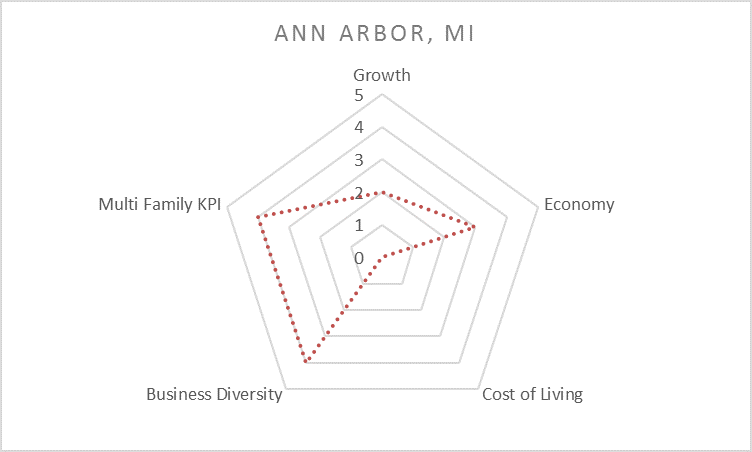
Growth | 2/5
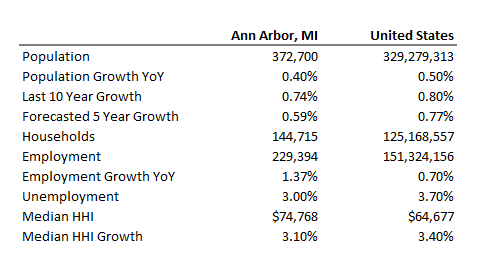
Ann Arbor, MI is the 5th largest city in Michigan with a population of roughly 372,700 people. Growing at a rate of 0.40% YoY; slower than the national index who's growing at 0.50% YoY.
Growth has slowed this year in comparison to the historical 10-year average (0.74%). The 5-year forecasted growth remains positive (0.59%) but still just shy of the national index (0.77%)
Ann Arbor is home to the renowned University of Michigan, who’s student population consists of 44,718 students and growing at a rate of 1.6% from last year.
Economy | 3/5
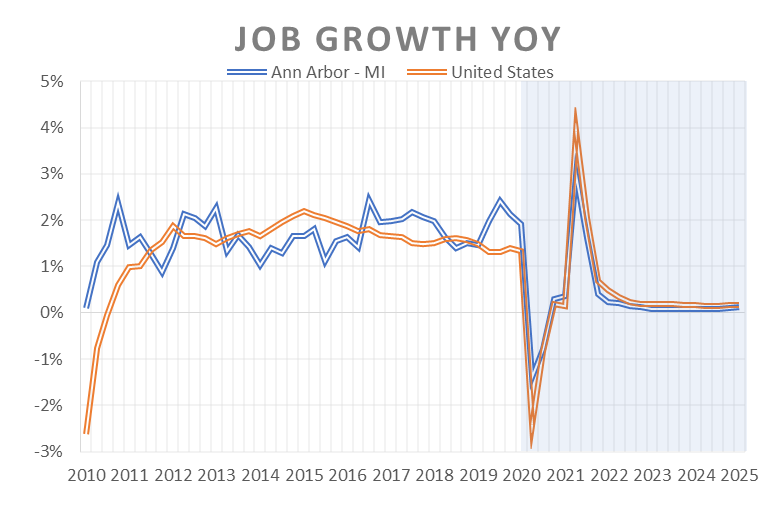
Employment growth is extremely strong; growing at a rate 1.37% in 2019, compared to national index 0.70%.
Unemployment is well below the national index at 3.0%.
Median household income is $74,768. Roughly $10,000 greater than the national index and growing at 3.1% annually; just a touch under the national index (3.4%).
Business Diversity | 4/5
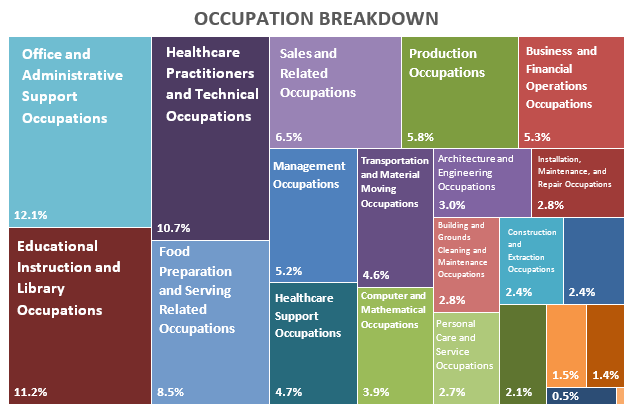
No one industry consumes greater than 20% of the workforce market-share.
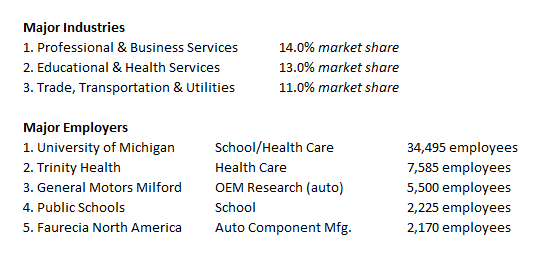
Educational Services (11.2%), Health Services (15.4%), Tech (across several occupations) and Manufacturing are occupational leaders.
Ann Arbor is considered a hot bed for start-up's due to the Universities R&D infrastructure.
Tech growth is an important demand driver that I look for when analyzing any market.
Cost of Living | 0/5
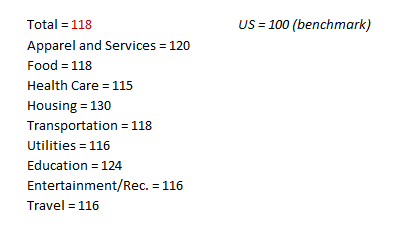
Living expenses are heavily inflated. The overall cost of living is roughly 18% greater than the United States
CRE Key Performance Indicators | 4/5
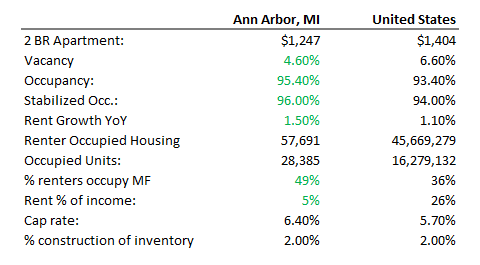
Rent is growing faster than the national index at rate of 1.5% YoY.
Stabilized occupancy is 96.0% and vacancy is just 4.6% – both 2.0% more desirable than the national index.
Of the 57,691 who rent, 50.0% are lessees of multi-family product, which is 13% greater than the U.S.
Although, cost of living is inflated, average rent is only 5% of total household income.
A concern to note is in the increased supply ratio. Supply > Demand. New construction is currently at 2% of inventory, while the population is only growing at 0.40%. More units are coming online then people.
Final Thoughts
Rated a 6.5/10 because of it's job growth, startup culture, large university, and consistent historical growth. There are concerns with costs and supply. Which brings the ratting just above average.
Half of the renters are renting apartments so there is a lot of market to capture if supply slows in the coming years. COVID-19 will help here.
Detroit has to make a turn-around eventually and I believe Ann Arbor will be the beneficiary of this.
Is Ann Arbor a market you would park your money? What Rustbelt market would you like to see next?
All data sourced from the Bureau of Labor Statistics and CoStar
Comments