

Why AirCover Alone Isn't Enough for STR Owners
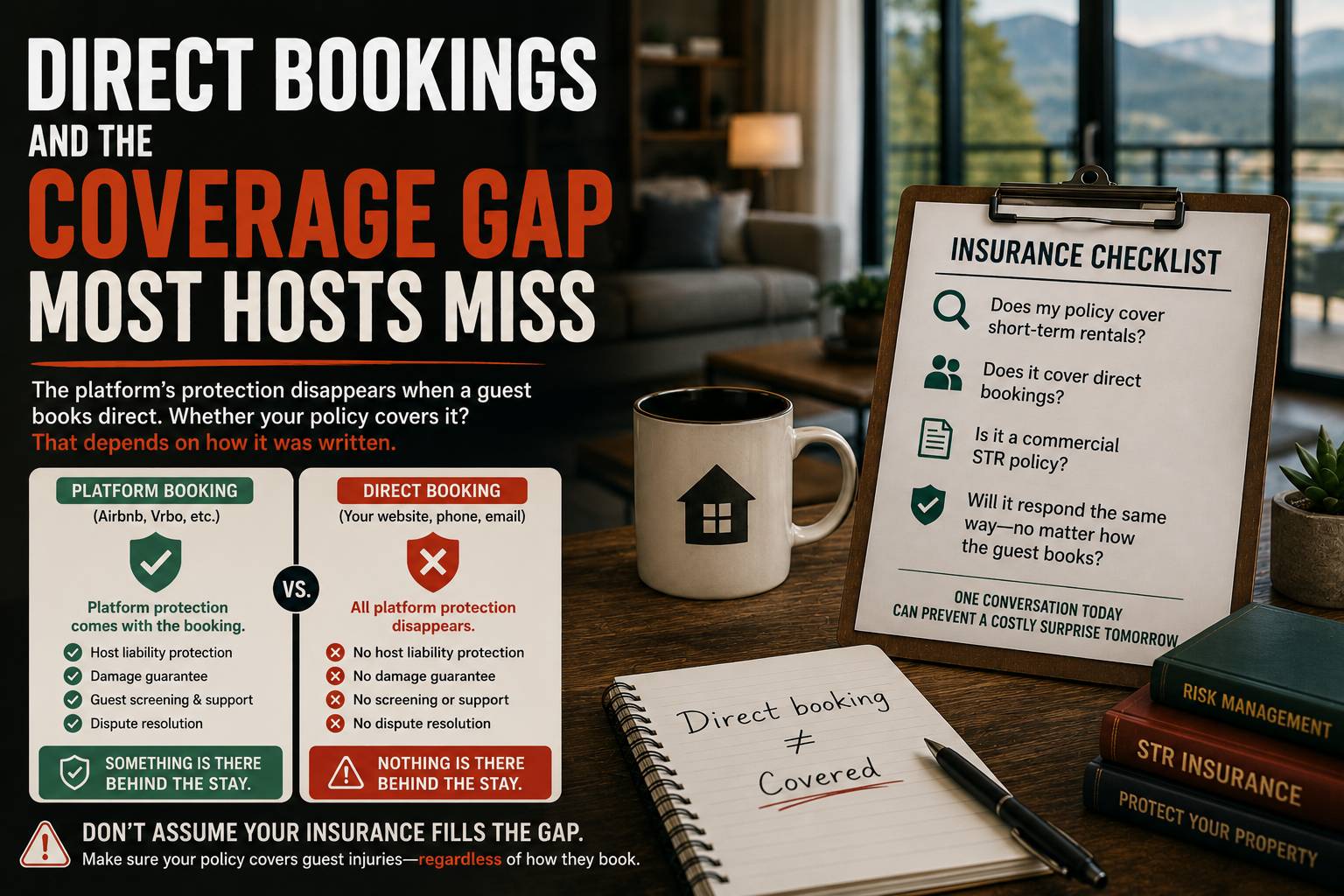
I've had this conversation with probably fifty hosts now. They all start the same way. "I have AirCover, so I'm covered, right?" Not exactly. And that's usually the moment they realize they're sitting on more risk than they thought. The $3 million damage protection and $1 million liability sound like a security blanket. They're not. AirCover is real, but it's also got some serious gaps. And most hosts don't discover them until they actually need it. So let's talk about what you actually have. AirCover Isn't Insurance. First thing: AirCover isn't an insurance policy. It's a host guarantee program. Airbnb handles it internally, not through an insurance carrier. That sounds like a small detail. It's not. When you have real insurance and something goes wrong, you have legal recourse. Your state has an insurance commissioner. There are rules about how long they can take to respond, how they have to handle your claim, what happens if they wrongfully deny you. It's regulated. AirCover? That's Airbnb's system, Airbnb's rules, Airbnb's timeline. And here's the thing that nobody mentions: Airbnb can change the terms whenever they want. Not after your coverage period. Just whenever. Also, AirCover only covers stays booked through Airbnb. Not VRBO. Not Booking.com. Not direct bookings. Only Airbnb. So if you're branching out (and most successful hosts do), you lose coverage the moment someone books somewhere else. What AirCover Actually Does I don't want to trash it. AirCover does some legitimate things. A guest breaks your TV. Stains your carpet. Damages the dishwasher. That stuff generally gets handled pretty smoothly. You document it, file the claim, and Airbnb takes care of it. The damage ceiling is generous. Three million is higher than you'll find on most standalone policies. And the fact that it's free and automatic? That's great. You get a baseline layer of protection without jumping through any hoops. The problem is that hosts see those numbers and think "I'm covered" and then stop thinking about insurance altogether. That's where the gaps appear. The Real Issue: Negligence Claims Here's what trips people up with AirCover liability. AirCover's $1 million liability coverage doesn't cover you if your own negligence caused the injury. And yes, that's exactly the kind of claim that happens most. A guest slips on your icy deck because you didn't treat it that morning? That's negligence. AirCover denies it. A guest hits their head on a loose railing you knew was loose? Negligence. Denied. Broken stair? Wet bathroom floor you didn't notice? Broken fence? All negligence. All denied. I'm not saying AirCover is being unreasonable. I think they're actually being clear about what they're covering. But what they're denying is exactly what actually happens at rental properties. Real liability insurance covers negligence claims. That's the whole point. Other Gaps Worth Knowing About Beyond the negligence thing, there's more. Vacancy periods aren't covered. So if your property sits empty between guests and something happens, you're on your own. That 2-day turnover between bookings? Uninsured. If your roof leaks and you have to cancel reservations, or a utility breaks and needs repair, you lose that income with nothing to replace it. AirCover only covers lost income if a guest caused the damage. If you have a pool or hot tub, your liability coverage gets pretty limited. AirCover doesn't like pools. And if you list on multiple platforms (which most of us do), everything off-Airbnb is completely uninsured. What Actually Happens When Something Goes Wrong I want to give you a real scenario because that's what matters. A guest slips on your back deck at 7 PM. Nothing seems serious at the moment. They say they're fine. They check out the next morning without mentioning it. Three weeks later, you get a letter from a lawyer. The guest has medical bills. They want $35,000 to settle and they're giving you 30 days before they sue. You call Airbnb about AirCover. They tell you they're investigating. Two weeks later, denial letter. The guest's injury happened due to your failure to maintain the deck (which is technically true—you didn't know it was dangerously icy that night). Now what? You're out $35,000. Plus you have to hire a lawyer, which costs $3,000-$5,000 just to start defending yourself. Legal fees climb from there. You might be looking at $50,000+ out of pocket. Or, you had proper STR insurance. Same guest, same injury, same settlement demand. You call your insurance company. They assign an adjuster and a defense attorney. You pay your $1,500 deductible. They handle everything else. That's a $48,500 difference based on which insurance you have. What You Actually Need If you're serious about this business—meaning you're not just renting out your guest bedroom on Airbnb once in a while—you need insurance beyond AirCover. Not homeowner's insurance. That explicitly excludes commercial activity, and Airbnb is commercial activity. Real STR insurance. The kind written for people who are actually operating a rental business. That costs maybe $150-$300 a month depending on your property. It covers all your platforms. It covers negligence claims. It covers vacancy periods. It covers your pool if you have one. Keep AirCover. It's useful for the simple stuff. But get a real policy underneath it. The Action Item Before you do anything else, call your insurance agent and ask them this specific question: "If a paying guest is injured at my property, am I covered by my current policy?" Listen to their answer. Don't accept vague responses. Ask them to put it in writing. Then read Airbnb's current AirCover terms directly from their website. Not a summary. The actual terms. Do those two things and you'll know exactly where your gaps are. Most hosts figure this out the hard way—when a claim actually happens. You don't have to.

Comments