@Jeffrey McKee - The numbers look solid on this... The cashflow seems appropriate "post refinance" - that cashflow will grow over time as the rents increase. The question I have is related to the renovation. It appears you'll put in $19k into the renovation - which will then drive up the value about $50k to %110k. Are you confident the renovation can be completed for $19k? Not sure what you are doing in the project, but I would double check that scope of the work and get some quotes prior to being 100% confident. I'm usually happy if I can get 1.5-2.0x on my capital injected into a renovation. This would show about 2.5x return in value on the 19k which seems a bit aggressive, so that's why I ask. Good Luck!
@Jeffrey McKee - The numbers look solid on this... The cashflow seems appropriate "post refinance" - that cashflow will grow over time as the rents increase. The question I have is related to the renovation. It appears you'll put in $19k into the renovation - which will then drive up the value about $50k to %110k. Are you confident the renovation can be completed for $19k? Not sure what you are doing in the project, but I would double check that scope of the work and get some quotes prior to being 100% confident. I'm usually happy if I can get 1.5-2.0x on my capital injected into a renovation. This would show about 2.5x return in value on the 19k which seems a bit aggressive, so that's why I ask. Good Luck!
Great comment. I have 2 quotes for the roof and foundation, Siding repairs. The rest is light cosmetics. I am buying very low. This is my first BRRR so we shall see. Everything hinges on the appraisal value. Comps are strong at 110,000, and the condition of those closed houses is pretty basic, rental-grade, and outdated. I will keep in mind the 1.5x2x on capital injection. I decided not to do the roof until absolutely necessary so that is taking my rehab down to 14K.
Greg flagged the $19K question. The listing answers it, and the answer is in one line most people scroll past: Foundation, Bois D'Arc Post.
That's a 1950 pier and beam house sitting on wooden posts. Bois d'arc is tough wood, but those posts are 75 years old, and TLC plus As Is plus fixer upper in the same listing usually means the sellers know what an inspection will find. Releveling a pier and beam house in Texas runs $8,000 to $15,000 before you touch anything cosmetic, and leveling an old house creates its own punch list: cracked drywall, doors that need rehanging, plumbing that moved. I've been building since 1996 and I'd want a structural opinion on those posts before I believed any rehab number, because if the foundation eats half the $19K, the renovation that was supposed to create the value never happens.
Second thing to pressure test: the value jump. If the model shows $50K to $110K of appreciation from a $19K reno, ask what that implies per square foot. This is 835 square feet. An ARV of $150K would be about $180 per foot. Pull sold comps for renovated 2 bed 1 bath cottages in Commerce and see if anything small has actually closed at that number. Small houses hit an ARV ceiling fast because the appraiser can only work with what sold, and there's not much house here to add value to.
Third, the refinance. Plenty of DSCR and portfolio lenders won't touch loans under $100K to $150K, and the ones that will charge for it. On a property this size, run the actual refi before you count on it, because fees on a small loan eat a big share of the proceeds.
The price history backs all this up. Listed at $85K in April, cut to $80K in July, three months to go pending in the cheapest band of the market. The market already looked at this one and hesitated. Doesn't mean it's a bad deal. Cheap old houses in college towns can work. But the deal lives or dies on those wooden posts, and I'd spend $500 on an engineer before I spent $80,000 on the house.
I totally agree with you on that. The foundation is the first thing I have to do on this house before we can make any other repairs, and it is guaranteed that some additional repairs will be required due to the foundation lift. I've got a quote for $4000 to replace 10 piers and add two new beams. I am waiting on a second quote for the foundation before moving forward. Thankfully i do have some solid comps above the 110,000 amount. One of those houses is a full renovation at 145,000 and the other is a similar finish-out at 129,000.
I do have a couple options for DSCR loans and they are saying they can do 100,000 or more.
Good progress on this one, Jeffrey. Two things on the foundation and one on the refi.
The $4,000 quote is the number I'd pressure test. Ten piers plus two new beams for $4,000 is $400 a pier before you even count the beams, and after 28 years of building I can tell you the cheap foundation quote is usually a scope difference, not a deal. When the second quote comes in, don't compare totals. Compare scope line by line: how many piers, shim or full replacement, who pulls the permit, whether an engineer's letter comes with it. If quote two lands at $9,000, the gap is almost always work quote one left out.
Second, budget for what the lift breaks. You already said additional repairs are guaranteed, which puts you ahead of most first BRRRR posts. On a 75-year-old house I carry a secondary line of roughly 30 to 50 percent of the lift cost for cracked drywall, doors, and trim, plus a plumber to pressure test supply and drain lines after the house moves. A leak found after the refi appraisal is the expensive version of that story.
On the ARV, comps at $129K and $145K make your $110K defensible. Package them. When you order the refi appraisal, hand the appraiser your comp sheet and the before and after scope. Appraisers default to caution on small cheap houses, and the borrower who shows their work usually gets the benefit of the doubt.
Last thing. Costin's input critique deserves a straight run. Plug his vacancy, maintenance, capex, and management numbers into your model next to yours. If the deal only pencils on your set, the spread between the two is your real risk, and it's cheaper to see that now than at the refi table.
Price the lift. Then budget for what the lift breaks.
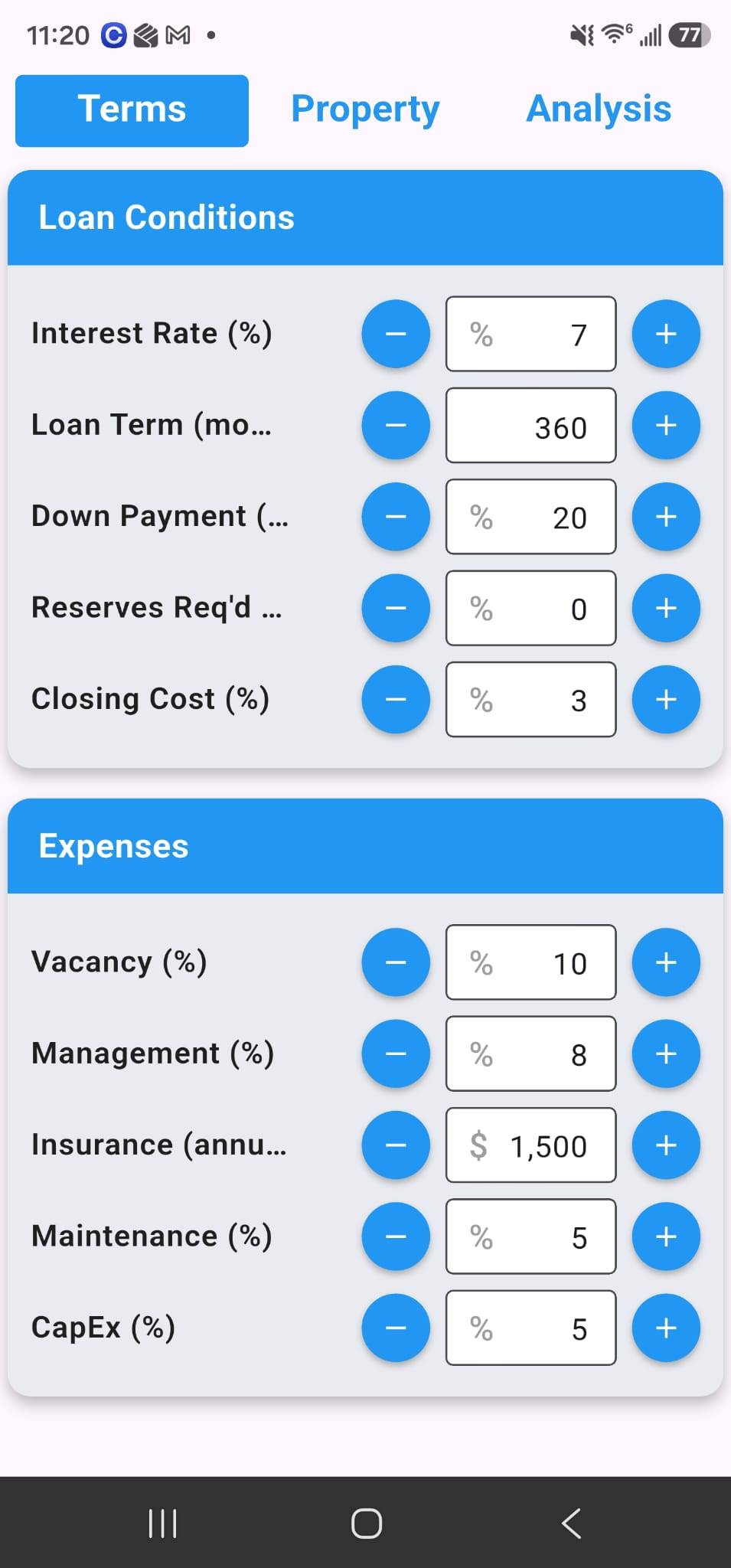
My 2¢: Your calculations are correct...with the input numbers you used. GIGO. I'm not going to discuss the renovation amount (plenty of input from others prior), but I'm going to flag some of the other numbers used. You have Vacancy at 5% ...for a SFR, not a small MF...and that's rather low, unless you are very experienced in marketing, leasing, make ready and turn-over operations...or in an area of very high demand (and that property and rent doesn't strike me as such)...I would use at least 8%, if not 10% or more (since this is a Class C property IMO, and will have high vacancy).
I see only 5% allocated for Repairs - which I assume it's for maintenance and incidentals. Even if renovated, a piglet (low cost, high rent, high promise, old house) will have more than 5% maintenance. If not completely reset (new roof, new mechanicals, new sewer, piping, etc), your maintenance will be more than 8%...IMO closer to 15%. And let's not forget about CapEx...which you still need to account for, even after a full rehab. And that's also at least another 5%. No way you can bundle them both in just 5%.
Then I see Management @ 5% - that only flies if you self-manage and give a discounted rate to your time. Good luck finding a good PM that charges you under 8%. And even then, when you factor in their lease fee, renewal fee, and other fees, their total take is closer to 12-14% of annual rental income. At a minimum, you should factor in 8%.
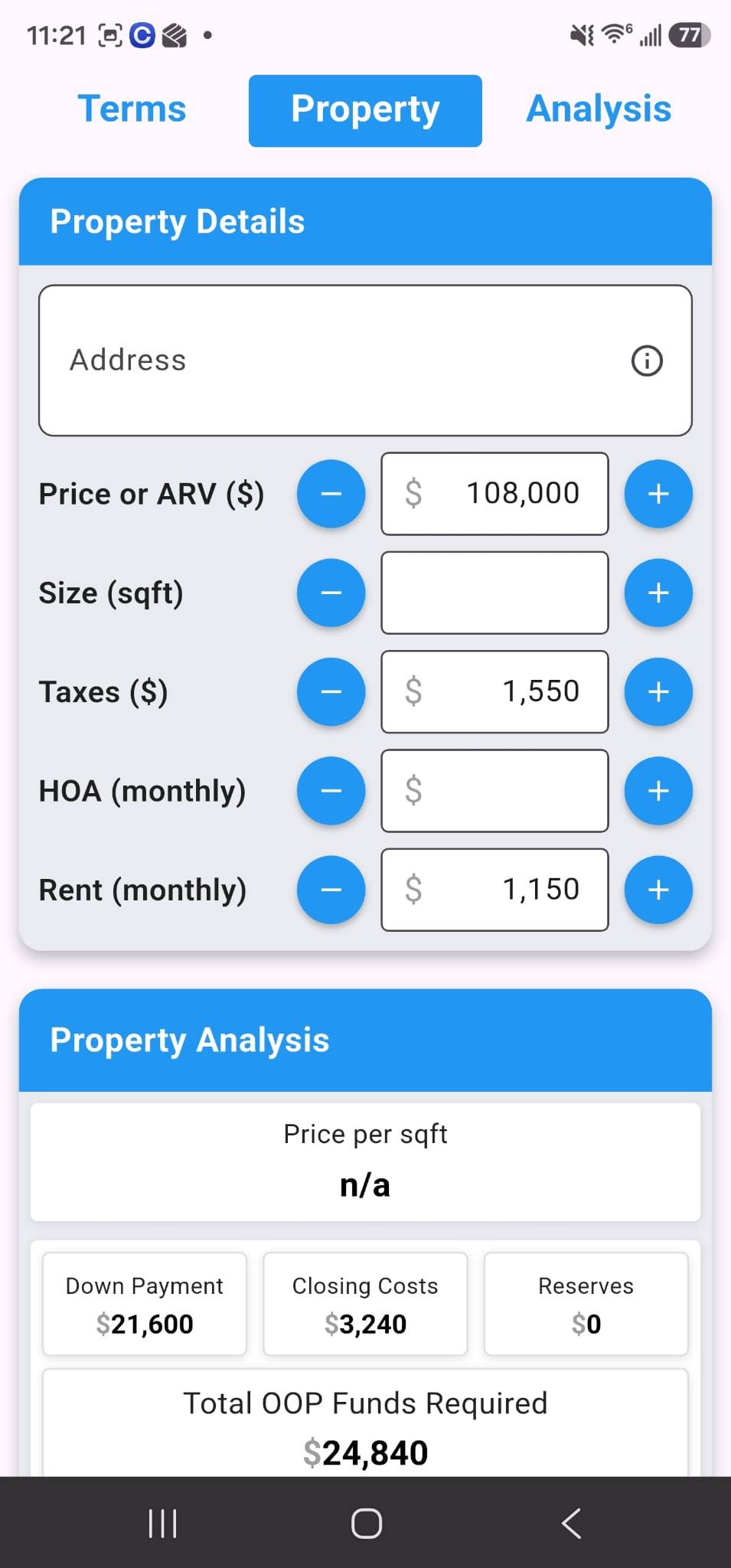
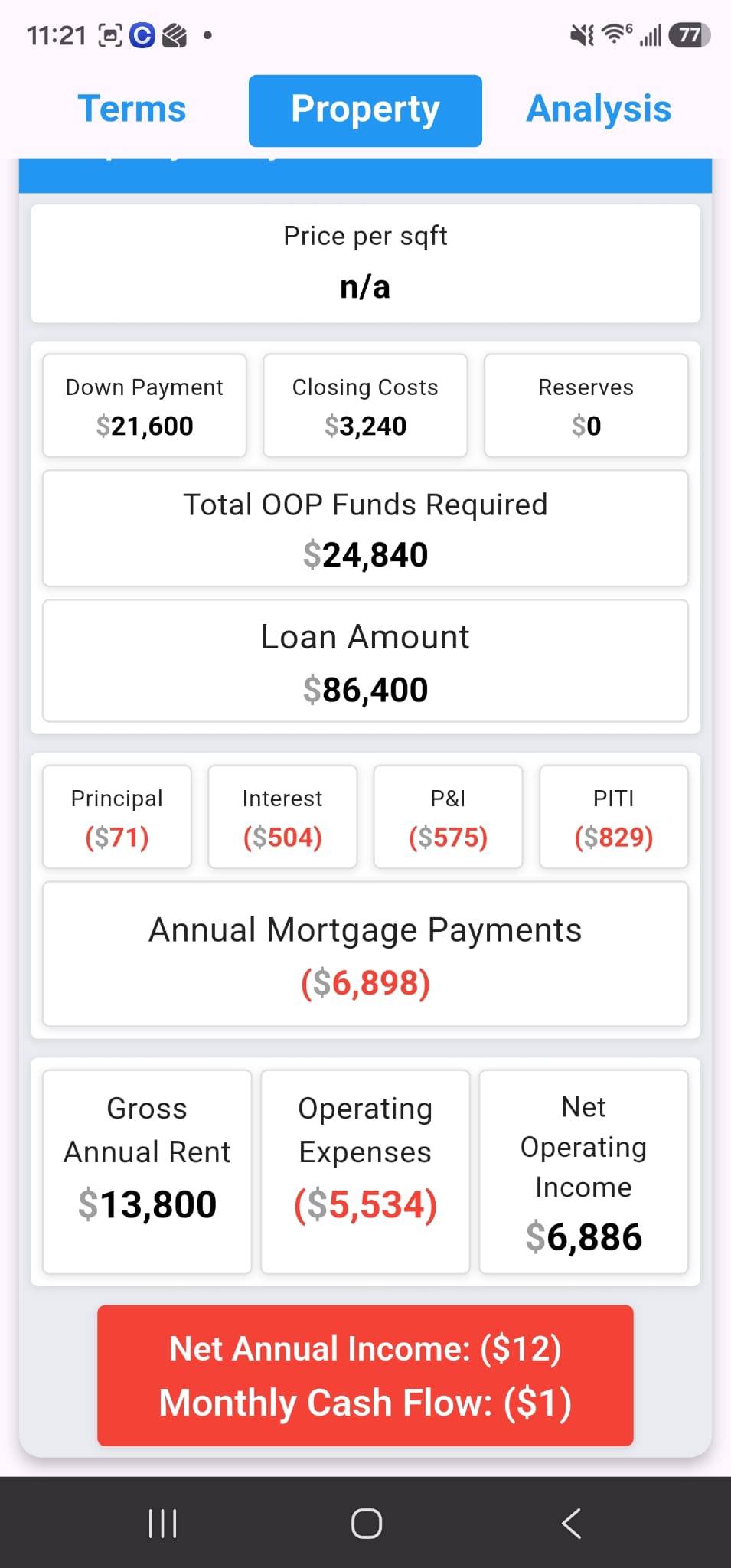
With what I consider more realistic numbers, this is how your deal changes - you barely break even in the BRRRR scenario. Any departure from the optimistic path and you have an aligator:
(FYI, I use the Rental Calculator 4K from the Google Play Store for my calculations).