Is the American Dream Dead?
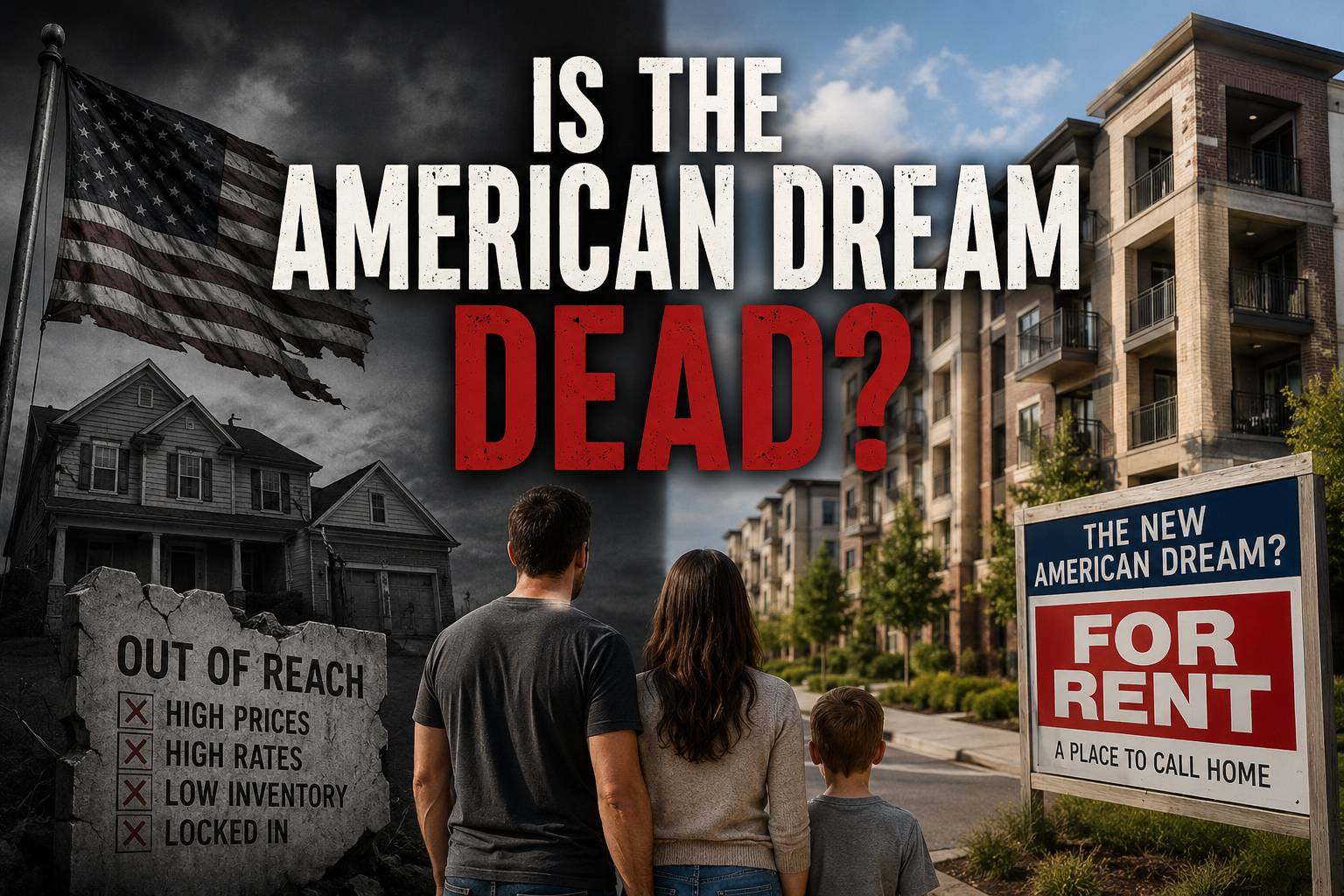
America is becoming a renter nation. Here's what the data says, and what it means for apartment owners.
I want to lay out a demand story that I think every apartment building owner should understand, because the numbers have moved past "interesting" into "structural." This is not a take or an opinion. It is what the data is showing.
The affordability wall:
- 77% of U.S. households cannot afford the median price of a new single-family home
- Three out of four homes on the market are out of reach for anyone earning the median income
- The average worker earns about $64,000/year, but affording the average home requires nearly $120,000
- Home values surged more than 45% between 2020 and 2025, roughly 11 years of normal appreciation compressed into five
- Mortgage rates sit near 6.5%, and more than half of all outstanding mortgages are locked below 4%
That last point is the one that keeps the cycle locked. Existing homeowners are not selling because they would be giving up a rate they will never see again. That keeps inventory off the market, which keeps prices elevated, which keeps would-be buyers renting. It feeds itself.
The result: nearly half of all U.S. renters are now cost-burdened (spending 30% or more of their income on housing). Three-quarters of Americans still believe homeownership is part of the American dream. But for a growing share of households, the math to get there simply does not work.
Why is this not a normal cycle:
This is the part that changes the conversation. If this were cyclical, you would expect it to self-correct in a year or two as rates ease and inventory loosens. But the underlying forces are structural:
- The country is short an estimated 4 to 5 million housing units
- New apartment construction has dropped to its lowest level since 2011 (down 73% from the 2022 peak)
- Single-family construction is constrained by the same high costs
- Wages have not kept pace with home prices over the past two decades
- The mortgage lock-in effect keeps existing inventory frozen
What this amounts to is a growing population of long-term renters who are not renting by choice but by math. Renting is no longer a temporary stop on the way to ownership for millions of Americans. It has become their housing solution for the foreseeable future.
What it means for apartment owners:
I want to be clear: this is not something to celebrate. The affordability crisis is real, and it is affecting families and communities. But as owners, understanding the forces shaping demand for your building is not optional.
The demand floor under apartment buildings is not temporary. It is structural. The tenants in your units are not leaving for homeownership anytime soon, not at current rates, not at current prices, and not with inventory this tight. Occupancy is measured in years, not months.
That changes the strategic question. It is no longer "will my tenants stay?" It is "is my building positioned to capture the value that comes with sustained demand?" Specifically: are rents at market, are operating expenses optimized, are utility costs being recovered, are vendor contracts current, and does the NOI reflect the building's actual performance?
Because when demand is structurally locked in, every dollar of income left on the table is a missed opportunity that compounds over time. The owners who recognize this and tighten their operations now are the ones best positioned when it comes time to refinance or sell.
Genuinely curious how this group reads it:
- Are you seeing longer tenant stays in your portfolio, and do you attribute that to the affordability wall?
- Has the homeownership crisis changed how you think about rent increases or renewal strategy?
- For those in markets where new construction was heavy, are you starting to see the supply pressure ease while demand holds firm?