The Job Market Just Went Negative. Here’s What That Means for Your Building
The economy lost jobs in July. Here's the two-sided read for apartment owners.
Friday's jobs report was the most consequential data point of the year for anyone who owns rental property, and I think it deserves a careful
read rather than a headline reaction. It is genuinely good news and bad news at the same time, and I want to lay out both.
What the report showed:
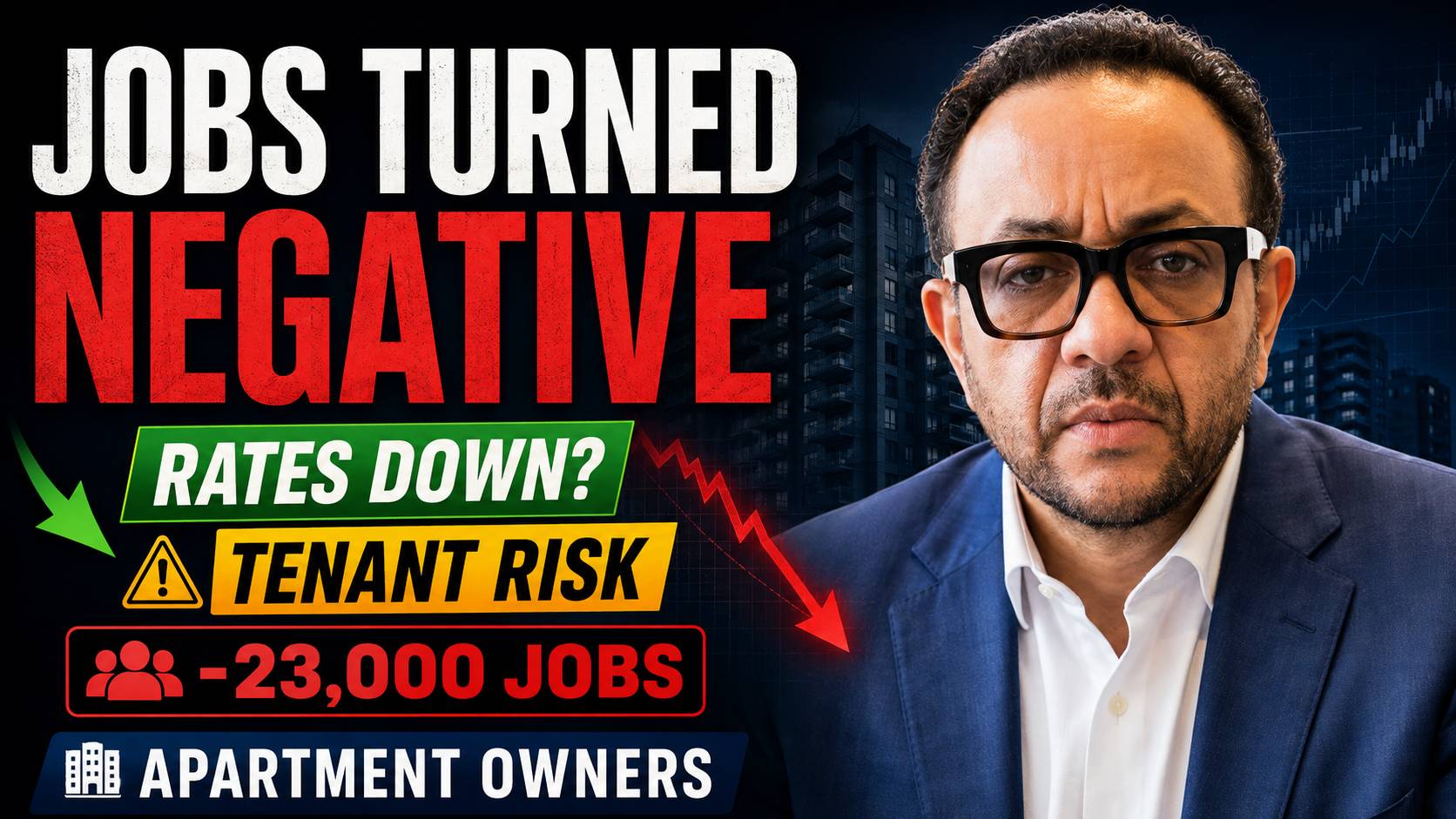
- Nonfarm payrolls FELL 23,000 in July. Consensus was a gain of 83,000 to 95,000.
- May was revised down 66,000 (from +129K to +63K). June was revised down 37,000 (from +57K to +20K). Combined downward revision: 103,000.
- Unemployment ticked DOWN to 4.1%, but labor force participation fell to 61.4%, the lowest in over five years.
- Temporary layoffs rose 153,000 to 921,000.
- Average hourly earnings grew 3.2% year over year, the lowest since May 2021.
- Long-term unemployed (27+ weeks) accounted for 25.5% of all unemployed.
- Total employment in 2026 has fallen by 833,000.
- Private payrolls actually rose 30,000. Government shed 53,000, led by local government education (-50K) and retail trade (-19K).
The unemployment rate falling in a month when the economy lost jobs is the detail worth understanding. That only happens when people exit the labor force rather than find work. If you read only the headline jobless rate, you would conclude the labor market improved. It did the opposite.
The good news for owners:
Weak payrolls plus decelerating wage growth is a disinflationary combination. It removes the Fed's strongest justification for holding rates high. Two weeks ago several Fed officials were publicly arguing for a September hike. After Friday, traders repriced. Citi is now out with a call for three cuts between now and January 2027, which is well outside consensus but signals how fast the conversation shifted.
Add the oil picture: prices swung hard on Iran headlines all week (down 5% Monday when strikes were called off, down again Tuesday on Bessent's comments about a Hormuz deal, then up nearly 4% Thursday when Iran published a restrictive draft transit plan). Talks stalled Friday over a fee dispute. Net for the week, oil finished down roughly 9%.
Weak jobs, slowing wages, and falling energy is the most favorable combination of rate signals we have seen this year.
The bad news, and I do not think it should be soft-pedaled:
Your tenants work in this economy. When employment contracts, temporary layoffs jump 153,000 in a month, and wage growth hits a five-year low, some residents will feel it. The sectors that shed jobs in July (retail, leisure and hospitality, local government) employ a meaningful share of workforce renters.
A weakening labor market may eventually deliver a better refinance rate. It may also deliver a harder rent roll before that happens. Both things can be true, and planning for only one of them is how owners get caught.
What I think changes practically:
The order of operations. In a softening labor market, retention should move ahead of aggressive rent growth. Keeping a performing tenant is worth more than a modest increase that risks a vacancy, especially when turn costs and downtime are the silent NOI killers and leasing velocity is slowing.
Then work the expense side, which is fully within your control regardless of the macro:
- Re-bid vendor contracts (insurance, trash, landscaping, maintenance all creep)
- Recover utility costs you may be absorbing
- Fix deferred maintenance that drives turnover
- Pull your delinquency report and look at the three-month trend, not just the current month
Every dollar of NOI protected or recovered improves your debt service coverage ratio. If rates ease this fall, you want a building positioned to capture it. If the labor market weakens further, you want a building that performs through it. The work is the same either way, which is the useful part.
Genuinely curious how this group is reading it:
- Are you seeing any change in collections or delinquency in your portfolio yet, or is it still steady in your market?
- Does the weak labor data change your renewal strategy this fall, or are you holding your pricing approach?
- For those with a refinance in the next 12 months: does the improving rate outlook make you want to wait, or are you moving on today's numbers?