The 10-year Treasury just hit its highest level since 2007

The 10-year Treasury just hit its highest level since 2007

Lender · Miami, FL · Member since 2026 · 7 posts · 3 votes

The 10-year Treasury just hit its highest level since 2007 and 2023, just under 5%. If you're a real estate investor, flipper, builder, or developer, here are 3 things that means for you, in less than a minute.

I'm Luis Alejandro, a loan originator with one of the top private real estate lenders in the country. We originate half a billion in New Construction, Fix-and-flip, Bridge and DSCR loans per year.

(1) Your buyer can afford less. Mortgage rates follow the 10-year. A buyer paying $3,000 a month can borrow about $500,000 at 6%, but only about $450,000 at 7%. The fix: offer a seller-paid rate buy down instead of cutting your price.

(2): Your refi gets harder. Rental loan rates follow Treasury yields too. On a $300,000 loan, going from 7% to 8% adds about $200 to your monthly payment, which could cost you around $27,000 in cash-out. The fix: get a signed lease before you apply and run your numbers at today's rates.

(3): Property values can drop. When the government pays a safe 5%, investors want more from real estate. A buyer will want a higher cap rate, so they will negotiate a lower purchase price. For example: a building earning $100,000 a year drops from about $1.67 million to $1.54 million when the cap rate goes from 6% to 6.5%. The fix: underwrite your exit at a higher cap rate and make sure your loan has extension options.
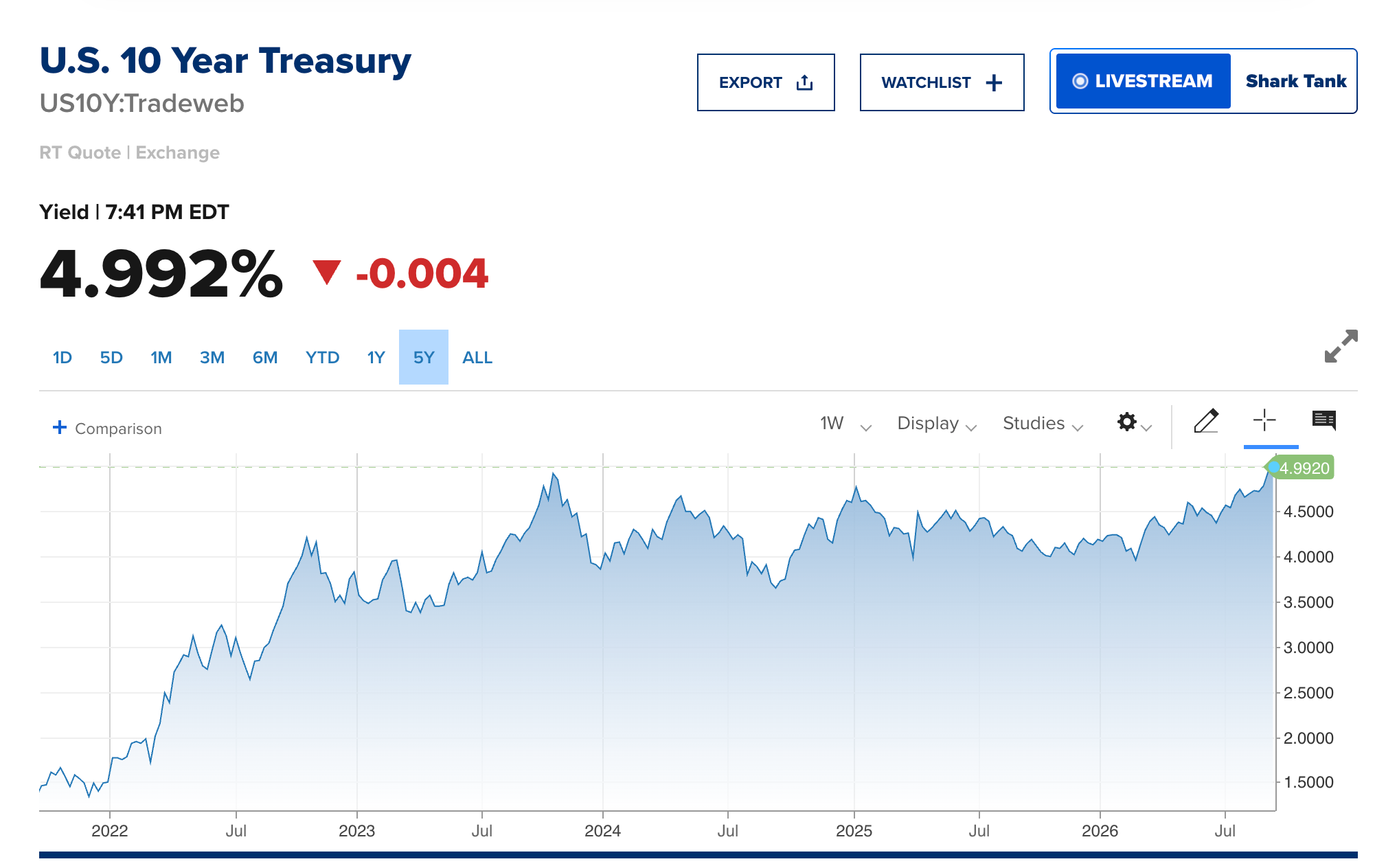
And your flip or construction loan? It follows short-term rates, which move with the Fed, and the Fed meets this week. Follow for more!

2 votes total

The FED will RAISE rates
The FED will NOT raise rates
The FED will KEEP rates the same.
0Reply
169 views

2 Replies

Jump to latestLatest
  • Jaron WallingPro Member
    Rental Property Investor · Indianapolis, IN · Member since 2018 · 4k+ posts · 4k+ votes
    3w

    The policies enacted by big orange head combined with the Iran war put this country in a challenging predicament (to say it nicely). It feels like the policies are steering one way, and the Fed is trying to steer it back. The average American is going broke in the process. It's appears it's by design which is unfortunate.

  • Coral Springs, FL · Member since 2018 · 487 posts · 106 votes
    3w

    Luis, your point about property values dropping when the risk-free rate goes up is playing out in real time at tax deed auctions down here in Broward County.

    When the 10-year was at 4% last year, we had a lot of financed buyers showing up to auctions competing against the cash guys. Now that it's pushing 5%, those financed buyers have basically disappeared from the auction floor. Their budgets can't stretch to the same bid levels. So what you're left with is a smaller pool of cash buyers bidding against each other, and the spreads are actually tightening because there's less competition.

    The interesting thing is that the auction prices haven't dropped as much as the retail market. The sellers at tax deed auctions are already distressed, so the starting bids are low. But the ceiling has come down because the exit buyer for flips can't qualify for as much. I've been underwriting my auction bids assuming the retail buyer is getting a loan at 7.25% or higher, and that changes what I can pay.

    Your cap rate example is spot on. A $100K NOI building at 6% cap is $1.67M. At 6.5% it's $1.54M. That's $130K of value that just evaporated from a rate move. The problem is the seller doesn't see it that way. They still think their building is worth what it was appraised at when rates were lower. That disconnect is what's creating the gridlock you see in transaction volumes.

Join the conversationCreate a free account to reply, vote on answers and follow this thread.