How To Know The Difference Between A Good Deal and a Turkey

How To Know The Difference Between A Good Deal and a Turkey

Investor · Get yourself trained before doing something inadvisable. · Member since 2024 · 3k+ posts · 1k+ votes

Investing isn't hard really, if you know the right questions to ask and you can get those answers. The tools I use are available for free on request so you can make the most of your efforts.

We look at the numbers and they tell the story.

Don't buy into the malarkey "the dog ate my homework". There is no room for excuses when the knowledge an tools are readily available. Use common sense.
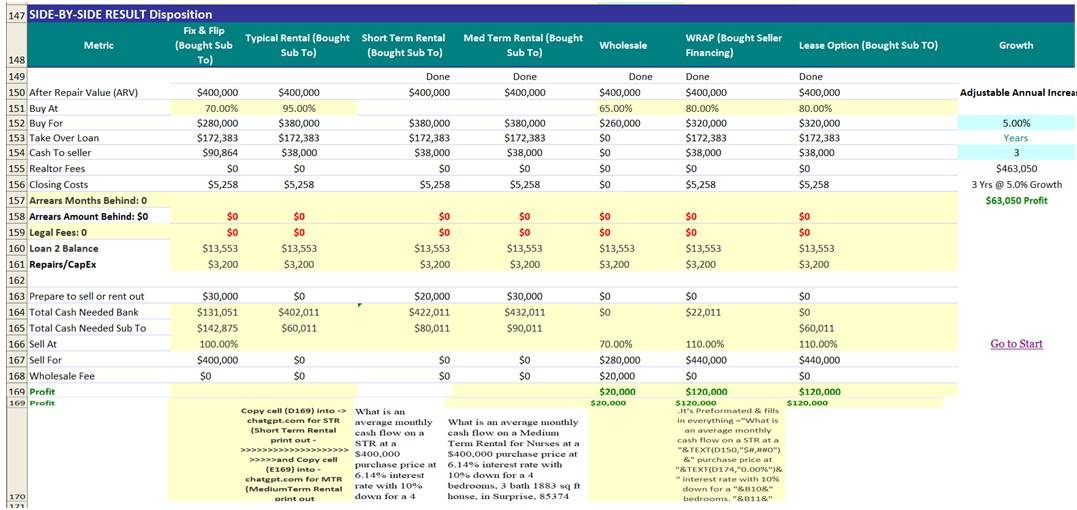
Whether you're a new or experienced real estate investor looking for cash, private lenders, or creative financing, consider asking the seller to become your private lender through seller financing, owner financing, or other no-bank financing strategies.

Depending on the deal structure, this approach may work for Fix & Flip, BRRRR, buy-and-hold rental, single-family, multifamily, or other investment property opportunities while helping improve cash flow.

We use it entirely and it works in so many situations.

1Reply
180 views

2 Replies

Jump to latestLatest
  • Englewood, NJ · Member since 2018 · 356 posts · 60 votes
    3d

    The numbers absolutely tell the story, but I've found that in some markets the hard part is knowing WHICH numbers to look at before you even run the analysis.

    I buy at tax deed auctions in Broward County FL, and the turkey detection starts way before the bid. A lot of people see a property with a low opening bid and think "deal," but they haven't checked what survives the tax deed. In my market, municipal code violations, open permits, and certain IRS liens don't get wiped. I've seen properties where the new owner inherited $30K+ in unpaid code enforcement fines on top of what they paid at auction.

    My filter before I even look at ARV:

    - Pull the code violation search from the county — any open cases with daily fines accumulating?
    - Check building permits — were they pulled and finalized, or are there open permits that never got signed off?
    - Run a 40-year title search (not just a quick O&E) — the tax deed wipes most liens but not everything
    - Check if the property has environmental issues — Broward has a lot of old septic systems in areas that now require sewer connections

    If any of those come back dirty, the deal is a turkey no matter how cheap the opening bid looks. The "good deal" filter is really a "can I get it insurable and marketable at exit" test.

    Seller financing is great when you can get it, but at tax deed auctions there's no seller to negotiate with — you're buying from the county. So the due diligence has to be bulletproof before you bid, because there's no inspection period and no backing out once the clerk calls sold.

    • Investor · Get yourself trained before doing something inadvisable. · Member since 2024 · 3k+ posts · 1k+ votes
      3d
      Quote from @Igor Ganapolsky:

      The numbers absolutely tell the story, but I've found that in some markets the hard part is knowing WHICH numbers to look at before you even run the analysis.

      I buy at tax deed auctions in Broward County FL, and the turkey detection starts way before the bid. A lot of people see a property with a low opening bid and think "deal," but they haven't checked what survives the tax deed. In my market, municipal code violations, open permits, and certain IRS liens don't get wiped. I've seen properties where the new owner inherited $30K+ in unpaid code enforcement fines on top of what they paid at auction.

      My filter before I even look at ARV:

      - Pull the code violation search from the county — any open cases with daily fines accumulating?
      - Check building permits — were they pulled and finalized, or are there open permits that never got signed off?
      - Run a 40-year title search (not just a quick O&E) — the tax deed wipes most liens but not everything
      - Check if the property has environmental issues — Broward has a lot of old septic systems in areas that now require sewer connections

      If any of those come back dirty, the deal is a turkey no matter how cheap the opening bid looks. The "good deal" filter is really a "can I get it insurable and marketable at exit" test.

      Seller financing is great when you can get it, but at tax deed auctions there's no seller to negotiate with — you're buying from the county. So the due diligence has to be bulletproof before you bid, because there's no inspection period and no backing out once the clerk calls sold.

      Ya got me there. I don't do tax deeds and the software isn't set up for tax deeds. It only handles, foreclosures, probates, rentals, MLS, STR, Mid Term Rentals, Lease Options, Mobiles, land, Seller Finance but no tax deeds.

Join the conversationCreate a free account to reply, vote on answers and follow this thread.