Due Diligence Update – Operating History, Prior Financing, Revised Asking Price, and Underwriting
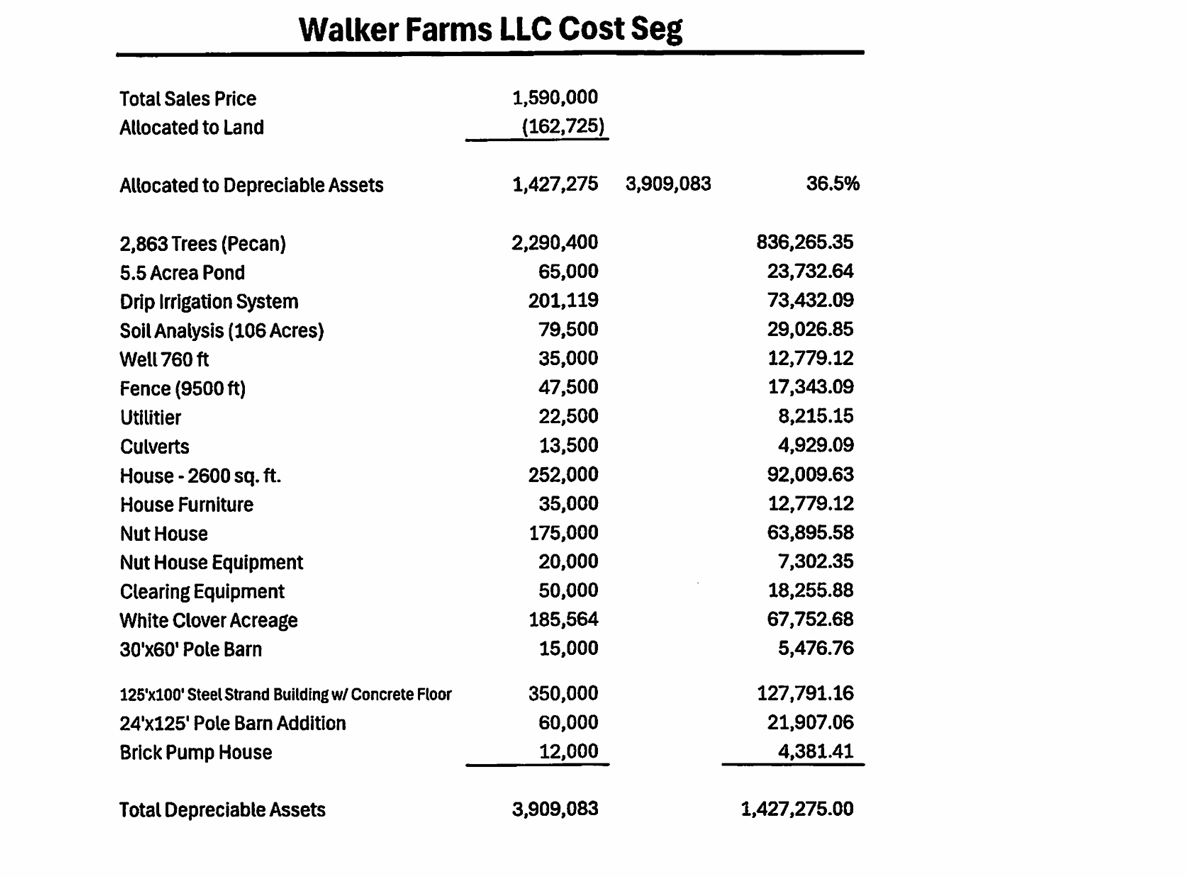
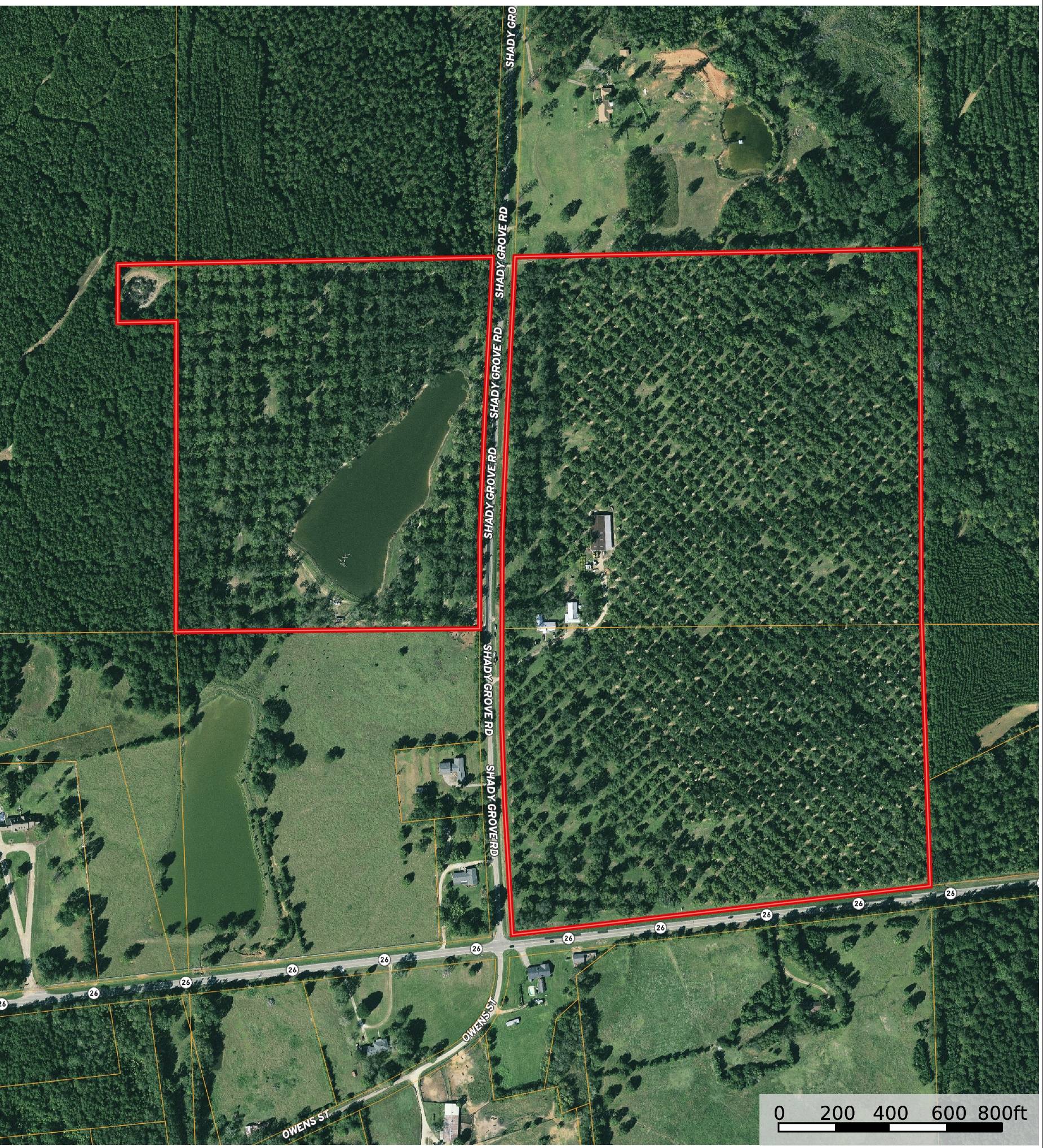
I wanted to provide an update because several people in this discussion raised important questions about the gap between the orchard's substantial physical assets and its historical financial performance. Those comments led me to dig further into both the operating history and how the property was previously financed.
First, there has been a material change in the asking price. The property that I originally posted about at $1.4 million has since been reduced to $1.2 million.
I view the $200,000 reduction as a reason to update the underwriting, not as evidence by itself that the property is now a good acquisition. The revised price still has to be justified by realistic production, operating expenses, capital requirements, management costs, reserves, and sustainable debt service.
I also followed up on the historical production variability.
The available sales records showed significant year-to-year swings, which several people here correctly identified as something that needed a better explanation.
According to the broker, who has been familiar with the property for years, he believes a significant part of the production variation was related to how the orchard was historically operated. The owner operates a paving business, and his paving crew was reportedly used for orchard labor when they had available time between paving jobs. The paving operation was the owner's primary business and took priority over orchard work.
I do not consider that proof that the orchard will automatically produce more—or more consistently—under different management. That still needs to be supported by production records, realistic operating assumptions, and an independent orchard/agronomic evaluation. But it provides additional context for interpreting the historical financial results.
The previous financing structure was also interesting.
I asked the broker how the current owner originally financed the acquisition. After speaking with the owner, the broker reported that the property was financed through the bank where the owner maintained his business accounts and had a long-standing banking relationship.
The loan reportedly used monthly interest-only payments, with a principal payment made at the end of each year. The loan was ultimately paid off several years ago.
I don't yet know the original loan amount, down payment, interest rate, annual principal payment, or other loan terms, and I would not assume that another borrower could obtain the same structure. However, it is useful to know that the property was previously bank-financed and that the debt structure apparently recognized the seasonal nature of the operation's cash flow.
My underwriting approach has also changed since my original post.
Rather than starting with the seller's asking price and trying to find enough financing to make that price work, I am now approaching the acquisition from the opposite direction.
The question I am trying to answer is:
How much annual debt service can this farm realistically support from normalized operating cash flow?
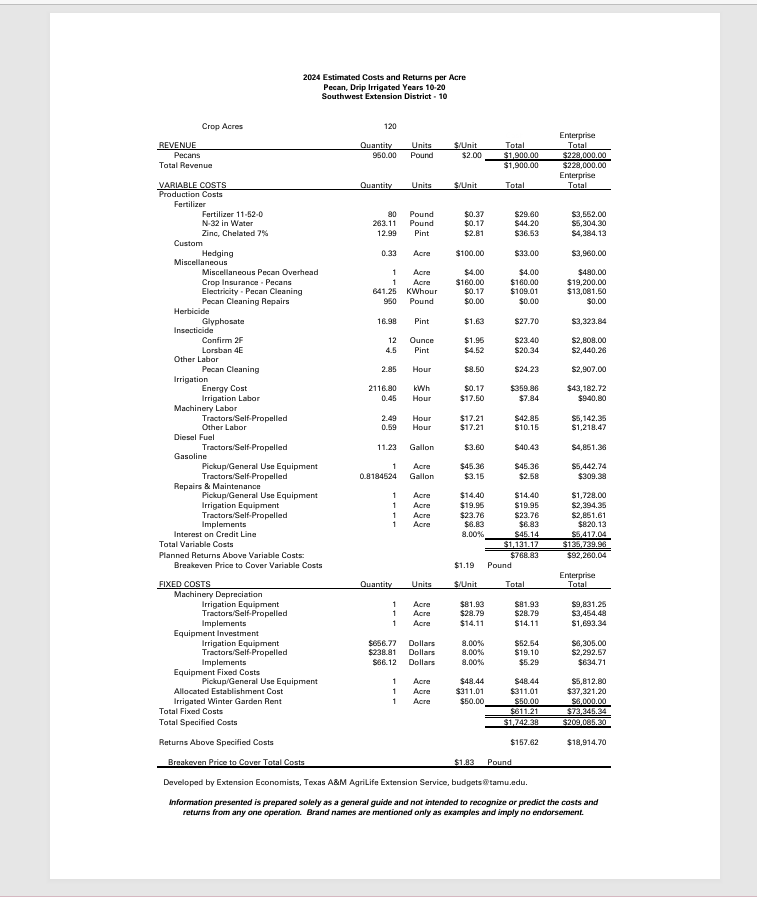
That means accounting for operating expenses, labor and management, orchard maintenance, equipment requirements, reserves, and the inherent year-to-year variability of pecan production before determining how much cash is actually available for debt service.
From there, I can work backward to a supportable loan amount, required equity contribution, and ultimately a purchase price that the agricultural operation itself can reasonably carry.
The previous owner's interest-only monthly payment and annual-principal structure is relevant because it demonstrates one way financing can be aligned with seasonal agricultural cash flow. But I don't want to use creative financing merely to make an otherwise unsupported purchase price appear affordable. The underlying operation still has to support the debt.
So even with the asking price now at $1.2 million, I am not starting with the assumption that $1.2 million is necessarily the right acquisition price.
I have also completed a comprehensive business plan for the orchard acquisition and operating strategy. The plan incorporates the property, orchard operations, equipment and infrastructure, production assumptions, management requirements, financing considerations, and longer-term operating strategy.
I am now using the additional due-diligence findings and feedback from this discussion to stress-test and refine the underwriting assumptions behind that plan. Completing the business plan does not mean that I consider the acquisition decision complete; the underlying assumptions still need to withstand independent verification and lender scrutiny.
My next steps are to continue validating realistic production capacity, normalized operating expenses, management requirements, capital reserves, and sustainable debt service, along with obtaining an independent assessment of the orchard itself.
Several of the comments in this discussion caused me to look at the transaction differently, particularly the questions about operating experience, production variability, lender underwriting, and whether the historical income actually supports the acquisition debt. I appreciate those challenges because they have improved the due-diligence process.
For those with agricultural lending, orchard operations, or farm acquisition experience: when underwriting a property like this, what debt-service coverage or cash-flow cushion would you want to see before determining what purchase price the operation can actually support?