How do you compare deals and know which one is actually “safer”?

How do you compare deals and know which one is actually “safer”?

Member since 2026 · 26 posts · 6 votes

Hi everyone — I’ve been learning a lot from this group, really appreciate all the insights here.

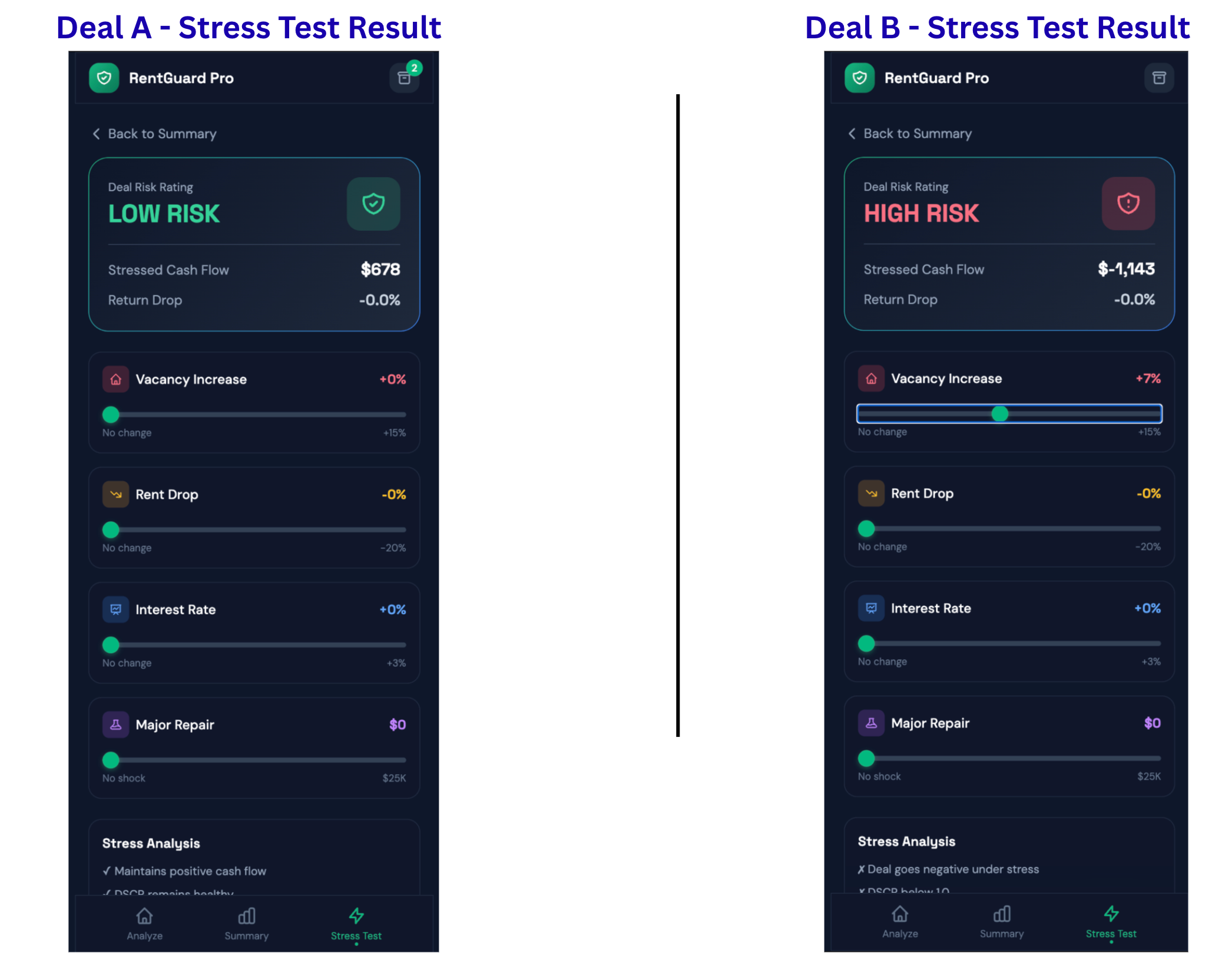
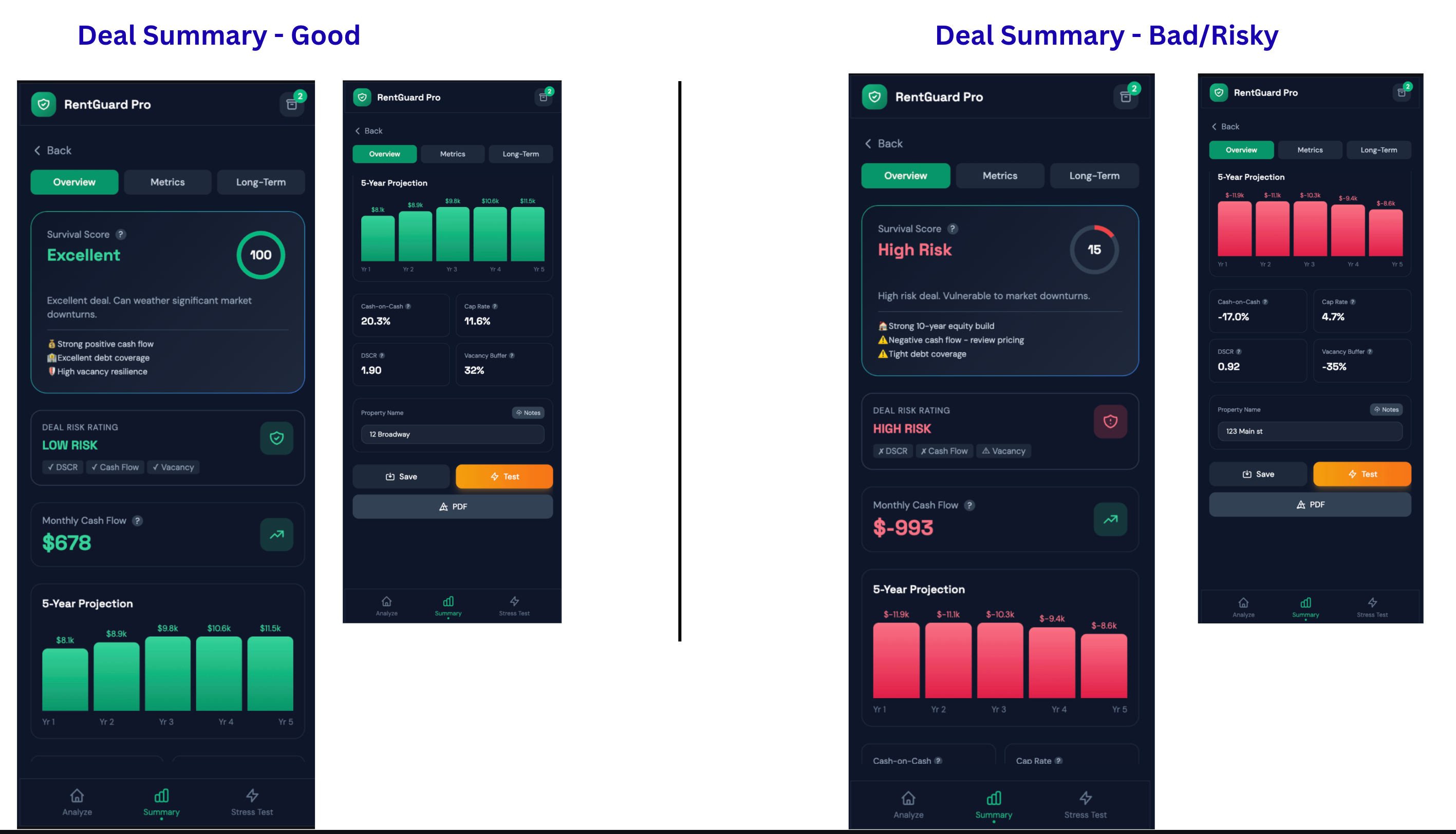
I’m a mobile developer exploring a simple tool for small landlords (1–20 units) to compare deals and quickly see which one actually survives bad scenarios (vacancy, repairs, rate changes, etc.).

here is rough version (not built yet):
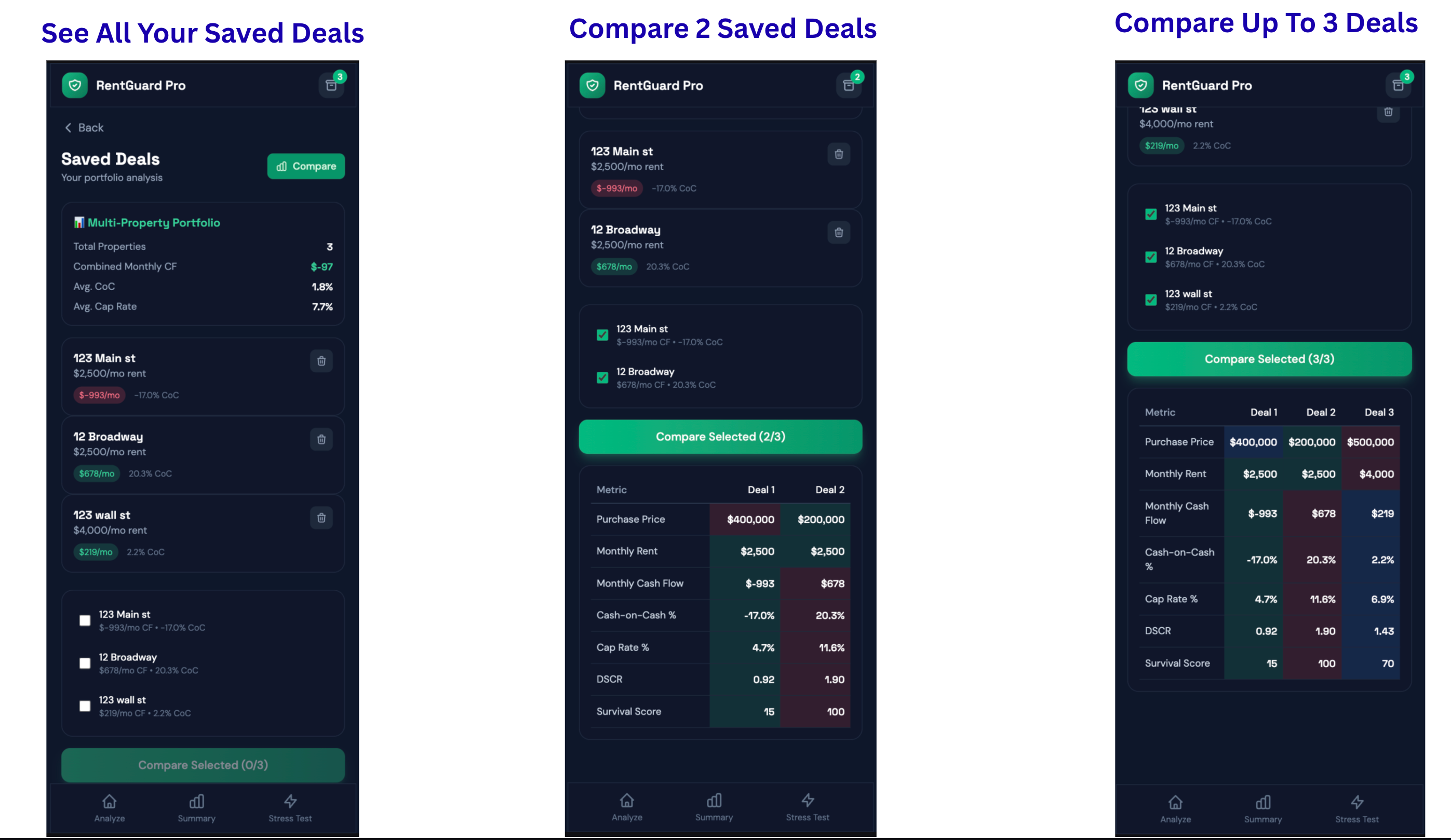
The idea is to show things like:

  • Monthly cash flow
  • Side-by-side deal comparison
  • A “Survival Score” = how well the deal holds up under stress

I’m not selling anything — just trying to understand if this is actually useful.

Would love your honest feedback:

  1. Would this help you make decisions faster?
  2. What’s missing or unnecessary?

Thanks again — really appreciate it.

0Reply
114 views

6 Replies

Jump to latestLatest
  • Bo SmithPro Member
    Hinton, WV · Member since 2026 · 1k+ posts · 373 votes
    6mo

    Al, I like where your head is at on this. The concept of a "Survival Score" is solid because most investors run one-case scenarios and miss stress testing. The tool idea makes sense -- comparing deals side by side with variance scenarios is valuable. Most people do that in their head or messy spreadsheets.

    For landlords especially, you need to know: what happens if I'm vacant 90 days? What if a major system fails? What if rates go up 2%? If a deal doesn't survive those scenarios with positive cash flow, it's not a rental -- it's a speculation bet on appreciation. And that's risky for a small operator.

    One thing to add to the feature set though: compare against acquisition cost. Two deals with the same cash flow look identical until you realize one cost 0k to close and the other cost 00k. That changes the return profile and how much risk you can take. Could your survival model also show payback period or cash-on-cash return under stress? That would be useful.

    Al, are you limiting this to SFR analysis or are you also modeling multifamily and commercial? The complexity scales pretty different.

    • Member since 2026 · 26 posts · 6 votes
      6mo
      Quote from @Bo Smith:

      Al, I like where your head is at on this. The concept of a "Survival Score" is solid because most investors run one-case scenarios and miss stress testing. The tool idea makes sense -- comparing deals side by side with variance scenarios is valuable. Most people do that in their head or messy spreadsheets.

      For landlords especially, you need to know: what happens if I'm vacant 90 days? What if a major system fails? What if rates go up 2%? If a deal doesn't survive those scenarios with positive cash flow, it's not a rental -- it's a speculation bet on appreciation. And that's risky for a small operator.

      One thing to add to the feature set though: compare against acquisition cost. Two deals with the same cash flow look identical until you realize one cost 0k to close and the other cost 00k. That changes the return profile and how much risk you can take. Could your survival model also show payback period or cash-on-cash return under stress? That would be useful.

      Al, are you limiting this to SFR analysis or are you also modeling multifamily and commercial? The complexity scales pretty different.

      Bo, really appreciate the thoughtful feedback — this is super helpful.

      I like how you framed it as “rental vs speculation bet” — that’s exactly the kind of clarity I’m trying to surface.

      Good point on acquisition cost too. Right now I’m focusing more on survival and downside, but tying that to capital invested (cash-on-cash, payback) under stress makes a lot of sense.

      For now I'm thinking of starting simple (mostly SFR / small multifamily) and then expanding once the core model is solid.

      Out of curiosity — when you evaluate deals today, do you usually run those stress scenarios formally, or more mentally / rough estimates? 

  • Bo SmithPro Member
    Hinton, WV · Member since 2026 · 1k+ posts · 373 votes
    6mo

    This is a smart idea. Most landlords are doing this stuff in a spreadsheet and losing their mind trying to remember where they put the rent numbers and expense assumptions. The stress-test angle (survival score) is the part that actually matters.

    One thing I'd emphasize: the tool needs to force users to stress-test using REAL bad scenarios, not theory. 6-month vacancy isn't "bad scenario" -- it's what happened in 2008. 30% repair costs higher than estimated? That's how real rehabs go. A 2% rate bump? Look at what happened with DSCR loans in the last three years. The tool only works if it's making people build in real margins for disaster.

    The side-by-side comparison is gold though. Most people pick between two deals based on feeling, not numbers. Having a simple dashboard showing which one actually survives a rate bump and a extended vacancy would change how people choose. Are you planning to pull rent comps and expense estimates from external data, or making users input everything manually?

    • Member since 2026 · 26 posts · 6 votes
      6mo
      Quote from @Bo Smith:

      This is a smart idea. Most landlords are doing this stuff in a spreadsheet and losing their mind trying to remember where they put the rent numbers and expense assumptions. The stress-test angle (survival score) is the part that actually matters.

      One thing I'd emphasize: the tool needs to force users to stress-test using REAL bad scenarios, not theory. 6-month vacancy isn't "bad scenario" -- it's what happened in 2008. 30% repair costs higher than estimated? That's how real rehabs go. A 2% rate bump? Look at what happened with DSCR loans in the last three years. The tool only works if it's making people build in real margins for disaster.

      The side-by-side comparison is gold though. Most people pick between two deals based on feeling, not numbers. Having a simple dashboard showing which one actually survives a rate bump and a extended vacancy would change how people choose. Are you planning to pull rent comps and expense estimates from external data, or making users input everything manually?

      Bo, this is incredibly helpful — especially your point about using real bad scenarios vs theoretical ones. That makes a lot of sense.

      I like the idea of not just letting users choose assumptions, but actually pushing them to see what happens under conditions like extended vacancy or higher-than-expected rehab costs. That’s where deals probably break in real life.

      And yeah, the comparison piece is something I’m leaning into more after seeing the feedback — it seems like that’s where people get the most clarity.

      For now I’m thinking of keeping inputs manual to stay simple and fast, and then potentially layering in external data later once the core experience is solid.

      Curious — in your experience, do most investors underestimate those “bad scenarios,” or do they just not model them at all?


  • Bo SmithPro Member
    Hinton, WV · Member since 2026 · 1k+ posts · 373 votes
    6mo

    The concept you're building is solid, and yeah, landlords need this. The problem most people have isn't the tool -- it's that they don't actually stress-test their deals before they buy. They run the numbers assuming best-case: 95% occupancy, 5% maintenance, and a stable market. Then reality hits and they're shocked when a 2-month vacancy or a K roof repair wipes out 6 months of cash flow.

    What your tool needs to show (if it doesn't already): not just the base cash flow number, but the sensitivity tiers. Like, at what vacancy % does the deal break even? At what point does a repair spike make the monthly cash flow negative? Some deals can handle a 3-month vacancy and stay above breakeven. Others blow up at 30 days. That's the number that matters when you're picking between two deals.

    One suggestion though -- don't overcomplicate the "Survival Score." Investors want one number to look at, not a weighted formula they don't understand. Cap rate after expenses minus replacement reserve and expected vacancy is usually enough for landlords in your target range. Are you building this as a web app or thinking mobile-first?

    • Member since 2026 · 26 posts · 6 votes
      6mo
      Quote from @Bo Smith:

      The concept you're building is solid, and yeah, landlords need this. The problem most people have isn't the tool -- it's that they don't actually stress-test their deals before they buy. They run the numbers assuming best-case: 95% occupancy, 5% maintenance, and a stable market. Then reality hits and they're shocked when a 2-month vacancy or a K roof repair wipes out 6 months of cash flow.

      What your tool needs to show (if it doesn't already): not just the base cash flow number, but the sensitivity tiers. Like, at what vacancy % does the deal break even? At what point does a repair spike make the monthly cash flow negative? Some deals can handle a 3-month vacancy and stay above breakeven. Others blow up at 30 days. That's the number that matters when you're picking between two deals.

      One suggestion though -- don't overcomplicate the "Survival Score." Investors want one number to look at, not a weighted formula they don't understand. Cap rate after expenses minus replacement reserve and expected vacancy is usually enough for landlords in your target range. Are you building this as a web app or thinking mobile-first?

      Bo, this is extremely helpful — the way you framed it around “when the deal actually breaks” really clicked for me.

      I realized that’s more actionable than just showing a score, so I’ve started emphasizing those thresholds more clearly — like vacancy %, rent level, and how much cushion the deal has before going negative.

      I’m trying to keep it simple while still making those downside scenarios obvious (so people can’t ignore them).

      Also, I starting with Mobile (Android first, then iOS right after) for now and do a web version later on. 

      Quick question — when you’re comparing two deals, what’s usually the first “break point” you look at? Vacancy tolerance, repair risk, or something else? 

Join the conversationCreate a free account to reply, vote on answers and follow this thread.