STUCK - Can't sell 30 rentals, property management too expensive

STUCK - Can't sell 30 rentals, property management too expensive

Lender 路 Member since 2019 路 3 posts 路 2 votes

Asking directly to those who have owned 10+ properties before, thanks in advance to those who answer or tag those who can.

One of my good childhood mentors and his wife built up a nice portfolio of 30+ homes in a secondary market in the midwest. They have fully managed every single rental together with the help of just one rehap guy. My mentor was great at finding distressed properties for 20-60k, and utilizing his HVAC and plumbing skills to get them rentable. 

Fast forward a few years and now, he and his wife are in their 60's, are tired of managing and want to simplify. 

Simple solution: get a property manager right? They have tried and the only managers that they have found give them second preference to their favorite properties and overcharge (paying themselves a healthy hourly wage, taking 3.5 hrs for a simple window fix that takes 1 tops)

I advised that they sell the properties and invest the equity into passive multifamily syndications. The only problem is, their area hasn't seen much appreciation since they bought the properties so there isn't a lot of equity to be had.

Solution 1: Keep tracking down the right management company (in small-town) until they can negotiate the right terms and accept that they'll only get $100-300 free cash flow per property per month.

Solution 2: Sell homes all at once, invest what little equity there is passively into syndications.

Solution 3: Sell homes one by one, invest what little equity there is passively into syndications.

BTW - They have tried all three of these solutions so if someone can give specifics on one or provide another I'd be thrilled.

I'm excited to hear from those who have successfully done this before.


0Reply
66 views

Most Popular Reply

Jay HinrichsBusiness Member
Real Estate Consultant 路 Summerlin, NV 路 Member since 2014 路 45k+ posts 路 66k+ votes
6y

that my friend is the back side truth of building up a big portfolio of hard to manage none appreciating assets .. ONLY way to do that is with cash.. with debt your really taking on a bunch of risk and your exits can be VERY painful.

I got lucky I had 350 of these and a partner bought me out.. happiest day of my life.. he made it 3 years until like your guy when he went to 3 p management he failed. I walked with money he got wiped out. 

These types of portfolios need to be handed down to family if you cant run them. other investors are only going to pay and buy very cheap just like he did.. 

the other exit is to just start to sell them to locals on contract..  that will take the management aspect away and expect to take some back every year when they fail. 

See this reply in the discussion

29 Replies

Jump to latestLatest
  • Jay HinrichsBusiness Member
    Real Estate Consultant 路 Summerlin, NV 路 Member since 2014 路 45k+ posts 路 66k+ votes
    6y

    that my friend is the back side truth of building up a big portfolio of hard to manage none appreciating assets .. ONLY way to do that is with cash.. with debt your really taking on a bunch of risk and your exits can be VERY painful.

    I got lucky I had 350 of these and a partner bought me out.. happiest day of my life.. he made it 3 years until like your guy when he went to 3 p management he failed. I walked with money he got wiped out. 

    These types of portfolios need to be handed down to family if you cant run them. other investors are only going to pay and buy very cheap just like he did.. 

    the other exit is to just start to sell them to locals on contract..  that will take the management aspect away and expect to take some back every year when they fail. 

  • Lender 路 Member since 2019 路 3 posts 路 2 votes
    6y

    Thank you @Jay Hinrichs, you always bring such value to the table!

  • Real Estate Consultant 路 Cleveland, OH 路 Member since 2016 路 511 posts 路 345 votes
    6y

    @Eric Hugh have you ever looked into Master Leasing the properties? With a master lease you essentially rent the properties to another investor who will then manage the property and pay you a portion of the rent. Typically in a "performing" master lease the Master Tenant will pay the property owner 85-90% of the monthly rent collected. There is rarely a leasing fee (at least not in my contract) and you work as partners with the Master Tenant. The Master Tenant is not trying to make money from fees and repairs as keeping the property rented and in good condition increases the master tenants take on the property. If you would like to set up some time to talk further. Feel free to reach out!

  • Lender 路 Member since 2019 路 3 posts 路 2 votes
    6y

    That's a good option @Christopher Blanco, I really appreciate the idea, will look into it.

  • Real Estate Broker 路 Cleveland Dayton Cincinnati Toledo Columbus & Akron, OH 路 Member since 2013 路 30k+ posts 路 20k+ votes
    6y
    Originally posted by @Eric Hugh:

    Asking directly to those who have owned 10+ properties before, thanks in advance to those who answer or tag those who can.

    One of my good childhood mentors and his wife built up a nice portfolio of 30+ homes in a secondary market in the midwest. They have fully managed every single rental together with the help of just one rehap guy. My mentor was great at finding distressed properties for 20-60k, and utilizing his HVAC and plumbing skills to get them rentable. 

    Fast forward a few years and now, he and his wife are in their 60's, are tired of managing and want to simplify. 

    Simple solution: get a property manager right? They have tried and the only managers that they have found give them second preference to their favorite properties and overcharge (paying themselves a healthy hourly wage, taking 3.5 hrs for a simple window fix that takes 1 tops)

    I advised that they sell the properties and invest the equity into passive multifamily syndications. The only problem is, their area hasn't seen much appreciation since they bought the properties so there isn't a lot of equity to be had.

    Solution 1: Keep tracking down the right management company (in small-town) until they can negotiate the right terms and accept that they'll only get $100-300 free cash flow per property per month.

    Solution 2: Sell homes all at once, invest what little equity there is passively into syndications.

    Solution 3: Sell homes one by one, invest what little equity there is passively into syndications.

    BTW - They have tried all three of these solutions so if someone can give specifics on one or provide another I'd be thrilled.

    I'm excited to hear from those who have successfully done this before.
     

    When did $100-$300 of free cash flow per month per property become undesirable?

  • Investor 路 Greenville, SC 路 Member since 2016 路 5k+ posts 路 13k+ votes
    6y

    They were getting paid to self-manage.  If they want to retire from self-management, that compensation goes away.  Separate self-management compensation from investment returns.  If the remaining investment returns meet their criteria, keep the portfolio.  If not, sell.  The equity is irrelevant.

    Hiring a part-time employee is another option.

  • Ned J.Pro Member
    Investor 路 Manteca, CA 路 Member since 2017 路 1k+ posts 路 2k+ votes
    6y
    As Jay pointed out, this is the downside to these "great cash flowing properties" in the Midwest.......... there is often very little appreciation and the exit can be ugly....LOTS of people ignore that part.... I'm with James....... you hire a PM and take the $100-300/month per unit....... you are now much more passive. You still make decent $$ but you hardly do anything...... why is that bad? They are held up on the fact that they were "cash flowing" more $$ when they were actively managing it themselves.....so it seems like its a huge pay cut.....well it is...... but you are no longer doing the work....so you pockets less $$..... but you make decent $$ and do less..... sounds ok to me..... They can't expect to make the same $$ AND do less.... The only other option I see is sell them off individually over time. Less financial hit at one time. Otherwise you have to sell to someone that wants to buy a large portfolio at one time...... and that's only an investor that wants a smoking deal, so you eat that all at one time and walk away....
  • Jay HinrichsBusiness Member
    Real Estate Consultant 路 Summerlin, NV 路 Member since 2014 路 45k+ posts 路 66k+ votes
    6y
    Originally posted by @Ned J.:

    As Jay pointed out, this is the downside to these "great cash flowing properties" in the Midwest.......... there is often very little appreciation and the exit can be ugly....LOTS of people ignore that part....

    I'm with James....... you hire a PM and take the $100-300/month per unit....... you are now much more passive. You still make decent $$ but you hardly do anything...... why is that bad?

    They are held up on the fact that they were "cash flowing" more $$ when they were actively managing it themselves.....so it seems like its a huge pay cut.....well it is...... but you are no longer doing the work....so you pockets less $$..... but you make decent $$ and do less..... sounds ok to me..... They can't expect to make the same $$ AND do less....

    The only other option I see is sell them off individually over time. Less financial hit at one time. Otherwise you have to sell to someone that wants to buy a large portfolio at one time...... and that's only an investor that wants a smoking deal, so you eat that all at one time and walk away....

    the other gotcha is if you sell them off one at a time and they are already saying very little equity..  then you don't have anything to 1031 and you will have to pay recapture.. so each exit actually cost money and it can be thousands .. I know been there done that. 

  • Ned J.Pro Member
    Investor 路 Manteca, CA 路 Member since 2017 路 1k+ posts 路 2k+ votes
    6y
    As usual Jay brings up another good point......sell individual and you pay more in taxes and agent fees...... or sell them all at one at a bigger overall discount, but you can 1031 them and not eat the tax issues Either way, all those years and years of "awesome cash flow" don't seem so awesome now.....
  • Specialist 路 San Antonio, TX 路 Member since 2012 路 865 posts 路 351 votes
    6y

    The property management is not the end of the world. If there is no equity the options pretty much are to rent, rent, or rent. If your friend doesn鈥檛 want to self manage then property management is just part of the picture. It鈥檚 like this you make more being an active investor, but it鈥檚 a job. 

  • Rental Property Investor 路 Erie, PA 路 Member since 2018 路 6k+ posts 路 9k+ votes
    6y

    May I suggest Solution #4

    Owner finance all the homes out to qualified buyers who can鈥檛 get bank loans with 10-20% down for ten to twenty years and defer capital gains while getting full market pricing .easiest way to dump a house at full value . The best part is you charge a handsome interest and amortize the loan and no more toilets tenants or trash .

  • Rental Property Investor 路 Concord, GA 路 Member since 2015 路 3k+ posts 路 3k+ votes
    6y

    I'm not following why these properties don't have significant equity especially in light of the forced appreciation at the beginning when they rehabbed distressed properties. Have they pulled equity out by taking loans on these properties? Seems the cash flow would be better than a couple hundred even with management fees.

  • Jay HinrichsBusiness Member
    Real Estate Consultant 路 Summerlin, NV 路 Member since 2014 路 45k+ posts 路 66k+ votes
    6y
    Originally posted by @Dennis M.:

    May I suggest Solution #4

    Owner finance all the homes out to qualified buyers who can鈥檛 get bank loans with 10-20% down for ten to twenty years and defer capital gains while getting full market pricing .easiest way to dump a house at full value . The best part is you charge a handsome interest and amortize the loan and no more toilets tenants or trash . 

    AGREED Dennis and you can pay the depreciation recapture I believe as you collect the payments  I could be wrong about that.. 

    it sounded like these have max debt  which of course some folks on BP preach all that dead equity etc.. so there could be due on sale issues..  so lease with options to purchase might be a hybrid model. although my experience with those is those folks are not homeowners and don't have that mentality so even though you say maintenance is up to them.. they still call you   LOL.. or when you sell low end houses on contract same thing they don't maintain them and walk away..  its a tough one frankly.  I have wrestled with it for 20 years.

    my solution for mine and I had no bank debt so I could do this.. I sold mine with lower down payments but Zero interest loans.. amortized over 3 to 5 years.. they don't cash flow but investors will buy them since they know they will be paid off very quickly . I have been successful with that strategy now I was usually selling these for a loss any way.. and I did not depreciate them as they were landlords I foreclosed on in the first place.. so a little different tax treatment for me. 

  • Rental Property Investor 路 East Wenatchee, WA 路 Member since 2014 路 10k+ posts 路 16k+ votes
    6y

    Offering an option to buy to the strongest tenants. TBs will pay the first $150 or so of hassle repairs/maintenance and take better care of the property.

    Sell the largest headaches with seller financing,  especially if Land Conracts are customary in that area.  

    The 90/10 principal applies in landlording.  90% of the problems come from 10% of the people or properties.  Focus on divesting that 10%. 

  • Rental Property Investor 路 Salem, OR 路 Member since 2016 路 202 posts 路 305 votes
    6y

    @Jay Hinrichs

    I guess I consider myself one of the lucky ones. Jay took the time 5 years ago to explain the pitfalls of investing in these types of properties and for once I listened, well partially anyway馃お

    I鈥檒l be in Memphis next week looking for more gems,,, but it will ALWAYS be all cash in the areas I operate. 

    I still owe you lunch Jay

    Thanks again

  • Rental Property Investor 路 Member since 2018 路 483 posts 路 956 votes
    6y
    Originally posted by @Account Closed:

    This post should be manditory reading for all new REI investors.

    There are way too many posters on these forums preaching the idea of leveraging a portfolio of junk, 100k homes, in the crap areas that are plentiful in places like the midwest. 

     I agree 100%!

    This stuff "real estate investing " shouldn't be hard.  I follow these simple rules. 

    1. If the property does not cashflow minimum $500 a month after PM, PITI, vacancies, maintenance and capex I don't buy it.

    2. We keep 30% to 40% of our portfolio paid off at all times.  We wait to buy our next property. 

    3. We don't live on our rental income and never have.  There's thousands of ways to make more money than investing in real estate. Why even build a portfolio? Because you have to put your money somewhere and real estate builds wealth. 

    4. Build a relationship with your local banks and credit unions... the smaller the better.  My relationship is going on 30 years and   since starting  my second  portfolio in 2012 they have financed over 1.8 mm of my loans.  Rates are competitive and the loans are all keep in house.  

    5. Don't sweat the small stuff... life is short.  

  • Rental Property Investor 路 Navarre, FL 路 Member since 2019 路 913 posts 路 640 votes
    6y

    Like someone else said, where did all the equity go? Did they refinance after the rehab? Where did that refinance money go? If they didn't refi, where is the sweat equity, let alone appreciation equity? 

    What are the management fees like on 30 properties? I'm in St. Louis, I have 5 houses, and I'm gearing up to move to my 3rd property management company. Every company I've used have offered competitive rates to keep or earn my business. And I'm just a 5 property guy. I imagine with 30, I'd have some serious leverage on fees. Right now I pay $80 a month per property, and one month's rent as placement fee for the tenant. It's going to be less when I migrate them to the new guy. 

  • Realtor 路 Saint Louis, MO 路 Member since 2017 路 228 posts 路 174 votes
    6y

    Summing up what seems like the best path:

    1. Find out which properties have the most vacancy or maintenance costs. Divest those, even at a loss to simplify management.

    2. Offer strong tenants to purchase the home, finance the purchase for them. Still have income but now maintenance is off the books, and taxes on the sale are spread out.

    3. Master lease if interested, seems like a good option to explore for the remainder.

    4.  PM whatever doesn鈥檛 go in the above.  Take the income hit, but do none of the work.

    5. Reassess annually to see if anything in category 4 can/should be moved up to 1-3. 

  • Investor 路 Vacaville, CA 路 Member since 2016 路 433 posts 路 249 votes
    6y
    Originally posted by @Michael King:

    Like someone else said, where did all the equity go? Did they refinance after the rehab? Where did that refinance money go? If they didn't refi, where is the sweat equity, let alone appreciation equity? 

    What are the management fees like on 30 properties? I'm in St. Louis, I have 5 houses, and I'm gearing up to move to my 3rd property management company. Every company I've used have offered competitive rates to keep or earn my business. And I'm just a 5 property guy. I imagine with 30, I'd have some serious leverage on fees. Right now I pay $80 a month per property, and one month's rent as placement fee for the tenant. It's going to be less when I migrate them to the new guy. 

     On one hand I agree that with more properties you should get a better deal on pm Fees. I have had the same happen as I own 18 in one market. However, keep your eye on the ball. The pm fees are the red herring. Keep an eye on their repair and rehab fees. I have seen several property managers where that鈥檚 really the profit center in my opinion. 

  • Investor 路 Vacaville, CA 路 Member since 2016 路 433 posts 路 249 votes
    6y

    @Eric Hugh I would list them as a package with a local investment real estate firm but as pocket listing. Also put on roof stock. You never know what you might get. I recently was in a 1031 and had cash to spend.  I didn鈥檛 find the right investment so invested in a low return option At the last minute. There are buyers out there but they can鈥檛 find this package If your friend keeps it hidden. 

  • Investor 路 Akron, OH 路 Member since 2016 路 2k+ posts 路 4k+ votes
    6y
    Originally posted by @Account Closed:

    This post should be manditory reading for all new REI investors.

    There are way too many posters on these forums preaching the idea of leveraging a portfolio of junk, 100k homes, in the crap areas that are plentiful in places like the midwest. 

    LOL. I KNOW you aren't from the midwest or you would know that you can get a *NICE* starter home for less than 100k in a good school district. The *junk* homes in bad neighborhoods are <20k.

  • Real Estate Investor 路 Des Moines, IA 路 Member since 2016 路 922 posts 路 533 votes
    6y

    @Jill F.

    HAHA Jill.  One person's nice is another's trash :)  I'm with you; there are good midwest markets that have reasonably upward potential less than $100k, however there's also areas where values will flat-line or worse, depreciate looking out 20-30 years.  Those (2nd) areas are what'll kill someone like the OP's mentor.

  • Eastern Mass & Central Maine 路 Member since 2009 路 252 posts 路 135 votes
    6y

    If the rentals are not too far apart, It should be possible to find a handyman who would maintain them in exchange for free rent. 

  • Real Estate Investor 路 Springfield, MO 路 Member since 2017 路 1k+ posts 路 2k+ votes
    6y
    Originally posted by @Jill F.:
    Originally posted by @Account Closed:

    This post should be manditory reading for all new REI investors.

    There are way too many posters on these forums preaching the idea of leveraging a portfolio of junk, 100k homes, in the crap areas that are plentiful in places like the midwest. 

    LOL. I KNOW you aren't from the midwest or you would know that you can get a *NICE* starter home for less than 100k in a good school district. The *junk* homes in bad neighborhoods are <20k.

    Jill, I'm with you.  I buy these for monthly cash flow only, and at $20K-$30K "all in"...sure it's nice if you can sell them some day, but my goal is to keep them standing and rented.  I should make back over 4x the amount "in" them by the time I'm ready to hang up my hat and call it good, so if I can give them away for $20K-30K a piece to a budding investor I'll be only too happy.

    The problem is with "pigs" in expensive markets.  You're paying mostly for the dirt, not the value of the house itself.  When you buy a $100K house in a Class C hood that only rents for $800-$1,200/month, then 10-15 years later it's only worth $120K-$140K because the neighborhood is still crap or the nearby big employer shut down the strategy fails to deliver.  

    Appreciation is nice, but it's not guaranteed, and you have to eat negative cash flow often for many years in one of those market and maybe "someday" you'll make some big money (or not).  Plus you almost have to time the market because if you pay too much and values plummet it can take years (decades!) of appreciation before you're back to where you started.  That can get disheartening, and we know most people invest with emotion vs. head.  They often give up and get out at a loss before seeing the grand plan come to fruition.  I do not omit myself from this: I like to see the fruits of my labor.  Not a single one of us is guaranteed tomorrow, and the portfolio one puts together may end up making your heir's rich instead of you.  So why not build wealth while achieving respectable cash flow?

    My "little ATMs" don't go up much, but they don't go down either.  An old timer investor told me once about his theory: "The most profitable ATMs are in strip clubs where guy pay $5 service fees per $20 stack of $1 bills".  Dunno how accurate that is since I've never been to a strip club.  Same deal with "pigs"....buy 'em cheap and let the cash flow!   People always have money for cheap living and -- I assume -- strip clubs are in the category of "vices" that stay popular even in down economies.  I think that's why he used that analogy.  Maybe he just liked strip clubs.  *shrugs

    I go by the 2% or better Rule, so my little ATMs return every $ I have in them in 7 years or less and the rest is gravy.  Rinse and repeat.

    1 $30K house in year 7 earns $30K net profits.  Buy another.

    2 $30K houses in year 14 earn $60K net profits.  Buy 2 more.

    4 $30K houses in year 21 earn $120K net profit.  Buy 4 more.

    8 $30K houses in year 28 earn $240K net profit.  

    Now we have $1/4 million net profit ($34K per year) as income and a portfolio worth $320,000.  Not too shabby starting out with a dime!

  • Investor 路 Akron, OH 路 Member since 2016 路 2k+ posts 路 4k+ votes
    6y

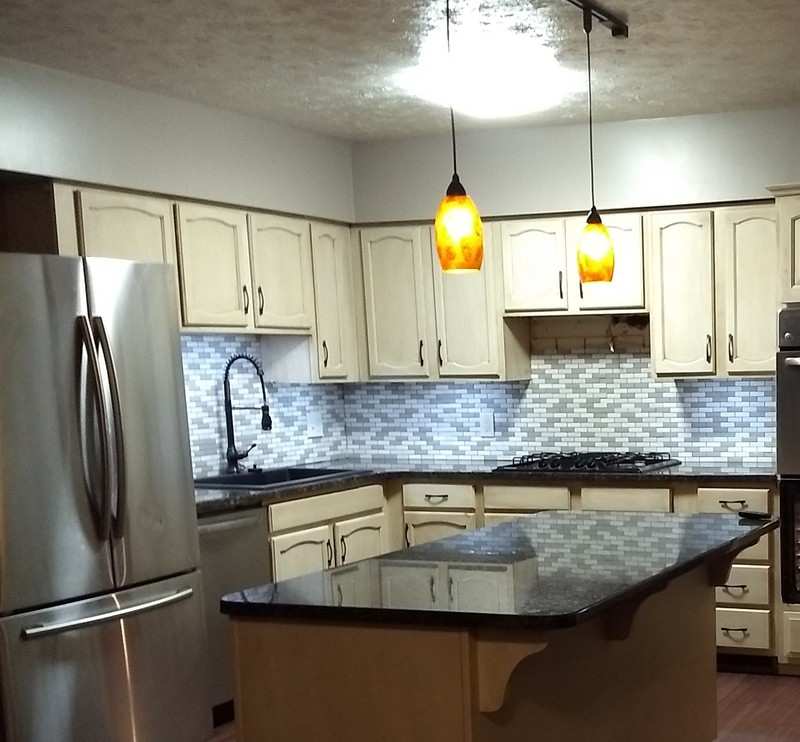
    @Account Closed hahaha. I know my market. I own 33 units. I'll be okay, but thanks for your concern ;p p.s. here's a picture from one of my duplexes. To be fair the property was 112k so the unit was 56k.

    The one above was just under 30k

Join the conversationCreate a free account to reply, vote on answers and follow this thread.