@Chris Martin I love your comment about the LP being too low if the DOM is too low. The one wrinkle to put into the equation in the world of real estate is the impact by third parties on the transaction--particularly the appraiser and the lender. The market values are now much higher than the appraised values. If the buyer is unwilling to cover the difference above the appraised value, there's a risk in having a price that is so high that it results in longer DOM. I know this position that I'm taking can be easily refuted with the logic of economics, eventual adjustments by appraisers to match with the market, etc. It has always been interesting to me that the REI is not a pure supply-demand space because of the influence of the third parties. But, to your original point, I agree that low DOM can very often mean the price is too low (if the Sale Price = the List Price). Thoughts?
10 years ago, we had similar discussions. Only back then nothing would sell. Market time was Years on Market, not Days on Market. Here is one BP topic, simply called comps, and my post (copied below) that summed up the state of the market back then:
Appraisals are not an exact predictor of future sales prices. They are a one day snapshot of someone's (trained) opinion of value. Then you have issues like this, directly from an current appraisal that basically says there is no way to value the property: "The problem with the MC data presentation is that the subject's submarket is so small, wild fluctuations can appear from period to period... No truly like kind sales were available from within the past 12 months... This market has effectively collapsed over the previous 12 to 18 months... price for fixerupper properties have dropped to lows not seen in a generation"
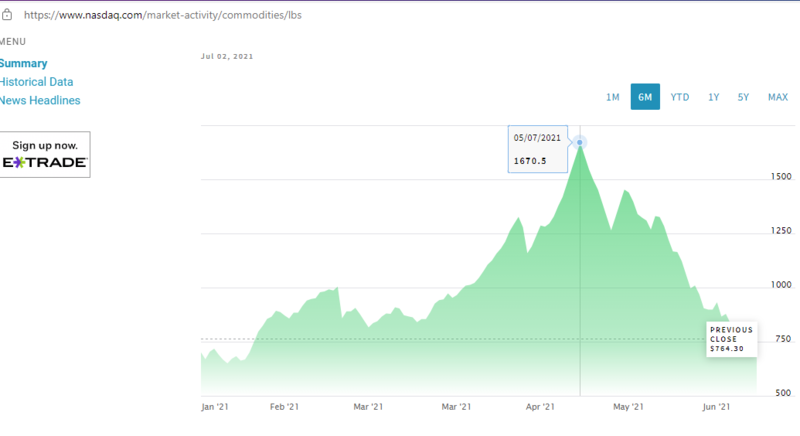
I still have the property associated with that appraisal. Back then, I knew I overpaid for it... but $19,350 for a single family house in Garner seems like an Ok deal now. Back then, which was only 10 years ago, prices had "dropped to lows not seen in a generation" and literally appraisers were having difficulty even identifying "the market." Today, we are at unprecedented levels. So, what is the "market price" when we have volatility like we see now? Lumber is... $764 per thousand board feet today, down from $1,670 about seven weeks ago. And that high price was 133% higher than the start of the year.
A commodity's "market price" changes daily. Real estate price volatility is not quite as bad, but how does one value this incredibly uniform townhouse neighborhood in Garner?
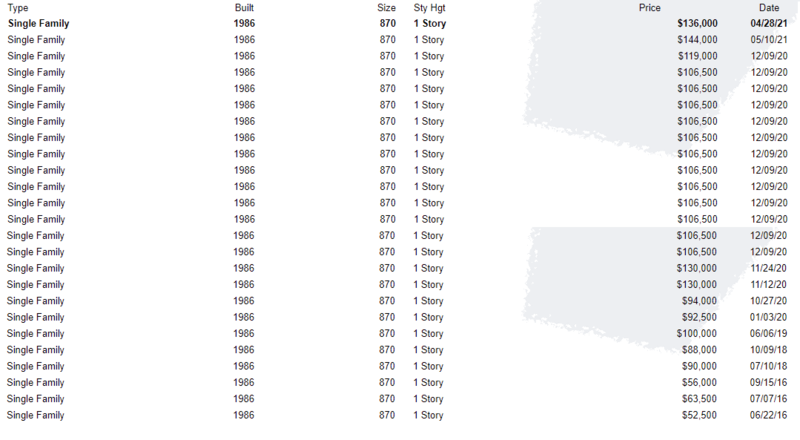
The interesting thing? Prices of properties there were about $105K in 2005, then about $30K in 2011, and now are back well above $100K.
Are real estate prices too high or too low? Regardless of the answer, it's subject to change over time.