Regulating Airbnbs in AZ

Regulating Airbnbs in AZ

Real Estate Agent · Scottsdale, AZ · Member since 2018 · 46 posts · 22 votes

https://www.azcentral.com/story/news/local/scottsdale/2023/0...

AI Summary Here for those who don't want to read the article: 


Local governments in Arizona are advocating for increased regulation of the short-term rental industry through proposed legislative changes to address concerns about housing shortages and community impacts. The proposed regulations, backed by the League of Arizona Cities and Towns, aim to grant local officials more control over short-term rentals and address the following key points:

1. **Occupancy Limits:** Local officials would have the authority to set limits on the percentage of housing stock that can be used for short-term rentals. For example, a city may restrict such rentals to occupy no more than 10% of available houses.

2. **Neighborhood Density:** Similar to occupancy limits, regulations could be imposed on a neighborhood level to prevent entire communities from becoming dominated by short-term rentals.

3. **Spacing Requirements:** Cities could require short-term rentals to maintain a minimum distance from each other, preventing the clustering of rental properties and maintaining a balance in neighborhoods.

These proposed changes are in response to concerns arising from a 2016 state law that limited the ability of local governments to regulate short-term rentals. The rapid growth of such rentals has been linked to housing shortages and various community issues. However, in 2022, Arizona lawmakers partially restored some regulatory powers to local authorities by allowing them to establish licensing rules and suspend properties for rule violations.

Short-term rentals now make up a significant portion of vacant homes in some areas, affecting housing availability and pricing. Local leaders argue that these issues impact their communities, reduce workforce availability, and impact state-shared revenue. They emphasize the importance of preserving neighborhoods and addressing the challenges posed by the short-term rental industry.

Overall, these proposed changes reflect the ongoing debate between local and state authorities, as well as the short-term rental industry's impact on housing markets and communities in Arizona.
0Reply
35 views

2 Replies

Jump to latestLatest
  • Investor · Scottsdale Austin Tuktoyaktuk · Member since 2021 · 4k+ posts · 4k+ votes
    3y
    Quote from @Mick Hofmann:

    https://www.azcentral.com/story/news/local/scottsdale/2023/0...

    Local governments in Arizona are advocating for increased regulation of the short-term rental industry through proposed legislative changes to address concerns about housing shortages and community impacts. The proposed regulations, backed by the League of Arizona Cities and Towns, aim to grant local officials more control over short-term rentals

    Good information.

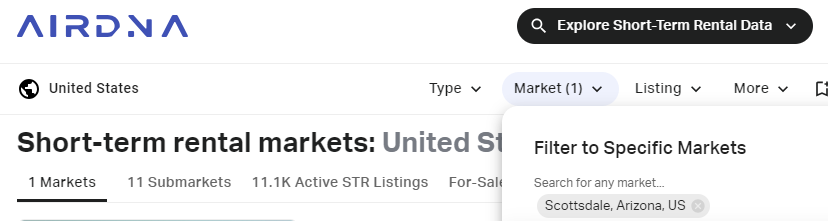
    NOTE: It appears AIRDNA has revamped their webiste and they now show 

    Phoenix Active      11,900 Sep 9, 2023 - no explanation given for the wild increase in their numbers
    Scottsdale Active  11,100 Sep 9, 2023- no explanation given for the wild increase in their numbers

    ******************************************************
    Previous website numbers as of Aug 29, 2023

    Here is what I've found from AirDNA.

    STRs Phoenix - A drop of about 586 from June 23 2023 to Aug 29 2023

    Phoenix Active 7,872 June 23, 2023 

    Phoenix Active 7,286 Aug 29, 2023


    STRs Scottsdale - A drop of about 568 from June 23 2023 to Aug 29 2023

    Scottsdale Active 7,671 June 23, 2023

    Scottsdale Active 7,103 Aug 29, 2023

  • Residential Real Estate Broker · Sedona, AZ · Member since 2017 · 754 posts · 504 votes
    3y
    Quote from @Mick Hofmann:

    https://www.azcentral.com/story/news/local/scottsdale/2023/0...

    AI Summary Here for those who don't want to read the article: 


    Local governments in Arizona are advocating for increased regulation of the short-term rental industry through proposed legislative changes to address concerns about housing shortages and community impacts. The proposed regulations, backed by the League of Arizona Cities and Towns, aim to grant local officials more control over short-term rentals and address the following key points:

    1. **Occupancy Limits:** Local officials would have the authority to set limits on the percentage of housing stock that can be used for short-term rentals. For example, a city may restrict such rentals to occupy no more than 10% of available houses.

    2. **Neighborhood Density:** Similar to occupancy limits, regulations could be imposed on a neighborhood level to prevent entire communities from becoming dominated by short-term rentals.

    3. **Spacing Requirements:** Cities could require short-term rentals to maintain a minimum distance from each other, preventing the clustering of rental properties and maintaining a balance in neighborhoods.

    These proposed changes are in response to concerns arising from a 2016 state law that limited the ability of local governments to regulate short-term rentals. The rapid growth of such rentals has been linked to housing shortages and various community issues. However, in 2022, Arizona lawmakers partially restored some regulatory powers to local authorities by allowing them to establish licensing rules and suspend properties for rule violations.

    Short-term rentals now make up a significant portion of vacant homes in some areas, affecting housing availability and pricing. Local leaders argue that these issues impact their communities, reduce workforce availability, and impact state-shared revenue. They emphasize the importance of preserving neighborhoods and addressing the challenges posed by the short-term rental industry.

    Overall, these proposed changes reflect the ongoing debate between local and state authorities, as well as the short-term rental industry's impact on housing markets and communities in Arizona.

    This article is a few years behind the times. Quite a few local governments have been moaning and groaning for quite some time- especially since beginning of 2022. We will see what happens.
    It's likely we will see statewide law changes that give local municipalities the option to opt into restrictions.
    My prediction, based on Hobbs campaign platform + ongoing speeches, as well as my interviewing quite a few AZ politicians... I think we will see a law with a set "cap" on max percentage of STR's. But again, nothing in the pipeline, yet. It's also likely STR's will be grandfathered in and see slow attrition back down to the cap percentage- rather than a fast "snap" to that number. This is all educated speculation- so don't hold me to it.
Join the conversationCreate a free account to reply, vote on answers and follow this thread.