Are We Looking at Worcester's Housing Issue All Wrong?
We constantly hear that housing in Worcester is becoming too expensive and that prices are climbing too fast. While the rapid shift is undoubtedly challenging for many residents, a fundamental question remains: Is housing in Worcester actually overpriced, or is the root problem tied to local wage growth and commercial investment?
To evaluate this, let’s look at MLS data from the past six months, focusing specifically on the 2–4 unit multifamily market. We’ll compare Worcester against Framingham, a nearby city with strong transit access to Boston and robust regional employment.
1. Multifamily Home Sales (Past 6 Months)
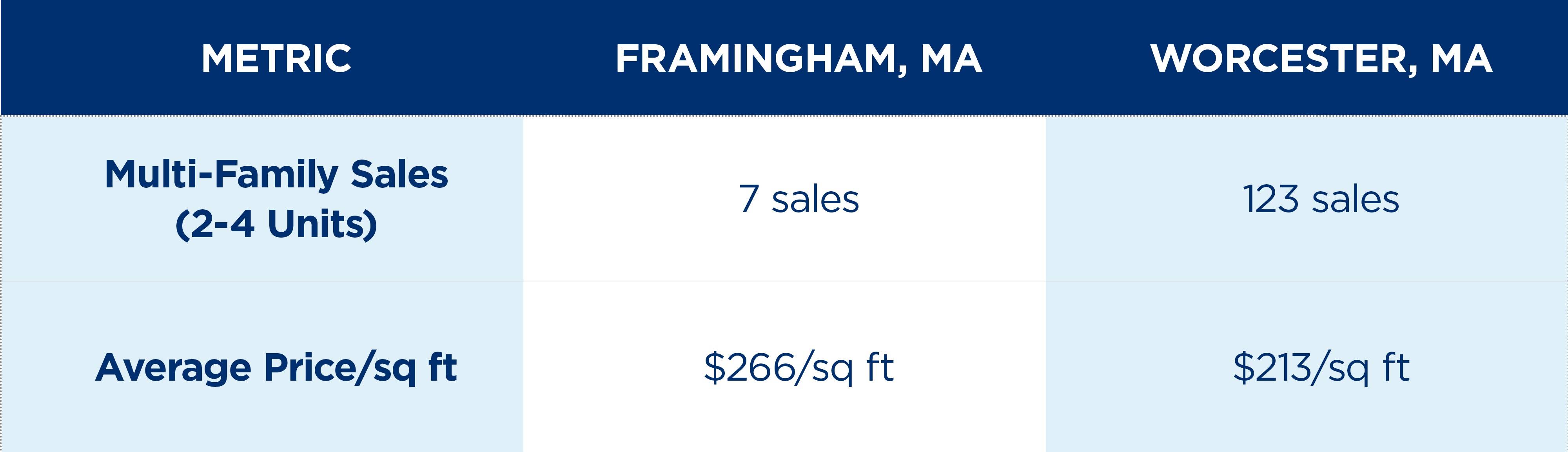
When comparing ownership opportunities in the small multifamily sector, Worcester offers a significantly lower cost per square foot despite having far more market activity.
2. Rental Market Affordability
The inventory of completed rentals tells a similar story. Lower-cost options and larger family-sized units remain noticeably more accessible in Worcester than in Framingham.

3. The Commercial Disconnect: Leasing Costs vs. Income
If real estate costs are demonstrably lower in Worcester, why does housing feel so unaffordable to local residents? The underlying challenge lies in job quality, municipal tax structures, and income disparity.

Although businesses in Worcester pay comparable commercial rent and face a higher split property tax rate relative to Framingham, local job opportunities offer significantly lower average pay. Consequently, Worcester residents have less purchasing power relative to fixed living expenses.
Conclusion
Housing in Worcester is technically less expensive than in nearby regional hubs. However, because commercial overhead remains high while high-paying corporate jobs lag behind, residents face a persistent affordability gap. Addressing Worcester's housing challenge will require more than just building units below replacement cost, it demands attracting higher-paying jobs and fostering an environment where local incomes can keep pace with regional market realities.