Investor · Sacramento, CA · Member since 2024 · 129 posts · 36 votes
2mo
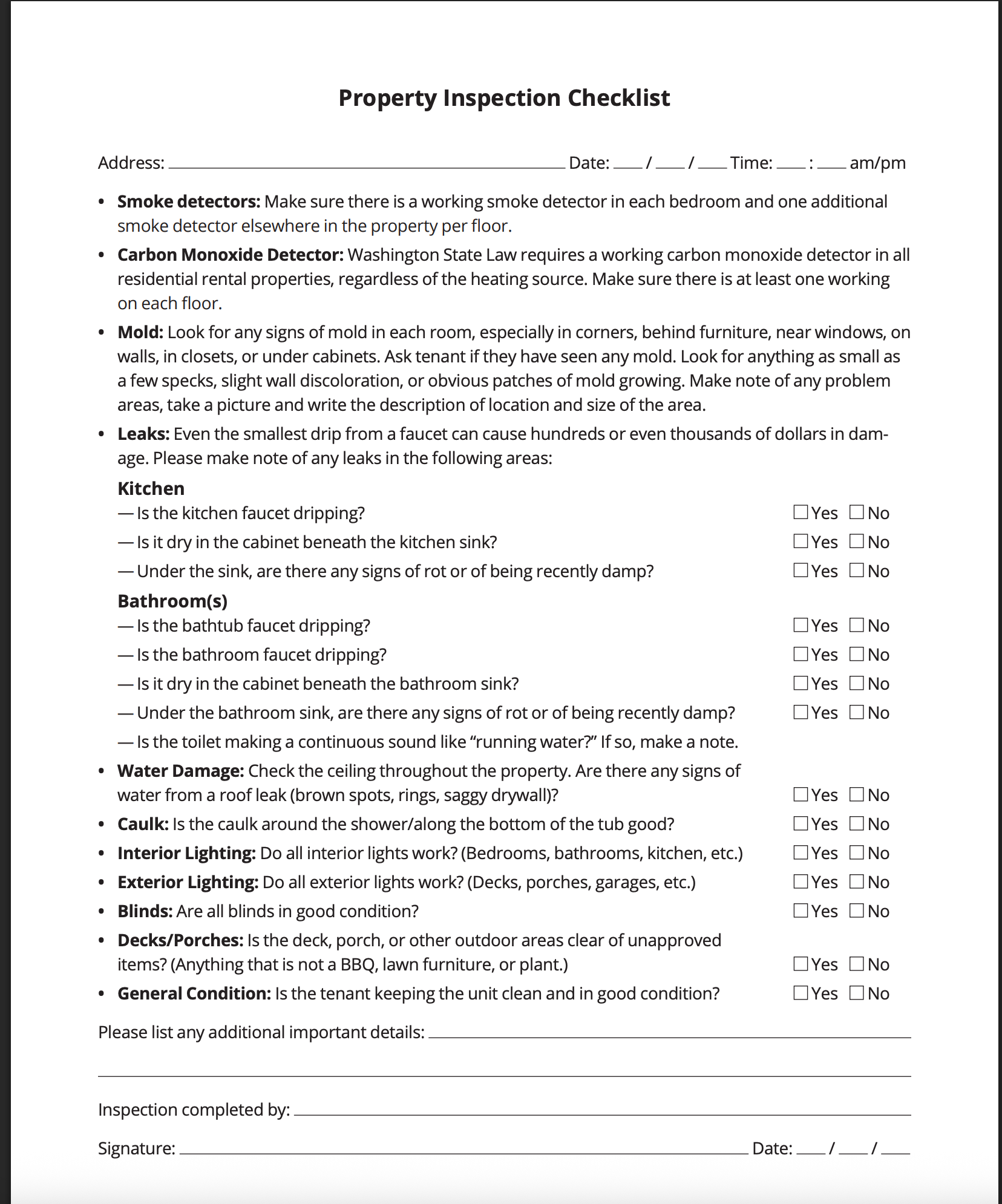
@Tamara Kilgore — here's the framework I use for inspections. Forget generic checklists — the point of inspection documentation is creating a defensible record, not checking boxes.
Move-in / Move-out (most critical):
Room-by-room photo walkthrough with timestamps (phone camera metadata is your friend)
Document every wall, floor, appliance, fixture, window, and door
Note existing damage in writing on the checklist — "normal wear" is not a note. "3-inch scuff on east wall behind door" is a note.
Tenant signs and dates the checklist. You both keep a copy.
Do the exact same walkthrough at move-out, same order, same rooms.
Why this matters: Most security deposit disputes come down to "was this here when I moved in?" If you can pull up timestamped photos from move-in day and compare them to move-out photos, the conversation is over. Without that, you're in a he-said-she-said that you'll probably lose.
Annual inspections:
30 days written notice (check your state — MO requires "reasonable notice," typically 24 hours, but I'd give more)
Focus on safety items: smoke detectors, CO detectors, water heater, HVAC filters, exterior drainage, visible mold, pest evidence
Document deferred maintenance before it becomes an emergency — a small roof leak in an inspection is a $500 fix. The same leak discovered when the tenant calls about water damage is a $5,000 fix.
Photo everything, even things that look fine. You're building a timeline.
The tool side: I track all of this in LeaseBase — move-in/move-out documentation, photo attachments, inspection schedules, and the full paper trail. Free to use if you want a system instead of a folder of PDFs. But the process matters more than the tool — start with the room-by-room photo walkthrough and the signed checklist, and you're ahead of 90% of landlords.
@Tamara Kilgore — here's the framework I use for inspections. Forget generic checklists — the point of inspection documentation is creating a defensible record, not checking boxes.
Move-in / Move-out (most critical):
Room-by-room photo walkthrough with timestamps (phone camera metadata is your friend)
Document every wall, floor, appliance, fixture, window, and door
Note existing damage in writing on the checklist — "normal wear" is not a note. "3-inch scuff on east wall behind door" is a note.
Tenant signs and dates the checklist. You both keep a copy.
Do the exact same walkthrough at move-out, same order, same rooms.
Why this matters: Most security deposit disputes come down to "was this here when I moved in?" If you can pull up timestamped photos from move-in day and compare them to move-out photos, the conversation is over. Without that, you're in a he-said-she-said that you'll probably lose.
Annual inspections:
30 days written notice (check your state — MO requires "reasonable notice," typically 24 hours, but I'd give more)
Focus on safety items: smoke detectors, CO detectors, water heater, HVAC filters, exterior drainage, visible mold, pest evidence
Document deferred maintenance before it becomes an emergency — a small roof leak in an inspection is a $500 fix. The same leak discovered when the tenant calls about water damage is a $5,000 fix.
Photo everything, even things that look fine. You're building a timeline.
The tool side: I track all of this in LeaseBase — move-in/move-out documentation, photo attachments, inspection schedules, and the full paper trail. Free to use if you want a system instead of a folder of PDFs. But the process matters more than the tool — start with the room-by-room photo walkthrough and the signed checklist, and you're ahead of 90% of landlords.
Thank you for the highly valuable insights and protocols. I am using RentRedi's PM software, so I'll check my software for a similar component.
Property Manager · Phoenix, AZ · Member since 2024 · 534 posts · 205 votes
2mo
One thing I'd add is to keep the same inspection form every year. It makes it much easier to compare changes over time instead of starting from scratch each visit. We also use a 360° camera during our inspections. It lets us capture every room from a single spot, making it much easier to compare conditions over time and giving us a more complete record than standard photos.