July Jobs Missed Big. Here Is What a Cooling Labor Market Means for Rates
Week of August 3 recap! The headline from July's jobs report got a lot of attention... the economy shed jobs instead of adding them. The full picture underneath that number matters more than the headline, and for real estate investors it points in a clear direction.

The July Jobs Report
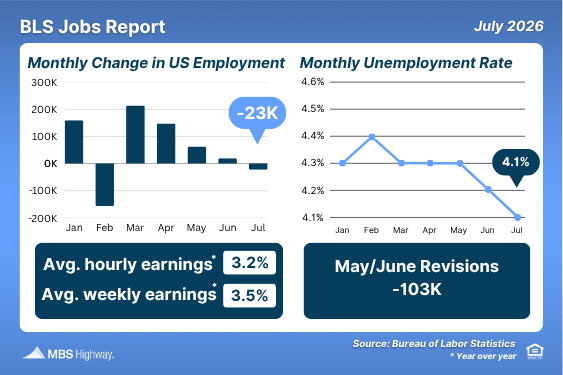
The economy shed 23,000 jobs in July against expectations for an 80,000 gain. That alone is a significant miss. But the revisions to May and June made it worse. Those months were revised down by a combined 103,000. The labor market heading into July was already softer than anyone reported at the time.
The unemployment rate ticked down, and that sounds fine until you look at why. The labor force shrank by 264,000 people in July. When people stop looking for work, they stop being counted as unemployed. Since May, the labor force has dropped by close to one million. That is not improvement. It is people giving up. Full-time employment fell while part-time rose. Wage growth came in soft.
Private Sector Confirmed the Trend
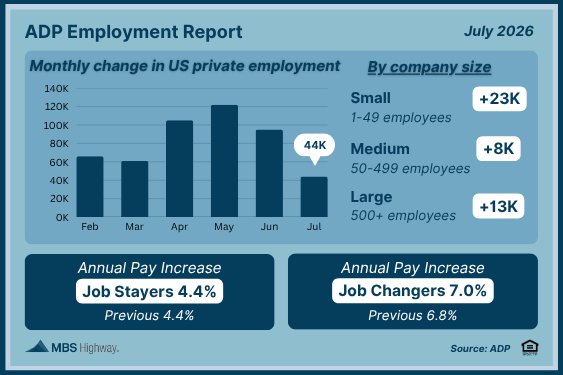
ADP showed private employers adding just 44,000 jobs in July, well below expectations, with hiring narrow and concentrated in a few sectors. Job openings continued to fall. Continuing claims held elevated, meaning workers who lose jobs are taking longer to find new ones. The ISM Services employment component fell into contraction. ZipRecruiter called the market subdued. These data points are not conflicting, they are all saying the same thing.
What It Means for the Fed and Rates
Some Fed officials had cited labor market strength as a reason to hold rates higher. This report removes that argument entirely. The next major input before the Fed's September 15-16 meeting is the August jobs report, due in early September. A second consecutive weak reading makes a September cut materially more likely. For real estate investors using leverage, the rate trajectory just got friendlier.
What to Watch This Week
Tuesday brings Existing Home Sales. Wednesday is CPI which is the most important release of the week. A soft inflation print alongside a softening labor market makes the case for a September cut very hard to argue against. PPI and jobless claims follow Thursday. Retail Sales closes things out Friday.
