Housing Sales: How Low Will They Go?

Housing Sales: How Low Will They Go?

Investor · Fort Lauderdale, FL · Member since 2013 · 919 posts · 607 votes

The headline is rough: Pending home sales just fell to the second-lowest level ever recorded.  The West hit a new record low, while the South is sitting just above its record low.  July contract signings fell another 2.3% and are now about 30% below 2019 levels.

So. . .how low can will it go?

Yet despite the dismal sales numbers, prices remain stubbornly high. . .and buyers remain stubbornly sidelined.  That's a dangerous combination.  Add mortgage rates near 7% and the inevitable question is what happens next?

More price reductions.
More days on market.
More builders offering incentives.
More accidental landlords.

My guess:  if this market was going to crash it would have done so already.  Instead of a downside blowout, I see a long, slow grind.  Whatever is going to happen will do so in slow motion.

1Reply
415 views

Most Popular Reply

Investor · Milwaukee - Mequon, WI · Member since 2010 · 5k+ posts · 7k+ votes
1mo

We basically have a real estate stagflation. I happen to be in one of the last 6 sellers markets in the US (per Redfin, Aug 2026) but it does not feel very different than the last 3 years: 30% lower transaction volume, 6% higher prices. 

The market is stagnating and prices inflate.

Fundamentally, when I look at supply (deaths, new construction, moving out of area) and demand (household formations, immigration, demographic trends) - we remain largely in the same imbalance we have been for the last 10 years: more demand than supply.

Currently the market is suppressed because of rates, low consumer confidence and upcoming midterm election uncertainty. We always see that before big elections. People wait for the outcome, so they have certainty what will happen next, even though it does not really change much. 

So my near term guess is sluggish market between now and Thanksgiving. By the end of the midterms we will have winter. Rates will go to over 7%. Spring market will be nuts, inflation remain high and Milwaukee real estate prices push up 6% to 7%.

See this reply in the discussion

10 Replies

Jump to latestLatest
  • MD/DC · Member since 2024 · 1k+ posts · 1k+ votes
    1mo

    Welp trees don't grow to the sky and if you are in FL there are a whole host of other issues likely in play also. I agree it is probably time for a slow down but the good news is historically over the long term RE continues to go up like the stock market. 

  • Chris SeveneyBusiness Member
    Moderator
    Investor · VA · Member since 2015 · 21k+ posts · 19k+ votes
    1mo

    It will be a longer slower grind with some markets having prices decline and some flatlining or having slight increases 

    7e investments53 Reviews
  • Eric FernwoodBusiness Member
    Realtor · Las Vegas, NV · Member since 2014 · 996 posts · 1k+ votes
    1mo

    Hello @Michael Carbonare,

    I agree that a market crash is unlikely. High prices despite high interest rates are a strong sign of market strength.

    Another factor is that national statistics do not reflect individual markets. Some markets have months of excess inventory, while others have limited supply. You can also have excess inventory in one price range and a shortage in another.

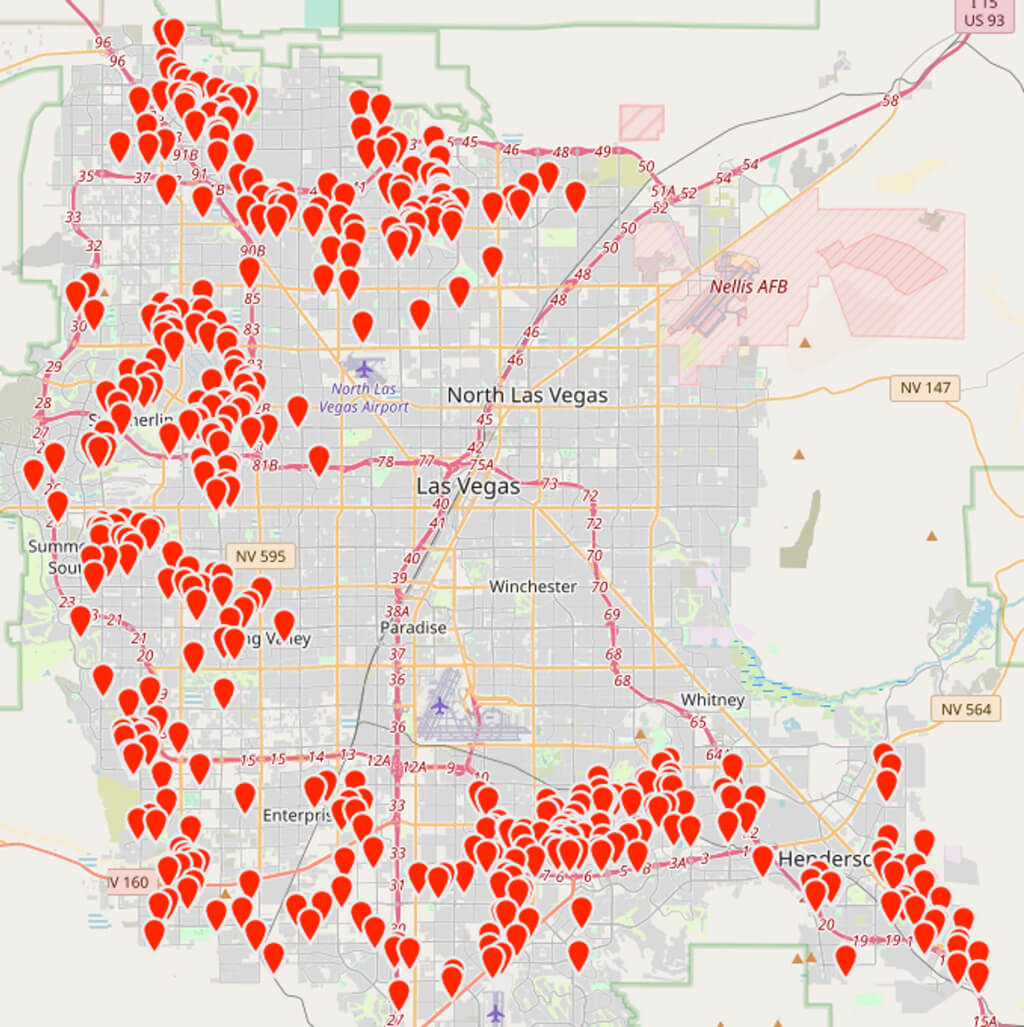
    The best indicators are inventory and days on market for the specific price range you are targeting. I live in Las Vegas, and we publish monthly statistics showing a rolling 13-month trend for the property segment we target, which can loosely be described as follows:
    • Type: Single-family
    • Configuration: 3+ bedrooms, 2+ baths, 2+ car garages, 1,100 to 2,400 SF, one or two stories, lot size 3,000 SF to 6,000 SF.
    • Projected rent range: $1,900/Mo to $2,400/Mo.
    • Priced between $350,000 and $450,000.
    • Location: See the map below for the general areas our target tenant segment chooses to live.

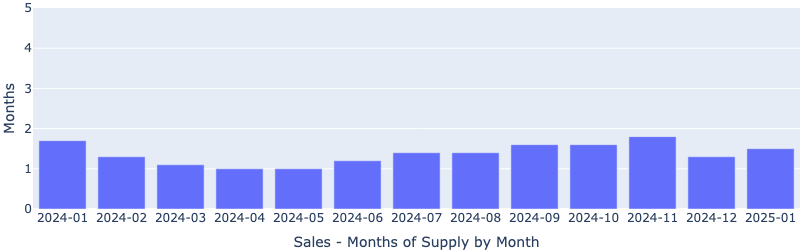
    Sales – Months of Supply (Inventory)

    Six months of supply is considered “balanced.” Inventory is currently about two months, which is a seller’s market. As further evidence, well-priced investment properties typically stay on the market for only a few days.
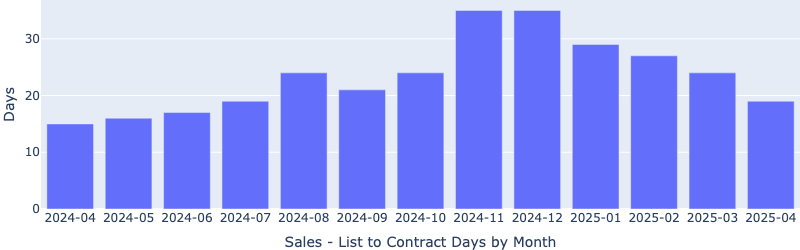
    Sales – List to Contract Days by Month

    Median days on market remained under 30 days throughout 2026. YoY is down ~15%. This indicates a persistent high-demand environment.
    Conclusion

    National statistics are often sound bites designed to attract eyeballs. They do not necessarily apply to any specific market. Even within a local market, you need to stratify the data by property type, location, and price range so you are not mixing apples and oranges.

    FERNWOOD Team, KW VIP Realty520 Reviews
  • Investor · Fort Lauderdale, FL · Member since 2013 · 919 posts · 607 votes
    1mo

    Great breakdown, Eric.  Thank you for sharing that.

  • Investor · Las Vegas, NV · Member since 2013 · 8k+ posts · 10k+ votes
    1mo

    I agree it will “seem slow”. At lest to all the people sitting out. But the “smart money” will start buying months before the new money.  So in 6-12-18-even 24 months the people sitting on the sidelines will pay the same or a little more than they could have paid today. And all it cost them was either rent paid or rental income lost.  They won’t know they lost by sitting out. Just like all the people who sat out from 2015-2021. Heck, most of them are probably still sitting out.  

    If interest rates don’t go down you’ll have less and less seller. 80-90%? Of all sellers are buyers within a couple months of selling? So where’s the selling inventory come from? Someone with a 3-6% interest rate that wants to pay $500/mo more to trade sideways or $1,200/mo more for a 10% nicer home?

    I don’t care how low transactions go. If I’m buying it gives me more power. If I’m selling I’m also buying/exchanging. So it’s either in my favor or a wash.  I understand it’s bd for realtors/title companies/governments that want to tax everything. But we already know the average realtor sells one house a year give or take. Does it matter if they sell one every two years instead? We could easily lose half the title companies and not notice. I just don’t see the downside.  But I sure am glad for every “buyer” sitting on the sidelines. 

  • Investor · Milwaukee - Mequon, WI · Member since 2010 · 5k+ posts · 7k+ votes
    1mo

    We basically have a real estate stagflation. I happen to be in one of the last 6 sellers markets in the US (per Redfin, Aug 2026) but it does not feel very different than the last 3 years: 30% lower transaction volume, 6% higher prices. 

    The market is stagnating and prices inflate.

    Fundamentally, when I look at supply (deaths, new construction, moving out of area) and demand (household formations, immigration, demographic trends) - we remain largely in the same imbalance we have been for the last 10 years: more demand than supply.

    Currently the market is suppressed because of rates, low consumer confidence and upcoming midterm election uncertainty. We always see that before big elections. People wait for the outcome, so they have certainty what will happen next, even though it does not really change much. 

    So my near term guess is sluggish market between now and Thanksgiving. By the end of the midterms we will have winter. Rates will go to over 7%. Spring market will be nuts, inflation remain high and Milwaukee real estate prices push up 6% to 7%.

  • V.G JasonPro Member
    Investor · Member since 2022 · 3k+ posts · 3k+ votes
    1mo

    The housing market represents the "I" economy; great areas with locked in housing build are still going up strong or at minimum keeping up pace.

    The above average and below areas with locked in housing build, possible increases, are a falling knife.

    Basically, the folks that can pay for the top 5% of housing in the area--those are going up. Bottom 95% going down, and searching for a bid.

    How long can it go--price discovery won't bottom until monthly PITI aligns with local purchasing power in primary markets. We're in the late innings of speculative washout, but price discovery at 7% debt takes multiple years, not quarters. I think it started top of 2025, and 2024 was the consolidation year.

  • Real Estate Broker · Northeast PA · Member since 2017 · 2k+ posts · 2k+ votes
    1mo

    IDK, to me you can't look at a 'national' snapshot of real estate.  Look at the boom/bust markets, like Fl, AZ, NV,  other 'sand states', and covid booms like WA, TX, CO.  They go through major cycles every 15 to 20 years, with minor corrections every 6--10 years.

    The mid-west and northeast are staying steady, with some higher appreciation happening in upper mid-west all the way to upstate NY.

    Our country is a segmented market, and after the dust settles, I do feel it will be a slow grind-- until it's not.  

    The only wealth protection I see is owning appreciating assets/income producing assets.  Without them, you will NEVER be able to keep up with inflation with just a W-2, or multiple side-hustles.

    Most folks say 'real estate will continue to go up, like the stock market'.  That's only partially true--it depends on what it's measured by.  

    In US Dollars, real estate and the S&P go 'up' mostly because the dollar is CONSTANTLY BEING DEVALUED BY PRINTING notes, bills, and treasuries.  And that printing will NEVER stop--it can't--not in our debt-based system.

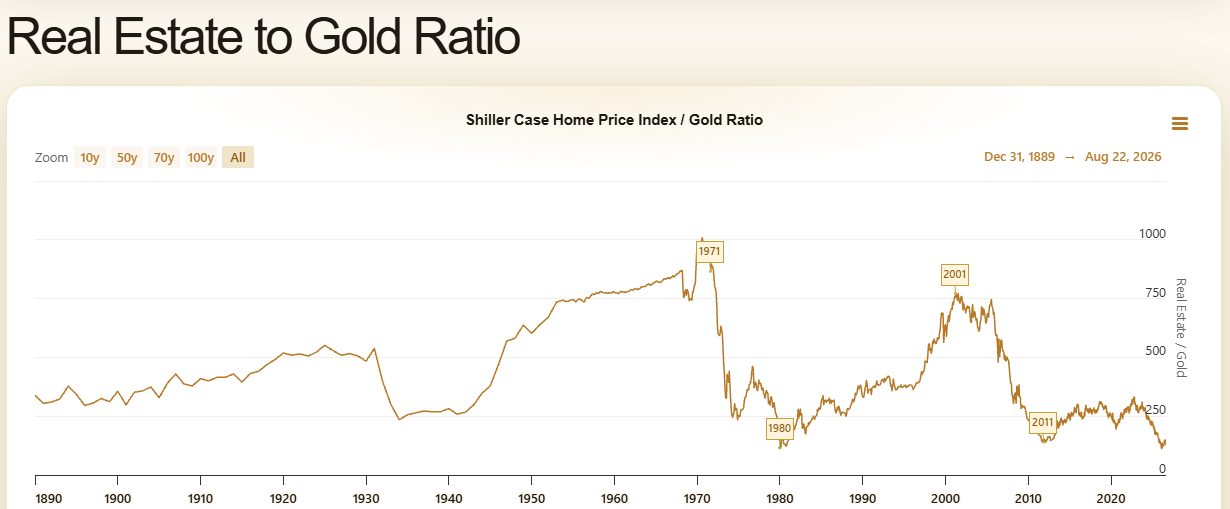
    Measure the same items in precious metals, like gold, and see a very different scenario.  In 2017 average price of house was approx $300k, and took approx 238 oz of gold to purchase.  In 2026 house average approx $425, and gold purchase is about 105 ozs.

    It's ok, don't stress--just learn the rules of the game, then play to win, and succeed.

  • Member since 2024 · 4 posts · 1 vote
    1mo

    bond yields are rising with high interest rates and debt at 40 Trillion dollars, Yeah, its wonderful time to buy.

  • Investor · Milwaukee - Mequon, WI · Member since 2010 · 5k+ posts · 7k+ votes
    1mo

    So there are two components to the market: real estate prices and real estate transaction volume. Inflation and the ongoing errosion of the dollars purchasing power shows clearly when you price real estate in gold. I would argue to ignore the last 18 months, because gold has been hyped, so we are at about 250-ish.

    Transaction volume is down, because people just don't sell. And that is the reason why real estate prices tend to be downward sticky, sellers just don't sell and rather wait than lowering their price.
Join the conversationCreate a free account to reply, vote on answers and follow this thread.