Feedback Needed: AED 1.65B Luxury Waterfront Hospitality Concept for Palm Jebel Ali,

Feedback Needed: AED 1.65B Luxury Waterfront Hospitality Concept for Palm Jebel Ali,

Global / International · Member since 2026 · 1 post · 0 votes

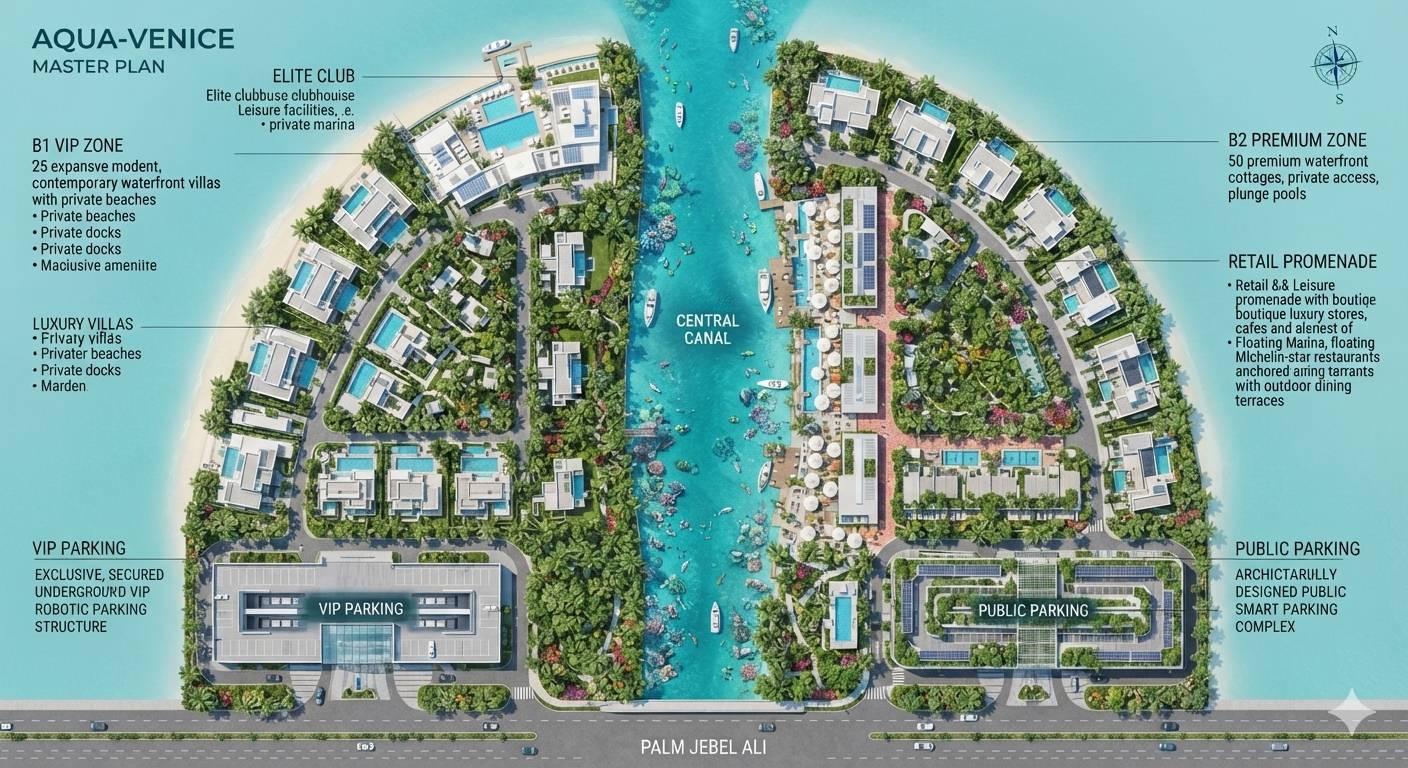
Hello BiggerPockets Community,As a Real Estate Master Planner, I have developed and finalized a comprehensive financial feasibility and capital structure for a premium hospitality development concept on Palm Jebel Ali, Dubai, named AQUA-VENICE.This is a pure "Concept & Financial Model" intended for a Joint Venture or outright Concept Sale, where the incoming developer/institutional fund will acquire the land and execute the construction.Here is the high-level financial framework we have optimized based on current Dubai luxury benchmarks:Initial CAPEX: AED 1,650,000,000 (Includes land acquisition, DLD fees, ultra-VIP villas, overwater cottages, and robotic parking structures).Projected Annual Gross Revenue: AED 280,080,000 (Assuming a stabilized occupancy structure).Annual OPEX: AED 44,400,000 (Human capital, DEWA, facility management).Projected Annual Net Profit: AED 235,680,000 (Pure retained earnings).Target Investment Payback Period: 7.0 Years (84 Months).Revenue Vectors:Ultra-VIP Enclave: 25 Waterfront Villas (AED 225k/day) & Bio-Filtered Marine Canal Experience (AED 150k/day).Premium Integrated Town: 50 Overwater Cottages (AED 175k/day), Luxury Fashion & Michelin Dining Promenade (AED 168k/day), and Automated Robotic Parking Hubs (AED 60k/day).I am seeking validation and experienced feedback from global institutional investors and developers on this platform:Does a 7-year capital recovery timeline for a mega-project of this scale align with your current international luxury benchmarks?Given the seasonal shifts in Dubai, what stress-testing factors or off-season occupancy rates would you recommend factoring into the OPEX/Revenue ratio?What is the best strategy to protect this intellectual property (IP) when pitching directly to major master developers like Nakheel or Emaar?Looking forward to your professional insights and technical feedback.Best Regards,Fazul RehmanGlobal Business Strategist & Real Estate Master Planner
0Reply
140 views

1 Reply

Jump to latestLatest
  • Investor · Pacific Northwest · Member since 2026 · 511 posts · 286 votes
    3w

    Fazul — I think the concept is interesting.

    But if I were sitting across the table from you, I wouldn’t spend much time on the 7-year payback yet.

    I’d go straight at the model.

    You’re showing roughly AED 280M in revenue and AED 44M in OPEX, which leaves about AED 236M in net profit.

    That’s an enormous margin for something this operationally heavy.

    Hospitality, villas, cottages, F&B, retail, marine amenities, parking, staffing, maintenance, marketing, replacement reserves, management fees, pre-opening costs, insurance, technology, ongoing CAPEX — all of that starts eating into the number pretty quickly.

    So before I worried about whether seven years is attractive, I’d want to know whether seven years is real.

    I’d beat the model up.

    What happens if occupancy comes in at 70%?

    What happens at 60%?

    What if ADR is 15% lower than planned?

    What if construction runs 15% over?

    What if opening slips 18 months?

    What if retail takes longer to lease?

    What if stabilization takes three years instead of happening on schedule?

    And then I’d stack those problems together, because that’s usually how development works. You don’t get one clean problem at a time.

    The Dubai hospitality market is obviously strong.

    But Palm Jebel Ali is not some empty canvas where you’ll be the only luxury product in the room. There is a ton of capital and a ton of hospitality supply coming into that ecosystem.

    Which means the idea has to survive competition, not just look good in isolation.

    The other thing I’d think hard about is what you’re actually selling.

    If you don’t control the land, development rights, approvals, or a relationship with the master developer, then the buyer is really acquiring the concept, the planning work, the financial model, and the thinking behind it.

    That can still be very valuable.

    But now the bar gets higher.

    Nakheel, Emaar, or an institutional fund already has architects, analysts, operators, consultants, and capital.

    So the pitch cannot just be:

    “Here is a great idea.”

    It has to be:

    “Here is something you didn’t already see, and here is why the economics still work when you try to kill it.”

    That’s where I’d spend my energy.

    On the IP side, I’d also be careful about trying to protect the idea itself.

    You can protect the actual work — drawings, plans, models, documents, financial materials, architectural expression, branding.

    But the broad concept is much harder to own.

    So I’d protect the materials, control the data room, watermark everything, disclose in stages, use NDAs where they actually make sense, and make sure any eventual transaction clearly defines what is being licensed or assigned.

    But the real moat cannot be “nobody can copy this.”

    The moat has to be that your work is so developed, so specific, and so economically credible that copying the headline idea doesn’t get somebody anywhere close to the actual project.

    If you want to really get into it, send me the assumptions behind the AED 280M revenue and AED 44M OPEX.

    That’s the part I’d want to tear apart.

Join the conversationCreate a free account to reply, vote on answers and follow this thread.