Austin Market Report - August 2026
August reinforced the basic shape of the Austin market right now: activity is holding up, inventory is tightening, and prices remain soft.
Across the 5-county metro, closed sales increased 0.8% year over year to 2,704, while pending sales rose 3.1%. Prices were softer, but inventory also tightened.

Pricing remains the weak spot. Average sold price declined 2.9% year over year to $564,422, while median sold price fell 5.8% to $414,136. Price per square foot was also down.
Some of the decline from June is normal seasonality. Austin prices typically peak in late spring or early summer and then soften into the fall. Still, the year-over-year numbers make it hard to argue that there is much upward pricing pressure right now. And as always, the metro median is heavily influenced by sales mix, so that 5.8% decline should not be read as a uniform drop across every neighborhood and property type.

The more interesting piece is that softer pricing isn't being accompanied by worsening inventory.
New listings declined 3.7% from last August, pending sales were up, and months of inventory fell from 5.3 to 4.9 months. That still puts Austin in roughly balanced-market territory, with buyers having meaningful choice but without an obvious oversupply. Withdrawn and expired listings also fell 15.1%. So while buyers still have plenty of choice, inventory is no longer simply building month after month, and fewer sellers appear to be throwing in the towel.
My read is that Austin is still working through its post-pandemic reset. Annual closed sales remain below pre-pandemic levels, but the data doesn't look like a market entering another major leg down either. Sales are holding up year over year, inventory has tightened some, and the market is behaving much more normally than it did during either the 2021 boom or the correction that followed.

Mortgage rates are still the obvious constraint. They've moved back toward 7% in September, which continues to put pressure on affordability and limits how much room prices have to move higher.
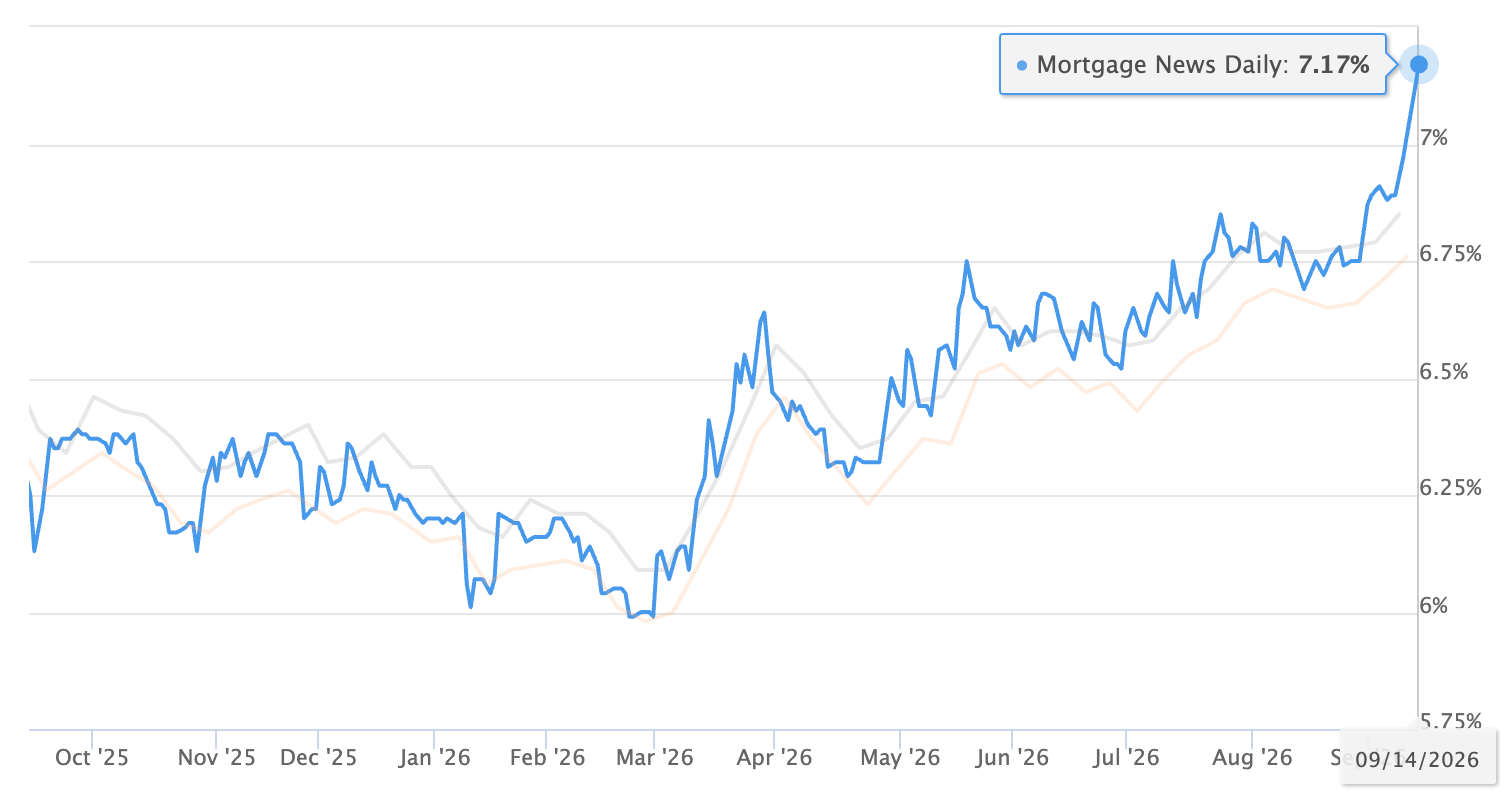
For buyers, this is still a market where patience and negotiation can pay, particularly on listings that have been sitting. For sellers, spring comps are increasingly stale. The homes moving now are the ones priced to the current market.
Overall, I don't think the data supports either extreme narrative right now. Austin isn't suddenly rebounding, but it also doesn't look like demand is disappearing or inventory is spiraling higher.
If you're looking at a specific Austin-area property, neighborhood, or investment, I'm always happy to help you think through the numbers and strategy.