The Fed Held. Two Members Wanted a Hike and I Think That Matters
The Fed paused this week and inflation landed right where everyone expected, but a few details under the headlines matter more for investors than the headlines themselves.
The Fed Held, With Two Votes for a Hike
The Fed kept the Fed Funds Rate at 3.75% to 4%, following September's quarter-point hike. A hold was the consensus call, so the decision itself wasn't news. The vote was. Cleveland Fed President Beth Hammack and Governor Lisa Cook both dissented in favor of another quarter-point increase. Two dissents toward tighter policy is a pretty clear signal that the hiking debate is still alive inside the Fed, even if the market treats this pause as the finish line.
Inflation Was In Line, and the Underlying Trend Looks Better
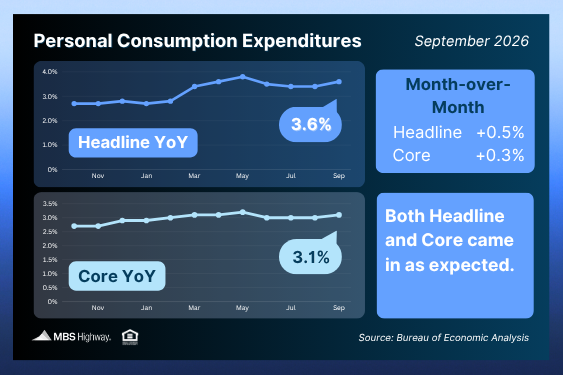
September PCE came in as expected. Headline rose 0.5% for the month and 3.6% for the year, while core rose 0.3% for the month and 3.1% for the year. Both are still well above the 2% target. The more encouraging read came from the Dallas Fed's Trimmed Mean, which throws out the most extreme price moves and was running at 2.3% over the past twelve months. That suggests the broad base of prices is cooling more than the headline shows, with a handful of big movers doing a lot of the damage.
Why the New Home Price Drop Isn't What It Looks Like
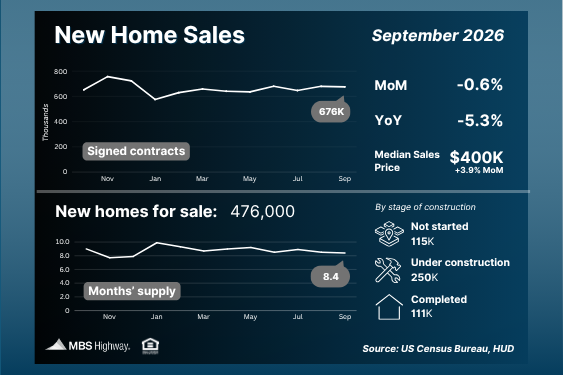
New home sales slipped 0.6% to a 676,000 annual pace, down 5.3% from a year ago but well ahead of the 650,000 expected. The median new home price fell 3.9% year over year, which generated some "prices are falling" headlines. The actual driver was mix. Sales between $300,000 and $400,000 rose noticeably from last year while sales above $600,000 fell, so the midpoint dropped without values dropping. Case-Shiller had national prices up 0.3% for the month and 2.1% for the year, accelerating from 1.9%, and FHFA showed conventional loan prices up 2.4% year over year. For investors that's a useful reminder that builders are leaning into the entry level price band, which is the same band a lot of rental demand competes in.
A Strong Economy Keeps the Pressure On
The first estimate of Q3 GDP came in at 3.4% annualized, up from 2.2%, on the back of consumer spending, government spending and business investment in things like AI data centers. Initial jobless claims stayed around 194,000 and continuing claims dipped to 1.7 million. Layoffs look limited, though claims miss people moving into gig work and people whose benefits simply ran out. This week is full of labor data: job openings Tuesday, private payrolls Wednesday, claims Thursday and the employment report Friday.
Where I'm Less Sure
The comfortable read is that the Fed is done and the next real move is a cut sometime next year. I'm not as sure. You have 3.4% growth, core inflation at 3.1% and two voting members already asking for a hike. On the other side, the Trimmed Mean at 2.3% is a solid argument that underlying inflation is closer to target than it looks, and that's probably what kept the majority on hold. I could see this going either way in December, and Friday's jobs report will carry a lot of weight.
Investor Takeaway
I wouldn't underwrite deals assuming lower rates are right around the corner. Run your numbers at today's rates, and treat any drop as upside rather than the plan. On the price side, don't read the falling new home median as softening values, because the broader indexes are still rising. If anything, builders shifting toward the $300,000 to $400,000 range tells you where they see the deepest demand, and that's worth paying attention to when you think about entry level rentals and resale competition.
