Single Family Permits Hit a 4 Year Low. Supply May Tighten Again
Contract signings just hit a record low for the second straight month, but the bigger story for investors this week might be what builders are doing about it.
Contracts Hit Another Record Low
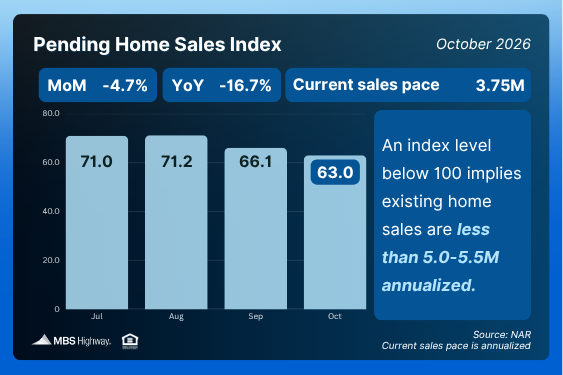
Pending home sales fell 4.7% in October and are down 16.7% from a year ago, with all four regions down on both a monthly and annual basis. That's the second straight month of record low contract signings, and NAR's Lawrence Yun expects a sluggish fourth quarter, with existing home sales possibly falling to their lowest annual level since the mid-1990s. Demand is clearly on hold, but last week's data showed inventory up and prices basically flat, so sellers aren't being forced to cut.
Permits Are the Number to Watch
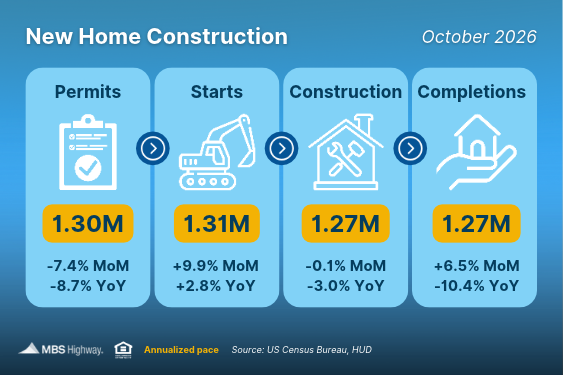
Housing starts beat expectations, rising 9.9% to a 1.31 million annual pace. Permits are the forward looking number though, and they fell 7.4% to 1.3 million, with single-family permits down 8.7% to their lowest level in nearly four years. The NAHB Housing Market Index fell four points to 25 in November, the weakest reading in 14 years, with builders citing elevated rates, labor shortages, hesitant buyers and rising energy and material costs. Permits take months to become finished homes, so this won't hit inventory right away, but it sets up a thinner pipeline of new supply right when the sidelined buyers are likely to come back.
The Fed Still Sounds Hawkish
The October minutes said "almost all participants" believed additional hikes may be needed to get inflation back to 2%. Since then, St. Louis Fed President Alberto Musalem suggested several more increases may be needed before spring, and Governor Christopher Waller floated a 50 basis point hike in December. A couple of members felt a larger move could be needed at the next meeting, though expectations still favor 25 basis points. Retail sales rose 0.2% in October, with sales outside autos, gas, building materials and restaurants up a stronger than expected 0.6%. Initial claims are low at about 203,000, though continuing claims rose to 1.76 million.
Where I'm Less Sure
The consensus is that a hawkish Fed means a weak housing market well into next year. I'm less sure that's how it plays out for prices. Demand is postponed, not gone, and the supply response from builders is already happening. If rates ease even modestly next year, those buyers come back into a market with fewer new homes in the pipeline, and that's how you get prices firming up quickly. Wednesday's PCE report is the next big test for a December hike.
Investor Takeaway
I'd keep underwriting at today's rates and treat any relief as upside. The opportunity right now is the lack of competition: record low contract activity means more negotiating room on acquisitions than we've seen in a long time. Longer term, falling permits and weak builder sentiment point to tighter supply ahead, which supports both values and rents in markets that are already short on housing. Buying during the lull, before the sidelined buyers and a thinner new construction pipeline meet, looks like the better side of the trade to me.
