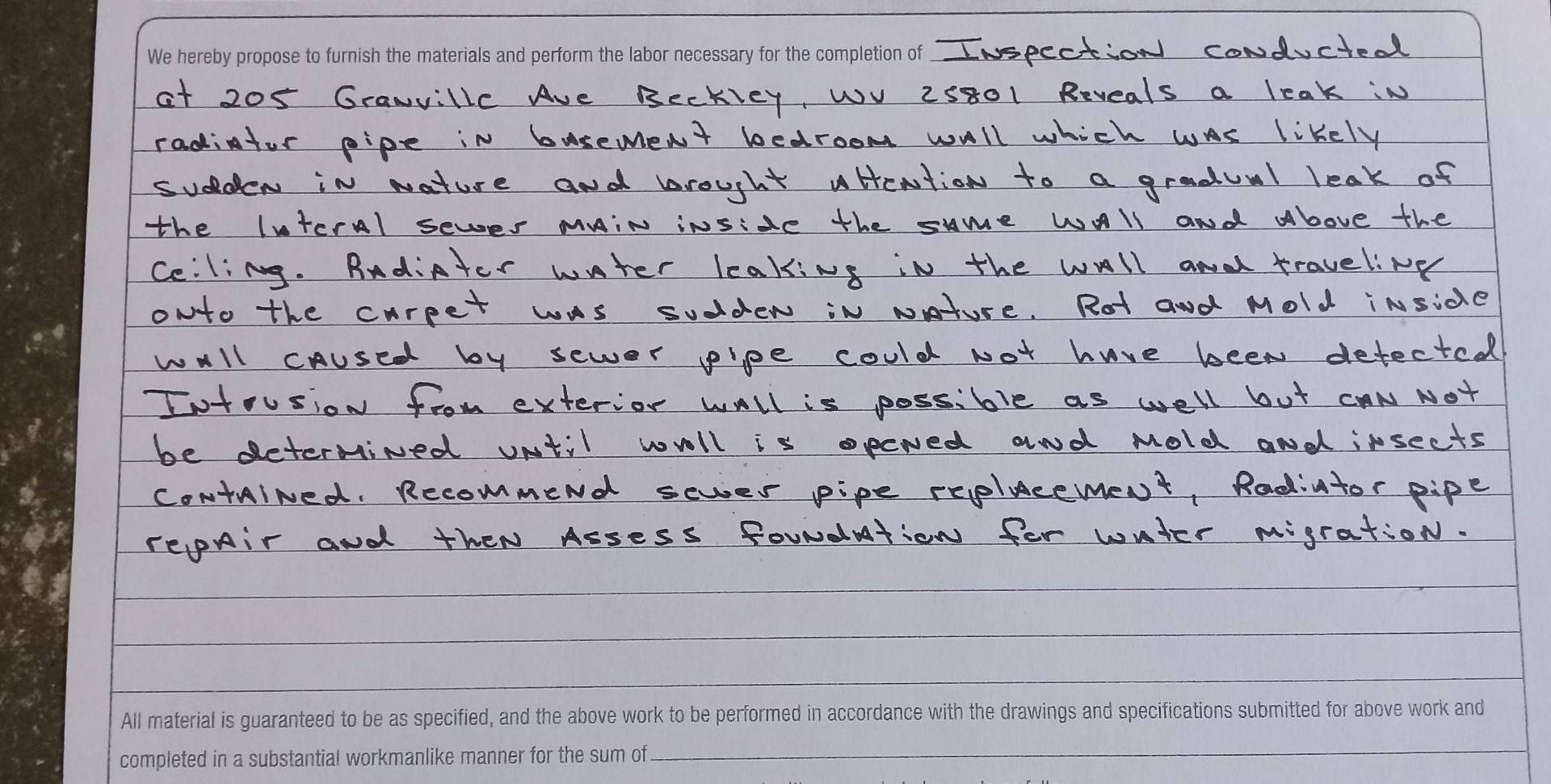
Landlord in WV with a rental property. Plumber found a sewage pipe leak (gradual) and a radiator pipe leak (sudden per plumber's written report) behind basement walls. Also found mold and insects as a result. Public adjuster consulted — said claim will likely be denied due to mold exclusion and gradual leak, even if radiator pipe leak was sudden.
Concerned about CLUE report impact across my portfolio of multiple properties if I file and get denied. Should I still file with insurance and take a chance?
My deductible is 3000, not sure about the extent of damage behind walls due to mold.
Has anyone filed a similar claim — sudden pipe + resulting mold — and what was the outcome? Was it covered? Did denial affect your other properties' premiums?"
Insurance is rough these days. Best if you can self insure on a smaller claim like this, keep the policy for a major fire or storm damage. Is the area of the leaks living space, or storage/ off limits to Tenants? Unless occupied living space, utilize your regular contractors to remove,TREAT, and restore the walls and affected area. Much less costly than the specialists., but you must use proper procedures for health and safety.
Thanks! Area is the bedroom in the basement, living space.
My action plan would be to get the walls removed, get everything cleaned up(sewage, insects, mold), get the pipes fixed, and put the drywall back.
plumbers can't provide estimate till wall is removed. They didn't remove the wall because of mold. Is it a good idea to get an independent mold inspector and then get quotes for remediation, instead of directly contacting a remediation company?
With at least some sewage leak, and the fact mold was already there, I would talk with your General Contractor to see if they can remove and dispose of the affected materials safely and properly. If not, then just have the remediation team remove and clean only. Have your General repair and replace as needed. The longer it sits, the more the moisture and mold will spread. The slow leak would have been the mold source originally, so be sure the plumbing repairs are thorough. What, specifically, did the plumber find wrong with the waste line? What was wrong with the radiator pipe? Any pics? If it is cast iron, likely an age related problem that will reoccur in other sections of the pipe. How old is the house?
This first: Hate this for you. Those cast iron pipes have been a reoccurring adventure' in my life. I've always paid for it without making an insurance claim but please know it's because insurance in Florida is vulgar enough when no claims have ever been made.
What is the cost of the remediation and repairs? Did you get three estimates yet? "May be denied" is not an answer as to whether it will be or not. In my state, any leaks that occurred more than 14 days before detection -even if hidden - are not covered. Here's the other clincher: if you ask your insurance company if a leak is covered, it could be considered a claim. You're reporting something. So if you choose to inquire, just reference the radiator leak and then asked what leaks would be excluded just for your own knowledge. Then decide.
Again, hate this for you - but this too shall pass as they say. Best.
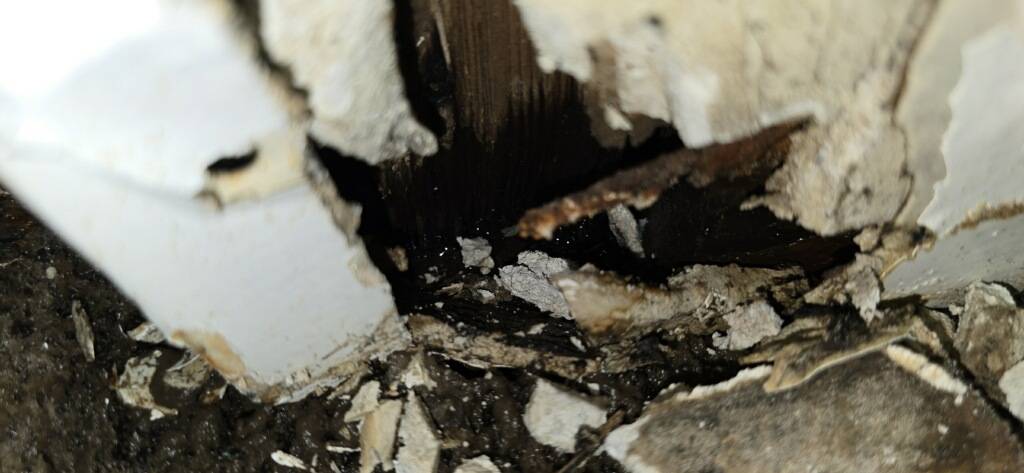
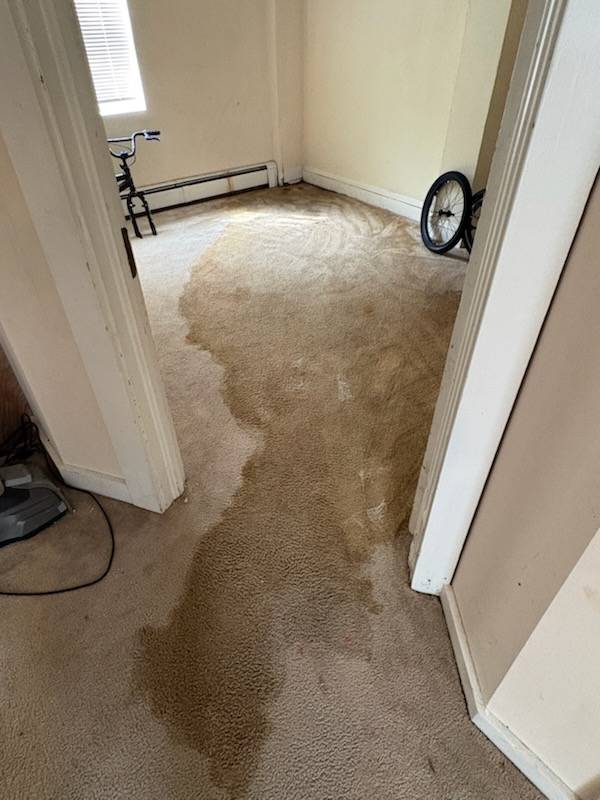
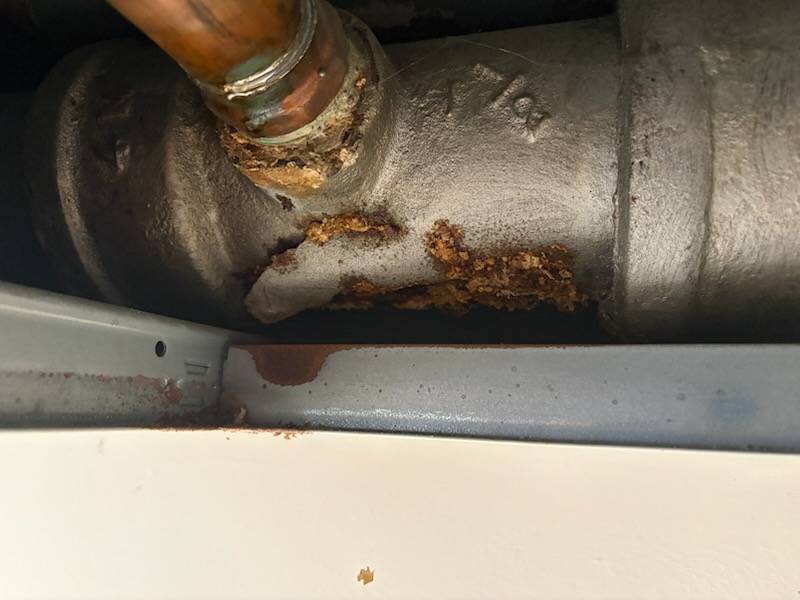
@Mona V. That's certainly not terrible, although definitely a PITA. It is readily apparent from the closeup of the corner wall area that there was evidence of long term seepage, between the staining of the carpet, both rust colored and much darker at the base trim, should have been investigated long ago. The splitting, and corroded, cast iron T is typical for waste lines well beyond their statistical useful life. Based on that one section, you need to plan for replacement of the entire system very soon to prevent recurrences of this seepage in multiple areas. The waste lines are corroding from the inside to the outside of the pipe. You will likely find hairline splits along the bottom of numerous sections, as well as issues at other T's and L's. At that age, also the nipple that protrudes under your sinks, where the trap assembly connects, often will have very deteriorated threads where that nipple connects to the horizontal line in the wall. These also seep. Water runs downhill, so it will always try to "find" it's way to lower levels, transiting through soffits, and down through pipe or duct chases and other wall cavities. If you see small areas of rough, or disturbed walls, such as in the corner of that room near the bottom (before the drywall was opened), or along the bottom of soffits, don't be afraid to open them up to investigate for moisture.
Based on the appearances, I would just have my regular contractor perform the work. Maybe submit a sample and test the mold if backside of sheetrock has large area, over 2 SF, but it obviously has been there for a long time, if Tenant did not complain, it is not very likely to be a dangerous mold. There is ALWAYS some baseline of mold in our environment...
Good question — this is where the details of the policy really matter.
In most cases, carriers separate the cause from the resulting damage. A sudden pipe break may be covered, but mold and anything tied to a long-term or gradual leak are often excluded or heavily limited. That’s why adjusters are already flagging risk of denial.
On the CLUE side, even an inquiry or filed claim can show up, and multiple claims (or frequent inquiries) can impact premiums across your portfolio over time — not always immediately, but it becomes part of your loss history.
Before filing, a couple of things are worth weighing:
In situations like this, many owners only move forward if they’re confident a clean, sudden event can be documented and stands on its own. If everything is intertwined with long-term damage, it often leans toward a denial.
It’s less about “should I file” and more about whether there’s a clearly defensible claim that justifies adding to your loss history.
Landlord in WV with a rental property. Plumber found a sewage pipe leak (gradual) and a radiator pipe leak (sudden per plumber's written report) behind basement walls. Also found mold and insects as a result. Public adjuster consulted — said claim will likely be denied due to mold exclusion and gradual leak, even if radiator pipe leak was sudden.
Concerned about CLUE report impact across my portfolio of multiple properties if I file and get denied. Should I still file with insurance and take a chance?
My deductible is 3000, not sure about the extent of damage behind walls due to mold.
Has anyone filed a similar claim — sudden pipe + resulting mold — and what was the outcome? Was it covered? Did denial affect your other properties' premiums?"
I deal with this from time to time . We spray all areas down with a bleach and soap mixture . Put on some respirators and cut out the damaged areas . Then repair and rehang drywall . I would never claim a small mold issue on insurance since it would now be on record .
If you can find a local handyman type person to do the work, or an inexpensive GC: pay for it out of pocket. If you bring in a fancy mold remediation company or restoration company, it will get so expensive that you will need to make an insurance claim. The way I’ve seen these companies operate is they double charge expecting your insurance to negotiate them down by half. Their special proprietary mold spray that you can’t buy from the store which is basically just bleach will be charged at $100/ bottle compared to $5/ bottle for bleach as an example.
I’d be careful here—this is one of those gray areas where filing a claim can create more downside than upside if it’s not clearly covered.
Most landlord policies treat this in two separate buckets:
The problem is carriers usually look at the dominant cause. If they determine the mold and damage primarily resulted from the gradual sewage leak, they’ll deny the whole claim—even if there was a sudden break somewhere in the mix. Public adjuster is probably right on how this plays out in real life.
On the CLUE report concern—you’re thinking about this correctly. Even an inquiry or denied claim can show up and absolutely can impact underwriting across your portfolio, especially if you have multiple properties. I’ve seen investors get hit with higher premiums or tighter underwriting after a few “zero-pay” claims.
What I typically tell clients in your situation:
If the damage clearly exceeds your deductible by a meaningful margin (not just a few thousand), it may be worth filing—but only if you can confidently tie the damage to the sudden pipe failure, not the gradual leak. Documentation from the plumber matters a lot here.
If it’s borderline or likely mold-driven, I’d lean toward handling it out of pocket and avoiding the claim entirely. Once it’s on your loss history, you don’t get to undo it.
Before you decide, you might consider having a contractor open a small section to better understand the scope. Spending a little upfront to quantify damage can save you from making the wrong call on filing.
Bottom line—this isn’t just a coverage decision, it’s a portfolio-level risk decision. If it doesn’t look like a clean, winnable claim tied to sudden damage, I’d probably pass.
Thank you all for your help/advice. I got plumbers/contractors investigate it and looks like its more than I thought. Sewage pipe runs horizontal in the ceiling, comes down the wall and runs across the floor of the basement (across the room in the photo to the other corner in the basement). On the way it connects to a laundry room (on right of the room in the photo), a full toilet/bath (behind the wall opposite to door, towards left inside the laundry room), then goes out from the other corner of the basement (which is also showing signs of mold behind the dehumidifier). He showed me the dry patch between the bedroom and the laundry room and thinks sewage pipe is leaking and seeping from under the concrete. An estimate of around 15k from the plumber to dig the concrete (to change around 40 ft of pipe from ceiling, through wall, and under concrete to outside connection, and put the concrete back).
Waiting for estimate from the drywall guy to cut drywall, clean mold and expose the pipe.
Mostly not going through insurance, I can't isolate the damage from gradual sewage leak. There is exclusion for mold in my policy, even if they cover partial for everything it would be painful to convince them, and they probably would not cover most.
Link to photos/videos -
https://drive.google.com/drive/folders/1mjtW6P8Tmlxs3KP44d8I...
That’s a tough situation. With the cast iron and the mold, it sounds like the damage is more extensive than just the sudden radiator leak. When you can’t clearly separate damage from a long-term issue versus a sudden event, insurance often won’t cover it, and a denied claim could impact premiums across your portfolio. Handling it out of pocket with trusted contractors to replace the pipes, remove mold, and restore the walls is often the safer route. Opening a small section first to fully understand the scope before committing to repairs seems smart.
Update : Looks like pipes are not actually not running under the floor. Finally understand the scope of repair. Not using insurance.
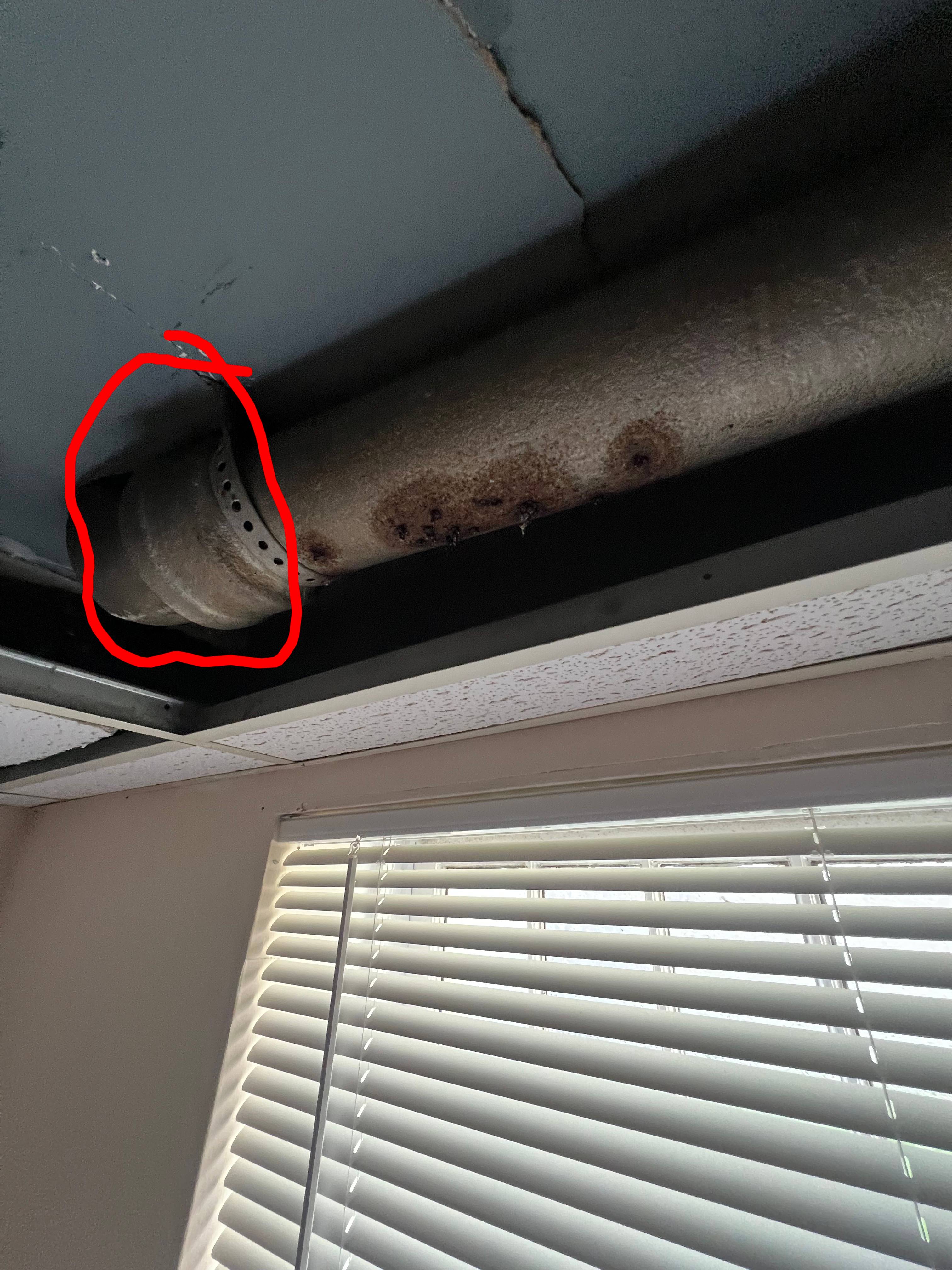
I am confused for one last bit. There is an elbow coming out of toilet on floor above and visible rot is after that.
One plumber says he would change the elbow in the picture.
second plumber says he wouldn't touch that because it's probably holding weight of pipes going up and it would be a mess, and can open pandoras box (only change after the galvanized strap).
Personally i would want it to be changed given pipe close to it are rotting, but don't want to change all the plumbing in the house.
Any pro has ideas right thing to do? Attaching the picture. Price difference is not huge, just want to save trouble later.
Thanks for your help!

@Mona V. I would absolutely change the elbow and toilet flange. It appears that the spots along the bottom of the straight section are pinholes that have corroded through from the inside. The elbow etc. are obviously the same age (and same internal condition), and with the white mineral traces on the elbow, it is leaking from above that point as well.If that is a concrete floor immediately above, it is a simple matter to securely install new pipe hangers for the new install. If I understand you correctly however, the pipe is not extending straight up to the next story from that elbow, in which case the flange of the toilet immediately above actually supports the assembly as well as the hanger.