Would you take the flooring damage out of the security deposit?

Would you take the flooring damage out of the security deposit?

Member since 2018 · 42 posts · 4 votes

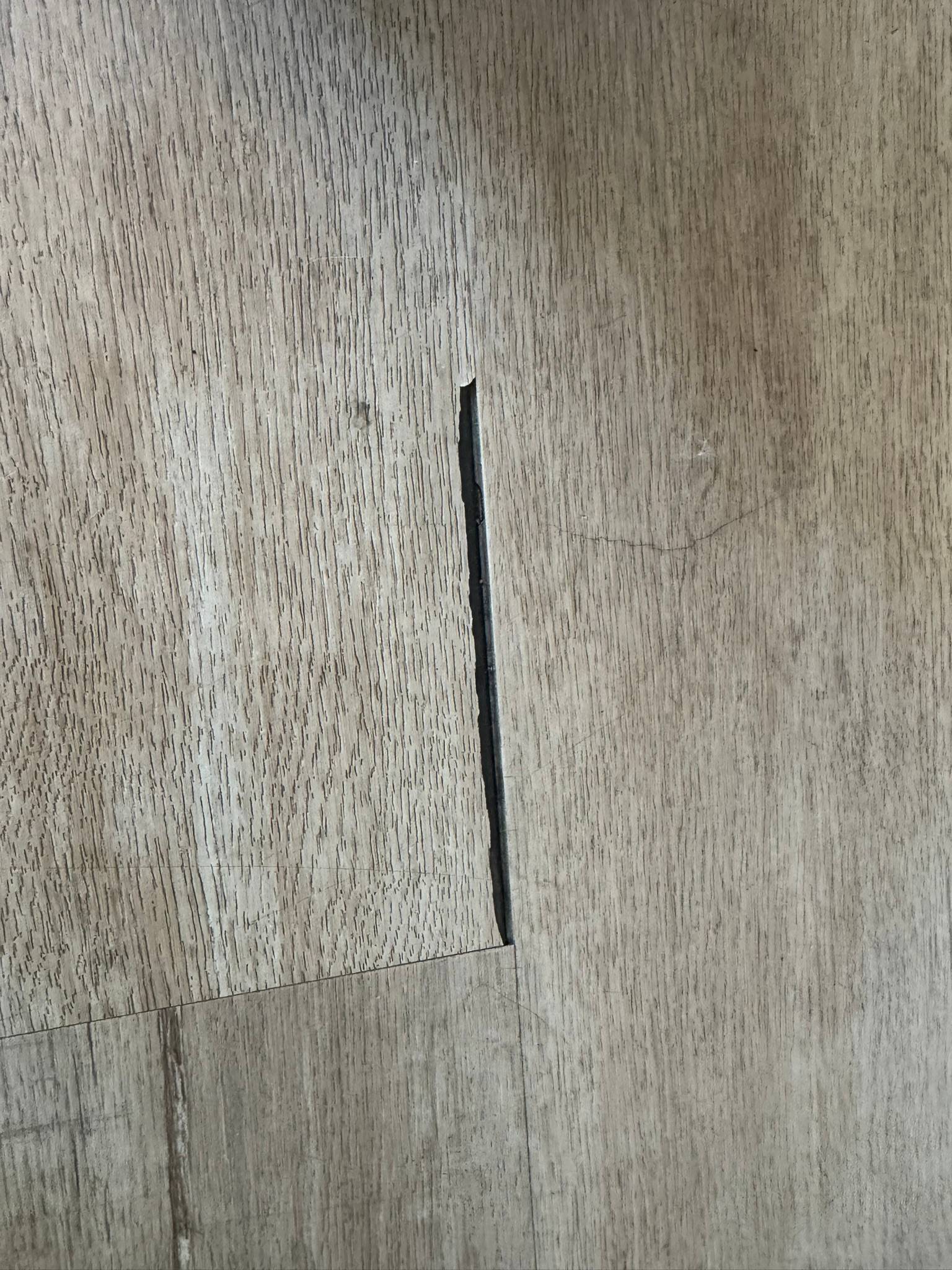
I have six-year old LVP flooring in the unit.  The tenants that just moved out were there for three years.  There is one plank that was damaged as seen in the photo, and another (not pictured) that has really rough scratch marks.  This flooring is very tough, so I have no idea how they scratched the one plank so badly.

I'm waiting on a quote back from the flooring company to replace the planks (I already have the planks, so labor only), but would you lean towards taking this out of the security deposit or not?
0Reply
187 views

Most Popular Reply

Stuart UdisPro Member
Attorney · Philadelphia · Member since 2018 · 2k+ posts · 3k+ votes
3mo

When you zoom in on the image there are scratches throughout the floors. I believe you are overstating how durable these floors are. To me this seems like ordinary wear and tear. I always ask landlords whether small withholdings of deposits is actually worth the potential hassle that ensues. There should be studies on reactions to security deposit deductions because people often don't behave rationally in these situations. Even when a deduction is justified, tenants frequently view it as unfair and become disproportionately focused on recovering the money. For something this minor, it's often not worth the time, hassle, and potential conflict.

I've seen numerous instances where landlords write numerous posts trying to determine  whether a security deposit withholding was justified, all while worrying that an irrational demand letter from a former tenant might actually turn into a small claims case. As silly as it sounds, that's the irrational behavior I was referring to. Sometimes the amount in dispute is relatively minor, but by the time you've documented everything, exchanged emails, and stressed over the possibility of litigation, the hours invested would work out to less than minimum wage. Being right and having it be worth the effort isn't always the same thing.

See this reply in the discussion

11 Replies

Jump to latestLatest
  • MD/DC · Member since 2024 · 1k+ posts · 1k+ votes
    3mo

    If only a couple of planks to replace that seems like expected wear and tear to me. 

  • James JonesPro Member
    Investor · Collierville, TN 38017 · Member since 2017 · 934 posts · 639 votes
    3mo

    That photo doesn't look like a scratch to me. It looks like a split.

    You said yourself the floor is tough and you can't figure out how they'd do that. Worth taking seriously. Six year old LVP that splits along the length of a plank can be an install problem, not enough expansion gap, subfloor movement, that kind of thing. If it's a floating floor check whether it's tight to the walls anywhere. If the floor did that to itself, that's yours, not theirs.

    The rough scratches on the other plank sound like tenant damage. That one's fair game.

    If you do charge it, charge what it actually costs and nothing more. You already have the planks, so it's labor only, and labor to restore damage doesn't get prorated the way materials do. You're putting the floor back, not upgrading it. Wait for the real invoice, not the estimate, and itemize it.

    The test I use: would I actually pay to fix this before the next tenant moves in? If yes, charge it. If I'd shrug and rent it as is, then I'm not really out anything and I'm just harvesting the deposit. Three year tenants, two planks. Don't turn a $200 line item into a fight you spend $200 of your own time on.

    • Member since 2018 · 42 posts · 4 votes
      3mo
      Quote from @James Jones:

      That photo doesn't look like a scratch to me. It looks like a split.

      You said yourself the floor is tough and you can't figure out how they'd do that. Worth taking seriously. Six year old LVP that splits along the length of a plank can be an install problem, not enough expansion gap, subfloor movement, that kind of thing. If it's a floating floor check whether it's tight to the walls anywhere. If the floor did that to itself, that's yours, not theirs.

      The rough scratches on the other plank sound like tenant damage. That one's fair game.

      If you do charge it, charge what it actually costs and nothing more. You already have the planks, so it's labor only, and labor to restore damage doesn't get prorated the way materials do. You're putting the floor back, not upgrading it. Wait for the real invoice, not the estimate, and itemize it.

      The test I use: would I actually pay to fix this before the next tenant moves in? If yes, charge it. If I'd shrug and rent it as is, then I'm not really out anything and I'm just harvesting the deposit. Three year tenants, two planks. Don't turn a $200 line item into a fight you spend $200 of your own time on.


       Thanks for the input - that's a good way to look at it.

  • Rachid AbadliBusiness Member
    Investor · Sacramento, CA · Member since 2024 · 129 posts · 37 votes
    3mo

    The first question is whether it's damage or normal wear and tear.

    Minor scuffs, fading, and traffic patterns are usually normal wear. Gouges, burns, pet damage, or water damage caused by neglect generally aren't.

    The biggest factor is documentation. If you have clear move-in and move-out photos, the conversation becomes much simpler. Without them, it's often your word against the tenant's.

    I'd also factor in depreciation. Courts generally expect landlords to account for the remaining useful life of flooring instead of charging full replacement cost for older materials.

    Finally, send your itemized statement within your state's deadline and include photos, receipts or estimates, and your depreciation calculation. A thorough paper trail goes a long way if the deduction is challenged.

    LeaseBase.ai
    View Page
    • Member since 2018 · 42 posts · 4 votes
      3mo
      Quote from @Rachid Abadli:

      The first question is whether it's damage or normal wear and tear.

      Minor scuffs, fading, and traffic patterns are usually normal wear. Gouges, burns, pet damage, or water damage caused by neglect generally aren't.

      The biggest factor is documentation. If you have clear move-in and move-out photos, the conversation becomes much simpler. Without them, it's often your word against the tenant's.

      I'd also factor in depreciation. Courts generally expect landlords to account for the remaining useful life of flooring instead of charging full replacement cost for older materials.

      Finally, send your itemized statement within your state's deadline and include photos, receipts or estimates, and your depreciation calculation. A thorough paper trail goes a long way if the deduction is challenged.


       Thanks - I'll be sure to keep that in mind. My documentation is solid, but I'm sure it could be more organized. 

  • Stuart UdisPro Member
    Attorney · Philadelphia · Member since 2018 · 2k+ posts · 3k+ votes
    3mo

    When you zoom in on the image there are scratches throughout the floors. I believe you are overstating how durable these floors are. To me this seems like ordinary wear and tear. I always ask landlords whether small withholdings of deposits is actually worth the potential hassle that ensues. There should be studies on reactions to security deposit deductions because people often don't behave rationally in these situations. Even when a deduction is justified, tenants frequently view it as unfair and become disproportionately focused on recovering the money. For something this minor, it's often not worth the time, hassle, and potential conflict.

    I've seen numerous instances where landlords write numerous posts trying to determine  whether a security deposit withholding was justified, all while worrying that an irrational demand letter from a former tenant might actually turn into a small claims case. As silly as it sounds, that's the irrational behavior I was referring to. Sometimes the amount in dispute is relatively minor, but by the time you've documented everything, exchanged emails, and stressed over the possibility of litigation, the hours invested would work out to less than minimum wage. Being right and having it be worth the effort isn't always the same thing.

    • Member since 2018 · 42 posts · 4 votes
      3mo
      Quote from @Stuart Udis:

      When you zoom in on the image there are scratches throughout the floors. I believe you are overstating how durable these floors are. To me this seems like ordinary wear and tear. I always ask landlords whether small withholdings of deposits is actually worth the potential hassle that ensues. There should be studies on reactions to security deposit deductions because people often don't behave rationally in these situations. Even when a deduction is justified, tenants frequently view it as unfair and become disproportionately focused on recovering the money. For something this minor, it's often not worth the time, hassle, and potential conflict.

      I've seen numerous instances where landlords write numerous posts trying to determine  whether a security deposit withholding was justified, all while worrying that an irrational demand letter from a former tenant might actually turn into a small claims case. As silly as it sounds, that's the irrational behavior I was referring to. Sometimes the amount in dispute is relatively minor, but by the time you've documented everything, exchanged emails, and stressed over the possibility of litigation, the hours invested would work out to less than minimum wage. Being right and having it be worth the effort isn't always the same thing.


       That makes sense - I always try to err on the side of returning the full security deposit, but just want to be sure I do deduct from it when it makes sense.  

  • Member since 2018 · 42 posts · 4 votes
    3mo

    @Stuart Udis what you said above makes sense, but what's your strategy for communicating that to the owner? It seems some owners would prefer it comes out of the tenant's pocket.

  • Ryan SpathBusiness Member
    Real Estate Agent · Boise, ID · Member since 2017 · 585 posts · 381 votes
    3mo
    Quote from @Wade Penner:

    I have six-year old LVP flooring in the unit.  The tenants that just moved out were there for three years.  There is one plank that was damaged as seen in the photo, and another (not pictured) that has really rough scratch marks.  This flooring is very tough, so I have no idea how they scratched the one plank so badly.

    I'm waiting on a quote back from the flooring company to replace the planks (I already have the planks, so labor only), but would you lean towards taking this out of the security deposit or not?



     This is tough to gage by a single photo. If the occupants damaged the flooring beyond normal wear and tear, yes it should come out of the deposit. Do you have proof of the condition prior to move in photo or video, if yes you are in good shape. If no, be sure to document this in the future.

  • Property Manager · Maitland, FL · Member since 2026 · 49 posts · 37 votes
    3mo
    Quote from @Wade Penner:

    I have six-year old LVP flooring in the unit.  The tenants that just moved out were there for three years.  There is one plank that was damaged as seen in the photo, and another (not pictured) that has really rough scratch marks.  This flooring is very tough, so I have no idea how they scratched the one plank so badly.

    I'm waiting on a quote back from the flooring company to replace the planks (I already have the planks, so labor only), but would you lean towards taking this out of the security deposit or not?


     Hey Wade, 

    Looking at the zoom, I'd flip on the split call. The edge is jagged, which reads to me like impact, as if something dug in and dragged, not the floor failing on its own. That's the tenant.

    If you charge it, check your state's deposit rules before the flooring quote runs your timeline. A lot of states put a hard deadline on sending written notice of a claim. Worth knowing your window before you wait on an invoice.

    If you were to charge the tenant, use the depreciated value, not new. 

    hope this helps! 

  • Patrick O'SullivanBusiness Member
    Property Manager · Phoenix, AZ · Member since 2024 · 551 posts · 210 votes
    3mo
    Quote from @Wade Penner:

    I have six-year old LVP flooring in the unit.  The tenants that just moved out were there for three years.  There is one plank that was damaged as seen in the photo, and another (not pictured) that has really rough scratch marks.  This flooring is very tough, so I have no idea how they scratched the one plank so badly.

    I'm waiting on a quote back from the flooring company to replace the planks (I already have the planks, so labor only), but would you lean towards taking this out of the security deposit or not?

    Based on the photo alone, I'd be hesitant to charge the deposit. It looks more like a split than an obvious gouge, and it's hard to rule out an installation or flooring issue. Unless you have clear evidence it was caused by the tenant, I'd probably treat it as normal wear and move on.
    get MULTIfamily Property Management4.7214 Reviews
Join the conversationCreate a free account to reply, vote on answers and follow this thread.