Will COVID-19 Cause a Recession?

Will COVID-19 Cause a Recession?

Adiel GorelPro Member
Real Estate Broker · San Rafael, CA · Member since 2016 · 13 posts · 30 votes

As we all observe and fear the Coronavirus, we see many cities under “shelter-at-home” restrictions, and many “non-essential” businesses closing. Then on the other hand, the Fed lowered rates almost to zero, and mortgage rates, after a short spike, are starting to settle down near the lowest point ever. Some people fear a recession is likely to follow, and if we remember the recession of 2008, I think it’s quite possible. That depends, of course, on the length of the lock-down.

If a recession does occur, let’s point out some of the differences between the recession of 2008 and the next recession, if it hits.

Before the 2008 recession happened, there was a major boom in many states. Home prices in states like Arizona, Nevada and Florida went through the roof. The media was shouting “It’s a bubble! It has to burst!” Prices of homes in Phoenix, for example, nearly doubled from the beginning of 2004 till the middle of 2006. Not all states participated in the party, for example, Texas and Oklahoma have not gone up very much during that time.

When the 2008 recession hit, the markets that went down precipitously were, of course, the exact markets that had participated in the 2004-2006 boom. Places in Arizona, Nevada, Florida, and other states. Prices tanked and crashed quite a bit. However not across the board, states like Texas and Oklahoma did not go down very much during the recession of 2008.

By contrast, at the present time, especially in affordable markets like Oklahoma City, Tulsa, Baton Rouge, Central Florida, parts of Atlanta, Raleigh and others, there are currently no price bubbles. No major boom has happened, Thus the likelihood of a major price crash in such markets is much slimmer than the markets which crashed in the 2008 recession. There are very high priced markets now, the expensive markets in San Francisco, for example (which has already started going down in price last year). In such markets, there may be a stronger effect on prices. Also, when you invest in a brand new home in a good area in Oklahoma and pay $170,000. You are buying the home not much over the basic construction and land cost. Again, the probability of an “intrinsic value” home like this going down much is small. By contrast, a $2M home in San Francisco, which cost $900K to build, has a lot of “air” in the price, with a higher likelihood of prices going down in San Francisco.

The recession of 2008 was created by housing. Lenders released all limits, and loans were made to virtually anyone that was human, almost regardless of credit or ability to pay. Some loans were up to 125% of the value of the house. This bad debt, called “sub-prime”, was then packaged among other debt, and amazingly, the credit agency gave these packages high ratings, as if it was a quality debt product. Then these faulty packages sold on Wall Street, and financial wizards found way to leverage them enormously. Once defaults on the bad loans started to hit, the entire structure unraveled.

By contrast, at the present we are still under the Dodd-Frank Act, which was drafted after the 2008 recession. Borrowing is now much harder and lengthier than it was before the 2008 recession. Even borrowers with great credit are finding the current loan processes frustrating. The amount of sub-prime loans is minuscule relative the period preceding the 2008 recession, and steps were taken to make the abuses with rating agencies be much harder to repeat. Thus the next recession is likely not to be caused by bad loans. It is clear that if another recession comes, its effects on rental home investing will be quite different than the recession of 2008.

I believe that the best way to invest in real estate is to buy brand new homes, in affordable large metropolitan areas, where the rent numbers match well with prices. Then finance the homes with a fixed-rate loan. To the best of my knowledge long term fixed rate loans like we get here in the US don’t exist elsewhere. The monthly payment and the mortgage balance never change with the cost of living, while everything else does. That means inflation constantly erodes the true buying buyer of your debt, making your debt ever smaller in real dollars.

For these kinds of homes, purchased anywhere from $150K to $250K, I believe the effects of the next recession will be minimal. Rates are very low, however, so fixed rate loans will retain these great rates forever.

The act of buying good rental homes in large metro areas and holding them as rental for the long term, where the loan erodes, is a future-changer. It does not change your future instantly or even within a short time, but over the long term, this strategy is a powerful future changer. I have seen people retire well, send kids to college, and look much stronger financially thanks to these simple yet powerful investments.

Since these investments show their power over the long term, and since the interest rates are so favorable now, and since a possible impending recession is unlikely to have effects on prices like the 2008 recession, I believe this would be a good time to invest.

As an extra “bonus”, the virus fear creates more flexibility with sellers, including builders, and the ability to negotiate better prices.

I would be happy to discuss it with anyone who may wish to inquire further.

30Reply
163 views

Most Popular Reply

Columbia, MD · Member since 2018 · 27 posts · 169 votes
6y

We have strong economy ??? Really ? Do we? 10 days after the shut down of the country most Americans did NOT have the money to pay their rent on April 1st .... just freaking 10 days !!! They did not last one month !! San Antonio, food bank, feeds 120k people a week, millions on unemployment, in a few weeks you will hear about families with crazy hospital bills to pay ($20K-30K each) plus some will have funerals to pay for ( 5-10k) and that's while many were without any income coming in. Commercial real-estate owners about to lose their pants during corona epidemic, all those with over leveraged investments and kings of BRRRR will feel the sh** hitting the fan in like 3,2,1.....while rent goes un paid. This was not strong economy to begin with! Homes, cars and student loans leveraged to the brim while most pay the minimum is not a sign of strong economy.This was crap economy on borrowed time and borrowed cheap money. Sorry y'all

See this reply in the discussion

178 Replies

Jump to latestLatest
  • Russell BrazilBusiness Member
    Moderator
    Real Estate Agent · Washington, D.C. · Member since 2012 · 17k+ posts · 30k+ votes
    6y

    Yes

  • John UnderwoodPro Member
    Investor · Greer, SC · Member since 2014 · 13k+ posts · 17k+ votes
    6y

    We have a strong economy, the government is doing a great job of trying to prevent a meltdown.

    Once this is over I believe the economy and jobs will bounce back.

  • Columbia, MD · Member since 2018 · 27 posts · 169 votes
    6y

    We have strong economy ??? Really ? Do we? 10 days after the shut down of the country most Americans did NOT have the money to pay their rent on April 1st .... just freaking 10 days !!! They did not last one month !! San Antonio, food bank, feeds 120k people a week, millions on unemployment, in a few weeks you will hear about families with crazy hospital bills to pay ($20K-30K each) plus some will have funerals to pay for ( 5-10k) and that's while many were without any income coming in. Commercial real-estate owners about to lose their pants during corona epidemic, all those with over leveraged investments and kings of BRRRR will feel the sh** hitting the fan in like 3,2,1.....while rent goes un paid. This was not strong economy to begin with! Homes, cars and student loans leveraged to the brim while most pay the minimum is not a sign of strong economy.This was crap economy on borrowed time and borrowed cheap money. Sorry y'all

  • Joseph CacciapagliaBusiness Member
    Lender · San Antonio, TX · Member since 2020 · 1k+ posts · 1k+ votes
    6y
    Originally posted by @Luke Ski:

    We have strong economy ??? Really ? Do we? 10 days after the shut down of the country most Americans did NOT have the money to pay their rent on April 1st .... just freaking 10 days !!! They did not last one month !! 

    I'm curious why you think that most Americans didn't pay their rent. If you read this somewhere, I'd love to see a link. Our management team collected full rent from 90% of our portfolio and set up payment plans with an additional 5%. That leaves only 5% that paid nothing, and that's actually not too far from normal. Given that our collection efforts have been greatly hampered, I'd say that shows that people are doing pretty well all things considered. I have a lot of contacts in the property management field, and I haven't heard of anyone in Texas with a sizable portfolio that collected less than 85%. I even know a decent number of managers in the PA/NJ area that have collected similar percentages. I do know one manager in California that was extremely hard hit, but I think that was more a result of local government policy choices than it was about actual inability to pay. It doesn't seem possible that "most Americans" didn't pay their rent.

    Joseph Cacciapaglia powered by Morty
  • Rental Property Investor · Erie, PA · Member since 2015 · 1k+ posts · 2k+ votes
    6y

    I think unemployment will get back to its pre-coronavirus numbers though it will take time (at least 6-9 months).

    The economy is good if you look at the classic definition: 

    An economy (from Greek οίκος – "household" and νέμoμαι – "manage") is an area of the production, distribution and trade, as well as consumption of goods and services by different agents.

    However when I look at US debt - which pretty much every politician with few exceptions have kicked the can down the road - I see a massive problem with inflation. 

    One could argue the massive US debt isn't part of the economy though I would argue it's going to impact the economy when there's inflation - and a lot of people seem to think/hope hyperinflation won't happen because we're the world's currency. 

    Honestly, when I think about it too much my head spins. 

    As far as the best kind of property to buy: it 100% depends on the market and what the investor is trying to achieve. 

  • San Jose, CA · Member since 2015 · 4k+ posts · 3k+ votes
    6y
    Originally posted by @Adiel Gorel:

    As we all observe and fear the Coronavirus, we see many cities under “shelter-at-home” restrictions, and many “non-essential” businesses closing. Then on the other hand, the Fed lowered rates almost to zero, and mortgage rates, after a short spike, are starting to settle down near the lowest point ever. Some people fear a recession is likely to follow, and if we remember the recession of 2008, I think it’s quite possible. That depends, of course, on the length of the lock-down.

    If a recession does occur, let’s point out some of the differences between the recession of 2008 and the next recession, if it hits.

    Before the 2008 recession happened, there was a major boom in many states. Home prices in states like Arizona, Nevada and Florida went through the roof. The media was shouting “It’s a bubble! It has to burst!” Prices of homes in Phoenix, for example, nearly doubled from the beginning of 2004 till the middle of 2006. Not all states participated in the party, for example, Texas and Oklahoma have not gone up very much during that time.

    When the 2008 recession hit, the markets that went down precipitously were, of course, the exact markets that had participated in the 2004-2006 boom. Places in Arizona, Nevada, Florida, and other states. Prices tanked and crashed quite a bit. However not across the board, states like Texas and Oklahoma did not go down very much during the recession of 2008.

    By contrast, at the present time, especially in affordable markets like Oklahoma City, Tulsa, Baton Rouge, Central Florida, parts of Atlanta, Raleigh and others, there are currently no price bubbles. No major boom has happened, Thus the likelihood of a major price crash in such markets is much slimmer than the markets which crashed in the 2008 recession. There are very high priced markets now, the expensive markets in San Francisco, for example (which has already started going down in price last year). In such markets, there may be a stronger effect on prices. Also, when you invest in a brand new home in a good area in Oklahoma and pay $170,000. You are buying the home not much over the basic construction and land cost. Again, the probability of an “intrinsic value” home like this going down much is small. By contrast, a $2M home in San Francisco, which cost $900K to build, has a lot of “air” in the price, with a higher likelihood of prices going down in San Francisco.

    The recession of 2008 was created by housing. Lenders released all limits, and loans were made to virtually anyone that was human, almost regardless of credit or ability to pay. Some loans were up to 125% of the value of the house. This bad debt, called “sub-prime”, was then packaged among other debt, and amazingly, the credit agency gave these packages high ratings, as if it was a quality debt product. Then these faulty packages sold on Wall Street, and financial wizards found way to leverage them enormously. Once defaults on the bad loans started to hit, the entire structure unraveled.

    By contrast, at the present we are still under the Dodd-Frank Act, which was drafted after the 2008 recession. Borrowing is now much harder and lengthier than it was before the 2008 recession. Even borrowers with great credit are finding the current loan processes frustrating. The amount of sub-prime loans is minuscule relative the period preceding the 2008 recession, and steps were taken to make the abuses with rating agencies be much harder to repeat. Thus the next recession is likely not to be caused by bad loans. It is clear that if another recession comes, its effects on rental home investing will be quite different than the recession of 2008.

    I believe that the best way to invest in real estate is to buy brand new homes, in affordable large metropolitan areas, where the rent numbers match well with prices. Then finance the homes with a fixed-rate loan. To the best of my knowledge long term fixed rate loans like we get here in the US don’t exist elsewhere. The monthly payment and the mortgage balance never change with the cost of living, while everything else does. That means inflation constantly erodes the true buying buyer of your debt, making your debt ever smaller in real dollars.

    For these kinds of homes, purchased anywhere from $150K to $250K, I believe the effects of the next recession will be minimal. Rates are very low, however, so fixed rate loans will retain these great rates forever.

    The act of buying good rental homes in large metro areas and holding them as rental for the long term, where the loan erodes, is a future-changer. It does not change your future instantly or even within a short time, but over the long term, this strategy is a powerful future changer. I have seen people retire well, send kids to college, and look much stronger financially thanks to these simple yet powerful investments.

    Since these investments show their power over the long term, and since the interest rates are so favorable now, and since a possible impending recession is unlikely to have effects on prices like the 2008 recession, I believe this would be a good time to invest.

    As an extra “bonus”, the virus fear creates more flexibility with sellers, including builders, and the ability to negotiate better prices.

    I would be happy to discuss it with anyone who may wish to inquire further.

    This doesn't seem to take into account the job market.  If those places that haven't experienced a bubble lose their employers, it seems to me the prices, even in non-bubble markets could crash.

    During the 2008 crash, I was managing a building in Santa Clara. Right in the heart of Silicon Valley.  We lost 25% of our renters in about 2 months. They lost their jobs and moved mainly out of state to go live with family while they regrouped.  Apartment complexes had huge banners on their buildings saying no credit checks, first month free, pets welcome.  Rent prices came crashing down.

    But, see, we weren't dealing with people who lost their homes. We were dealing with renters who lost their jobs.  It's all about jobs first and foremost.

  • Wholesaler, Rehabber and Landlord · San Antonio, TX · Member since 2014 · 2k+ posts · 2k+ votes
    6y

    Hey @Adiel Gorel it sounds like you are a salesman trying to convince yourself or others that it is a great economy right now. Why? Because you want to sell more houses. Pre-corona we had 3.5% unemployment, but why?? We had near zero interest rates. What happened not long ago when the fed tried to raise them just a bit?? Everyone got really scared. They had to be lowered again, and then they were lowered even more just to keep things the same or a little better. This was why we kept having record highs in the stock market. 

    WHY would you have to have rates at or near zero in a healthy economy?? Answer: it is not a healthy economy, pre-corona.  Things are NOT going to bounce back in a few months post-corona. I will not bore everyone with why, but they are not.

    Texas counties re-appraise properties every year so the tax cost of a house (about 2.8%) in a good economy DOES go up every year. That is what is causing so many California investors to scratch their heads somewhat when prices and rents go up, but so does the tax bill next year. Plus we have some of the highest insurance rates in the country. We have quite a few state legislators who are in the insurance business. Coincidence? Who knows.

    I agree with @Luke Ski, there is so much leverage right now. People are stretched to the limit. Lots of people could not go several weeks without an income. Do you really think $1,200 is going to keep everyone going?? If you make $2 - 5,000 a month, how is 1200 going to make everything ok? We are not going to get back to normal in 6 - 9 months.

    @Luke Ski

  • Jay HinrichsBusiness Member
    Real Estate Consultant · Summerlin, NV · Member since 2014 · 45k+ posts · 66k+ votes
    6y
    Originally posted by @Rick Pozos:

    Hey @Adiel Gorel it sounds like you are a salesman trying to convince yourself or others that it is a great economy right now. Why? Because you want to sell more houses. Pre-corona we had 3.5% unemployment, but why?? We had near zero interest rates. What happened not long ago when the fed tried to raise them just a bit?? Everyone got really scared. They had to be lowered again, and then they were lowered even more just to keep things the same or a little better. This was why we kept having record highs in the stock market. 

    WHY would you have to have rates at or near zero in a healthy economy?? Answer: it is not a healthy economy, pre-corona.  Things are NOT going to bounce back in a few months post-corona. I will not bore everyone with why, but they are not.

    Texas counties re-appraise properties every year so the tax cost of a house (about 2.8%) in a good economy DOES go up every year. That is what is causing so many California investors to scratch their heads somewhat when prices and rents go up, but so does the tax bill next year. Plus we have some of the highest insurance rates in the country. We have quite a few state legislators who are in the insurance business. Coincidence? Who knows.

    I agree with @Luke Ski, there is so much leverage right now. People are stretched to the limit. Lots of people could not go several weeks without an income. Do you really think $1,200 is going to keep everyone going?? If you make $2 - 5,000 a month, how is 1200 going to make everything ok? We are not going to get back to normal in 6 - 9 months.

    @Luke Ski

    I agree with your assessment of Texas as a buy and hold market.. property tax's insurance etc are something that really needs to be looked at carefully.

    As for buying new construction in markets that dont appreciate.. Well i did that personally I bought 13 new homes in and around Jackson MS 5 in Madison county which is the wealthiest county in the state.. and 8 in Rankin county.. second wealthiest..  here is the issue with those homes good and bad.

    One price to rents allowed for meager cash flow .  But very little in the way of cap ex unless a hail storm hit.  so that was good tax's there are OK less than Texas but more than say Vegas or Indiana..

    The issue with thinking buying in a market that never goes up and you have new construction is that .. over time its not new anymore and the builders keep building new and selling for basically the same price so what is a buyer going to do they are going to buy that brand new home everything being equal.. And now you have 15 year old home.. that needs major cap ex.. all your cash flow will be spent on cap ex.

    I sold all of mine to owner occs.. and thats what i experienced I had to up date them to modern standards after being rentals for 10 to 15 years and this cost 10 to 20k per home.. bye bye cash flow.. Granted I sold for what i paid for them but when you have transaction costs and heavy cap ex to actually get fair market value for the homes it was really why did we even do it in the first place.. TIE up over 2 million in debt to make nothing long term.. Now for me I made my money when i bought them as i got Go ZONE tax bene's  if that did not happen then buying non appreciating new construction out of market well why ?   Only play really is if your going to own them until they are basically paid off and then can roll them up.. but with 30 year mortgages any exit prior to about 20 years you simply have not paid down the mortgage enough to recapture your sales costs and your cap ex to bring it to modern standards.

    And the history lesson above is well documented.. Although other markets crashed hard.. Central CA and out east of LA crashed very hard as well during those times.. but if you bought there the houses have now doubled.. instead of buying in a market out east were the houses have not gone up becasue of new construction being built next to you keeps the values in check.. I feel you need appreciation to make a fully rounded real estate investment .. Cash flow is great if you want to scale to 100 doors  but if your just buying 4 to 6 doors or so in a non appreciating market.. my experience says there are far better things to do

  • Theresa HarrisPro Member
    Member since 2019 · 15k+ posts · 11k+ votes
    6y

    I think a lot depends on what happens with unemployment and the stock market.  Where I am (Alberta), the govt was doing massive cuts to the public sector right before this happened (they were in the middle of the cuts).  The two larger cities were hard hit due to oil prices.  

    Interest rates are at an all time low and have been for many years, yet at least where I am (Canada) the unemployment wasn't high.  People's personal finances are another thing as many people are living above their means and taking on massive debt.  People who have no savings and massive debt, are going to feel the impact of this for a long time.

    So for a recession, I think it very much depends on where you are and the local economy.

  • Jay HinrichsBusiness Member
    Real Estate Consultant · Summerlin, NV · Member since 2014 · 45k+ posts · 66k+ votes
    6y
    Originally posted by @Theresa Harris:

    I think a lot depends on what happens with unemployment and the stock market.  Where I am (Alberta), the govt was doing massive cuts to the public sector right before this happened (they were in the middle of the cuts).  The two larger cities were hard hit due to oil prices.  

    Interest rates are at an all time low and have been for many years, yet at least where I am (Canada) the unemployment wasn't high.  People's personal finances are another thing as many people are living above their means and taking on massive debt.  People who have no savings and massive debt, are going to feel the impact of this for a long time.

    So for a recession, I think it very much depends on where you are and the local economy.

    Is Ft. McMurray still going strong.. can the Oil Sands projects keep going at these low oil prices.. I understand its not sweet crud.. but was curious.. I spent a weekend up there years ago and got a tour of the Oil Sands operations .. its was really cool.. 

  • Investor · Corpus Christi, TX · Member since 2012 · 2k+ posts · 1k+ votes
    6y

    Absolutely. Pain is coming. Those who can wait it out and cherry pick deals to hold until it's over in a couple of years will win, as they always do. Those who believe all will be back to the prior normal in just a few months will be on the losing side of the equation. I have been through several market disruptions but those will look like a cake walk compared to this event. 

  • Theresa HarrisPro Member
    Member since 2019 · 15k+ posts · 11k+ votes
    6y
    Originally posted by @Jay Hinrichs:
    Originally posted by @Theresa Harris:

    I think a lot depends on what happens with unemployment and the stock market.  Where I am (Alberta), the govt was doing massive cuts to the public sector right before this happened (they were in the middle of the cuts).  The two larger cities were hard hit due to oil prices.  

    Interest rates are at an all time low and have been for many years, yet at least where I am (Canada) the unemployment wasn't high.  People's personal finances are another thing as many people are living above their means and taking on massive debt.  People who have no savings and massive debt, are going to feel the impact of this for a long time.

    So for a recession, I think it very much depends on where you are and the local economy.

    Is Ft. McMurray still going strong.. can the Oil Sands projects keep going at these low oil prices.. I understand its not sweet crud.. but was curious.. I spent a weekend up there years ago and got a tour of the Oil Sands operations .. its was really cool.. 

    I'm in the south and don't have links there.  From what I hear of the industry in general, things are really tough.  I think they are still rebuilding from the massive fire a few years ago.  I know a lot of offices in Calgary and Edmonton were vacant and there were lots of lay offs.  Not a great time for Alberta right now.

  • Jay HinrichsBusiness Member
    Real Estate Consultant · Summerlin, NV · Member since 2014 · 45k+ posts · 66k+ votes
    6y
    Originally posted by @Theresa Harris:
    Originally posted by @Jay Hinrichs:
    Originally posted by @Theresa Harris:

    I think a lot depends on what happens with unemployment and the stock market.  Where I am (Alberta), the govt was doing massive cuts to the public sector right before this happened (they were in the middle of the cuts).  The two larger cities were hard hit due to oil prices.  

    Interest rates are at an all time low and have been for many years, yet at least where I am (Canada) the unemployment wasn't high.  People's personal finances are another thing as many people are living above their means and taking on massive debt.  People who have no savings and massive debt, are going to feel the impact of this for a long time.

    So for a recession, I think it very much depends on where you are and the local economy.

    Is Ft. McMurray still going strong.. can the Oil Sands projects keep going at these low oil prices.. I understand its not sweet crud.. but was curious.. I spent a weekend up there years ago and got a tour of the Oil Sands operations .. its was really cool.. 

    I'm in the south and don't have links there.  From what I hear of the industry in general, things are really tough.  I think they are still rebuilding from the massive fire a few years ago.  I know a lot of offices in Calgary and Edmonton were vacant and there were lots of lay offs.  Not a great time for Alberta right now.

    when I had my home in Kelowna  Alberta was rockin.. lots of golfers would come over from Edmonton to play at our club I had a golf course front home and I could always tell those guys..  shorts and golf shirt in 8C weather  LOL.. 

  • Rental Property Investor · Durham, NC · Member since 2016 · 7k+ posts · 7k+ votes
    6y

    @Adiel Gorel yes we’re already in a recession. I just finished reading a long article about the author thinking there is a 35-85 percent chance this is as bad somewhere between the Great Recession to Great Depression.

    Realistically you’re looking at 1.5 to 3 years for everything to fully recover. This same author was predicting 12 percent unemployment spike in second Quarter 2020, down to 9 percent by end of 2020 and 6 percent by end of 2021.

    So 18 months from now we still have twice as much unemployment as February 2020 (3.5).

    Real estate will go down. It’s just a matter of when and where.

  • Theresa HarrisPro Member
    Member since 2019 · 15k+ posts · 11k+ votes
    6y
    Originally posted by @Jay Hinrichs:
    Originally posted by @Theresa Harris:
    Originally posted by @Jay Hinrichs:
    Originally posted by @Theresa Harris:

    I think a lot depends on what happens with unemployment and the stock market.  Where I am (Alberta), the govt was doing massive cuts to the public sector right before this happened (they were in the middle of the cuts).  The two larger cities were hard hit due to oil prices.  

    Interest rates are at an all time low and have been for many years, yet at least where I am (Canada) the unemployment wasn't high.  People's personal finances are another thing as many people are living above their means and taking on massive debt.  People who have no savings and massive debt, are going to feel the impact of this for a long time.

    So for a recession, I think it very much depends on where you are and the local economy.

    Is Ft. McMurray still going strong.. can the Oil Sands projects keep going at these low oil prices.. I understand its not sweet crud.. but was curious.. I spent a weekend up there years ago and got a tour of the Oil Sands operations .. its was really cool.. 

    I'm in the south and don't have links there.  From what I hear of the industry in general, things are really tough.  I think they are still rebuilding from the massive fire a few years ago.  I know a lot of offices in Calgary and Edmonton were vacant and there were lots of lay offs.  Not a great time for Alberta right now.

    when I had my home in Kelowna  Alberta was rockin.. lots of golfers would come over from Edmonton to play at our club I had a golf course front home and I could always tell those guys..  shorts and golf shirt in 8C weather  LOL.. 

     8C is definitely T shirt weather in the spring!!

  • Tacoma, WA · Member since 2014 · 77 posts · 92 votes
    6y

    Yes, 100%.  

    I see Chase just announced customers applying for a new mortgage will need a credit score of at least 700, and will be required to make a down payment equal to 20% of the home’s value.  Everyone is tightening lending standards across the board.  RE prices will certainly drop.

    CEO, Jamie Dimon has released his annual letter to shareholders.  Good read about what is to come.

    "...but at a minimum, we assume that it will include a bad recession combined with some kind of financial stress similar to the global financial crisis of 2008. Our bank cannot be immune to the effects of this kind of stress."

    https://reports.jpmorganchase.com/investor-relations/2019/ar-ceo-letters.htm  

  • Jay HinrichsBusiness Member
    Real Estate Consultant · Summerlin, NV · Member since 2014 · 45k+ posts · 66k+ votes
    6y
    Originally posted by @Caleb Heimsoth:

    @Adiel Gorel yes we’re already in a recession. I just finished reading a long article about the author thinking there is a 35-85 percent chance this is as bad somewhere between the Great Recession to Great Depression.

    Realistically you’re looking at 1.5 to 3 years for everything to fully recover. This same author was predicting 12 percent unemployment spike in second Quarter 2020, down to 9 percent by end of 2020 and 6 percent by end of 2021.

    So 18 months from now we still have twice as much unemployment as February 2020 (3.5).

    Real estate will go down. It’s just a matter of when and where. 

    there is a nice thread going over on COPA  cirrus owners and pilots association..  Lots of business owners and really smart dudes on that site along with one senior writer for Forbes.. Their take is tempered a bit with the doom and gloomers..  

    And most of these guys own companies with 10 to 1000 employees so there is some good discussion on their employees working from home the cost of office space etc..  One thing that was discussed is that Collage which has not changed in 100 years may never be the same with all the on line class's.. so you could see a retreat or consolidating collage campuses and the associated housing for the students.. Now to me a lot of collage is just getting out of the house and on your own and that whole vibe so not sure about that.

    Also how we deal with our doctors could change to doing a doctors appointment via video all though I don't know how that works when the doc needs to take a close look at you .. etc.

    The forbes writer stated that he will deem the economy back when conventions are going and airlines are back to running almost full which was the case 8 weeks ago.  

    the other long thread is all the doctors talking about covid 19 and how very serious this is..  reading those posts will give you pause.. 

  • Luke CarlPro Member
    Rental Property Investor · Tennessee Florida · Member since 2016 · 4k+ posts · 5k+ votes
    6y

    @Caleb Heimsoth I could have been the bass player for Guns N’ Roses. But I’m not.

    Noone has a crystal ball. Everyone take it easy and be positive.

  • Rental Property Investor · Durham, NC · Member since 2016 · 7k+ posts · 7k+ votes
    6y

    @Lucas Carl I understand you want to ignore all of this as the economy grinds to a halt, and that’s fine but to assume there’s no way to predict any of this and how it will play out is just wrong.

    Using past data, current data and some basic math you can see how it will likely play out. Best case scenario is 1-3 years to fully recover. Worst case scenario is closer to 12 years.

  • Jay HinrichsBusiness Member
    Real Estate Consultant · Summerlin, NV · Member since 2014 · 45k+ posts · 66k+ votes
    6y
    Originally posted by @Caleb Heimsoth:

    @Lucas Carl I understand you want to ignore all of this as the economy grinds to a halt, and that’s fine but to assume there’s no way to predict any of this and how it will play out is just wrong.

    Using past data, current data and some basic math you can see how it will likely play out. Best case scenario is 1-3 years to fully recover. Worst case scenario is closer to 12 years.

    If its 12 years I am leaving it to you young folks to carry the torch I will just call it a day..  LOL  

  • Investor · Willow Spring, NC · Member since 2009 · 5k+ posts · 3k+ votes
    6y

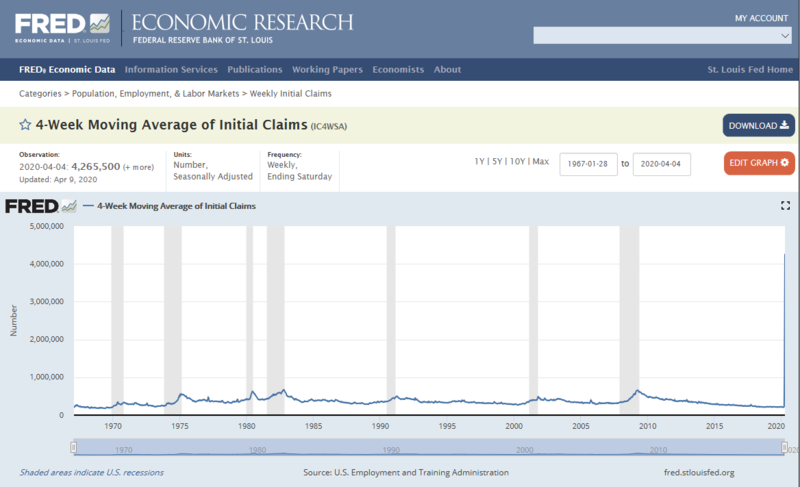
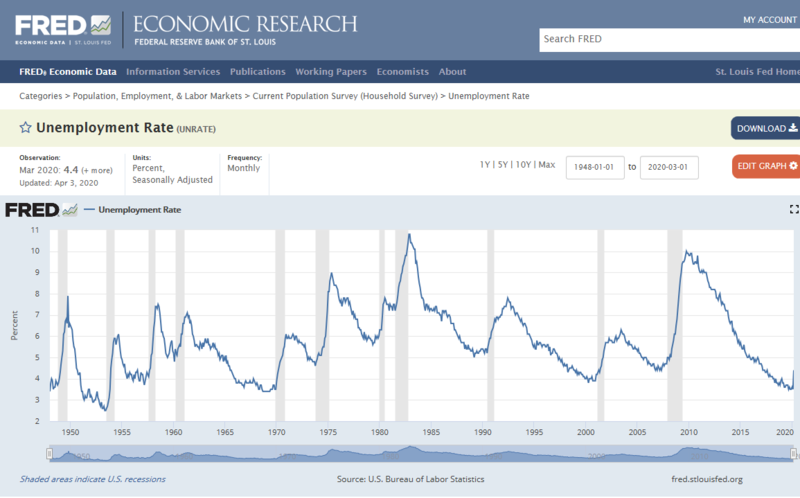
    Wow. I guess people aren't paying attention. You don't need words, the charts will do. 

    The area under the curve, where the grey lines are, shows the unemployment during past recessions. The big jump up, like we've never seen before in our life times, is now. History also shows how long these spikes up last, as shown below  

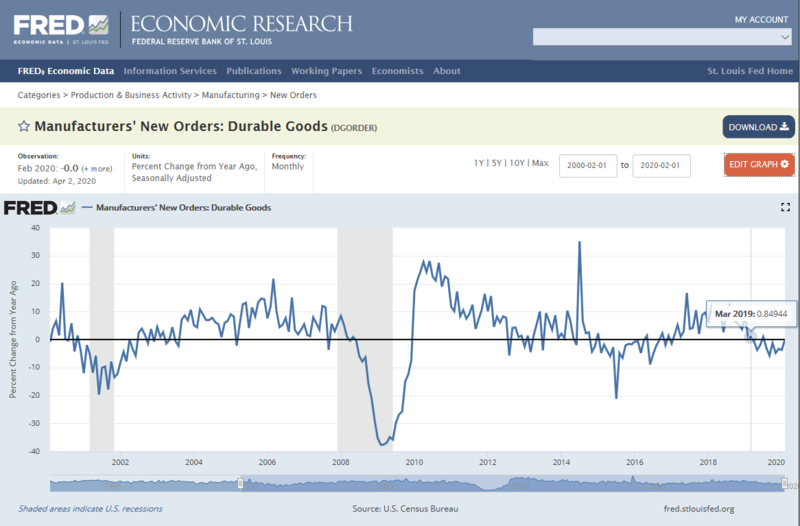
    Not much straight up and straight down. Recoveries take time. We are in a recession, by definition two consecutive quarters of negative GDP Y/Y, because for sure 2020Q2 will have negative GDP vs. last year. Most likely 2020Q1, and most probable 2020Q3, will show negative GDP as well, since many parts of the economy were anemic already... like manufacturing, where furloughs have been common for the past three quarters: 

    (All graphs courtesy of the St. Louis Fed, based on relevant data sources.) 

  • Warsaw, IN · Member since 2017 · 229 posts · 270 votes
    6y

    @Luke Ski in my opinion our economy was in pretty good shape pre Corona virus. Do you know a business that wasn’t trying to hire talent in late January or early February? I don’t.

    I think the issue is household money management, due to an absolute lack of any formal training or education in money management. That’s the colossal failure.

    It’s a widely cited statistic around here, and publicly, that most Americans don’t have much saved in emergency funds. But it’s easy to find a lot of people with fancy cell phones, all sorts of “necessities” like newer cars, expensive cable plans, eating out/partaking in services, etc.

    I think the US “normal” spending habits help the economic numbers look good, but also think if every American, myself included, kept a little more in savings, the economy would still be pretty good. The economic lockdown is hurting everyone, as income sources from jobs has been pulled without much warning and no fault of workers. I have to hope it saved lives, but still feel pretty good about the economy once the lockdown is over.

  • Rental Property Investor · Neenah, WI · Member since 2019 · 154 posts · 105 votes
    6y

    It will be interesting to see what the post COVID-19 economy looks like.  The majority of people that I talk to are sure that things will ramp right back up to normal with 6-9 months.  Really??  Companies will be required to re-hire some of their workforce to comply with the CARES act loan rules.  But not every employee will be re-hired.  The transition to a remote workforce was pretty seamless at my company and has management questioning how many face to face meetings with customers, vendors, peers are actually needed. We won't be flying or driving nearly as much as pre COVID-19.  I know my family will continue to social distance to some extent for the next few years at least.  My rental income for April was not impacted in April but I see that being impacted during the summer as people realize that $1200 isn't really that much, the stock market continues to lag and the job situation fails to improve.  

  • WorldWide · Member since 2016 · 1k+ posts · 1k+ votes
    6y
  • Specialist · Frederick, MD · Member since 2017 · 474 posts · 454 votes
    6y

    Will it cause a Depression? That's the question I've been asking. 

    Taking into account a global economic shock, a coinciding drop in energy prices, many small businesses that won't recover, unemployment, the possibility for a run on US Dollars which could cause the USD to spike, plus municipalities and retirement funds who were already on financial thin ice – there's a great deal of risk and the combined headwinds are enormous. 

Join the conversationCreate a free account to reply, vote on answers and follow this thread.