Would you rather invest in duplex in CA that breaks even or invest in RE syndication for 2 years that offers you expected 18% annually
Example: Duplex in CA costs around $600k, down payment $120k, rent = mortgage payment+real estate tax + insurance (if interest drops by 1%, then expected cash flow could be $200-$300 per month)
RE syndication is offering 18%, in 2 years, I can expect to make $43,200 without lifting a finger..
The numbers are favoring more towards RE syndication, in the past I have only done rentals never invested in RE syndication. In my analysis, with previous rentals purchased in CA, I have made same amount as RE syndication when I factor in appreciation. However, with current market scenario, I am factoring $0 for appreciation.
I don't think you should do either at this point.
It sounds like you haven't defined a "deal that works" or looked at enough creative options in California yet.
And, my sense from your post, is that you are looking at a single RE syndication.
What I'd do is the following:
- Analyze/Look at 25+ (100 is world-class) Duplexes, Triplexes, and Quadplexes over Q1.
- Analyze/Attend Pitches for 25+ (100 is also world-class) syndications in Q2.
In six months, you will have done more research than most on these two alternatives, and you will have your answer.
Right now, with how you framed the question, I worry, frankly, that you are susceptible to the sales pitch of this or any syndicator. Every syndicator promises 15-20% IRR or similar. Go view a bunch of pitches and see for yourself. It's a sales pitch to get your money. Some will earn those returns. Others won't. Nothing wrong with the sales pitch. It's just that you should know that it is one, and see a bunch of them before handing over your money.
Your duplex, too could earn an 18% IRR. In fact, if appreciation is just 4-5% per year over the next two years, it almost certainly will.
That's almost certainly what your syndicator is assuming - 4-5% rent growth/ NOI growth per year, levered to the the max, and/or cap rate compression (which is the same as appreciation in your duplex world).
The difference is that your duplex, you can just hold for 30 years on that nice fixed rate mortgage if the market is soft next year. You can manage it yourself if things get tough, or fix things up to save money. Once your money is with the syndicator, it's no longer your control. That's the blessing, and the curse, of investing with syndicators, and why I invest far, far more in properties I own directly than in syndications.
Would you rather invest in duplex in CA that breaks even or invest in RE syndication for 2 years that offers you expected 18% annually
Example: Duplex in CA costs around $600k, down payment $120k, rent = mortgage payment+real estate tax + insurance (if interest drops by 1%, then expected cash flow could be $200-$300 per month)
RE syndication is offering 18%, in 2 years, I can expect to make $43,200 without lifting a finger..
The numbers are favoring more towards RE syndication, in the past I have only done rentals never invested in RE syndication. In my analysis, with previous rentals purchased in CA, I have made same amount as RE syndication when I factor in appreciation. However, with current market scenario, I am factoring $0 for appreciation.
Duplex
you would lose money quickly in syndication if you do it today
Duplex
I don't think you should do either at this point.
It sounds like you haven't defined a "deal that works" or looked at enough creative options in California yet.
And, my sense from your post, is that you are looking at a single RE syndication.
What I'd do is the following:
- Analyze/Look at 25+ (100 is world-class) Duplexes, Triplexes, and Quadplexes over Q1.
- Analyze/Attend Pitches for 25+ (100 is also world-class) syndications in Q2.
In six months, you will have done more research than most on these two alternatives, and you will have your answer.
Right now, with how you framed the question, I worry, frankly, that you are susceptible to the sales pitch of this or any syndicator. Every syndicator promises 15-20% IRR or similar. Go view a bunch of pitches and see for yourself. It's a sales pitch to get your money. Some will earn those returns. Others won't. Nothing wrong with the sales pitch. It's just that you should know that it is one, and see a bunch of them before handing over your money.
Your duplex, too could earn an 18% IRR. In fact, if appreciation is just 4-5% per year over the next two years, it almost certainly will.
That's almost certainly what your syndicator is assuming - 4-5% rent growth/ NOI growth per year, levered to the the max, and/or cap rate compression (which is the same as appreciation in your duplex world).
The difference is that your duplex, you can just hold for 30 years on that nice fixed rate mortgage if the market is soft next year. You can manage it yourself if things get tough, or fix things up to save money. Once your money is with the syndicator, it's no longer your control. That's the blessing, and the curse, of investing with syndicators, and why I invest far, far more in properties I own directly than in syndications.
Would you rather invest in duplex in CA that breaks even or invest in RE syndication for 2 years that offers you expected 18% annually
Example: Duplex in CA costs around $600k, down payment $120k, rent = mortgage payment+real estate tax + insurance (if interest drops by 1%, then expected cash flow could be $200-$300 per month)
RE syndication is offering 18%, in 2 years, I can expect to make $43,200 without lifting a finger..
The numbers are favoring more towards RE syndication, in the past I have only done rentals never invested in RE syndication. In my analysis, with previous rentals purchased in CA, I have made same amount as RE syndication when I factor in appreciation. However, with current market scenario, I am factoring $0 for appreciation.
Duplex
you would lose money quickly in syndication if you do it today
Would you rather invest in duplex in CA that breaks even or invest in RE syndication for 2 years that offers you expected 18% annually
Example: Duplex in CA costs around $600k, down payment $120k, rent = mortgage payment+real estate tax + insurance (if interest drops by 1%, then expected cash flow could be $200-$300 per month)
RE syndication is offering 18%, in 2 years, I can expect to make $43,200 without lifting a finger..
The numbers are favoring more towards RE syndication, in the past I have only done rentals never invested in RE syndication. In my analysis, with previous rentals purchased in CA, I have made same amount as RE syndication when I factor in appreciation. However, with current market scenario, I am factoring $0 for appreciation.
Duplex
you would lose money quickly in syndication if you do it today
ÇRE market is on crashing right now.
read the real deal dot com
you can safely investing in 2025 for CRE
Would you rather invest in duplex in CA that breaks even or invest in RE syndication for 2 years that offers you expected 18% annually
Example: Duplex in CA costs around $600k, down payment $120k, rent = mortgage payment+real estate tax + insurance (if interest drops by 1%, then expected cash flow could be $200-$300 per month)
RE syndication is offering 18%, in 2 years, I can expect to make $43,200 without lifting a finger..
The numbers are favoring more towards RE syndication, in the past I have only done rentals never invested in RE syndication. In my analysis, with previous rentals purchased in CA, I have made same amount as RE syndication when I factor in appreciation. However, with current market scenario, I am factoring $0 for appreciation.
@Kareena Sharma
I can bet you that syndication doesn’t make 18% annually over 2 years.
@Kareena Sharma
I can bet you that syndication doesn’t make 18% annually over 2 years.
Can you explain your perspective?
@Kareena Sharma
I can bet you that syndication doesn’t make 18% annually over 2 years.
LOL there's someone promising 18% annually ?
I like when newbie "trust" someone in the world promising 'em 43k in two years without lifting finger.
this is the precisely why people losing money very fast.
Would you rather invest in duplex in CA that breaks even or invest in RE syndication for 2 years that offers you expected 18% annually
Example: Duplex in CA costs around $600k, down payment $120k, rent = mortgage payment+real estate tax + insurance (if interest drops by 1%, then expected cash flow could be $200-$300 per month)
RE syndication is offering 18%, in 2 years, I can expect to make $43,200 without lifting a finger..
The numbers are favoring more towards RE syndication, in the past I have only done rentals never invested in RE syndication. In my analysis, with previous rentals purchased in CA, I have made same amount as RE syndication when I factor in appreciation. However, with current market scenario, I am factoring $0 for appreciation.
Duplex
you would lose money quickly in syndication if you do it today
also
https://lplessons.substack.com/p/top-15-syndication-mistakes
Would you rather invest in duplex in CA that breaks even or invest in RE syndication for 2 years that offers you expected 18% annually
Example: Duplex in CA costs around $600k, down payment $120k, rent = mortgage payment+real estate tax + insurance (if interest drops by 1%, then expected cash flow could be $200-$300 per month)
RE syndication is offering 18%, in 2 years, I can expect to make $43,200 without lifting a finger..
The numbers are favoring more towards RE syndication, in the past I have only done rentals never invested in RE syndication. In my analysis, with previous rentals purchased in CA, I have made same amount as RE syndication when I factor in appreciation. However, with current market scenario, I am factoring $0 for appreciation.
@Kareena Sharma I personally prefer the Duplex. However if you only plan on owning it for 2 years it would be better not to buy any real estate because statistically speaking with the costs for taxes, expenses, mortgage interest, realtors commission, and other things that come up you won’t make any money anyway.
Real estate tends to be a long game if you’re going to make a profit.
That being said even if surprisingly enough there was no appreciation in a California market for 2 years you would still be able to write off your things like depreciation and your expenses so there would be benefits to owning the duplex.
Sometimes with the correctly structured syndication you get those benefits also but not always.
A lot of syndications are currently having trouble paying their investors on time and the full amount of expected returns so if you choose that route be cautious.
It looks like they focus on mobile homes and self-storage facilities. Do you have an idea of what areas of the country they are targeting? My take is that it's vitally important to know who you are working with, and have the history of the players involved. I've seen former players from the 2000's coming back to the industry under different business names, and some of their prior work was less than stellar. It's important to have the advice and perspective of an industry old-timer, in my opinion.
Kareena, that's the marketing number, you really need to get the T12 proforma from them and check their underwriting, what's the NOI every year, their financing, their DSCR, their waterfall, their acquisition fee and their sensitivity analysis to interest rate changes. Check with them if they're using operating partner and/or integrated partner, sometimes stupid issue like property manager can destroy potential investment as well.
If you can read company balance sheet or 10K/10Q report, then you may dig dive easily into reading T12.
Every Joe during good year can deliver 12% IRR ; but I told you, if you buy duplex on the same year with them, due to long term financing and hgher appreciation of residential asset, you could make 20% IRR above.
If you really want syndication, find syndication in industrial space with good sponsor, the volatility in this space is much lower than MF and usually the sponsor is very experienced as well. you can start educating yourself from Aleksey LP education that I shared before, there're few sections there that maybe coming from my idea as well.
@Kareena Sharma Duplex in CA hands down. I’m in a handful of syndications and they are all making 0% right now, with likely loss of principle in most.
A break-even duplex in CA has the potential to have high cash flow in just a few years due to the following 1) low prop taxes increase of 2%/yr 2) low turnover due to rent caps 3) 7-10%/yr rent increases 4) better tax shielding
The real question is whether you’ve underwritten the duplex correctly. Did you increase the property tax basis to the new acquisition value? Are you looking at actual rents or proforma? If tenants are in place you can’t easily increase rent beyond the cap.
I would absolutely consider the syndication over the duplex if looking for passive returns whose potential growth of capital would outpace a SFH or duplex. I wouldn't do a commercial office syndication, but Multifamily, industrial, medical offices, etc, Absolutely. An 18% return is not unheard of in the syndication space, but certainly conduct due diligence and vet the sponsor.
@Kareena Sharma Duplex in CA hands down. I’m in a handful of syndications and they are all making 0% right now, with likely loss of principle in most.
A break-even duplex in CA has the potential to have high cash flow in just a few years due to the following 1) low prop taxes increase of 2%/yr 2) low turnover due to rent caps 3) 7-10%/yr rent increases 4) better tax shielding
The real question is whether you’ve underwritten the duplex correctly. Did you increase the property tax basis to the new acquisition value? Are you looking at actual rents or proforma? If tenants are in place you can’t easily increase rent beyond the cap.
Agreed with @Allan C. Duplex is better choice. You may break even or may be lose a few hundred each month on 20-25% down on purchase in CA. However, you can increase rent and has potential on appreciation along with local to area that you live in. May be with self manage on duplex can also help you save 6-8% more. After a few years, you would start to see positive cash flow. Most important of all is that you are in control of your investment in area that you like with better school, safer area, etc.
@Kareena Sharma
I can bet you that syndication doesn’t make 18% annually over 2 years.
Can you explain your perspective?
@Kareena Sharma
I can bet you that syndication doesn’t make 18% annually over 2 years.
LOL there's someone promising 18% annually ?
I like when newbie "trust" someone in the world promising 'em 43k in two years without lifting finger.
this is the precisely why people losing money very fast.
They forget to mention the $43k is not their return, but return on principal and thats all you are getting from your original $120k...
my answer is... neither. you got a killer answer from @Scott Trench. you're asking if you should buy apples or helicopters. i have no idea - I don't know anything about you.
can you share any additional information about your goals, how many properties you own, etc.? happy to weigh in with more info
A syndication that's suggesting or even worse is promising an 18% annualized return for a 2- year investment period will be reliant on a realization event or will over raise equity and use the over raised equity as distributions. You have to ask yourself how likely the business plan is to yield the realization event in a 2- year timeframe. If the distribution will merely be return of other LP's capital, that's a red flag. It's also important to vet the sponsor. What is their track record? Are they personally invested? Are they responsible for the debt? Is there a silent Co-GP the syndicator is reliant on for the debt signatures or the GP equity? These are all questions you should be asking any sponsor of a syndication.
@Kareena Sharma
I can bet you that syndication doesn’t make 18% annually over 2 years.
LOL there's someone promising 18% annually ?
I like when newbie "trust" someone in the world promising 'em 43k in two years without lifting finger.
this is the precisely why people losing money very fast.
They forget to mention the $43k is not their return, but return on principal and thats all you are getting from your original $120k...
Consider her to be lucky that she is asking us first
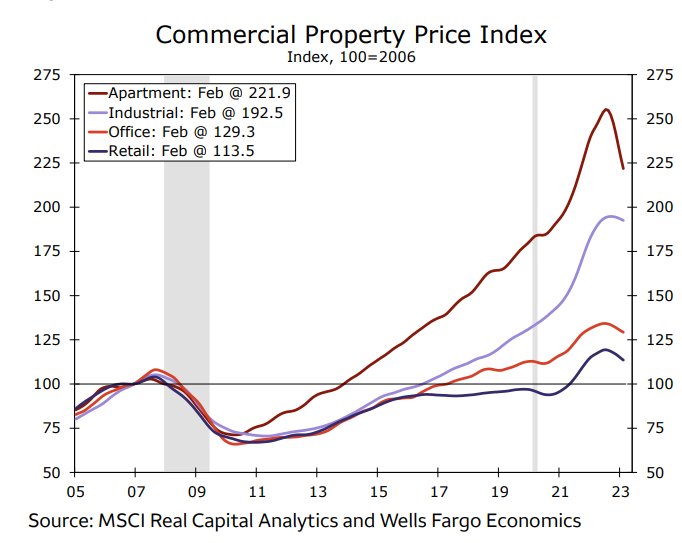
@Kareena Sharma :
take a look at this chart and few things to decipher:
- If you want to invest in anything, the first you have to analyze is the probabily of the risk of losing money , not the return.
- Currently all CRE are still on downtrend, you could invest safely when the slope of the line is moving up or flattening
- in 2013, if you invest at syndication in MF for example, your probability of hitting the return is 80% with risk of losing money lets say 10%
- in 2023, if you do it now, your chance of losing money is 40%, your probabily of hitting the return maybe 30%, this is just arbitrary number
I've shown to you after I analyze the slope
- The duplex or any MF2-4 is always better because first, the financing is using long term 30 year amortization with goverment as the note holder literally speaking. In CRE, the financing is executed by private party with only 5 years baloon payment, the private part of the financier also
uses the money from investor, so yo could literally, invest from both side (this has nothing to do with your original question).
- So in reality, the residential equity ownership is always better because you owned the asset directly and your counterparty is goverment, this is not the same with CRE.
- Also because of the structure of LP/GP ownership, this is always true: the return/risk is always favour the GP side, even if investment is collapsed they still make money from the split,acquisition fee, waterfall etc,etc. While the return would be always higher from GP side. This is why everyone want to become GP lol ;-)
- So in your personal consideation, all in all, LP investment in bad market would perform even worse compare to invest to direct ownership
- However, lets say now is good time to invest and market is good, then it is best to become GP of syndicator because you would make money 2000 times more LOL
- hope you get it how you approach investment based on time and risk perspective.
Of the two options, the syndication deal
I can't imagine buying a property that does not cashflow or at least have a path to good cashflow.
That being said, I suggest connecting with several other experience syndicator groups and doing your due diligence before choosing a group to invest with. With the information presented - 18% annually over a two-year period sounds fishy.