Stop Waiting on Proof of Funds. The Deal Comes First.
There's a pattern I see constantly with investors who are trying to get into their first deal — or their next one.
They find a property. The numbers work. And then they don't submit an offer because they don't have proof of funds lined up yet.
So the deal goes to someone else. Someone who figured out the capital after the fact.
I want to push back on this directly, because I think the proof-of-funds requirement has become a mental stop sign that's costing investors real opportunities. The sequence matters. And most people have it backwards.
Why POF-First Is the Wrong Order
The logic behind waiting for proof of funds seems sound on the surface: you don't want to make an offer you can't back up. You want to look credible. You don't want to waste anyone's time.
Here's the problem. Capital is abundant. Good deals are scarce. When you find something that genuinely pencils — where the rents cover the expense stack at a realistic vacancy rate, where the price actually makes sense for your underwriting — the conversation about capital becomes significantly easier. You're not pitching a hypothetical. You're presenting a real deal with real numbers.
**Partners, lenders, and private capital sources evaluate deals, not investors (usually).** They want to see a property that works. If you can show them that the numbers hold up under scrutiny, the conversation about capital moves fast. If you walk in with a concept but no deal, it stalls.
The investor who waited six months for their proof of funds to be "ready" before making an offer is not in a better position than the investor who found the deal, got it under contract, and then had that conversation with capital lined up behind a real opportunity.
The Actual Sequence
Here's the order that I've seen work consistently, across investors at every experience level:
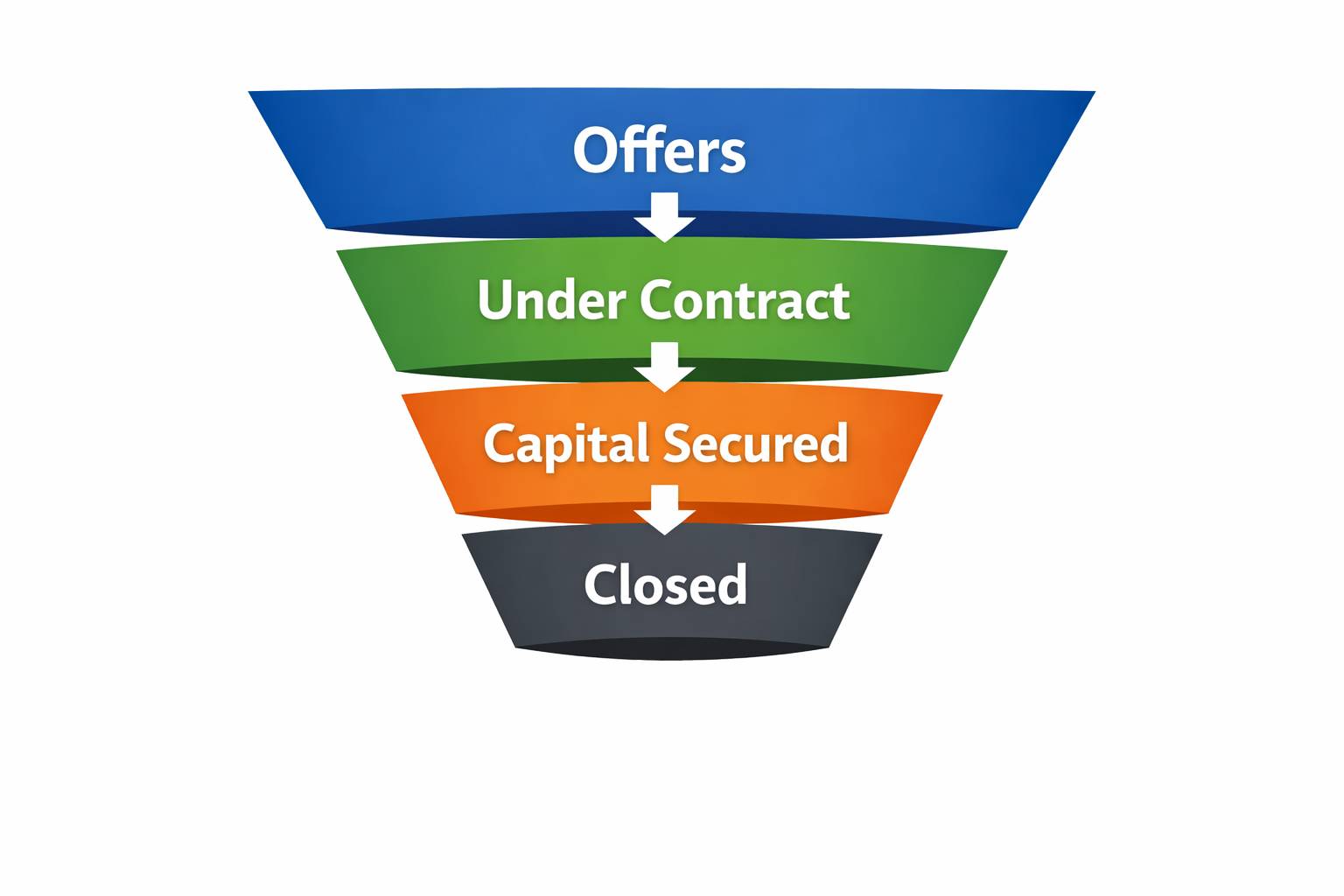
First: find the deal. This means submitting offers at volume — at the number that actually works for your analysis, not the number you think the seller will accept. Do the work to identify properties where the math can hold up.
Second: confirm the numbers. Before you get excited, build the expense stack. Taxes, insurance (get a real quote — not a guess), CapEx reserves, management, vacancy. Run it at conservative rent assumptions. If it still pencils, you have something real.
Third: go get the capital. This is when the POF conversation happens. Not before. You're now walking into that conversation with a specific property, a specific price, and a specific analysis. That's a much better conversation than "I'm looking to buy something — want to partner?"
Most experienced investors I know have partnered on deals they found first and capitalized second. The deal is the asset. The capital is the tool.
What's Actually Stopping Most Investors
I'll be honest with you: in most cases where an investor cites proof of funds as the reason they didn't make an offer, that's not the real reason.
The real reason is usually one of two things. Either they're not confident enough in their analysis to back it up in a conversation — they're not sure the deal actually works, so they don't want to commit. Or they're self-disqualifying before the seller has a chance to say anything at all.
Both of those are solvable. **The solution to shaky analysis confidence is volume of reps.** Analyze one deal a day until the read is fast and automatic. The solution to self-disqualification is submitting anyway and letting the market respond.
Neither of those problems requires more capital or a better POF letter. They require more offers.
A Note for Agents Specifically
If you're a licensed real estate agent who's trying to transition into investing — this applies to you more than anyone.
You already have access to the MLS. You can see deals as they come on market. You can submit offers directly. You have relationships with listing agents that give you a different kind of access than a typical buyer.
The one thing you don't have to wait for is a perfect capitalization plan before you start making offers. Use the access you already have. Submit at your number. The capital conversation is one you can have once you've found the deal that earns it.
The Bottom Line
Proof of funds is not the prerequisite. The deal is the prerequisite.
Find the property that pencils. Confirm the numbers hold under conservative assumptions. Then go have the capital conversation — with a deal in hand, not a hypothetical.
That's the sequence. And it changes the entire dynamic of how you build a portfolio.
We run free meet-ups in New England and go over this logic on a weekly basis. This has helped accelerate numerous investors. Feel free to connect anytime.