Do You Think the Housing Market’s About To Crash? Read This First

Do You Think the Housing Market’s About To Crash? Read This First

Real Estate Agent · Virginia, Maryland and North Carolina · Member since 2023 · 179 posts · 33 votes

Lately, it feels like a lot of people have been asking the same question: “Is the housing market about to crash?”

If you’ve been scrolling through social media or watching the news, you might have seen some pretty scary headlines yourself. That’s why it’s no surprise that, according to data from Clever Real Estate, 70% of Americans are worried about a housing crash in 2025.

But before you hit pause on your plans to buy or sell a home, take a deep breath. The truth is: the housing market isn’t about to crash – it’s just shifting. And that shift actually works in your favor.

Today’s Inventory Keeps the Housing Market from Crashing

Mark Fleming, Chief Economist at First American, says:

Think about it. If there’s a shortage of something – like tickets to a popular concert – prices go up. That’s what’s been happening with homes. We still have a shortage of supply. Too many buyers and not enough homes push prices higher.

Check out the white line for 2025 in the graph below. Even though the number of homes for sale is climbing, data from Realtor.com shows we’re still well below normal levels (shown in gray):
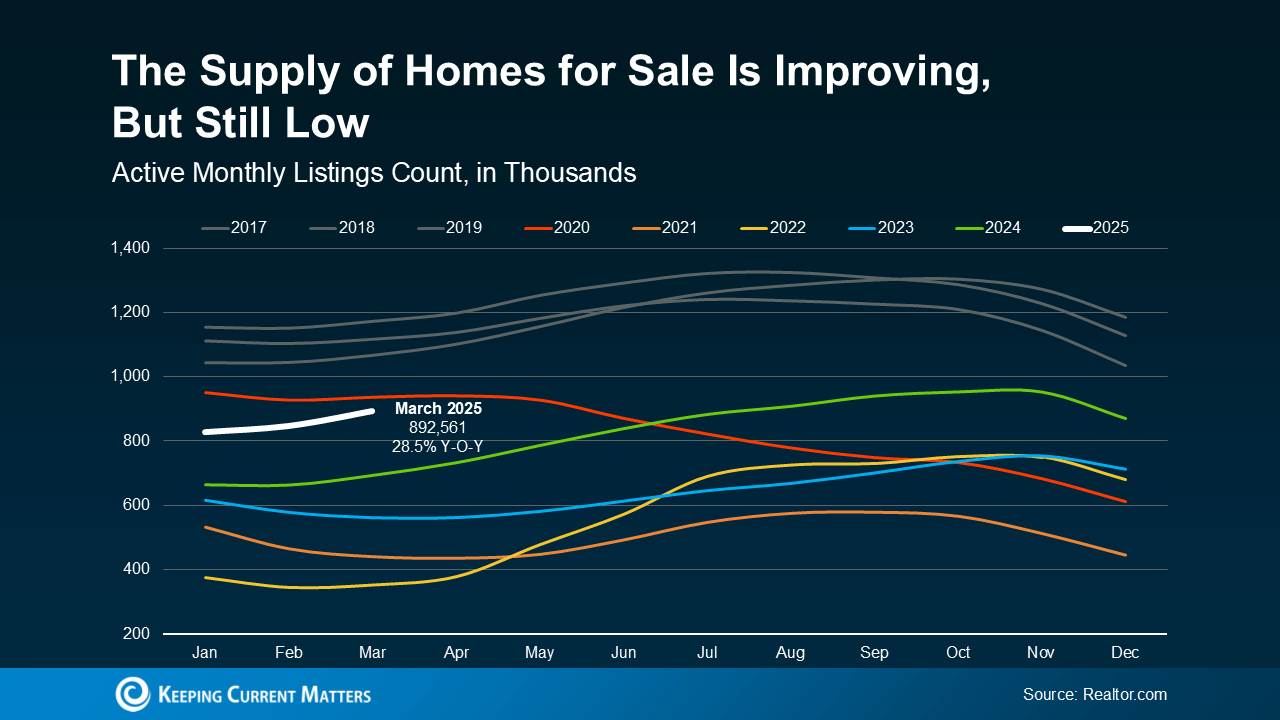
a graph of sales and pricesThat ongoing low supply is what’s stopping home prices from dropping at the national level. As Lawrence Yun, Chief Economist at the National Association of Realtors (NAR), says: More Homes for Sale Means Price Growth Is Easing

And, as more homes become available, that takes some of the intense upward pressure off home price growth – leading to healthier price appreciation.

So, while prices aren’t falling nationally, growing inventory means they also aren’t rising as fast as they were. What we’re seeing is (see graph below):
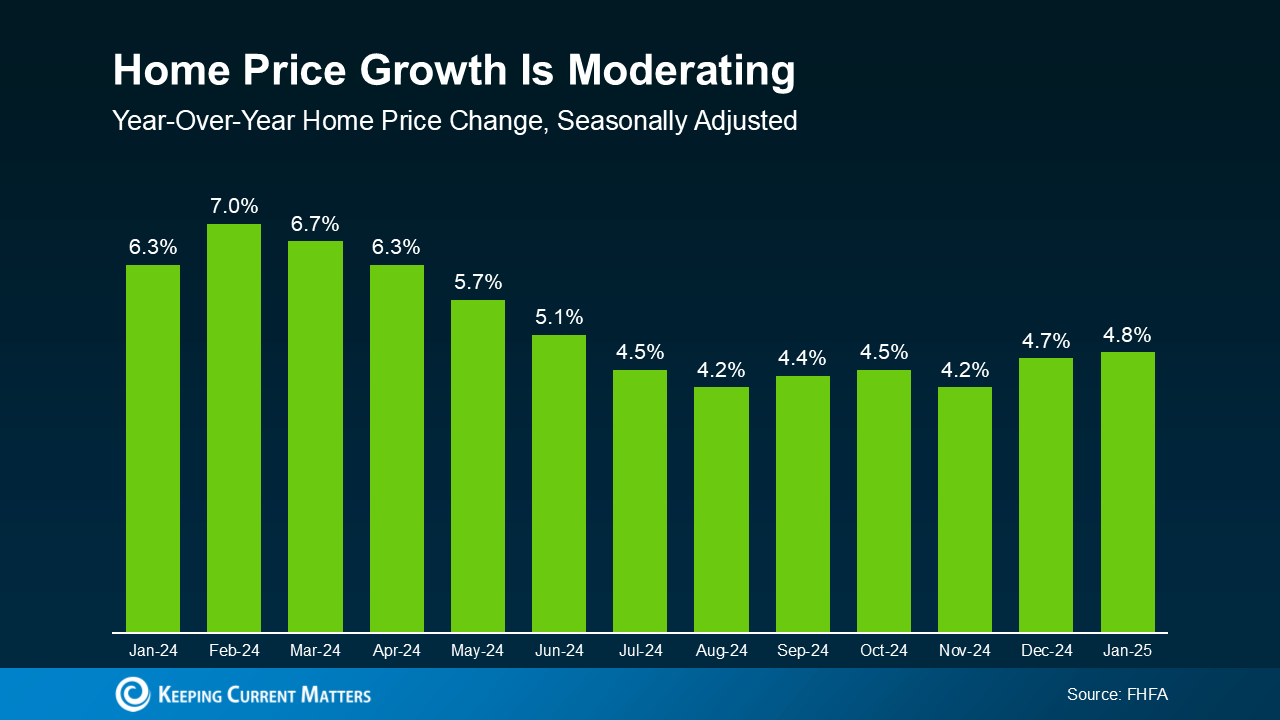
a graph of green barsAnd according to Freddie Mac, that moderation should continue through the rest of this year:

Put simply, that means prices will continue going up in most areas, just not as quickly. That’s good news for anyone who’s been having trouble finding a home and feeling sticker shock from the rapid price appreciation of the past few years.

But of course, what’s happening with prices and inventory is going to vary by local market. So, talk to your agent to find out what’s happening where you live.

Bottom Line

Don’t let the talk scare you. Experts agree that a housing market crash is unlikely in 2025. As Business Insider reports:

Instead, we’re heading into a housing market that’s healthier and more balanced, with slower price growth and more opportunity.

Chat with a local real estate agent about what’s happening in your local market and how you can make the most of it.

0Reply
40 views

Most Popular Reply

Chris SeveneyBusiness Member
Moderator
Investor · VA · Member since 2015 · 21k+ posts · 19k+ votes
1y
Quote from @Grant Tyler Short:

The inventory interpretation is an interesting one. I do continue to see folks look at a static market inventory number and make a claim about that static number at X point in time. 

In AZ, for the past 24 months, many realtors have continued to state inventory is at an all time low. Month after month after month, completely ignoring the massive, increasing, rate of change of new inventory growth as a result of both 1) new listing growth month over month and 2) decreases in purchase demand. It's analogous to a train accelerating from a dead stop that is increasing in acceleration but an outside observer  stating that at X point in time the speed is still "slow." I would caution, don't ignore the acceleration variable. It paints a more holistic picture. In AZ, inventory has 6Xd since the nadir of pandemic buying frenzy. Grant Cardone may be pleased once inventory 10Xs I suppose!


I think inventory also needs to look at why is the inventory increasing - the number of defaults especially on the FHA side is increasing and I agree that I do not see a crash in 2025 - but when institutional lenders/investors are pulling out of states like FL, AZ and other places this should raise some red flags as they spend 7-8 figures a year researching data and have more data than we have. So I would say proceed with caution, there are still deals out there and money to be made - but the days of buying an asset and expecting 5-10% appreciation per year are most likely not going to happen for a few years.

7e investments53 Reviews
See this reply in the discussion

5 Replies

Jump to latestLatest
  • Investor · Conshohocken · Member since 2025 · 23 posts · 3 votes
    1y

    Hey Desiree,

    Very interesting write up! It's going to be very interesting to see what's to come in the near future.

  • Real Estate Agent · Virginia, Maryland and North Carolina · Member since 2023 · 179 posts · 33 votes
    1y

    Hey Alex, 

    Thank you! I really appreciate you taking the time to read it. I agree—things are definitely shifting, and it’ll be exciting to see how everything unfolds. I’ll be keeping a close eye on it!

    Let’s definitely stay in touch as things develop.

  • Scottsdale, AZ · Member since 2017 · 21 posts · 18 votes
    1y

    The inventory interpretation is an interesting one. I do continue to see folks look at a static market inventory number and make a claim about that static number at X point in time. 

    In AZ, for the past 24 months, many realtors have continued to state inventory is at an all time low. Month after month after month, completely ignoring the massive, increasing, rate of change of new inventory growth as a result of both 1) new listing growth month over month and 2) decreases in purchase demand. It's analogous to a train accelerating from a dead stop that is increasing in acceleration but an outside observer  stating that at X point in time the speed is still "slow." I would caution, don't ignore the acceleration variable. It paints a more holistic picture. In AZ, inventory has 6Xd since the nadir of pandemic buying frenzy. Grant Cardone may be pleased once inventory 10Xs I suppose!

    • Chris SeveneyBusiness Member
      Moderator
      Investor · VA · Member since 2015 · 21k+ posts · 19k+ votes
      1y
      Quote from @Grant Tyler Short:

      The inventory interpretation is an interesting one. I do continue to see folks look at a static market inventory number and make a claim about that static number at X point in time. 

      In AZ, for the past 24 months, many realtors have continued to state inventory is at an all time low. Month after month after month, completely ignoring the massive, increasing, rate of change of new inventory growth as a result of both 1) new listing growth month over month and 2) decreases in purchase demand. It's analogous to a train accelerating from a dead stop that is increasing in acceleration but an outside observer  stating that at X point in time the speed is still "slow." I would caution, don't ignore the acceleration variable. It paints a more holistic picture. In AZ, inventory has 6Xd since the nadir of pandemic buying frenzy. Grant Cardone may be pleased once inventory 10Xs I suppose!


      I think inventory also needs to look at why is the inventory increasing - the number of defaults especially on the FHA side is increasing and I agree that I do not see a crash in 2025 - but when institutional lenders/investors are pulling out of states like FL, AZ and other places this should raise some red flags as they spend 7-8 figures a year researching data and have more data than we have. So I would say proceed with caution, there are still deals out there and money to be made - but the days of buying an asset and expecting 5-10% appreciation per year are most likely not going to happen for a few years.

      7e investments53 Reviews
  • V.G JasonPro Member
    Investor · Member since 2022 · 3k+ posts · 3k+ votes
    1y

    We've been saying this for some time. Nationally, no crash just some correction. Regionally and locally, definitely some market-specific crashes and some afloat.

    Real estate is inelastic in it's nature--extremely so. The best locations, with limited land plots and difficult housing construction, will remain bid albeit softened but still persistent bid. And the inverse with any area that has too many plots, too much saturation, bad location.

    Think of it as a sliding scale. And all I see is it getting worse, before better. To me that sounds like a buying opportunity; just buy right, no need to FOMO into this. 

Join the conversationCreate a free account to reply, vote on answers and follow this thread.