Fed Holds Rates, Housing Starts Hit Five Year Low, Pending Sales Rise Again
Week of June 15 data roundup for those tracking the mortgage and housing market.

Fed Holds, New Chair Sets Agenda
Kevin Warsh's FOMC debut resulted in a unanimous hold at 3.50% to 3.75%, the fourth consecutive meeting without a move. Warsh announced five new task forces targeting Fed communications, economic data collection, balance sheet management, productivity and jobs, and the inflation framework. The framing is clearly about modernizing how the Fed operates. Markets will be listening closely to how he signals the path forward on cuts.
Housing Starts at Lowest Level Since 2020
May housing starts fell 15.4% month over month to an annual rate of 1.18 million units. Building permits slipped 0.7% to 1.413 million units. The NAHB Housing Market Index dropped two points to 35 in June, well below the 50 threshold that separates builders viewing conditions as good versus poor.
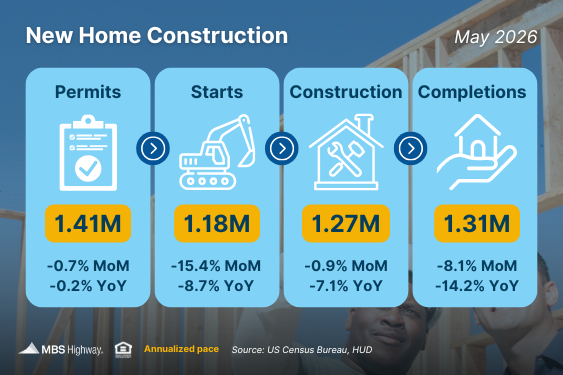
For investors, this supply contraction matters. Fewer units breaking ground today means less competitive inventory hitting the market over the next 12 to 18 months. If demand holds and rates ease, existing stock and turnkey properties stand to benefit from continued price support.
Pending Home Sales Up 3.8% for Fourth Consecutive Month
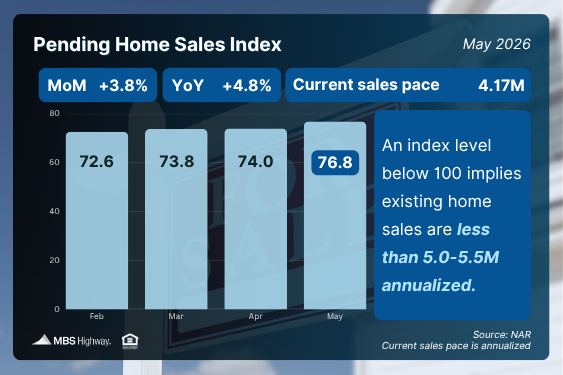
Signed contracts on existing homes rose 3.8% from April to May, beating expectations, with gains in all four major U.S. regions. Year over year, pending sales are up 4.8%. NAR is calling it a "late spring buyer rush." Demand remains resilient despite elevated rates, and the supply and demand dynamics continue to point the same direction.
Macro Picture
Retail sales came in at 0.9% for May, well above consensus. Excluding gas, the reading was still strong, confirming broad consumer spending rather than a gas price effect. New jobless claims held around 226,000. Continuing claims at 1.81 million remain elevated, suggesting a longer runway to reemployment for displaced workers.
The US and Iran agreed to extend their ceasefire and reopen the Strait of Hormuz. If oil prices come down as a result, it removes one inflationary pressure point the Fed has been watching.
What to Watch
Thursday brings the PCE report (the Fed's preferred inflation gauge), the final Q1 GDP reading, and jobless claims. Wednesday has May New Home Sales. A soft PCE print could meaningfully shift rate cut expectations and move mortgage bond pricing. If you are tracking DSCR or conventional investment property financing, keep an eye on Thursday's data. That is the print with the most potential to move rates in the near term.
