Investor · Fort Lauderdale, FL · Member since 2013 · 917 posts · 607 votes
The median U.S. mortgage payment has nearly doubled since 2020. $1,240 → $2,420 a month. Incomes didn't double. Payments did.
Everyone's diagnosing the housing market wrong. Not enough inventory? Blame builders. Too many investors? Blame Wall Street. Rates too high? Blame the Fed. None of that is the disease. It's all symptoms.
The disease is affordability. In 2019, a household earning $50K could afford 28% of home listings. Today, that number is 9%. When the payment outstrips the paycheck, nothing else matters: Buyers can't buy Sellers can't sell at the price they want Builders can't build at a price anyone can pay Investors show up because homeowners can't move their own homes
Fix affordability and all of that unwinds on its own. Ignore it and you can drop rates to 3%, flood the market with new construction, and ban every institutional buyer in America, but the market still won't clear. You'll just change who's priced out.
Everyone wants a villain. Affordability isn't a villain. It's the scoreboard.
I believe a significant factor is how unrealistic Americans are about what constitutes an acceptable standard of living. There are affordable properties but no one is interested in a starter home.
agreed I know you work in or have worked in Balt city.. I just sold a fully rehabbed house in an OK neighborhood not great but not the hood for 165k.. I think the other issue is automobiles RVs boats buying so much stuff on credit.. I think many in the US just dont prioritize housing over a new car or an RV or a new jet ski or boat or what have you..
I couldn't agree more. I believe the pricing issue was created by the vast amounts of free money to PE as well as artificial interest rates that drove prices through the roof. Then inflation poured salt in the wound. Unfortunately for all of us, there will be a reckoning, not sure what it will look like, but 2008 looms in my mind.
Affordability is the result of wage suppression. Get rid of Bork’s antitrust philosophy and bring back real antitrust enforcement. Find the high point in the minimum wage (some time in the 60s I think), index it to inflation and set new figure, then index the base to inflation. Enforce laws against union busting (and stop union featherbedding). Modernize government permit procedures.
Investor · Fort Lauderdale, FL · Member since 2013 · 917 posts · 607 votes
2mo
You're preaching to the choir, Troy. The fault with the current state of affairs re housing lies at the feet of the politicos in D.C. Every time the govt gets involved, decides to help us, the result is FUBAR.
Keep in mind that 2008 happened because the Shrub refused to enforce financial regulations on the books and then bailed out Wall Street iN September, 2008, rather than letting the banksters fail and get jailed.
So sometimes the FUBAR is because government didn’t get involved.
Investor · VA · Member since 2015 · 21k+ posts · 19k+ votes
2mo
I am going to talk out both sides of my mouth with this conversation.
First off, payment has increased because I agree with others, the government printed, I believe, around $7 trillion, which increased our money supply. In order to print that money, the government needed to sell treasuries. Mortgage rates are typically based off the 10-year Treasury. The way it was explained to me is that people buy 10-year treasuries either at a premium or discount to set a price point, which is considered a risk-free rate. Then investors will invest in 30-year mortgages, which are mortgage-backed securities, at that risk free rate plus a premium because there is risk involved.
Now this is where it gets interesting, because the mortgage rate has doubled as have payments and people will say, "Well, my salary hasn't doubled," which is the truth.
Butnhear me out: When you evaluate a multi-family property, as an example, your expenses year over year typically increase at a greater rate/percentage than your rental income, but the amount of rental income is significantly higher than your expenses..
Now let's take this with the median household income, which was $68,000 in 2020 and is now roughly $86,000, which is an $18,000 increase, or $1,500 a month. Now 100% of that increase, of course, would not go to a mortgage payment, as other costs of living and other things have increased. Let's say it's 45%. So that is roughly $2500 of income which would mean median income yo be more consistent would be $98,000
Point I'm trying to make is yes, housing is absolutely less affordable, but wait 3 years when salaries catch back up which they will and housing stays stagnant and we go from "we have record number of listings and price drops" to "we need to build more" and "people are removing contingencies"
Investor · Fort Lauderdale, FL · Member since 2013 · 917 posts · 607 votes
2mo
Chris, I want to but cannot share your optimism re salaries catching up. The job market is dicey at the moment. Don't see a 20% bump in the near future.
I believe a significant factor is how unrealistic Americans are about what constitutes an acceptable standard of living. There are affordable properties but no one is interested in a starter home.
agreed I know you work in or have worked in Balt city.. I just sold a fully rehabbed house in an OK neighborhood not great but not the hood for 165k.. I think the other issue is automobiles RVs boats buying so much stuff on credit.. I think many in the US just dont prioritize housing over a new car or an RV or a new jet ski or boat or what have you..
I believe a significant factor is how unrealistic Americans are about what constitutes an acceptable standard of living. There are affordable properties but no one is interested in a starter home.
agreed I know you work in or have worked in Balt city.. I just sold a fully rehabbed house in an OK neighborhood not great but not the hood for 165k.. I think the other issue is automobiles RVs boats buying so much stuff on credit.. I think many in the US just dont prioritize housing over a new car or an RV or a new jet ski or boat or what have you..
I see Mercedes in line at the Food Pantry giveaways.
I believe a significant factor is how unrealistic Americans are about what constitutes an acceptable standard of living. There are affordable properties but no one is interested in a starter home.
True. The starter home of the 1950s is considered a hovel today. People want starter homes with two bathrooms, three full bathrooms living room and dining room at 1800 square feet. They won’t listen when you tell them that’s not a starter home.
I believe a significant factor is how unrealistic Americans are about what constitutes an acceptable standard of living. There are affordable properties but no one is interested in a starter home.
True. The starter home of the 1950s is considered a hovel today. People want starter homes with two bathrooms, three full bathrooms living room and dining room at 1800 square feet. They won’t listen when you tell them that’s not a starter home.
There ya go. People won't "settle" for starter homes in crappy neighborhoods and they can't afford nice neighborhoods because college didn't prep them for jobs that mean anything.
So, they can't make money.
Then they carry the debt which pushes their debt load too high and they of course must have a nice car which increases the debt load. That $9 daily Starbucks drink offsets the disappointments and they call that living.
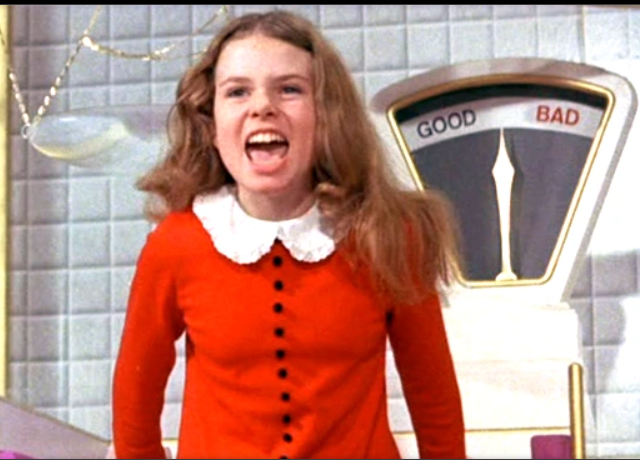
It's a "Veruca Salt in Willy Wonka and the Chocolate Factory" problem.
Investor · VA · Member since 2015 · 21k+ posts · 19k+ votes
2mo
@Jay Hinrichs - we have sold some houses in western Tennessee 3 bed 2 bath for 150k. Cape Coral and port charlotte for $200,000 - as you mention Baltimore for under $200k. I saw a guy online says he lives in Baltimore and trains to dc everyday and is saving tons of $ as he makes great money in dc and spends 1/3 on housing than he would if he lived in DMV
I believe a significant factor is how unrealistic Americans are about what constitutes an acceptable standard of living. There are affordable properties but no one is interested in a starter home.
True. The starter home of the 1950s is considered a hovel today. People want starter homes with two bathrooms, three full bathrooms living room and dining room at 1800 square feet. They won’t listen when you tell them that’s not a starter home.
There ya go. People won't "settle" for starter homes in crappy neighborhoods and they can't afford nice neighborhoods because college didn't prep them for jobs that mean anything.
So, they can't make money.
Then they carry the debt which pushes their debt load too high and they of course must have a nice car which increases the debt load. That $9 daily Starbucks drink offsets the disappointments and they call that living.
It's a "Veruca Salt in Willy Wonka and the Chocolate Factory" problem.
"I want it now!"
to me this is a classic case that happened to me..
40 acres outside portland that I logged had a very nice home on it I did a lease option for a buyer who out of pocket built a pole barn ( which was OK) but then 2 weeks before closing goes out and buys a 40k backhoe he just had to have for his new property.. Debt to income went wonky and he no longer qualified lease was up they had to move and I got the 25k pole barn as a parting gift and then resold to someone else. Ken I know you work defaulted debt type deals or have so have I.. I roll up to many homes and well two nice cars and aforementioned RV on the side of the house or a boat and they cant understand how they got behind on their mortgage.. Its a money management issue.
When I lived in Palo Alto in the mid 80s houses were already at 500k or so for a OLd what you would call starter I lived in Barron Park got mine before the run up at 185k.. But anyway it was common for new buyers to pay the 500k and drive old Honda or Toyota they prioritized RE in the Pennisula that was very common. House first cars way later.
I believe a significant factor is how unrealistic Americans are about what constitutes an acceptable standard of living. There are affordable properties but no one is interested in a starter home.
Jules, you are correct. Society has devolved into flexing for social media attention. A starter home won't get them Likes. But that shiny object will draw the attention that the "influencer" is craving.
"...college didn't prep them for jobs that mean anything. " ----------------------------------------------------------
Oh, I'm sure college prepped them for "meaningful" jobs, just not ones that pay anything. I'. all for ending wage suppression, but there's not much you can do with a degree in art history.
The median U.S. mortgage payment has nearly doubled since 2020. $1,240 → $2,420 a month. Incomes didn't double. Payments did.
Everyone's diagnosing the housing market wrong. Not enough inventory? Blame builders. Too many investors? Blame Wall Street. Rates too high? Blame the Fed. None of that is the disease. It's all symptoms.
The disease is affordability. In 2019, a household earning $50K could afford 28% of home listings. Today, that number is 9%. When the payment outstrips the paycheck, nothing else matters: Buyers can't buy Sellers can't sell at the price they want Builders can't build at a price anyone can pay Investors show up because homeowners can't move their own homes
Fix affordability and all of that unwinds on its own. Ignore it and you can drop rates to 3%, flood the market with new construction, and ban every institutional buyer in America, but the market still won't clear. You'll just change who's priced out.
Everyone wants a villain. Affordability isn't a villain. It's the scoreboard.
I think you're right that affordability is at the center of today's housing challenges, but I'd add that financing has become just as important as pricing.
Every day I work with real estate investors, and we're seeing deals that would have been easy to finance a few years ago now require much more creativity to make the numbers work. Higher rates, increased insurance costs, property taxes, and tighter underwriting have all pushed monthly payments higher—even when purchase prices haven't increased significantly.
That said, opportunities still exist.
We're seeing investors successfully close deals by:
Negotiating seller concessions to reduce closing costs or buy down the interest rate.
Purchasing distressed properties where forced appreciation creates equity.
Using bridge or Fix & Flip financing to renovate and refinance into long-term rental loans.
Focusing on cash flow and debt service rather than betting solely on appreciation.
Affordability isn't just a homeowner issue—it's affecting investors, builders, lenders, and sellers alike. The investors who succeed in this environment are the ones who adapt their financing strategy and underwriting assumptions to today's market instead of relying on yesterday's.
The market has definitely changed, but deals are still getting done for those willing to adjust their approach.
Great points, and I agree affordability is the major pain point. I do think that rates play a large part of that problem, and I think it boils down to the average buyer's buying power and having monthly payments that makes sense financially. After factoring in interest, taxes, insurance, HOA dues, etc. that final amount paid each month hurts a lot more today than it did 5 years ago.
Property Manager · Royal Oak, MI · Member since 2012 · 12k+ posts · 9k+ votes
2mo
Several of you have alluded to high interest rates as the problem - why are you so naive?
In the 1990s we thought 6-7% was LOW, so why are you fixated on something that is NOT the problem?
For the "average" American, wages have NOT kept up with inflation or productivity:
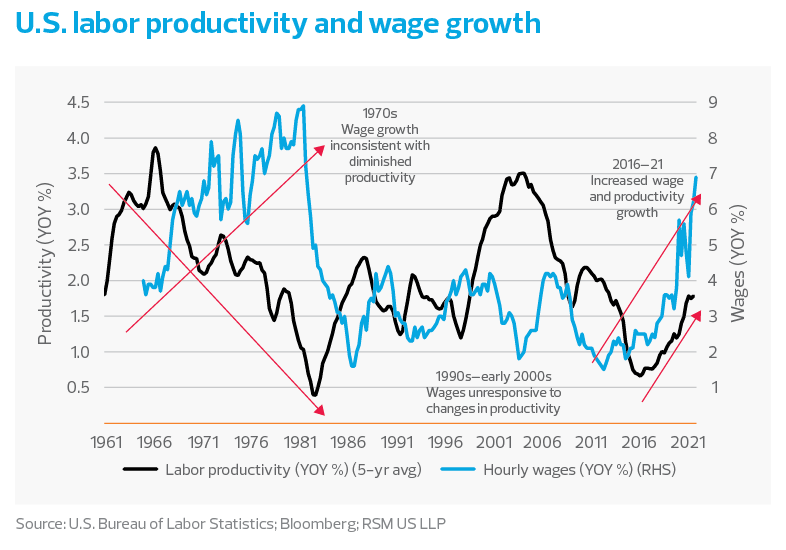
Seems an increasing percentage of Americans are working low-paying jobs.
I remember when your local McDonalds workers were majority high school and college kids. now the majority seems to be single mothers and retirees. - The kicker, many of these single mothers have student loan debt for worthless college degrees.
The middle class is shrinking as historically, there never was one until "recently":
Chronology of the Middle Class The history of the middle class is defined by its changing shape, expanding from a small group of merchants to a mass economic demographic before facing modern financial shifts. [1, 2, 3, 4]
18th Century (The "Middling Sort"): The concept originated in Britain to describe individuals who held wealth—often through trade or manufacturing—but lacked noble titles. This group eventually drove political changes, such as the French Revolution. [1, 2]
19th Century (The Industrial Revolution): As industrialization took hold, the middle class diversified. It grew to include management, white-collar office workers, doctors, lawyers, and engineers. [1, 2, 3, 4, 5]
Mid-20th Century (The Golden Age): The modern mass middle class took shape after World War II. Driven by the G.I. Bill, union expansion, and booming suburban development, a large majority of Americans achieved homeownership and access to higher education. [1, 2, 3, 4]
Late 20th Century to Present: The size of the middle class has steadily contracted. According to Pew Research Center data, the percentage of American households considered middle-income fell from 61% in 1971 to roughly 51%, with wealth increasingly concentrating in upper-income tiers. [1]
Rental Property Investor · Gilbert, AZ · Member since 2016 · 3k+ posts · 4k+ votes
2mo
@Michael Carbonare someone can't fix affordability in a free market. Supply and demand set prices in a free market. Affordability is irrelevant. Simply put, there are some people who are willing to stretch to buy a house at a certain price point and there are others who are not willing to or are unable to buy when the price gets to a certain point. And then on the sell side, there are some people who are willing to sell a house for under what they think they should be able to sell it for and there are others who are unwilling to. The price of the home is where the two intersect. The idea of fixing affordability is to artificially inflate the buyer's ability to afford a home or to interfere in the qualification process to help them qualify for a loan to buy a home. Or on the sell side, fixing affordability means to force people to sell their properties for less than they want to. Fixing affordability on either side, requires some sort of government intervention rather than allowing supply and demand to determine the price. When more people want to sell than people want to buy, the prices will come down naturally to a place where it hits an equilibrium where the number of people that can afford to purchase a home is the same number as the people who are willing to lower their sales price to sell their home. When demand remains high, prices will remain high to equal the number of units that the market is comfortable selling.
What sort of government imposed policies would you like to see in order to"fix affordability?"
Investor · Fort Lauderdale, FL · Member since 2013 · 917 posts · 607 votes
2mo
@Shiloh Lundahl When I referred to fixing affordability, by no means do I want any form of govt intervention. I'm a big believer that when the govt gets involved the result is almost always FUBAR. My thinking is the only way affordability is fixed is by a substantial decline in housing prices. If that is to occur, and I think it will, the cause will be as you stated: a dearth of buyers willing to pay current prices.
Rental Property Investor · Gilbert, AZ · Member since 2016 · 3k+ posts · 4k+ votes
2mo
@Michael Carbonare what Do you think would cause that dearth of buyers willing to pay current prices? I personally don't think that that's going to happen and the reason is because people continue to want to get into homes. And as soon as a property comes up that's within their price point they offer on it. So as long as that keeps happening, which I think it probably will, I don't think that there's going to be a large decline in home prices.
Here is an example, in Mesa, Arizona there's hardly any regular houses that sell for less than $300,000. As soon as a house comes on the market for $299,900 or less, it gets purchased by someone. So that $300,000 amount is kind of a market floor. There are enough buyers at that price point to where multiple buyers would bid on the house and it would not need to sell for less than $300,000. So in order for houses to go below that price point,all of the buyers would need to simultaneously not be able to qualify to purchase a home at that price, or they would need to make a collaborative effort to decide to not buy a house at that price point, thus forcing the person that puts the house on the market at $300,000 to lower the price until they can find a buyer. I just don't see that happening.
@Shiloh Lundahl When I referred to fixing affordability, by no means do I want any form of govt intervention. I'm a big believer that when the govt gets involved the result is almost always FUBAR. My thinking is the only way affordability is fixed is by a substantial decline in housing prices. If that is to occur, and I think it will, the cause will be as you stated: a dearth of buyers willing to pay current prices.
So, dollar goes up or housing supply in specific locale goes up, or both? Which are you betting on?
In 1-4 quarter time frame anything can happen, long term I doubt it.