Rental Property Investor · Joliet, IL · Member since 2013 · 102 posts · 48 votes
I have a rental property where the brick veneer is pulling away from the house. The current recommendation is complete teardown and rebuild. I’d like to make sure there isn’t a practical stabilization option first. The consensus root cause is inadequate or missing wall ties.
I’ve seen repairs on You Tubre where existing veneer is pushed back into position and secured with retrofit/helical masonry ties into the framing. Has anyone successfully used this approach?
I’m especially interested in whether you were able to:
Stabilize most of the existing brick
Rebuild only the worst sections
Any experience with a Chicago/Joliet area contractor would be appreciated.
That looks like t-111 or smartboard on the upper part. Have someone handy rip out the bricks, and replace with what matches the above siding, joined by a Z strip. Might be a good opportunity to insulate.
Without seeing pictures tough to say but you can as you mention pin the brick back to the structure and I have done this on commercial properties in the past. We were able to stabilize the existing brick and did not have to rebuild any of it, but that also would depend on how bad it is. Also what is the cause? Was the cavity filled with debris and not draining properly? The other thing to consider is why did this happen so it does not happen in future or cause other areas to fail
The brick is only about 4' up the building. Here is the worst section. There is concern that the wood behind the brick is damaged. Other areas have pulled away 0-3". I've spoken with several Masons.
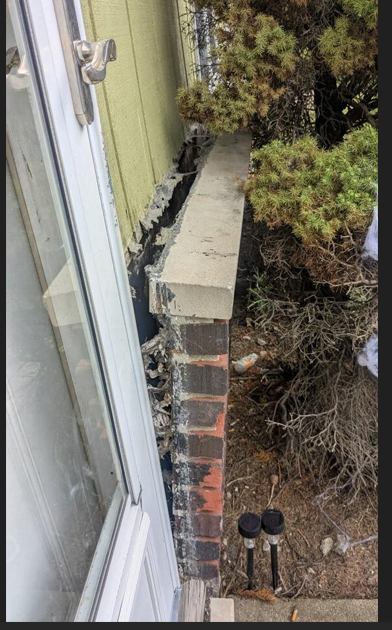
That looks like t-111 or smartboard on the upper part. Have someone handy rip out the bricks, and replace with what matches the above siding, joined by a Z strip. Might be a good opportunity to insulate.
Thanks, Henry. I think that’s a solid approach. If we can save most of the existing brick, matching the siding in the worst sections could be a practical and clean solution.
I wouldn't spend too much time/money on putting this back the way it was. You might want to just bite the bullet and rip it off right now. Especially if any of the wood framing behind the bricks is damaged. You could spend thousands and discover that you have to take it off anyway....
Yes — a full teardown is not automatically the only answer here.
Retrofit/helical masonry ties are a legitimate stabilization method if the existing veneer is still serviceable and the underlying framing/sheathing is sound. The key is figuring out whether you have primarily a tie failure or whether there is also movement, water damage, failed lintels/support, deteriorated mortar, or compromised substrate behind the brick.
I’d want an engineer or masonry-restoration contractor to map the wall before approving wholesale demolition. A reasonable repair plan can sometimes look like: selectively remove the worst displaced areas, bring salvageable veneer back into plane where feasible, install engineered retrofit ties into verified framing at a specified spacing, repoint the disturbed joints, and correct whatever flashing/weeping/water-management issue contributed to the failure.
The important distinction is stabilization vs. cosmetic repair. You don’t want someone simply screwing the brick back to the house without determining what those anchors are actually engaging and whether the veneer still has adequate bearing/support.
Before accepting a complete tear-off bid, I’d get an independent structural/masonry assessment and ask them to quantify what percentage of the wall actually requires reconstruction versus retrofit stabilization.
I’d also separate the inspection from the contractor selling the repair if possible.
If you want, send me the photos, approximate age of the property, and what the contractor told you. I’m happy to take a look at it with you and help you pressure-test the proposed scope/bids before you spend teardown money.
Alison, before deciding between a full tear-down and a stabilization repair, I’d want an independent structural engineer or experienced masonry specialist to confirm whether the existing veneer can actually be re-anchored safely.
If the root issue is missing or failed wall ties, pushing the veneer back and installing retrofit ties can sometimes be part of a repair strategy, but the feasibility really depends on how far the wall has moved, whether the brick itself is still sound, what’s happening behind the veneer, and whether moisture or sheathing damage is also involved.
I’d be especially careful with any repair that only addresses the visible movement without fixing the underlying attachment problem. If the veneer has pulled away enough to create instability, the safest solution may still involve rebuilding sections rather than trying to save everything.
From the tax side, I’d keep the engineering report, contractor scope, and invoices very detailed. If you end up replacing substantial sections of the veneer, that may need to be capitalized rather than treated as a normal repair. If old building components are removed and replaced, there may also be a partial-disposition opportunity depending on the facts.
So I’d make the structural decision first, then make sure the tax treatment follows the actual scope of work.
Feel free to DM me, I’d be happy to send over a few resources that might be helpful.
I have a rental property where the brick veneer is pulling away from the house. The current recommendation is complete teardown and rebuild. I’d like to make sure there isn’t a practical stabilization option first. The consensus root cause is inadequate or missing wall ties.
I’ve seen repairs on You Tubre where existing veneer is pushed back into position and secured with retrofit/helical masonry ties into the framing. Has anyone successfully used this approach?
I’m especially interested in whether you were able to:
Stabilize most of the existing brick
Rebuild only the worst sections
Any experience with a Chicago/Joliet area contractor would be appreciated.
@Alison Robinson, one thing I would add from working with property owners is that I would treat this as more than just a repair cost question. If the brick is already pulling away that much, I would want a qualified professional to tell me in writing whether there is any current safety concern before deciding how much of it can be saved.
I’ve seen owners get focused on finding the cheaper repair, but if the property is occupied, the bigger question is whether anyone could get hurt while you are figuring it out. I would document the condition now, get an independent assessment, and then have contractors bid from the same written scope so you are comparing the same repair instead of getting three completely different opinions. If there is any area that may be unsafe, I would also make sure access is limited until you know what you are dealing with.
I sent you a connection request as well. You clearly have a lot of hands on experience as an investor, and I’d be glad to stay connected and see how you end up solving this one.
Hi Diana, my property manager raised the same liability concern. We’re working diligently to find a solution, but the risk is definitely part of the decision.
The wall is only about 4 feet high, but we plan to block off the worst area while we continue evaluating repair options. Ideally, we’ll have a permanent solution in place before winter.
Thanks for the thoughtful input and the connection request.
I haven’t used this approach personally or have a Joliet contractor to recommend, but I’d definitely get another opinion from a masonry restoration specialist before tearing everything down. Retrofit ties are a legitimate repair method for missing or failed wall ties, so I’d want someone experienced with them to look at how much of your existing veneer can actually be stabilized and whether only the worst sections need to be rebuilt. A full teardown may still be the answer, but I’d want to know specifically why the existing brick can’t be saved first.