Seeking Feedback: Would You Pursue This $1.4M Alabama Pecan Orchard Acquisition?

Seeking Feedback: Would You Pursue This $1.4M Alabama Pecan Orchard Acquisition?

Investor · San Diego California / Hurtsboro, AL · Member since 2026 · 22 posts · 2 votes

Seeking Feedback: Would You Pursue This $1.4M Alabama Pecan Orchard Acquisition?

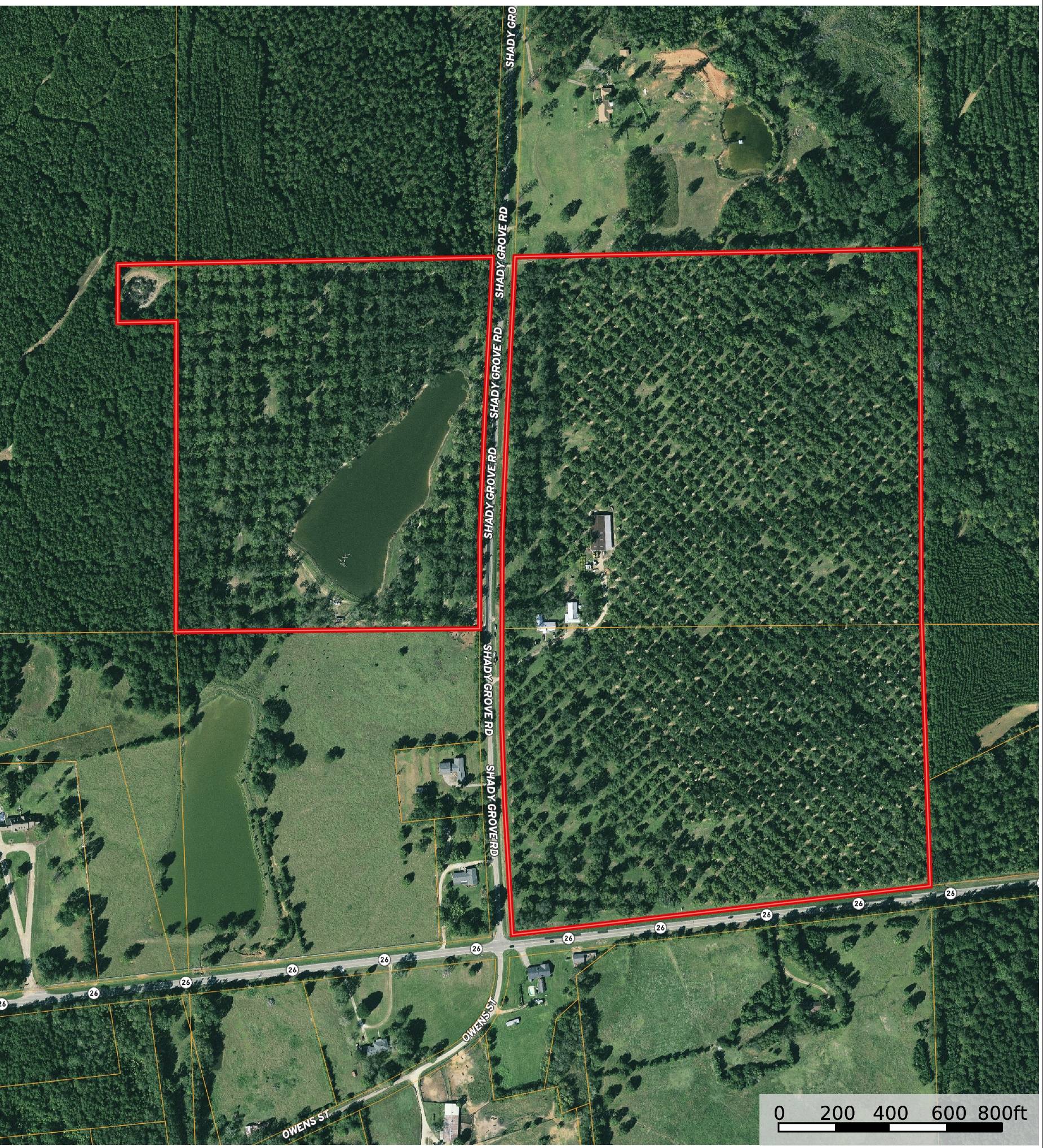
I am currently evaluating the acquisition of a 115-acre pecan orchard in Russell County, Alabama consisting of approximately 2,863 trees, irrigation infrastructure, processing facilities, equipment, retail space, a pond, and an on-site residence.

Purchase Price: $1.4 Million

I want to be completely transparent about both the opportunity and the challenges.

The orchard has been owned by the current owner for approximately 12 years. According to the broker, the owner significantly improved the property during his ownership but primarily operated it as a side activity rather than a fully optimized commercial farming enterprise. The farm was reportedly maintained in good condition, but maximizing annual production was not the owner's primary objective.

Available sales records provided by the seller show reported pecan sales of approximately:

• 2018: $52,106
• 2019: $20,869
• 2020: $109,425
• 2021: $9,335

The opportunity I see is not the purchase of a fully optimized income-producing orchard.
The opportunity is acquiring a mature orchard with established infrastructure that appears to have been underutilized relative to its physical assets and long-term production potential.

What attracts me to the property:

• Existing irrigation system
• Processing and retail infrastructure already in place
• Approximately 2,863 established trees
• On-site residence and supporting improvements
• Long-term agricultural asset with tangible value
• Potential operational improvements versus historical management approach

At this stage I am actively evaluating production history, operating costs, financing structures, and long-term viability.

I would appreciate feedback from anyone with experience in:

• Commercial orchards
• Pecan production
• Agricultural lending
• Farm acquisitions
• Asset-backed investment structures


I am happy to discuss available sales records, aerials, property information, and acquisition details with knowledgeable parties.

I welcome tough questions and constructive criticism from experienced agricultural investors.

1Reply
328 views

Most Popular Reply

Robert EllisBusiness Member
Developer · Miami, FL · Member since 2014 · 3k+ posts · 1k+ votes
3mo
Quote from @Davy Pough:

Seeking Feedback: Would You Pursue This $1.4M Alabama Pecan Orchard Acquisition?

I am currently evaluating the acquisition of a 115-acre pecan orchard in Russell County, Alabama consisting of approximately 2,863 trees, irrigation infrastructure, processing facilities, equipment, retail space, a pond, and an on-site residence.

Purchase Price: $1.4 Million

I want to be completely transparent about both the opportunity and the challenges.

The orchard has been owned by the current owner for approximately 12 years. According to the broker, the owner significantly improved the property during his ownership but primarily operated it as a side activity rather than a fully optimized commercial farming enterprise. The farm was reportedly maintained in good condition, but maximizing annual production was not the owner's primary objective.

Available sales records provided by the seller show reported pecan sales of approximately:

• 2018: $52,106
• 2019: $20,869
• 2020: $109,425
• 2021: $9,335

The opportunity I see is not the purchase of a fully optimized income-producing orchard.
The opportunity is acquiring a mature orchard with established infrastructure that appears to have been underutilized relative to its physical assets and long-term production potential.

What attracts me to the property:

• Existing irrigation system
• Processing and retail infrastructure already in place
• Approximately 2,863 established trees
• On-site residence and supporting improvements
• Long-term agricultural asset with tangible value
• Potential operational improvements versus historical management approach

At this stage I am actively evaluating production history, operating costs, financing structures, and long-term viability.

I would appreciate feedback from anyone with experience in:

• Commercial orchards
• Pecan production
• Agricultural lending
• Farm acquisitions
• Asset-backed investment structures


I am happy to discuss available sales records, aerials, property information, and acquisition details with knowledgeable parties.

I welcome tough questions and constructive criticism from experienced agricultural investors.


The part that gets interesting is the gap between the physical assets and the production history.

You mentioned 2,863 trees, irrigation, processing facilities, equipment, retail space, and a residence. That's a substantial asset base.

What would make me pause is the variability in the reported sales numbers. Going from roughly $109k one year to under $10k another suggests there may be a bigger operational story that hasn't been fully uncovered yet.

One lesson I've learned with asset-heavy acquisitions is that it's easy to underwrite the value of the infrastructure and harder to underwrite the consistency of the operation that sits on top of it.

If the upside depends on operational improvements, I'd want to understand whether prior performance was driven by management decisions, production cycles, labor constraints, weather events, or something else entirely.

The orchard may be underutilized. The question I'd want answered first is why.

See this reply in the discussion

20 Replies

Jump to latestLatest
  • Robert EllisBusiness Member
    Developer · Miami, FL · Member since 2014 · 3k+ posts · 1k+ votes
    3mo
    Quote from @Davy Pough:

    Seeking Feedback: Would You Pursue This $1.4M Alabama Pecan Orchard Acquisition?

    I am currently evaluating the acquisition of a 115-acre pecan orchard in Russell County, Alabama consisting of approximately 2,863 trees, irrigation infrastructure, processing facilities, equipment, retail space, a pond, and an on-site residence.

    Purchase Price: $1.4 Million

    I want to be completely transparent about both the opportunity and the challenges.

    The orchard has been owned by the current owner for approximately 12 years. According to the broker, the owner significantly improved the property during his ownership but primarily operated it as a side activity rather than a fully optimized commercial farming enterprise. The farm was reportedly maintained in good condition, but maximizing annual production was not the owner's primary objective.

    Available sales records provided by the seller show reported pecan sales of approximately:

    • 2018: $52,106
    • 2019: $20,869
    • 2020: $109,425
    • 2021: $9,335

    The opportunity I see is not the purchase of a fully optimized income-producing orchard.
    The opportunity is acquiring a mature orchard with established infrastructure that appears to have been underutilized relative to its physical assets and long-term production potential.

    What attracts me to the property:

    • Existing irrigation system
    • Processing and retail infrastructure already in place
    • Approximately 2,863 established trees
    • On-site residence and supporting improvements
    • Long-term agricultural asset with tangible value
    • Potential operational improvements versus historical management approach

    At this stage I am actively evaluating production history, operating costs, financing structures, and long-term viability.

    I would appreciate feedback from anyone with experience in:

    • Commercial orchards
    • Pecan production
    • Agricultural lending
    • Farm acquisitions
    • Asset-backed investment structures


    I am happy to discuss available sales records, aerials, property information, and acquisition details with knowledgeable parties.

    I welcome tough questions and constructive criticism from experienced agricultural investors.


    The part that gets interesting is the gap between the physical assets and the production history.

    You mentioned 2,863 trees, irrigation, processing facilities, equipment, retail space, and a residence. That's a substantial asset base.

    What would make me pause is the variability in the reported sales numbers. Going from roughly $109k one year to under $10k another suggests there may be a bigger operational story that hasn't been fully uncovered yet.

    One lesson I've learned with asset-heavy acquisitions is that it's easy to underwrite the value of the infrastructure and harder to underwrite the consistency of the operation that sits on top of it.

    If the upside depends on operational improvements, I'd want to understand whether prior performance was driven by management decisions, production cycles, labor constraints, weather events, or something else entirely.

    The orchard may be underutilized. The question I'd want answered first is why.

  • Investor · San Diego California / Hurtsboro, AL · Member since 2026 · 22 posts · 2 votes
    3mo

    Robert,

    I appreciate you taking the time to share your professional insight. I found your feedback both thoughtful and spot on.

    Your observation about the gap between the physical assets and the operating history prompted me to dig deeper. Since reading your comments, I've spent additional time reviewing county property records, ownership history, and other publicly available information.

    From that research, it appears the orchard was separated from the owner's other real estate holdings. It also appears the owner has operated a paving company for many years approximately 30 miles from the farm. Combined with the broker's comments that the orchard was maintained but largely operated as a side venture, it makes me wonder whether the historical production reflects management priorities more than the orchard's underlying productive capacity.

    I'm continuing to gather production history and operating records before drawing any conclusions, but your comment definitely changed how I'm approaching my due diligence.

    One question, if you don't mind sharing your experience: when lenders evaluate an asset like this, what single piece of documentation tends to move the needle the most? Three to five years of production history, tax returns, third-party orchard evaluations, or something else?

    Again, thank you for taking the time to offer such thoughtful feedback. It has already influenced how I'm approaching this opportunity, and I sincerely appreciate your willingness to share your experience.

  • Member since 2026 · 8 posts · 2 votes
    2mo

    Good instinct to dig into the "why" behind the production gap before running your numbers — that's exactly the kind of diligence lenders will want to see reflected back to them too.

    On your question: for an asset-heavy, income-variable property like this, most ag and asset-backed lenders weight a third-party orchard/appraisal evaluation the heaviest, specifically because it separates the value of the physical infrastructure (trees, irrigation, processing, equipment) from the historical income volatility. Tax returns and production history still matter, but on their own they tell a "side-venture" story that's hard to underwrite confidently — which sounds like exactly the story you're trying to move past. A solid third-party evaluation paired with even a rough 12-24 month operating plan (what changes under your management vs. the prior owner's) tends to be what actually moves a lender from "interesting asset" to "financeable deal."

    Given the variability you flagged, are you leaning toward structuring this with a traditional ag loan, or looking at asset-based/private financing given the operational uncertainty?

    Happy to talk through the financing structure options in more detail over DM.

    Wright Sara

    • Investor · San Diego California / Hurtsboro, AL · Member since 2026 · 22 posts · 2 votes
      4d

      @Wright Sara, thank you again for your earlier comments. Since your response, the asking price has been reduced from $1.4 million to $1.2 million, and I have continued developing the operating plan and investigating the historical performance of the orchard.

      You mentioned that a third-party orchard/appraisal evaluation paired with a 12–24 month operating plan can help move a lender from viewing this as an “interesting asset” to a “financeable deal.”

      If you were structuring this transaction today, what would you want that third-party evaluation and operating plan to establish before approaching an agricultural lender? And at what point would you consider bringing private or asset-based capital into the structure rather than continuing to pursue conventional agricultural financing?

  • Chris SeveneyBusiness Member
    Moderator
    Investor · VA · Member since 2015 · 21k+ posts · 19k+ votes
    2mo

    I assume you have significant experience in operating this type of facility? That is the first question I would ask someone who's considering purchasing this type of asset, as it is more of an operational business than traditional real estate. 

    7e investments53 Reviews
    • Investor · San Diego California / Hurtsboro, AL · Member since 2026 · 22 posts · 2 votes
      4d

      @Chris Seveney, you raised an important issue. I do not have significant direct experience operating a commercial pecan orchard, and I have treated that as a management risk that has to be addressed rather than assuming I can simply learn the operation after acquisition.

      Since your original comment, I have developed the operating plan further and have been looking at the orchard as an operating agricultural business rather than simply a real-estate acquisition.

      If an owner does not personally have deep pecan-production experience, what management structure would you want to see in place before you would consider an acquisition like this viable—an experienced orchard manager, consulting pecan specialist/agronomist, existing local operator, or some combination?

      I would also be interested in what you would want that operator or management team to demonstrate during the first 12–24 months.

  • Henry ClarkPro Member
    Developer · Member since 2020 · 4k+ posts · 4k+ votes
    2mo

    OP I would lose this deal.

    Your approaching this from a sponsored investor/ spreadsheet standpoint with no background in Pecan growing based on your background nothing is listed.

    There is not enough meat on the bone.    

    This size is for a live onsite family business. Or an add in to an existing next door operation.   

    The investor would need to bring the cash unless they were already established in the industry.      

    Production and thus revenue is cyclical due to the nature of pecans.   Investors and bankers don’t like cyclical tied to asset based investing.    

    From what I can tell from the aerial and ground level pictures the orchard is at a turning point.   You only get one shot to optimize.  You don’t have the background or cash backing to weather the change over.  

    Move on to another deal.  

    • Investor · San Diego California / Hurtsboro, AL · Member since 2026 · 22 posts · 2 votes
      4d


      @Henry Clark you raised an important issue. I do not have significant direct experience operating a commercial pecan orchard, and I have treated that as a management risk that has to be addressed rather than assuming I can simply learn the operation after acquisition.

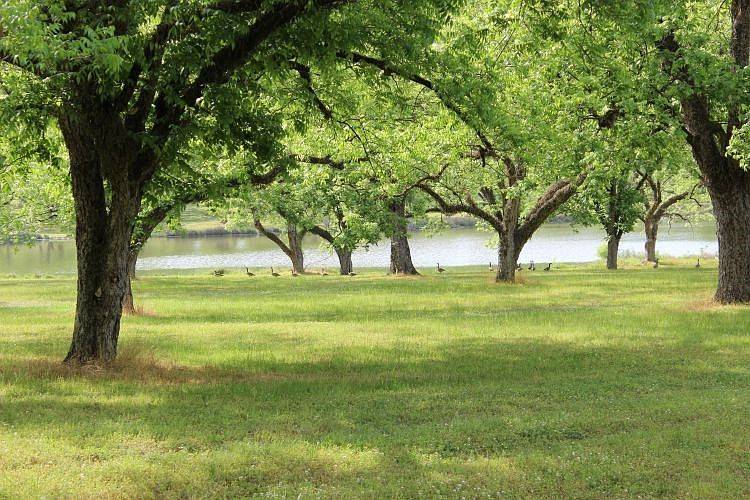
      I appreciate the direct assessment. One part of your comment in particular caught my attention. You said that, based on the aerial and ground-level photographs, the orchard appears to be “at a turning point” and that there is essentially one opportunity to optimize it.

      I would like to understand that observation better. What specifically are you seeing in the photographs that leads you to that conclusion — tree spacing or density, canopy crowding, tree age/condition, orchard layout, or something else?

      If you were evaluating the property today, what would you want an independent pecan specialist to examine first to determine whether the orchard can be economically optimized or whether it has reached the point where substantial removal, thinning, or redevelopment would be required?

  • Vijay FriedmanBusiness Member
    Miami, FL · Member since 2026 · 766 posts · 122 votes
    2mo
    Quote from @Davy Pough:

    Seeking Feedback: Would You Pursue This $1.4M Alabama Pecan Orchard Acquisition?

    I am currently evaluating the acquisition of a 115-acre pecan orchard in Russell County, Alabama consisting of approximately 2,863 trees, irrigation infrastructure, processing facilities, equipment, retail space, a pond, and an on-site residence.

    Purchase Price: $1.4 Million

    I want to be completely transparent about both the opportunity and the challenges.

    The orchard has been owned by the current owner for approximately 12 years. According to the broker, the owner significantly improved the property during his ownership but primarily operated it as a side activity rather than a fully optimized commercial farming enterprise. The farm was reportedly maintained in good condition, but maximizing annual production was not the owner's primary objective.

    Available sales records provided by the seller show reported pecan sales of approximately:

    • 2018: $52,106
    • 2019: $20,869
    • 2020: $109,425
    • 2021: $9,335

    The opportunity I see is not the purchase of a fully optimized income-producing orchard.
    The opportunity is acquiring a mature orchard with established infrastructure that appears to have been underutilized relative to its physical assets and long-term production potential.

    What attracts me to the property:

    • Existing irrigation system
    • Processing and retail infrastructure already in place
    • Approximately 2,863 established trees
    • On-site residence and supporting improvements
    • Long-term agricultural asset with tangible value
    • Potential operational improvements versus historical management approach

    At this stage I am actively evaluating production history, operating costs, financing structures, and long-term viability.

    I would appreciate feedback from anyone with experience in:

    • Commercial orchards
    • Pecan production
    • Agricultural lending
    • Farm acquisitions
    • Asset-backed investment structures


    I am happy to discuss available sales records, aerials, property information, and acquisition details with knowledgeable parties.

    I welcome tough questions and constructive criticism from experienced agricultural investors.

    @Davy Pough
    You've clearly done a lot of homework, which is refreshing to see. I'd spend just as much time validating the historical production, operating expenses, and capital improvement assumptions as the purchase price itself. Understanding what level of production is realistically achievable under active management will probably have the biggest impact on whether the deal pencils out.

    DreamPoint Capital
    • Investor · San Diego California / Hurtsboro, AL · Member since 2026 · 22 posts · 2 votes
      4d

      @Vijay Friedman, your point about determining realistically achievable production under active management has stayed with me as I have continued the due diligence.

      Since your original comment, the asking price has been reduced from $1.4 million to $1.2 million, but I don't want the lower price to substitute for validating the economics of the orchard.

      If you were underwriting this today, how would you establish a defensible normalized production level for approximately 2,863 mature trees when the seller's historical sales are inconsistent? Would you rely primarily on several years of actual production records, a third-party orchard assessment, regional per-acre/per-tree benchmarks, or some combination?

      And before assigning value to improved management, what evidence would you want to see that the orchard can actually support materially higher production?

  • Real Estate Broker · Brooklyn, CT · Member since 2026 · 12 posts · 2 votes
    2mo

    This isn't really one asset, it's several bundled together. You have raw land and trees, a retail and processing facility, equipment, and a residence. Each of those gets valued and financed differently, and that matters both for your acquisition financing and eventually for your exit. A lender comfortable underwriting the orchard operation may not be as comfortable with the residential component, and an ag lender and a commercial lender will look at retail/processing space differently too.

    Worth asking how financing was structured for the current owner, if at all, since that tells you something about how lenders have historically treated this bundle. It also affects your buyer pool down the line. Someone who wants a working orchard may not want the retail build-out, and someone who wants the residence may not want the operational complexity. That mismatch can matter as much as the production numbers when it comes time to sell.

    • Investor · San Diego California / Hurtsboro, AL · Member since 2026 · 22 posts · 2 votes
      4d

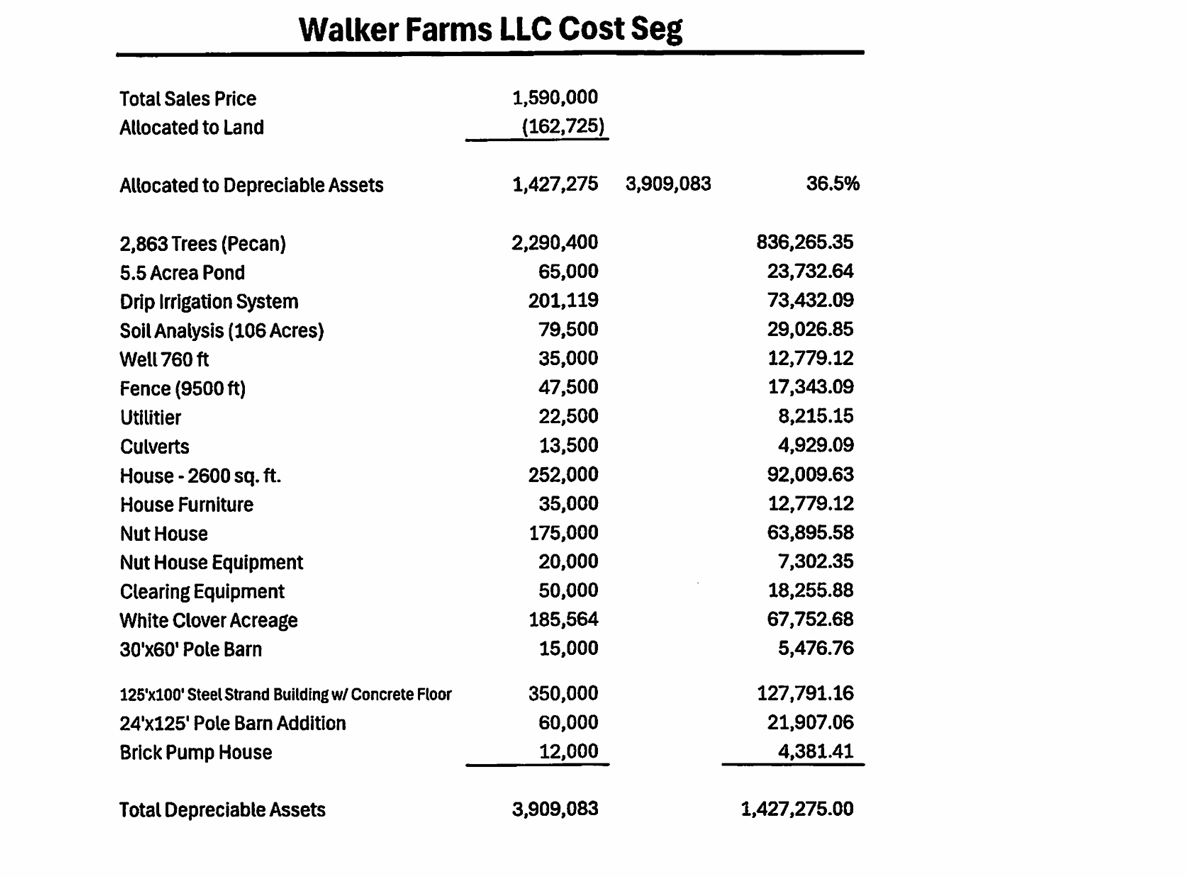
      @Andrea Kazantzis, your point about treating this as several assets bundled into one property has stayed with me. Since your original comment, I have continued looking at the land and orchard, residence, processing/retail facilities, equipment, irrigation and water resources separately rather than assuming the $1.2 million asking price represents one uniform asset.

      I have also followed up with the broker about how the current owner originally financed the acquisition, based in part on your suggestion.

      If you were evaluating this property today, how would you approach separating the value of those components for financing and eventual exit? Would you want separate valuations for the agricultural real estate, residence/improvements, and equipment, or would you still underwrite the property primarily as one operating agricultural asset?

      Also, is there anything else about this type of mixed agricultural property that you think I may be overlooking from a financing or exit-strategy standpoint?

  • Investor · Las Vegas, NV · Member since 2013 · 8k+ posts · 10k+ votes
    2mo

    Quick math:

    you out down 25% $350k

    You pay zero property tax or insurance

    You get amazing financing 30 years at 7% interest. 

    Your payment is $84k/year and you lose a boatload of money pretty much  every year. Before any labor, equipment, taxes or insurance  who knows  maybe the current has no clue and you’re literally the best at it in the country   

    Alternative. You put the $350k in a bank CD and make $14k/yr. Or you lend your money tot eh fool willing to buy this (with a low LTV for when it fails.) at 7% and make $24k/yr. Winner winner.

  • Investor · San Diego California / Hurtsboro, AL · Member since 2026 · 22 posts · 2 votes
    2mo

    Wright,

    Thank you for taking the time to share such a thoughtful response. Your point about separating the value of the physical assets from the historical operating results really resonated with me.

    Since starting this discussion, I've continued researching the orchard's history, reviewing production records, sales receipts, county records, and learning more about the processing side of the business. It's becoming increasingly clear that the historical financials reflect the prior owner's management approach more than the orchard's underlying productive capacity.

    I also agree that an independent third-party orchard evaluation, combined with a detailed 12–24 month operating plan, will likely be one of the strongest tools for helping lenders underwrite the opportunity based on future performance rather than past variability.

    At this point, my goal is to pursue a traditional agricultural financing structure if possible, while also understanding how private or asset-based capital could strengthen the transaction if needed. I appreciate your offer to discuss financing structures and may reach out as I continue refining the capital stack.

    Thank you again for sharing your expertise.

  • Investor · San Diego California / Hurtsboro, AL · Member since 2026 · 22 posts · 2 votes
    5d

    Due Diligence Update – Operating History, Prior Financing, Revised Asking Price, and Underwriting

    I wanted to provide an update because several people in this discussion raised important questions about the gap between the orchard's substantial physical assets and its historical financial performance. Those comments led me to dig further into both the operating history and how the property was previously financed.

    First, there has been a material change in the asking price. The property that I originally posted about at $1.4 million has since been reduced to $1.2 million.

    I view the $200,000 reduction as a reason to update the underwriting, not as evidence by itself that the property is now a good acquisition. The revised price still has to be justified by realistic production, operating expenses, capital requirements, management costs, reserves, and sustainable debt service.

    I also followed up on the historical production variability.

    The available sales records showed significant year-to-year swings, which several people here correctly identified as something that needed a better explanation.

    According to the broker, who has been familiar with the property for years, he believes a significant part of the production variation was related to how the orchard was historically operated. The owner operates a paving business, and his paving crew was reportedly used for orchard labor when they had available time between paving jobs. The paving operation was the owner's primary business and took priority over orchard work.

    I do not consider that proof that the orchard will automatically produce more—or more consistently—under different management. That still needs to be supported by production records, realistic operating assumptions, and an independent orchard/agronomic evaluation. But it provides additional context for interpreting the historical financial results.

    The previous financing structure was also interesting.

    I asked the broker how the current owner originally financed the acquisition. After speaking with the owner, the broker reported that the property was financed through the bank where the owner maintained his business accounts and had a long-standing banking relationship.

    The loan reportedly used monthly interest-only payments, with a principal payment made at the end of each year. The loan was ultimately paid off several years ago.

    I don't yet know the original loan amount, down payment, interest rate, annual principal payment, or other loan terms, and I would not assume that another borrower could obtain the same structure. However, it is useful to know that the property was previously bank-financed and that the debt structure apparently recognized the seasonal nature of the operation's cash flow.

    My underwriting approach has also changed since my original post.

    Rather than starting with the seller's asking price and trying to find enough financing to make that price work, I am now approaching the acquisition from the opposite direction.

    The question I am trying to answer is:

    How much annual debt service can this farm realistically support from normalized operating cash flow?

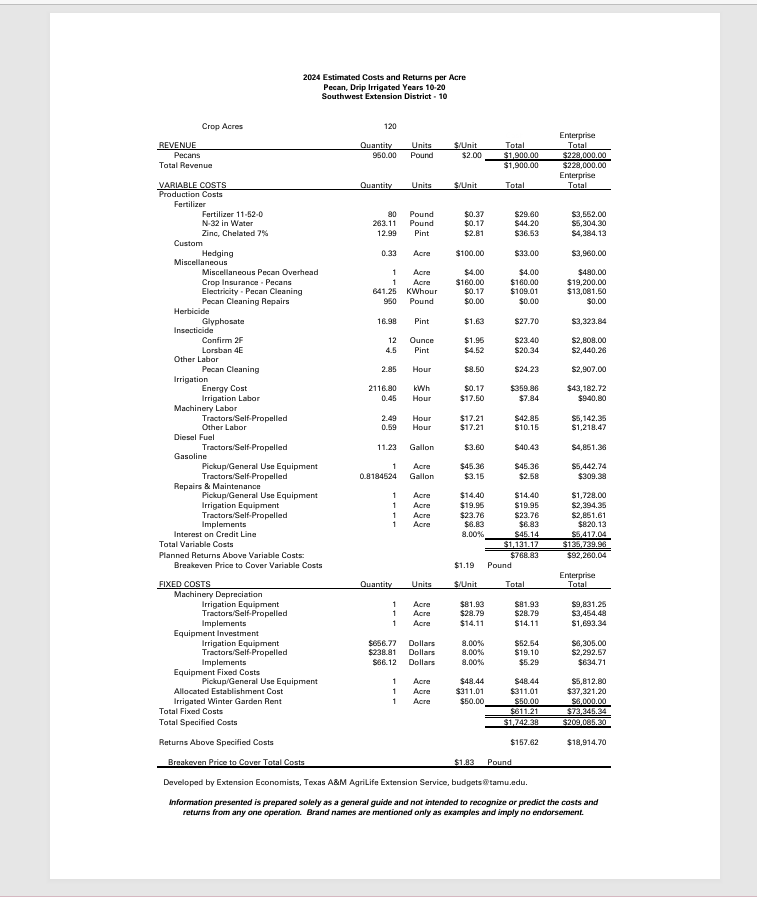
    That means accounting for operating expenses, labor and management, orchard maintenance, equipment requirements, reserves, and the inherent year-to-year variability of pecan production before determining how much cash is actually available for debt service.

    From there, I can work backward to a supportable loan amount, required equity contribution, and ultimately a purchase price that the agricultural operation itself can reasonably carry.

    The previous owner's interest-only monthly payment and annual-principal structure is relevant because it demonstrates one way financing can be aligned with seasonal agricultural cash flow. But I don't want to use creative financing merely to make an otherwise unsupported purchase price appear affordable. The underlying operation still has to support the debt.

    So even with the asking price now at $1.2 million, I am not starting with the assumption that $1.2 million is necessarily the right acquisition price.

    I have also completed a comprehensive business plan for the orchard acquisition and operating strategy. The plan incorporates the property, orchard operations, equipment and infrastructure, production assumptions, management requirements, financing considerations, and longer-term operating strategy.

    I am now using the additional due-diligence findings and feedback from this discussion to stress-test and refine the underwriting assumptions behind that plan. Completing the business plan does not mean that I consider the acquisition decision complete; the underlying assumptions still need to withstand independent verification and lender scrutiny.

    My next steps are to continue validating realistic production capacity, normalized operating expenses, management requirements, capital reserves, and sustainable debt service, along with obtaining an independent assessment of the orchard itself.

    Several of the comments in this discussion caused me to look at the transaction differently, particularly the questions about operating experience, production variability, lender underwriting, and whether the historical income actually supports the acquisition debt. I appreciate those challenges because they have improved the due-diligence process.

    For those with agricultural lending, orchard operations, or farm acquisition experience: when underwriting a property like this, what debt-service coverage or cash-flow cushion would you want to see before determining what purchase price the operation can actually support?
  • Investor · San Diego California / Hurtsboro, AL · Member since 2026 · 22 posts · 2 votes
    4d

    @Robert Ellis, your earlier comment about the gap between the physical assets and the production history caused me to dig considerably deeper into the operating history. Since then, I have learned that the owner's paving business was his primary operation and that orchard labor was reportedly handled around the paving operation's schedule. The asking price has also been reduced from $1.4 million to $1.2 million.

    I still don't consider that sufficient proof of the orchard's productive capacity. Given what you raised originally, what would you want independently verified before treating the historical performance as primarily an operating/management issue rather than a limitation of the orchard itself?

  • Michael K GallagherBusiness Member
    Real Estate Agent · Columbus OH · Member since 2018 · 1k+ posts · 1k+ votes
    4d

    regardless of where the financing comes from, do you have experience in commercial ag? or orchards in growing? run some hot peppers before? If you don't have the experience is there a person that actually works on that facility that can run you through the nitty gritty and what gaps there are in the operation?

    • Investor · San Diego California / Hurtsboro, AL · Member since 2026 · 22 posts · 2 votes
      4d

      @Michael K Gallagher, that is one of the issues I am trying to address before making an acquisition decision. I do not have direct commercial pecan-orchard operating experience, and I don't want to assume that a business plan or financing structure substitutes for experienced operating knowledge.

      The current owner has held the orchard for approximately 12 years, and I understand that people have worked the property during that period. Your suggestion about having someone familiar with the actual operation walk me through the “nitty gritty” and identify operational gaps is useful.

      If you were in my position, what would you specifically want that person to walk you through before closing? For example: irrigation condition and capacity, tree health and varieties, historical yields, spray/fertilization practices, labor requirements, harvesting and processing equipment, deferred maintenance, or something else?

      And would you rely on someone who has historically worked the orchard for that assessment, or would you want an independent pecan specialist to go through the property alongside them?

  • Rental Property Investor · Malvern, PA · Member since 2016 · 1k+ posts · 935 votes
    4d

    I admire the deep analysis you are doing for this potential investment. Here are a couple of considerations:

    You haven't written that you actually want to be a farmer and farm pecans. Do you? Farming is a lot of work for very low pay and labor is getting harder to find due to immigration enforcement. Do you want to pick pecans....really, really want to pick pecans? It's OK if this is just a side hustle and failure is acceptable; otherwise, if success is important, you should evaluate how much you really want to be in the middle of a pecan farm.

    You might be able to partially address the knowledge gap 2 ways: documentation and consulting. Request the seller document all of the processes and procedures with you so you know what to do in each season, how to sell pecans, etc. Second, see if the seller will agree to a consultancy for some number of years as part of the deal. The goal is to be able to call the seller whenever you need help. For example, "I see this....on the pecan trees. What is it and what do I do about it?"

    • Investor · San Diego California / Hurtsboro, AL · Member since 2026 · 22 posts · 2 votes
      3d

      Your idea of preserving the seller's knowledge through a transition period interests me. If you were structuring this acquisition, what would you want that transition to include, and for how long?

Join the conversationCreate a free account to reply, vote on answers and follow this thread.