Home Sales Just Hit Their Lowest Since 2010. The Demand Is Waiting, Not Gone
October brought hotter inflation, louder talk of a December rate hike and the slowest existing home sales pace since 2010, and the way those three fit together matters a lot for how you underwrite this winter.
Inflation Picked Up
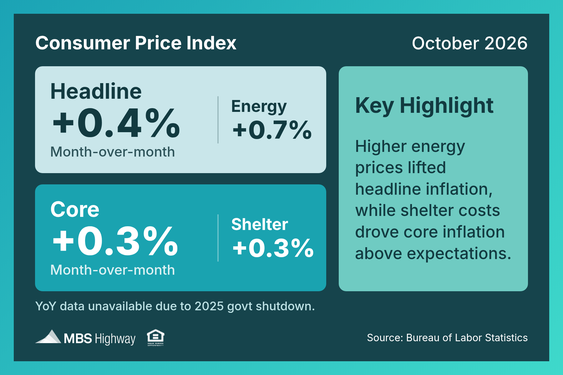
CPI rose 0.4% in October with core up 0.3%, both above forecasts. Energy was the big driver on the headline number, up 0.7%, while shelter rising 0.3% pushed core higher. There are no year-over-year figures this round because of last year's shutdown, so the market is reacting to the monthly prints alone. On the wholesale side, PPI rose 0.3% as expected, but it's up 6.5% from a year ago, the biggest annual gain in nearly four years, with core PPI up 5%. That's a lot of cost pressure sitting in the pipeline.
The Fed Sounds Ready to Hike
Within days of the CPI release, Governor Christopher Waller and Dallas Fed President Lorie Logan both said they support another hike at the December 8 and 9 meeting. The Fed already raised a quarter point in September before holding in October. Jobless claims don't give them a reason to wait either. Initial claims rose to 200,000, still historically low, and continuing claims sit near 1.7 million.
Resale Volume Hit Its Lowest Since 2010
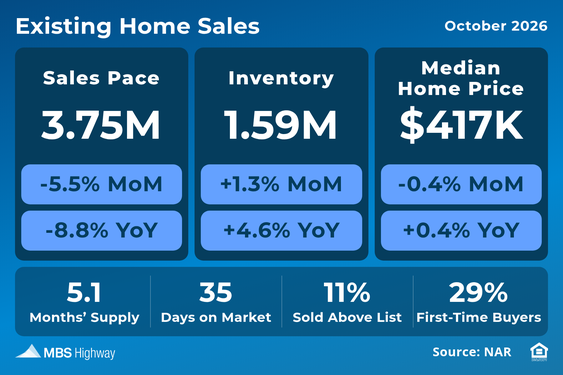
Existing home sales fell 5.5% in October to a 3.75 million annual pace, down 8.8% from a year ago and the slowest since 2010. Inventory kept climbing to 1.59 million homes, up 4.6% from last year, which works out to 5.1 months of supply. The median price barely moved at $417,000, up 0.4% year over year. Days on market are at 35, only 11% of homes are selling above list, and first-time buyers made up 29% of sales. Volume is falling hard but prices aren't, which tells you sellers aren't under pressure to dump properties. Buyers are simply waiting on rates. NAR's Lawrence Yun said there "could be sizable pent-up demand if mortgage rates decline."
Where I'm Less Sure
The consensus coming out of this week is that a December hike is close to locked in. I'm not as convinced. The headline CPI jump was mostly energy, which can reverse quickly, and wholesale inflation actually came in right where it was expected. The labor data is also softer than the claims numbers suggest, since some laid off workers are moving into gig work and some of the drop in continuing claims is benefits running out, not people finding jobs. If Wednesday's Fed minutes show the committee was split before this report, December could be closer than the market thinks.
Investor Takeaway
I'd underwrite at today's rates and treat any December relief as upside, not a plan. The more interesting opportunity is on the acquisition side. With volume at its lowest since 2010, inventory up and only about 1 in 10 homes going over asking, there's more room to negotiate than we've seen in a while, without prices actually falling. When rates do ease, the pent-up demand Yun is talking about should show up quickly, which favors buying before it does rather than after. In the meantime, a big pool of would-be buyers waiting on the sidelines keeps rental demand firm.

