make your case: Stocks vs Rentals

make your case: Stocks vs Rentals

Member since 2019 · 3 posts · 1 vote

Read through the forums but looking for current advice on a strong argument for choosing rentals over non-qualified stocks over the long term. The biggest differences I can see would be the rental 1031 to avoid taxes as you scale bigger, whereas NQ stocks would pay taxes each time they're sold. However, even with leveraging 75% money after the down payment, stock returns seem like they could make much higher returns. Of course it depends what stocks, but even some "high quality" stocks like Amazon can have 10,000% growth in just 20 years. I think both options provide a tax free step-up in cost basis at death, so they seem them being equally tax and legacy friendly that way. 

The top benefits I see to both would be:

stocks- much simpler to manage and liquidate stocks vs rentals and higher ROI even without the leverage
rentals
- income offset by taxes/depreciation and 1031 exchange for tax free liquidations


Would appreciate if someone could make a very strong case that I'm missing, for rentals beating the simplicity and returns of stocks. Thank you!!
1Reply
205 views

Most Popular Reply

Investor · Singapore · Member since 2013 · 1k+ posts · 3k+ votes
5y
Originally posted by @Casey Mayton:

Read through the forums but looking for current advice on a strong argument for choosing rentals over non-qualified stocks over the long term. The biggest differences I can see would be the rental 1031 to avoid taxes as you scale bigger, whereas NQ stocks would pay taxes each time they're sold. However, even with leveraging 75% money after the down payment, stock returns seem like they could make much higher returns. Of course it depends what stocks, but even some "high quality" stocks like Amazon can have 10,000% growth in just 20 years. I think both options provide a tax free step-up in cost basis at death, so they seem them being equally tax and legacy friendly that way. 

The top benefits I see to both would be:

stocks- much simpler to manage and liquidate stocks vs rentals and higher ROI even without the leverage
rentals
- income offset by taxes/depreciation and 1031 exchange for tax free liquidations


Would appreciate if someone could make a very strong case that I'm missing, for rentals beating the simplicity and returns of stocks. Thank you!!

Why do you have to choose? How about Stocks AND Rentals? 

EDIT: Just read some of the responses and while I get this is a REI board the sheer nonsense posted about stocks is amazing. Like every stock will lose money over 30 years! Or stocks are speculation and REI is 100% sure profit. What total and utter CRAP.

Stocks via ETFs and Mutual funds allow you to literally own a piece of the entire market. What equivalent vehicle exists for rentals? Sure there are REITs and Syndications but these are tiny compared to an S&P 500 or global market fund. And stocks have close to ZERO transaction costs and second to second liquidity. You can buy with very little capital and add small amounts regularly. You can leverage (via margin) and you can borrow against your brokerage holdings. So not that different from real estate.

Dont get me wrong. I own real estate but also own index funds and stocks. There is a place for both in any diversified portfolio.

See this reply in the discussion

73 Replies

Jump to latestLatest
  • Rental Property Investor · Wilsonville, OR · Member since 2019 · 40 posts · 34 votes
    5y

    @Mike Dymski hit the nail on the head with the question: What are your goals?

    Personally, I prefer RE over stocks because it is much easier to generate passive residual income. I have a dividend yielding stock that generates $350-400 every quarter with $80k sitting in there. With that same $80k, I could use it as a down payment with a turnkey provider in the midwest and purchase 2 properties that generate 3-4 times the income as my stock every month. Some people are of the opinion that RE is not passive, but if you find a good turnkey provider that sells professionally rehabbed properties with vetted property management onsite to run things for you, RE can be just as passive as stocks.

    With either RE or stocks, you have to do your homework to be successful, but there is a reason that 90% of millionaires made their wealth from RE.

    • Santa Rosa, CA · Member since 2017 · 325 posts · 701 votes
      5y

      It is Stocks, and if you add in 401k or IRA it laps the field

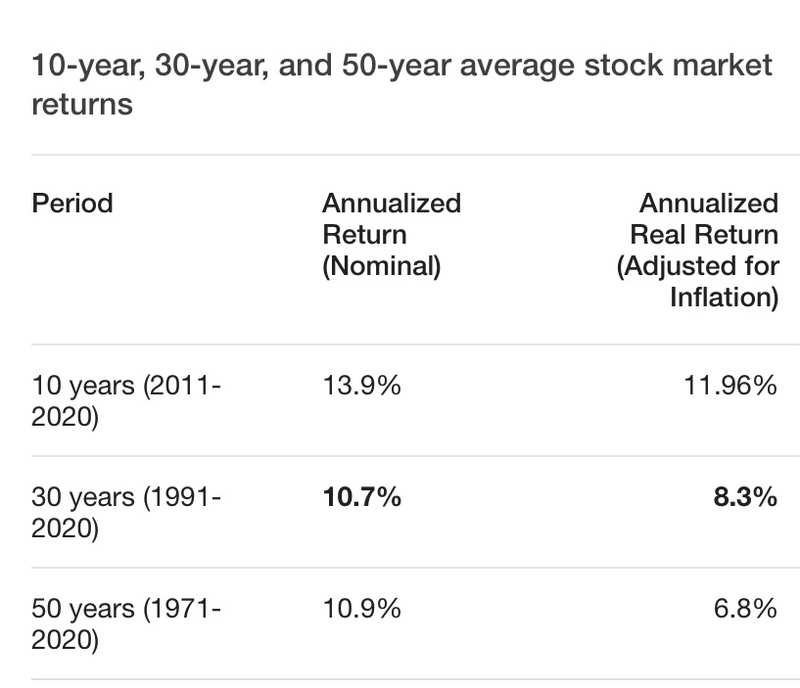
      The S&P 500 has averaged 10% yearly return (dividends reinvested) for 100+ years.   In my Schwab account I can buy an index fund with no trading fees and a 0.04% fee in any denomination I choose above $100.   It requires no effort, no education, no research, no team, and I don't have to pay taxes until I sell it.   It is 100% liquid, I can sell at any time.   I can add to it at any time in any denomination including automatic deposit.  It requires no additional capital, it carries no liability, and requires no counterparty like a tenet or a buyer/seller.  Add in the 401k with a company match and tax advantages and the you cant beat the return with any other investment.   Index Fund + Time = Guaranteed Success

      Real estate (direct ownership) has many advantages like cash flow, taxes, and appreciation.   However the effort required is miles above stocks.  Take all the items above that are not required for an index fund and that is real estate.  The learning curve is brutal and it is easy to lose everything.   Real estate is also a fixed commodity, you are competing against other people to buy it, so you have to be smarter than those people.  In the end, you can get richer rewards than stocks, but at much higher risk and requiring much higher investment in time, money, and knowledge.  

      Now, add in the average American.  As of Jan 2021 61% can't handle a $1000 expense without a credit card.  Little to no financial training.  The vast majority have absolutely no way to buy, maintain, or understand real estate.

      I would go as far as saying that to suggest anything other than stocks to most Americans is financial malpractice.  For the vast vast majority of people stocks are the only logical choice.  

    • Real Estate Broker · Hyde Park Tampa, FL · Member since 2019 · 2k+ posts · 3k+ votes
      5y

      It's not an either - or play. The wealth building strategy answer would be "YES." You want both. A well-diversified portfolio minimizes investment risk and provides the strongest ROI. Real Estate is part of your overall investment portfolio, just as cash, bonds, annuities, and all the like. So go ahead and draw the pie...draw out your investments by category and see what piece of your pie might need to be increased and others left alone or decreased.

      As a former wealth banking manager, there are no "either - or " decisions. Hope this helps.

    • Rental Property Investor · Cincinnati, OH · Member since 2020 · 84 posts · 81 votes
      5y

      @Casey Mayton

      Pull out excel and run an analysis on using $50k to buy rentals with leverage over the next 10 years. 60k in cash flow (500 a month) ~37k in principal paydown and $69k in appreciation (3% per year)

      Total = 166k with enough cash to buy another

      You also have tax benefits not included here.

      Compare that with about 8% returns on your 50k in a basket of stocks or index funds over the next 10 years. 108k not bad either but you'll get it with a 20% tax bill on your 58k gain if you sell.

      Assuming you reinvest your cash flow rentals snow ball and overtake stocks within 5-10 years

      Stocks are very passive however, set it and forget it. Dollar cost average as you go and you'll have a very nice return that is in liquid assets without much work.

      If you did rentals however you did allot of work, finding the deal, negotiation, closing process, managing the rental, etc. But in the end you'll have achieved over twice the return of stocks in the long term.

      It really come down to how much work you want to do and what sacrifices your willing make and what your other obligations are on your time and money.

    • Investor · Richmond, VA · Member since 2016 · 164 posts · 114 votes
      5y

      @Anish Tolia My point of view in a nutshell. I am more heavily invested in stocks than real estate because of the accessibility a brokerage account offered when I was fresh out of college. However I have been working to buy another rental for all of the obvious reasons that this community believes in. Real estate is a huge piece of my financial independence puzzle. The cash flow my wife and I need to live on our own terms is only achievable in my point of view through carefully selected rental properties. I’d need about $1,500,000 cash to put into stocks generating an average dividend of 3% to have enough cash flow to live modestly on. That much cash down on rental property yields a very different result. But the diversification of both is very important to me. And like someone else said, my stocks are instantly liquid should that be relevant. (When I say stocks I mean S&P ETFs almost exclusively. Boring is good!)

    • Investor · Hoffman Estates, IL · Member since 2014 · 434 posts · 185 votes
      5y

      Real estate for the win.  You have CONTROL over the asset, that's the major difference.  I can't make my stock go up (or down) no matter how hard I try.  I can increase the value or rental value of my real estate.

      Leverage, tax breaks (Depreciation!), long term stability.  Stocks/companies can disappear, my real estate can't (can be rebuilt even after a fire).  

      Stocks are better for short term riches, but real estate is better for long term wealth.  So it depends on what you're looking for.

    • Investor · Philadelphia, PA · Member since 2015 · 3k+ posts · 3k+ votes
      5y

      @Anish Tolia

      Exactly.

      My money flows in this direction:

      W2 , to REI , to diversified portfolio of index funds and etfs (tax free if possible)

      I’m in my mid thirties, been at it for 10+ years and I know my future self will thank me.

    • Investor · Philadelphia, PA · Member since 2015 · 3k+ posts · 3k+ votes
      5y

      @Justin Manges

      What happens when I take that loan, lose money on a bad RE deal, and then the stock value dips?

    • Deland, FL · Member since 2017 · 2k+ posts · 1k+ votes
      5y
    • Los Angeles, CA · Member since 2018 · 86 posts · 86 votes
      5y

      @JD Martin I always laugh at this reason, like having control over your investment is better than handing it off to a strong operator. Most people are not good operators and do not actually add any value. Typically sfh real estate returns are around 8.5%, which is similar to equity returns. I think unless you are a seasoned operator and willing to make it a job you are better off investing in the stock market. Although you could certainly make the argument as a diversification play.

    • Specialist · Portland, OR · Member since 2010 · 3k+ posts · 1k+ votes
      5y

      To get those stock market returns you need to have a 100% stock portfolio and not sell during downturns.

    • Investor · Costa Mesa, CA · Member since 2016 · 1k+ posts · 1k+ votes
      5y

      When stock market is up, rent is due- pay me!!! When stock market is down, rent is due- pay me!!!  This.

    • Rental Property Investor · Lehi, UT (Lehi) · Member since 2018 · 91 posts · 99 votes
      5y

      @Bruce Woodruff This is exactly how I feel. I’m sure someone could have an argument against this but hackers also scare me. What stops a hacker from going in and wiping out everything digitally and then we are left with nothing.

      Houses? I guess someone could destroy the place or burn it down but I have insurance for that.

    • Sherman Oaks, CA · Member since 2013 · 3k+ posts · 2k+ votes
      5y
      Originally posted by @Jeff S.:

      @Casey Mayton they are similar in that there are loser and winner stocks just like rentals. The average stock investor earns around 1.5% per year because like me they sell when the market tanks. You can build a stock portfolio for 10 years and watch it get cut in half in a week.

      In 1992 the Dow Jones was $3284. That year I bought a duplex for $48,000. I sold the duplex this year for $650,000. Granted there was work all along the way but I also earned around 3% on the value as it increased.

      The BIG difference is I put down $2,000. There was no way I had $48,000 to buy stock or properties.

      The way to do the stock market is to hold for 30 years. The biggest problem is many of the the darling stocks of yesteryear turn to...there are too many to list here.

      I hear ya. Just for kicks, we could compare $2k in 1992 apple stock or 6000 shares at 30 cents then add 3 two for 1 splits, then a 7 for 1 split, and last one was 4 for 1 split. Share price today is $149 plus dividends. Needless say it is tens of millions more than even a 1 million 1992 duplex is worth today. Its crazy no doubt. 

    • Rental Property Investor · Oakland, CA · Member since 2021 · 17 posts · 16 votes
      5y

      @Casey Mayton.

      It depends on your strategy, long term vs short term.

      My strategy is both because I'm playing the ling game.....

      Rentals equal cash flow, depreciation, loan pay down, equity appreciation, Interest dedeuctions.

      Stocks. I use a Roth IRA. I invest into mutual funds. One is a high cap nasdaq index (80%) and a retirement year based Index (20%). In using the Roth IRA, you will be using money already taxed but you negate the capital gains tax when retirement.

    • Joe S.Pro Member
      Investor · San Antonio · Member since 2020 · 3k+ posts · 3k+ votes
      5y

      For self-employed that hustles real estate was the only visible choice. ( at least for me.)

      For those that had good income with little time then stocks can be attractive. ( turn key real estate is and option.) 

    • Real Estate Broker · Scottsdale AZ & Cleveland, OH · Member since 2019 · 168 posts · 109 votes
      5y

      @Casey Mayton I max out my 401k and Roth IRA's - (due to RE Tax write-offs) every year and invest heavily in real estate. Once I built +$1 MILL in equity I pivoted to add stocks to collapse my time frames on down payments. My $0.02 is Real Estate will always #1 and then everything else.

    • Rental Property Investor · Owensville, IN · Member since 2021 · 33 posts · 14 votes
      5y

      @Max T.

      You hold.

      I wouldn’t use it for flipping. I don’t sell stocks when they’re down… and I wouldn’t sell real estate when it’s down either.

    • Specialist · Portland, OR · Member since 2010 · 3k+ posts · 1k+ votes
      5y

      @Matt R. and then there was this pilot that was getting super rich trading options with Apple stock. He started off with his entire 200k retirement account and quickly ran it up to millions. Apple always goes up right? Do you remember when Apple hit a rough spot and tanked. He lost it all including his $200k seed money.

      When I drove bus I had a friend who ended up with 4 free and clear rentals after a divorce. She sold them and invested in the tech bubble (and just like the pilot who made millions) buying start ups some guru was telling her to buy, She was just getting ready to retire as a millionaire when the bubble burst so she sold all her speculative positions and sank all of it into a safe stock, a well known name, Intel. Intel then tanked and took her net worth (what was left of it) and divided it by 4. I remember saying to my brother just think I could refinance my rentals and get rich investing in tech. Many bigger players did that with large apartment houses.

      So many stories. The very thing that gets many people rich is the same thing that wipes them out.

      Should have bought bitcoin. Should have bought Google and Tesla and on and on... I am satisfied. Is it bigger pockets or is it bigger problems? I don't envy the super rich.

    • Sherman Oaks, CA · Member since 2013 · 3k+ posts · 2k+ votes
      5y
      Originally posted by @Jeff S.:

      @Matt R. and then there was this pilot that was getting super rich trading options with Apple stock. He started off with his entire 200k retirement account and quickly ran it up to millions. Apple always goes up right? Do you remember when Apple hit a rough spot and tanked. He lost it all including his $200k seed money.

      When I drove bus I had a friend who ended up with 4 free and clear rentals after a divorce. She sold them and invested in the tech bubble (and just like the pilot who made millions) buying start ups some guru was telling her to buy, She was just getting ready to retire as a millionaire when the bubble burst so she sold all her speculative positions and sank all of it into a safe stock, a well known name, Intel. Intel then tanked and took her net worth (what was left of it) and divided it by 4. I remember saying to my brother just think I could refinance my rentals and get rich investing in tech. Many bigger players did that with large apartment houses.

      So many stories. The very thing that gets many people rich is the same thing that wipes them out.

      Should have bought bitcoin. Should have bought Google and Tesla and on and on... I am satisfied. Is it bigger pockets or is it bigger problems? I don't envy the super rich.

      Yeah, peeps thought apple was down for the count. Idk much about options as apparently the pilot did not either. What I do think is some experienced options dudes use upto 2% of a position as to prevent a wipe out. Pros only deal I guess. 

      All those are correct too regarding google, tesla, btc as these too will put virtually any head to head duplex down payment into a many millions difference later. Its just observational math but the math dont lie. 

    • Ian WalshBusiness Member
      Lender · Philadelphia, PA · Member since 2016 · 2k+ posts · 1k+ votes
      5y

      I think it comes down to goals, risk tolerance and how intimately you know your investment vehicle. 

    • Real Estate Agent · New York City · Member since 2020 · 819 posts · 641 votes
      5y

      For the average investor, index fund investing via dollar cost averaging is great. It is scalable and liquid. 

      However, absolute returns will almost certainly be subpar to real estate simply due to the force multiplier of leverage and the tax benefits. However, real estate is illiquid and management intensive - the investor is being compensated for those two characteristic differences. It is really apples and oranges in a way. 

      With that being said, the two can be blended through REIT investing which is liquid and scalable, but has historically outperformed major indexes.

    • Rental Property Investor · San Antonio, TX · Member since 2016 · 48 posts · 16 votes
      5y

      In simplest terms for me, rentals and real estate in general is a scarce resource and a required asset for people to live. You can add value to your real estate in a variety of ways. Rentals have an added dimension of being valued based on the income they produce. And you have a tenant that should be covering all your expenses during any market downturns. 

      Stocks have a place in a portfolio but they are very volatile and in today's markets a simple tweet can cause a 10% market swing! Can you imagine if you had to liquidate stocks during the height of the pandemic? Stocks were down 30% or more at the time. Then there's the AVERAGE annual historical return for stocks, 7-8%. But that is a longer term historical average not adjusted for inflation. So real rates of return are maybe 5-6%. Sure individual stocks can totally outperform (Amazon, Apple) but what if you buy in at the wrong time and are down 10%? Now you have to return 20% to get to a positive 10% return. 

      Long story short, I love, love, love the cash flow and stability of real estate!

    • Real Estate Investor · Austin, TX · Member since 2015 · 214 posts · 234 votes
      5y

      Not sure why anyone would invest in single tenant or small multifamily rentals today given the risks. Multifamily is great due to the tax benefits and potential to be passive, plus non-recourse debt.

      At current prices, I don't consider stocks "investments," but if you have a trading system, the advantages of stocks are liquidity and ease of diversification.

    • Investor · Los Angeles, CA · Member since 2017 · 523 posts · 476 votes
      5y

      I hate to not take a strong side, but what about both? Stocks, especially with index funds based on S&P 500, have been a historic long-term source of growth and wealth. I am not a fan of much active investing in stocks as I do with real estate, but if you let the market work, over the long run, it does deliver. 

      Real estate offers leverage, tax benefits, and better cash flow than most stock dividends. Long term appreciation is strong, although there's not much real estate that is likely to zoom up the way some stocks, especially tech companies, have in recent years. 

      I say do both. 

    Join the conversationCreate a free account to reply, vote on answers and follow this thread.