How typical are non-paying tenants in lower economic areas?

How typical are non-paying tenants in lower economic areas?

Rental Property Investor · Boulder, CO · Member since 2019 · 144 posts · 72 votes

The more I read and learn about investing, according to the bigger pockets strategies, the more questions I have.

Wouldn’t renting in a low economic area, where homes are selling for under $100k, wouldn’t that also invite less prosperous and less responsible tenants who will more frequently default on rent?

BP never mentions this, but I read it elsewhere. BP also seems to present the idea that owning 40, or even 20, homes is a breeze to manage. Not a big deal. I would think you would need a manager to manage all this? Especially if properties are located in different states?

I just see a lot of problems and headaches in owning numerous low cost homes in poor areas. I have no experience though, so I can’t say.

Can any experienced landlords here comment on this?

2Reply
192 views

Most Popular Reply

Handyman · Pittsburgh, PA · Member since 2018 · 5k+ posts · 13k+ votes
7y

Thanks for the mention, @Jay Hinrichs.

@Christopher Davis I have C/D-class borderline SFR rentals in a major Rust Belt city, several of which cost me $25K or less per unit to acquire.

Point 1: Does running cheap rentals mean that you're going to get tenants who default more often on rent? Not always.  But managing to get the right tenants into C/D units is, I believe, a more involved process than what A/B landlords typically go through.

Point 2: Managing 40 homes is possible in low-income rentals. The way we run our business, we renovate one acquisition at a time, we maintain all our own properties, and and we manage all own properties ourselves. I believe the far upper limit for this sort of business is 25 SFR, at which point running a single renovation as we do as well as managing and maintaining that many rentals will become more than a full-time job for one person with helpers to call on at need and a few key contractors to lean on, namely plumbing, HVAC, electrical,and roofing. I doubt I will get to that point before I start looking to unload my portfolio and transition to a different property class. Or completely change my business model.

Point 3: There are a lot of problems and headaches in owning numerous low-cost houses in poor areas. Well, yes. But if you stick with it, if you hone your craft, if you're willing to become a good handyman, and if you're willing to live where you invest, if you're coming to it from a job where you're not pulling down a lot of income and you're willing to gradually abandon such a job for full-time handyman employment, I believe it's a much less riskier strategy to make some money in real estate and tuck it away for a better retirement than a lot of other ideas I've seen on this website.

See this reply in the discussion

39 Replies

Jump to latestLatest
  • Ann Arbor, MI · Member since 2014 · 1k+ posts · 997 votes
    7y

    @Christopher Davis  Having an amazing property manager is key with tenants with less disposable income.  If the PM has vetted the tenant correctly, they shouldnt have payment issues, especially if a portion is from housing subsidies.  I've had issues with 2 tenants (i own 10 units in C- to C+ areas), both of whom were placed by a property manager OTHER than my primary/preferred property manager.  Said another way, 100% of my tenant issues were from poor PM placement.  

    There are good and bad tenants no matter the neighborhood but I suppose (overall across the country on average) missed payments would be expected from those with less means.  But it shouldn't dissuade someone from investing in those C neighborhoods IMHO.

  • Crystal SmithPro Member
    Moderator
    Real Estate Broker · Chicago, IL · Member since 2014 · 3k+ posts · 1k+ votes
    7y
    Originally posted by @Christopher Davis:

    Wouldn’t renting in a low economic area, where homes are selling for under $100k, wouldn’t that also invite less prosperous and less responsible tenants who will more frequently default on rent?

    Our experience at the beginning was yes, we had high default rates.  But what we learned was to be rigourous in our screening process & provide a product for the tenant that (renovated product) that made the tenant feel like they were living in the Taj Mahal.  We attracted higer quality tenants, defaults went down,...  Another thing we learned from a family member was to insist on a meeting with a potential tenant to discuss family budgets; Housing, food, insurance,clothng, entertainment, savings.....  Time of the month they were paid.    Our business objective for such a meeting- show that we were compassionate landlords who did not want tenants running out of money before they ran out of month.  Lastly with respect to income verification & rent collection- We insisted on periodic income verification (not just verification at the time of an application) and tenants had to have Bank Accounts and agree to ACH drafting of their accounts.  It felt like social work at the beginning, but honestly it worked.

    BP never mentions this, but I read it elsewhere. BP also seems to present the idea that owning 40, or even 20, homes is a breeze to manage. Not a big deal. I would think you would need a manager to manage all this? Especially if properties are located in different states?

      Start local with one property;  put systems in place that work for you as you grow your portfolio.  Our decison (independent of low cost homes.  It applied to all the properties) was to not manage our portfolio.  Eventually let a property management company do the work.  

  • Investor · Severna Park, MD · Member since 2016 · 32 posts · 39 votes
    7y
    Originally posted by @Jay Hinrichs:
    Originally posted by @Raju V.:
    Originally posted by @Daniella Sanchez:

    People like my mom and I and many other considerate tenants can be found.

    There are hardworking decent tenants that can be found in D areas, but you may have to burn through 2 or 3 really bad tenants to find them. 

    by then your down 5 to 15 in lost revenue and turn over cost when they trash the units. 

    This is correct. When my Class A tenant moves out of a unit, turn over costs are less than $500. When my Class D tenant "sneaks" out in the middle of the night, turn over costs are around $3500. 

  • Investor · Chattanooga, TN · Member since 2017 · 55 posts · 28 votes
    7y

    @Jim K. Loved reading this. I am so excited for the day I can be the full time handyman. To me it means I'll be close to the point where we have so many properties I can't do it myself anymore! :) Starting our first BRRR tomorrow!

  • Real Estate Broker · Cleveland Dayton Cincinnati Toledo Columbus & Akron, OH · Member since 2013 · 31k+ posts · 20k+ votes
    7y
    Originally posted by @Christopher Davis:

    The more I read and learn about investing, according to the bigger pockets strategies, the more questions I have.

    Wouldn’t renting in a low economic area, where homes are selling for under $100k, wouldn’t that also invite less prosperous and less responsible tenants who will more frequently default on rent?

    BP never mentions this, but I read it elsewhere. BP also seems to present the idea that owning 40, or even 20, homes is a breeze to manage. Not a big deal. I would think you would need a manager to manage all this? Especially if properties are located in different states?

    I just see a lot of problems and headaches in owning numerous low cost homes in poor areas. I have no experience though, so I can’t say.

    Can any experienced landlords here comment on this?

     I run a massive portfolio like this. They say a picture is worth 1,000 words. I've got 1,000's of pictures like this.
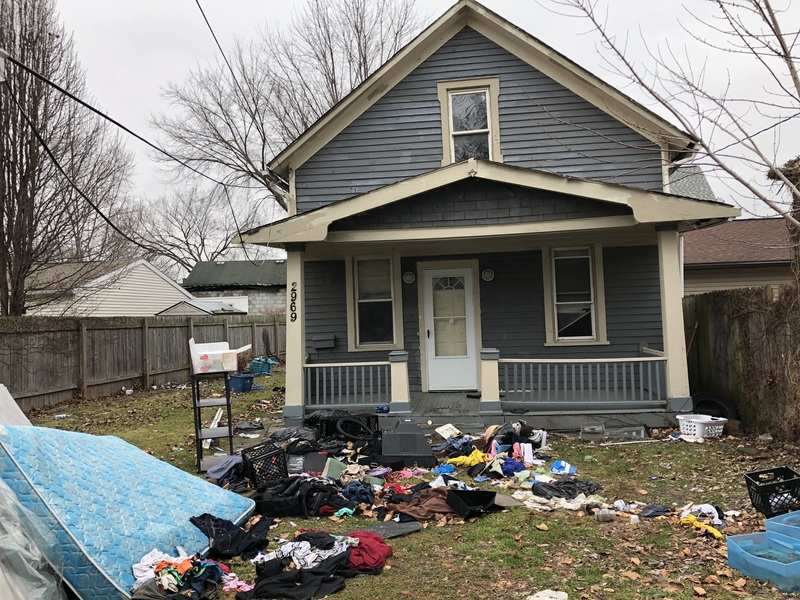
    tenants from hell
  • Professional · Parsippany, NJ · Member since 2013 · 384 posts · 262 votes
    7y

    Section 8 ALL Day Everyday. The Federal Government pays your rent direct deposit every month. Its a no brainer and I love it

  • Rental Property Investor · Boulder, CO · Member since 2019 · 144 posts · 72 votes
    7y

    @James Wise Oh my gosh. I would love to hear more about that if you cafe to share.

  • Real Estate Broker · Cleveland Dayton Cincinnati Toledo Columbus & Akron, OH · Member since 2013 · 31k+ posts · 20k+ votes
    7y
    Originally posted by @Christopher Davis:

    @James Wise Oh my gosh. I would love to hear more about that if you cafe to share.

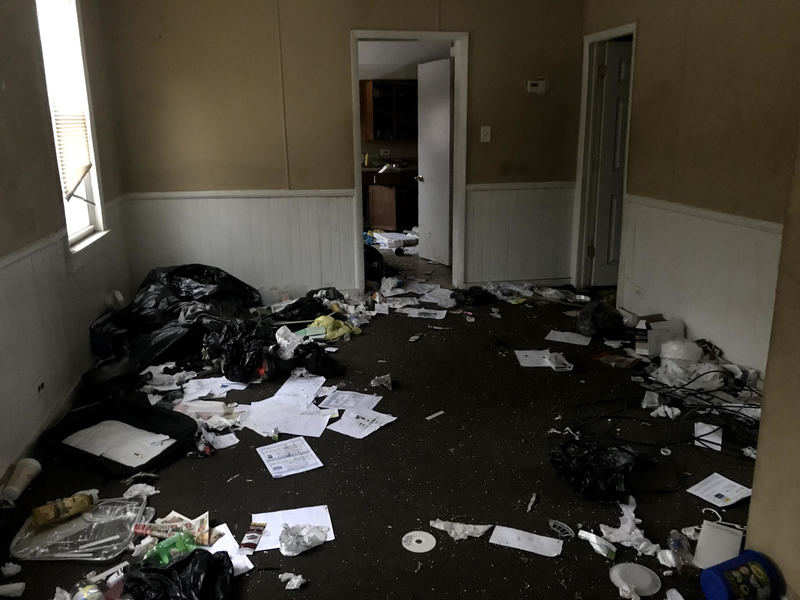
     Yea that was some pretty standard stuff when it comes to evicting savages. I believe we took that property over with inherited tenants living in it. Total savages. They stopped paying. We evicted. That was the front yard. Here is the dining room.
  • Real Estate Broker · Cleveland Dayton Cincinnati Toledo Columbus & Akron, OH · Member since 2013 · 31k+ posts · 20k+ votes
    7y
    Originally posted by @James Wise:
    Originally posted by @Christopher Davis:

    @James Wise Oh my gosh. I would love to hear more about that if you cafe to share.

     Yea that was some pretty standard stuff when it comes to evicting savages. I believe we took that property over with inherited tenants living in it. Total savages. They stopped paying. We evicted. That was the front yard. Here is the dining room.

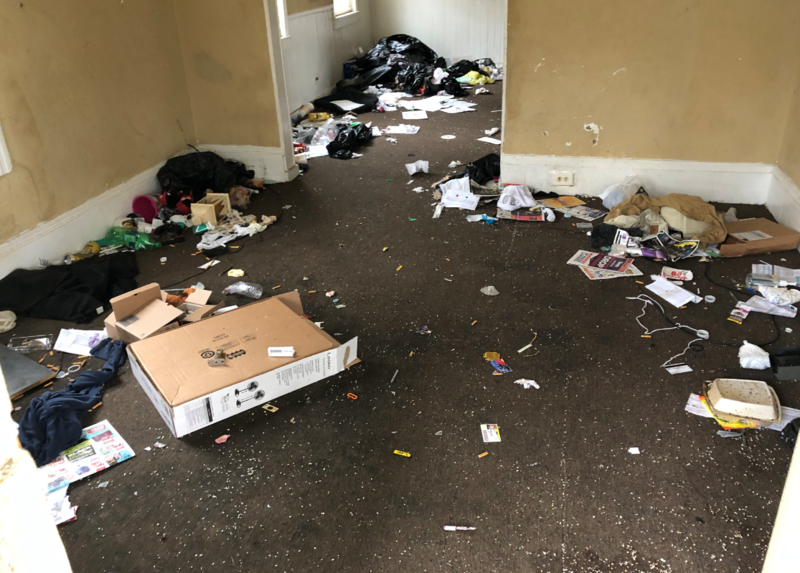
     Here is the living room.
  • Real Estate Broker · Cleveland Dayton Cincinnati Toledo Columbus & Akron, OH · Member since 2013 · 31k+ posts · 20k+ votes
    7y
    Originally posted by @James Wise:
    Originally posted by @James Wise:
    Originally posted by @Christopher Davis:

    @James Wise Oh my gosh. I would love to hear more about that if you cafe to share.

     Yea that was some pretty standard stuff when it comes to evicting savages. I believe we took that property over with inherited tenants living in it. Total savages. They stopped paying. We evicted. That was the front yard. Here is the dining room.

     Here is the living room.

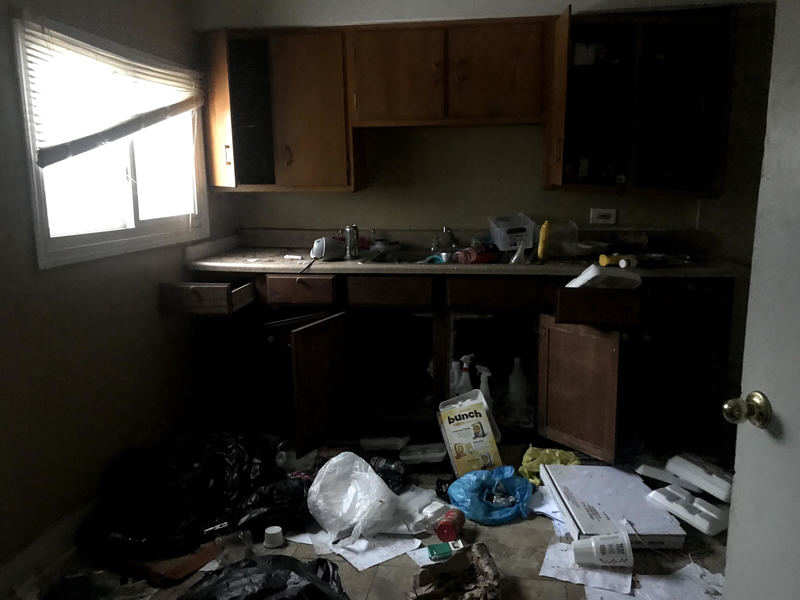
     And of course the kitchen
  • Rental Property Investor · Boulder, CO · Member since 2019 · 144 posts · 72 votes
    7y

    @James Wise Delightful. They were barbarians. Would you say that's the norm or the exception?

  • Real Estate Broker · Cleveland Dayton Cincinnati Toledo Columbus & Akron, OH · Member since 2013 · 31k+ posts · 20k+ votes
    7y
    Originally posted by @Christopher Davis:

    @James Wise Delightful. They were barbarians. Would you say that's the norm or the exception?

     We run a portfolio that's got around 1,000 doors in it. The majority probably 80% or so are C and D class rentals. We evict approx 5-10 people every month. Of those I'd say 20% look worse than this, 40% better and the rest are about the same. Now one super important thing to note is that we regularly take on properties for investors who are in over their heads so cleaning up bad landlord tenant situations is our thing. That is going to skew the numbers up a quite a bit on the savagery scale. People who're running a smooth portfolio don't often bring us in to take it over. We get the call when they can't handle it or the problems become too big.

  • Rental Property Investor · CT · Member since 2019 · 105 posts · 68 votes
    7y

    @Christopher Davis

    I buy in C and D areas. About 50% of my tenants are section 8. It comes down to screening, as someone else said. The majority of my tenants are very good. Few pay late. I actually do very well renting in these areas. After they leave, expect to change out the cabinets, counters, carpets, appliances, and paint. I don't really care about these as the majority of my tenants stay a while. The best piece of advice I can give you would be to buy multis (I don't own any SIngle family houses) that have 3+ bedrooms as they tend to stay longer. I have 2 duplexes with huge four bedroom units in each. I BRRRed them, ended up with 80-100% cash on cash ROIs, and they rent for an average of $1500-$1800 per Mo. Section 8 subsidized. I am making an absolute killing off these. I also put granite in my rentals when doing a rehab. Formica Counter's get water logged and destroyed, but with granite I can simply replace the cabinets if need be and reuse the granite. Also, things like granite and stainless appliances I've found attract better and cleaner tenants. They appreciate a nicer place, and since nicer places in C and D areas are tough to find, they are grateful and take slightly better care of it. My biggest focus is always reducing vacancies and getting the best quality tenant possible for these low income areas. Yes, you can get stuck with a bad tenant in these areas so I pay first months rent to have my agent list my rentals on the MLS, do the showings, and we both work together to screen the final tenant that ends up taking the unit. Also some of the government subsidy programs I work with offer 2 months rent security deposit (not section 8). So if and when they do move out, I can do quite a bit with $3500+.

Join the conversationCreate a free account to reply, vote on answers and follow this thread.