I am looking at a 2 family that is close to me and is in a good area. I
want to BRRRR this property. It needs a lot of work. The home has
been vacant for 10 years, and has no heat. The was built around 1900.
Structurally it is solid and the exterior needs minimal work. Here are a
few questions that I have regarding the rehab
1 Windows look original, should I assume that I need to replace all of them due to the risk of lead paint?
2 Should I assume the home needs all new plumbing and none of the original plumbing is salvageable?
3
The electric panels are fuse boxes, and I don't see much wiring that
looks new even though there appears to be some grounded outlets
upstairs. Should I assume all wiring needs to be replaced?
4
Since I have to get into the walls to do plumbing, electrical, heating,
should I assume that the house has to be gutted to studs?
I am in
the construction industry, but I don't have a lot of experience dealing
with older homes. I appreciate any insight you can share. TIA
@Randy Dulac
It sure sounds like a to the studs gut. 1900’s house, expect plaster and lathe over studs for the walls and ceiling. It’s a big demo.
The biggest danger is hidden structural damage. Water and termites are the concern. Go under the house and inspect all the floor joist, sill plates, rim joist, support piers, etc. Make sure the foundation and the wood components sitting on top of the foundation is solid and not rotted out. Expect to have lead and possibly asbestos to deal with. Lead in the paint, asbestos in heat protection uses, siding, and potentially in the plaster as well.
If I was budgeting site unseen I would be around $80/sqft. I like these properties, but I would “fine tooth comb” the property before I pulled the trigger because a slip up on a property that needs a lot of work has more potential consequences than a light rehab. Decades of cumulative neglect involved typically in these older properties.
@Randy Dulac
It sure sounds like a to the studs gut. 1900’s house, expect plaster and lathe over studs for the walls and ceiling. It’s a big demo.
The biggest danger is hidden structural damage. Water and termites are the concern. Go under the house and inspect all the floor joist, sill plates, rim joist, support piers, etc. Make sure the foundation and the wood components sitting on top of the foundation is solid and not rotted out. Expect to have lead and possibly asbestos to deal with. Lead in the paint, asbestos in heat protection uses, siding, and potentially in the plaster as well.
If I was budgeting site unseen I would be around $80/sqft. I like these properties, but I would “fine tooth comb” the property before I pulled the trigger because a slip up on a property that needs a lot of work has more potential consequences than a light rehab. Decades of cumulative neglect involved typically in these older properties.
Tony is right, and in line with that my opinion is always have a very thorough reliable detail oriented home inspector give you an aggressive evaluation, then you might find a couple things that can wait , but most things that old were not intended to last forever.
Assume everything is obsolete unless a good appraisal identifies something in good shape.
imho
I invest in houses from 1900 to 1920. I would not assume anything you are.
Look at the plumbing, the last 1902 house I bought has PEX Plumbing. It sat empty and vandalized for many years before the bank processed the foreclosure, but someone redid all the plumbing water lines. You really need to look at what you have. Do a pressure test on the water and sewage lines, see if there are issues. Turn on the water and see if the meter spins or if it is still. If it is not spinning when the water it turned on the leaks are in the facets instead of the lines. There may be plumbing issues, but there may not be.
Going to the studs should be very limited. In another 1900 house we just ran new electricity to the upstairs from the outside of the house. The electrician recommended that over going through the walls and floor/ceiling. If the wires are copper, you likely do not need to replace them. A new box is very different than new wires. I would assume that with grounded wires upstairs there has been electrical work in the past few decades.
The old windows and the old wavy glass is actually worth money and desirable. Wet sand the wood on the windows and repaint. You will have to give the tenants the EPA required lead based paint paperwork anyway because its better that testing the whole house.
I use mini-splits for HVAC in old houses--the ductwork will not fit through the crawl spaces and attics with all the room additions, so its much cheaper to put in the mini-splits and the tenants love having the individual room controls.
For what you are proposing to do, you might as well just buy a vacant lot. The amount of construction upgrades you will be hit with is not worth using an old frame, roof, and foundation and that seems to be all you are keeping. And you are taking a risk of opening those walls and finding out the studs are at an irregular spacing or 18" apart, which is common where I invest. Your building inspector will expect that to be fixed if you are open to the studs. So, what of the house are you keeping? The foundation? Is it any good? the roof?
Everything in the house probably contains asbestos. You need to post more numbers in regards to your purchase price and after repair value. If you purchase the house for $50k and it is worth $1.5 million when finished then maybe you have a good deal. Otherwise, you need to do the math a hundred times to project your profits before you purchase the property and not after. Only you have the numbers to do that.
Lol. Lots of asbestos from 1909? Not likely at all.
Popcorn ceilings weren't popular then. If you don't have an old "fix" with old acoustic ceiling tiles, you are probably fine. You can put VLP right over any asbestos VCT tiles and walk away happy that everyone is safe.
Lynette has the right idea. I'm just concerned that you don't have the knowledge for this sort of job.
Everything in the house probably contains asbestos. You need to post more numbers in regards to your purchase price and after repair value. If you purchase the house for $50k and it is worth $1.5 million when finished then maybe you have a good deal. Otherwise, you need to do the math a hundred times to project your profits before you purchase the property and not after. Only you have the numbers to do that.
Lol. Lots of asbestos from 1909? Not likely at all.
Popcorn ceilings weren't popular then. If you don't have an old "fix" with old acoustic ceiling tiles, you are probably fine. You can put VLP right over any asbestos VCT tiles and walk away happy that everyone is safe.
Lynette has the right idea. I'm just concerned that you don't have the knowledge for this sort of job.
There is asbestos in more than 2,000 building materials. Most likely, a place built in 1909 has has asbestos in the plaster walls in floor tiles in the kitchen and roofing materials have asbestos. Drywall and drywall mud used to have asbestos in it. Asbestos and horse hair used to be put into plaster to stop it from cracking.
Dealing with asbestos is much worse that dealing with mold. Unfortunately, asbestos is almost invisible and when workers smash down walls the asbestos can float on dead air space for 3 to 5 days. You may hire licensed contractors, but most-often the workers are illegals from three countries I will mention (Honduras, El salvador and Guatemala) and attorneys are constantly sending workers emails telling them to visit their office because there just may be something they can sue you and there boss for. Unfortunately, the internet has made every worker very well-informed in regards to the laws and the millions of dollars workers can get and all they need to say is they breathed in some asbestos, whether or not they really did.
The proper thing to do is to get asbestos testing before you smash down plaster walls and get an asbestos clearance from the testing company.
In California, the Air Quality Management District is a huge $50 million building with maybe a thousand workers and not one penny of the AQMD comes from a government agency. Every penny that runs the operation comes from fines. The fines are something like $37,500 for every worker for every day every worker is exposed to asbestos and then the business owner receives $37,500 per day fines for every violation in addition to his employee's fines and the fines always exceed $500,000 and are usually more than $1 million.
I have a license to abate asbestos and was on a job one day. An AQMD inspector drove up to our job and these were his first words he spoke:
"Everyone on this job, pull out your asbestos abatement certifications and anyone who does not have his certificate with him is going to jail".
Everything in the house probably contains asbestos. You need to post more numbers in regards to your purchase price and after repair value. If you purchase the house for $50k and it is worth $1.5 million when finished then maybe you have a good deal. Otherwise, you need to do the math a hundred times to project your profits before you purchase the property and not after. Only you have the numbers to do that.
Lol. Lots of asbestos from 1909? Not likely at all.
Popcorn ceilings weren't popular then. If you don't have an old "fix" with old acoustic ceiling tiles, you are probably fine. You can put VLP right over any asbestos VCT tiles and walk away happy that everyone is safe.
Lynette has the right idea. I'm just concerned that you don't have the knowledge for this sort of job.
There is asbestos in more than 2,000 building materials. Most likely, a place built in 1909 has has asbestos in the plaster walls in floor tiles in the kitchen and roofing materials have asbestos. Drywall and drywall mud used to have asbestos in it. Asbestos and horse hair used to be put into plaster to stop it from cracking.
Dealing with asbestos is much worse that dealing with mold. Unfortunately, asbestos is almost invisible and when workers smash down walls the asbestos can float on dead air space for 3 to 5 days. You may hire licensed contractors, but most-often the workers are illegals from three countries I will mention (Honduras, El salvador and Guatemala) and attorneys are constantly sending workers emails telling them to visit their office because there just may be something they can sue you and there boss for. Unfortunately, the internet has made every worker very well-informed in regards to the laws and the millions of dollars workers can get and all they need to say is they breathed in some asbestos, whether or not they really did.
The proper thing to do is to get asbestos testing before you smash down plaster walls and get an asbestos clearance from the testing company.
In California, the Air Quality Management District is a huge $50 million building with maybe a thousand workers and not one penny of the AQMD comes from a government agency. Every penny that runs the operation comes from fines. The fines are something like $37,500 for every worker for every day every worker is exposed to asbestos and then the business owner receives $37,500 per day fines for every violation in addition to his employee's fines and the fines always exceed $500,000 and are usually more than $1 million.
I have a license to abate asbestos and was on a job one day. An AQMD inspector drove up to our job and these were his first words he spoke:
"Everyone on this job, pull out your asbestos abatement certifications and anyone who does not have his certificate with him is going to jail".
This is wildly overstating the case. Asbestos was rarely added to building materials before the start of WWII. Yes, it was added sometimes, but your statements are extraordinarily misleading and hysteria-producing.
Extremely low levels that appear simply because a material is naturally sourced haven't ever been show to be a particular danger. That said, if you do nothing but drywall/plaster demo for 30 working years, it probably doesn't matter what the stuff is made of if it's really fine dust, c.f. silicosis.
I don't know where you are getting your information from. I am 71-years old, was born in Massachusetts and worked in multiple properties built in the early 1900's and asbestos was used in the early 1900's for
potable hot water pipes
steam pipes for radiators
small and large coal and oil burning boilers
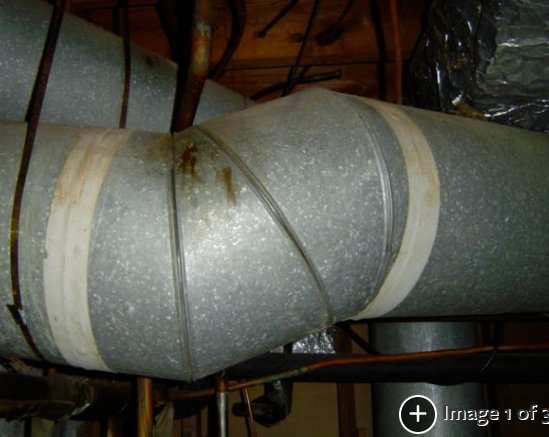
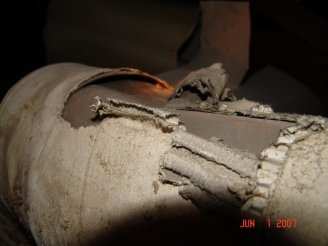
warm air heat ducts were loaded with asbestos as shown in the images below
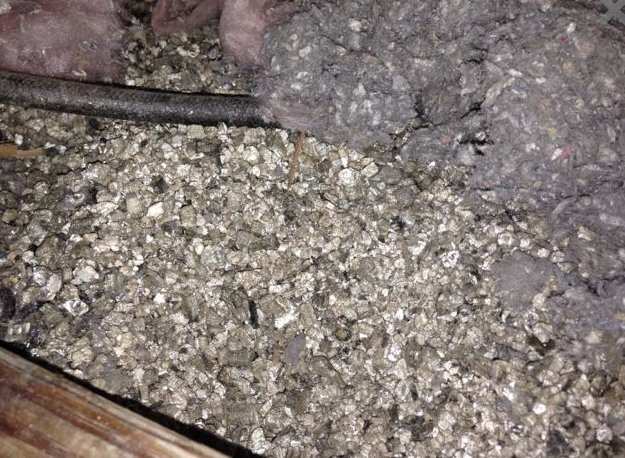
attic insulation as shown in the image below
electrical wiring as shown in the image below
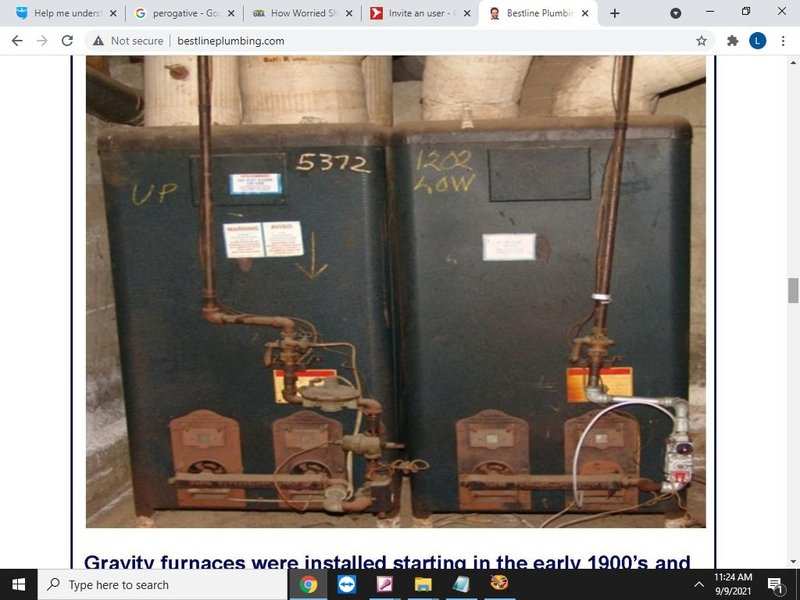
inside and outside floor furnaces and gravity furnaces as shown in the image below
floor tiles and linoleum is loaded with asbestos
drywall and drywall mud is loaded with asbestos and maybe that work was done after the home was built
roofing material is loaded with asbestos
I've been a licensed asbestos abatement contractor for more than 30 years, have been in the construction business for more than 48 years and I've been to more then thirty 10 to 40-hourtraining classes for asbestos abatement.
Cheap people, cheap homeowners and pathetically sick sick people tell tell their workers there is no need to be concerned about asbestos. One problem is; some people can breathe asbestos into their lungs every day in large quantities and they never had an adverse effect and some people only need to breath in a small amount of asbestos and they do have a serious adverse effect.
You don't have the moral right to tell someone there is no asbestos in a hope without testing and the problem with this world goes back to the previous paragraph where homeowners and contractors tell their workers testing is not necessary, tell them their is no asbestos without testing and tell their workers not to worry.
Here is a link about homes built in the early 1900's and an image from the link.
https://www.greenbuildingadvis...
Two if the images below are from business website I have since I am a licensed asbestos abatement contractor.
I took the picture of the pictures with the two gravity furnaces in a home built in Beverly Hills that was built around 1908 and that was not the first year those furnaces were manufactured and installed. In fact. the heading bellow the image states, "Gravity Furnaces Were Installed Starting in the Early 1900's".
You will never ever know as much about asbestos as I do since I've been in the business for asbestos for about 30 years and we have so many government regulations and so many government inspectors breathing down our neck when we work on any asbestos abatement job because every mistake we make can result in horrendous fines and multi-million dollar employee and customer lawsuits.
Did you ask if I am overstating health issues about asbestos? Do you have the moral right to tell people they can work for you and you don't need to investigate, get testing and get a clearance from the testing company. Of course you won't because you and millions of other people are smarter than the people who work with asbestos, you probably don't know anyone personally who dies from mesothelioma, like Steve Mc Queen.
Once asbestos is breathed into your lungs it goes through the tiny fibers in your lungs and remains
Sorry! remainder of my last statement should say
Once a person breathes in a tiny amount of asbestos it goes through the tiny fibers in their lungs and remains there for the rest of their life. It never ever comes out of their lungs. Again, do you have the right to tell people they can work on a project and they don't have to worry about breathing in asbestos that can float it dead air space for as much as 3 to 6 days and once they breathe it in it remains in their lungs for the rest of their life.
I am taking many prescription narcotics right now and can't remember the exact number of years we need to keep every record for every employee who works for us, but I think it is 40 years. We have to get extensive medical tests for our employees every year and like Steve Mc Queen, he worked with asbestos when he was in the Navy and died from mesothelioma about 30 or 4- years (don't know the exact number).
@Randy Dulac alot depends on the systems that were in the home. If you had hot water baseboard those pipes are probably gone (full of pinholes or burst) and you need a new heating system. If the pipes have that white clothlike covering insulation on the pipes, assume it is asbestos. Also some heating ducts will have asbestos. 8x8 tiles are almost always asbestos
For electric you have to put in breakers, no fuses. Electrician can give you an idea on wiring but chances are if you want grounded outlets and it hasn't been re-wired you need to do that.
For lead and windows, as pretty as that wavy glass is you have two issues, it will be a rental so you have to remediate lead to the level required in your state as a rental. Unfortunately the most cost effective way to do that is to replace windows. you also need to see if you have lead pipes. And most likely your siding and interior/exterior peeling paint is lead.
Is it a gut rehab, probably you have to decide what is it worth saving.
I am looking at a 2 family that is close to me and is in a good area. I
want to BRRRR this property. It needs a lot of work. The home has
been vacant for 10 years, and has no heat. The was built around 1900.
Structurally it is solid and the exterior needs minimal work. Here are a
few questions that I have regarding the rehab
1 Windows look original, should I assume that I need to replace all of them due to the risk of lead paint?
2 Should I assume the home needs all new plumbing and none of the original plumbing is salvageable?
3
The electric panels are fuse boxes, and I don't see much wiring that
looks new even though there appears to be some grounded outlets
upstairs. Should I assume all wiring needs to be replaced?
4
Since I have to get into the walls to do plumbing, electrical, heating,
should I assume that the house has to be gutted to studs?
I am in
the construction industry, but I don't have a lot of experience dealing
with older homes. I appreciate any insight you can share. TIA
Don't assume anything, investigate and know! 1. Adding new windows can add value to the home, if they are very old, then replacing is a good choice in most cases, not all. 2. Again, don't assume, find out. If it does need a re-pipe, and new electrical wiring, then expect to gut to studs, patching swiss cheese is more labor intensive so it is better to gut and start fresh. 3. Refer to answer in #2. 4. If yes to #2 & 3, then yes to this, gut it.
My Resume: Advice above from 15 year+ real estate investor, plus licensed contractor in CA.
@Randy Dulac alot depends on the systems that were in the home. If you had hot water baseboard those pipes are probably gone (full of pinholes or burst) and you need a new heating system. If the pipes have that white clothlike covering insulation on the pipes, assume it is asbestos. Also some heating ducts will have asbestos. 8x8 tiles are almost always asbestos
For electric you have to put in breakers, no fuses. Electrician can give you an idea on wiring but chances are if you want grounded outlets and it hasn't been re-wired you need to do that.
For lead and windows, as pretty as that wavy glass is you have two issues, it will be a rental so you have to remediate lead to the level required in your state as a rental. Unfortunately the most cost effective way to do that is to replace windows. you also need to see if you have lead pipes. And most likely your siding and interior/exterior peeling paint is lead.
Is it a gut rehab, probably you have to decide what is it worth saving.
Your post was well-written and very knowledgeable.
The removal of lead is regulated by the federal and not local government agencies. The regulations for lead are almost as serious as dealing with asbestos. I took the 40-hour course and got certified to do lead abatement about 15 years ago and never was interested in getting involved with lead abatement.
Lead is also found in older bathtubs when lead was put in the glazing and in ceramic tile.
Personally, I think lead is more dangerous than asbestos because lead causes very serious mental issues for children children where they really do become mentally handicapped vs. the b.s. about mold and even when asbestos is present in a rental unit, or commercial building the chances that the asbestos is loose enough to circulate through the air is slim to none, but there are some rare claims. All the vehicles in the world used asbestos break pads and there was a significant amount of asbestos in the are due to break pads. When people ride ATV's in the desert they kick up a significant amount of asbestos and I don't personally know one person who died from asbestos caused by break pads or desert dust, but I do personally know two children who were handicapped and doctors claim the cause was due to lead.
The requirements for removing lead depends heavily on who lives in the house. If no children live in the house (or rental unit) then when lead is present I am not sure if it has to be removed, but if a grandmother lives in the house and her grandchildren visit her for even short periods then the lead has to be removed. There are different requirements that depend on how the house is finance (if it is financed). If the rental unit is financed through FHA, Jenny May, Fannie May, or whatever they are called then the property is considered to be owned by the federal government and the regulations and requirements are much more stringent.
@Account Closed Thanks, yes that is correct lead laws are EPA based and federal and abatement procedures are I believe, defined for all states by those laws. What differs by state is if he is going to keep this as a rental there may be more restrictive laws when they issue lead certificates, how they define as lead free, what they considered abated and how strictly they enforce.
Thank you. You are surprisingly knowledgeable about lead and probably many other construction issues.
I think I slept through most of the 40-hour lead course and stuck it out only because I paid and to get the piece of paper saying I could work with lead (if I really wanted to).
Thank you very much.
Thanks for the replies. I have learned alot reading through what everyone has to say