Where should you buy Real Estate? And When? It's Simple, Buy Green.

Where should you buy Real Estate? And When? It's Simple, Buy Green.

Andreas MuellerBusiness Member
Real Estate Agent · Nashville, TN · Member since 2019 · 410 posts · 182 votes

Hi BP Community! Thought I would share my brief, hopefully insightful, dive into real estate and/or financial markets.

Today we’re keepin’ it short, but not light, it being the holidays and all, and let’s be honest, you are going to have some down time for contemplation. Where should you be looking to invest in real estate? The simple answer may surprise you. Plus, a personal story from a property I recently sold. It’s heavy.

Today’s Interest Rate: 7.32%

(👇 .08% from this time last week, 30-yr mortgage)

First, a super brief look at mortgage rates, which are in a trend down, albeit a short one, as we saw toward the end of 2022.
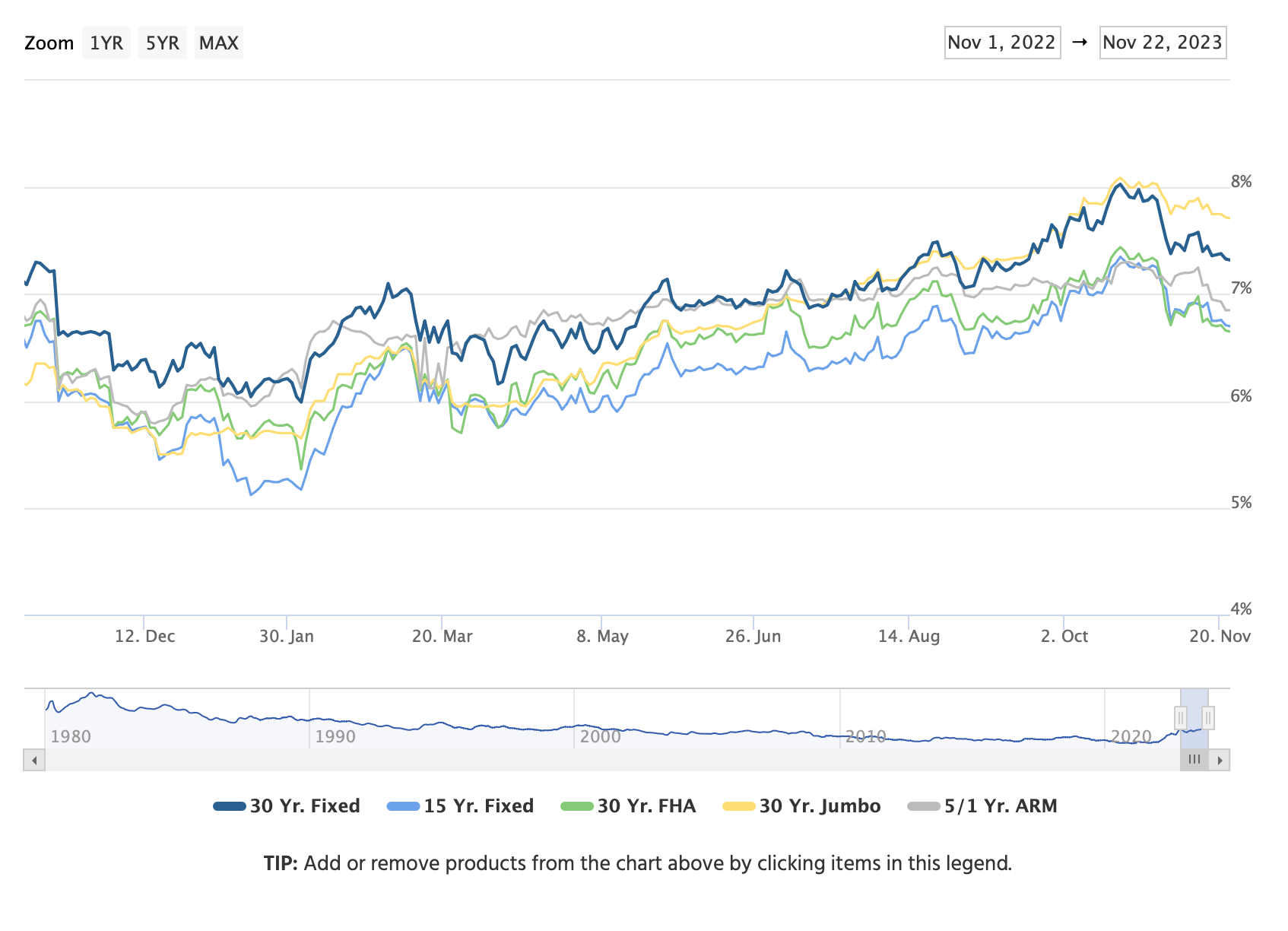
My take: this trend will continue, especially if the Fed signals a pause in rate hikes and/or cuts in 2024, as the large investment banks are predicting.

Where to ‘Real Estate?’

So where should one invest in real estate? And when? In short, if it’s green buy now.
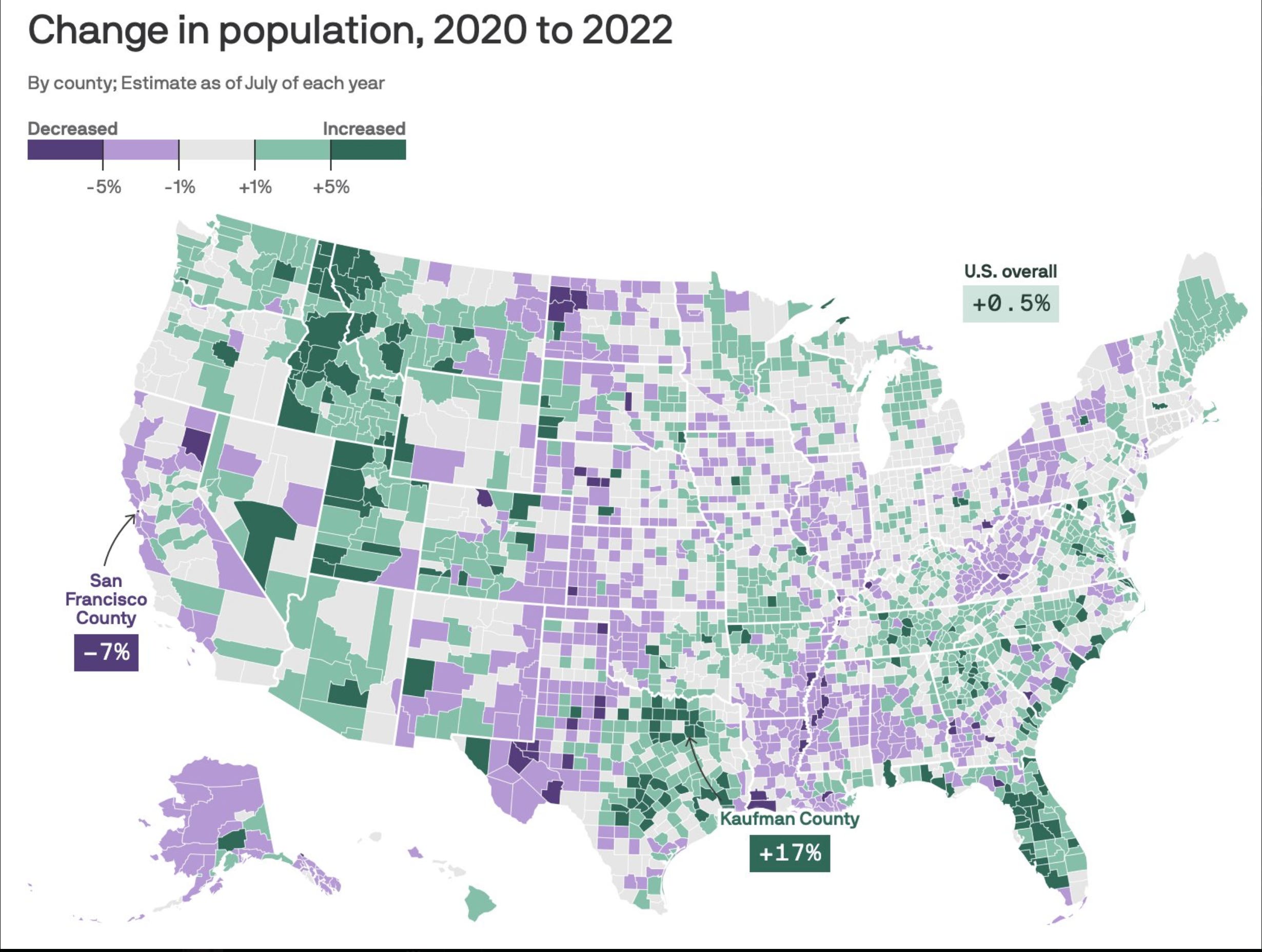
This chart says it all. Buy green, sell purple, redeploy capital to dark green, and avoid dark purple like the plague.

At its center, that’s all real estate is. Buy in growth areas, were people not only want to live but are actively moving to. Keep up on the population trends and sell to redeploy capital so you are always in the green.

Don’t believe me? Let me tell you a story. (Queue cut-away scene)

Most of my real estate portfolio is in and around Nashville, TN (dark green). However I also own one last property in DC, where I lived and worked for 17 years in my previous lift, and invested in rentals for most of that time. In just the last 1.5 years DC has gone from green to purple. Dark purple, especially in the B class neighborhoods, interestingly enough. Under my nose, and I admit I wasn't paying enough attention, a 15+ year trend quickly reversed: from buying a nice rowhouse after getting your first decent government job, which ostensively never relocates and always requires you to be in the office, to, screw that lets move a few minutes out of the city, get a much larger home with some land because I’ll just commute, and likely only have to do that 3 days a week. If that. Importantly, DC city and Federal government lockdowns were pretty stringent for 2 years, providing an extra incentive to bounce to the suburbs. This trend may reverse, but that’s the trend.

Because of this, home prices in much of DC, more so than the major cities, have stood still for 2+ years. To put this in perspective, my home market of Nashville saw annual price increases of 19%. Each year.

This year (not during covid or previously) I had two tenants in a row who were constantly late and/or didn’t pay the rent. So this early fall, when I went to turn over the leases and find new tenants, I was met with even more difficulty in both the number of and quality of potential residents. This 2023 trend confused me. I had easily found tenants in the past, and until this year, they were always great folks.

The renovated kitchen in my DC rowhouse

What was the problem? One thing I hadn’t accounted for was a confluence of 2 events: a ton of new supply of nice rental apartments competing with homes, interest rates driving down demand/affordability of homes and driving up demand for high-quality apartment rentals, families and other folks leaving DC for the suburbs, and significantly increased crime (also favoring apartment buildings vs single homes). In fact, Crime has gotten DEFCON level - ‘San Francisco’ in DC, I’m earnestly sad to report.

Anecdotally, not too far from my home a young man was killed when trying to carjack the car of an off-duty police officer. This man was wanted for several other carjackings as well. This “man”… was 13 years old. His accomplice, who was just arrested, was 12. As of October 1st, there have been 827carjackings this year in DC. Including to Member of Congress. Holy hell.

It wasn’t just the crime so don’t solely focus on that; I realized all of these things too late. So last month I decided to cut bait and sell. I’ll make a few bucks, but not much. Why am I selling when I have a 3% mortgage? It’s all about return on equity, and I recommend everyone do this every year. Ask yourself, how much equity (value/wealth) do I have in this property and what return am I making from it? If I sold and redeployed this capital into another property, would my 5-year return (my timeline of measurement) be higher? If so, sell and redeploy. And make sure to include all forms of investment income from the property when calculating the return, not just that rental check:

  1. - Cash flow and expected rent increases in the next 5 years
  2. - Estimated natural appreciation
  3. - Principle pay down of mortgage
  4. - Forced appreciation through a renovation (I couldn’t since I already did this)
  5. - Tax depreciation (3.6%/yr)
  6. - Non-Financial: crime, tenant quality etc…
  7. - Did I hit all the highlights @davidgreene? :)

Bottom Line

Learn from me, monitor your investments everyone. Especially if you have a property manager telling you everything is roses. You may still be getting that same rental check but how is the asset doing? Are there any emerging local trends that may cause concern? How can you asset manage the property better? For example: It may make sense to build a deck or landscape the backyard to keep top-quality residents and / or increase rents. In a high mortgage interest rate environment reinvesting in your current properties may make more sense than buying another property.

Should you redeploy? Is the property green or purple? Run the numbers, double check that every dollar you have is still a little worker bee making you the highest return on equity, even when you’re sleeping.

And above all, never lose money. That’s rule number 1 and 2.

Stay Green Y’all.

That’s it for this week. If you are interested in digging deeper into these ideas or talkin’ real estate investing - which I always love doing - don’t hesitate to reach out. You can direct message me on BP!

Until next time, stay Aware, stay Skeptical.

Herzliche Grüße

-Andreas

* The preceding has been my opinion only, the views are my own, and are intended for educational and entertainment purposes only and does not constitute financial advice.

THE Investor Agent and Management: For Investors by Investors
10Reply
125 views

Most Popular Reply

V.G JasonPro Member
Investor · Member since 2022 · 3k+ posts · 3k+ votes
2y

Map is hard to read since you can't see specific cities on it. 

See this reply in the discussion

38 Replies

Jump to latestLatest
  • V.G JasonPro Member
    Investor · Member since 2022 · 3k+ posts · 3k+ votes
    2y

    Map is hard to read since you can't see specific cities on it. 

  • Andreas MuellerBusiness Member
    OP
    Real Estate Agent · Nashville, TN · Member since 2019 · 410 posts · 182 votes
    2y

    VG, there is a link as well. Map should be clickable hopefully. DM me if not

    THE Investor Agent and Management: For Investors by Investors
  • V.G JasonPro Member
    Investor · Member since 2022 · 3k+ posts · 3k+ votes
    2y
    Quote from @Andreas Mueller:

    VG, there is a link as well. Map should be clickable hopefully. DM me if not

     Still isn't working, but to the point of this topic. This is covid to low rate era. Yes, era, even though it's less than 12 months ago. 

    2023 is painting a very different picture, I would like to see that one YTD if possible.  Believe the mid-west, new york, and even noCal are picking back up.

    I think we'll revert back to this 2020-2022 map but over the course of the next 3-5 years starting in 2025, and not as sudden as it came nor as aggressive. There's still more bleeding for the primetime cities(Austin, Nashville, etc.) before there is relief. 

    For example, if a place like SF lost 50% to Austin & these dark green cities, I think we see retracement and they'll get back 30% of it. That's still a net loss for SF/net gain for Austin. Likewise for other parts of No/So Cal and Idaho, Nashville, etc,. Those areas will go from purple to light-ish green. And the dark green will stay dark green in primetime cities, but revert to light green in non prime cities(like Central Florida), Idaho, Montana, maybe even white. 

    People are impulsive enough to sell their California house to move to Montana within 6-12 months of Covid, they will be impulsive enough to go back once they realize not all was resolved. The problem with that is right now they're locked into those low rates so they're not willing to sell in Idaho, and buy in California. Add the fact they are likely under water in some areas of Idaho & Montana from when they bought, it's definitely not a good time. 

    If/when rates hover around 6% for primaries(which may take 6 months to 2 years), I think you see that pattern inverse and people sell Idaho, Montana/buy California for example. Likewise, we are already seeing a bit of that in Austin as is most of them are actually moving to Denver, San Antonio, Asheville. Heck, even Raleigh is picking up.

    You want to go where the puck is going, not where it's been. 

  • Member since 2019 · 7k+ posts · 4k+ votes
    2y
    Quote from @Andreas Mueller:

    Hi BP Community! Thought I would share my brief, hopefully insightful, dive into real estate and/or financial markets.

    Today we’re keepin’ it short, but not light, it being the holidays and all, and let’s be honest, you are going to have some down time for contemplation. Where should you be looking to invest in real estate? The simple answer may surprise you. Plus, a personal story from a property I recently sold. It’s heavy.

    Today’s Interest Rate: 7.32%

    (👇 .08% from this time last week, 30-yr mortgage)

    First, a super brief look at mortgage rates, which are in a trend down, albeit a short one, as we saw toward the end of 2022.

    My take: this trend will continue, especially if the Fed signals a pause in rate hikes and/or cuts in 2024, as the large investment banks are predicting.

    Where to ‘Real Estate?’

    So where should one invest in real estate? And when? In short, if it’s green buy now.

    This chart says it all. Buy green, sell purple, redeploy capital to dark green, and avoid dark purple like the plague.

    At its center, that’s all real estate is. Buy in growth areas, were people not only want to live but are actively moving to. Keep up on the population trends and sell to redeploy capital so you are always in the green.

    Don’t believe me? Let me tell you a story. (Queue cut-away scene)

    Most of my real estate portfolio is in and around Nashville, TN (dark green). However I also own one last property in DC, where I lived and worked for 17 years in my previous lift, and invested in rentals for most of that time. In just the last 1.5 years DC has gone from green to purple. Dark purple, especially in the B class neighborhoods, interestingly enough. Under my nose, and I admit I wasn't paying enough attention, a 15+ year trend quickly reversed: from buying a nice rowhouse after getting your first decent government job, which ostensively never relocates and always requires you to be in the office, to, screw that lets move a few minutes out of the city, get a much larger home with some land because I’ll just commute, and likely only have to do that 3 days a week. If that. Importantly, DC city and Federal government lockdowns were pretty stringent for 2 years, providing an extra incentive to bounce to the suburbs. This trend may reverse, but that’s the trend.

    Because of this, home prices in much of DC, more so than the major cities, have stood still for 2+ years. To put this in perspective, my home market of Nashville saw annual price increases of 19%. Each year.

    This year (not during covid or previously) I had two tenants in a row who were constantly late and/or didn’t pay the rent. So this early fall, when I went to turn over the leases and find new tenants, I was met with even more difficulty in both the number of and quality of potential residents. This 2023 trend confused me. I had easily found tenants in the past, and until this year, they were always great folks.

    The renovated kitchen in my DC rowhouse

    What was the problem? One thing I hadn’t accounted for was a confluence of 2 events: a ton of new supply of nice rental apartments competing with homes, interest rates driving down demand/affordability of homes and driving up demand for high-quality apartment rentals, families and other folks leaving DC for the suburbs, and significantly increased crime (also favoring apartment buildings vs single homes). In fact, Crime has gotten DEFCON level - ‘San Francisco’ in DC, I’m earnestly sad to report.

    Anecdotally, not too far from my home a young man was killed when trying to carjack the car of an off-duty police officer. This man was wanted for several other carjackings as well. This “man”… was 13 years old. His accomplice, who was just arrested, was 12. As of October 1st, there have been 827carjackings this year in DC. Including to Member of Congress. Holy hell.

    It wasn’t just the crime so don’t solely focus on that; I realized all of these things too late. So last month I decided to cut bait and sell. I’ll make a few bucks, but not much. Why am I selling when I have a 3% mortgage? It’s all about return on equity, and I recommend everyone do this every year. Ask yourself, how much equity (value/wealth) do I have in this property and what return am I making from it? If I sold and redeployed this capital into another property, would my 5-year return (my timeline of measurement) be higher? If so, sell and redeploy. And make sure to include all forms of investment income from the property when calculating the return, not just that rental check:

    1. - Cash flow and expected rent increases in the next 5 years
    2. - Estimated natural appreciation
    3. - Principle pay down of mortgage
    4. - Forced appreciation through a renovation (I couldn’t since I already did this)
    5. - Tax depreciation (3.6%/yr)
    6. - Non-Financial: crime, tenant quality etc…
    7. - Did I hit all the highlights @davidgreene? :)

    Bottom Line

    Learn from me, monitor your investments everyone. Especially if you have a property manager telling you everything is roses. You may still be getting that same rental check but how is the asset doing? Are there any emerging local trends that may cause concern? How can you asset manage the property better? For example: It may make sense to build a deck or landscape the backyard to keep top-quality residents and / or increase rents. In a high mortgage interest rate environment reinvesting in your current properties may make more sense than buying another property.

    Should you redeploy? Is the property green or purple? Run the numbers, double check that every dollar you have is still a little worker bee making you the highest return on equity, even when you’re sleeping.

    And above all, never lose money. That’s rule number 1 and 2.

    Stay Green Y’all.

    That’s it for this week. If you are interested in digging deeper into these ideas or talkin’ real estate investing - which I always love doing - don’t hesitate to reach out. You can direct message me on BP!

    Until next time, stay Aware, stay Skeptical.

    Herzliche Grüße

    -Andreas

    * The preceding has been my opinion only, the views are my own, and are intended for educational and entertainment purposes only and does not constitute financial advice.


     Following population increases is the worst investment metric investor can use , this should not be a single factor.

  • Andreas MuellerBusiness Member
    OP
    Real Estate Agent · Nashville, TN · Member since 2019 · 410 posts · 182 votes
    2y
    Oh yes, I wouldn't rely on this actual image to guide your data gathering and to determine where population changes are. There are many paid and non paid population tacking and prediction data sources out there.

    Anything in 2023 is likely an estimate. Census data is only taken every 10 years. BUT the Census Bureau puts out estimates, latest so far are 2022. Its a good site though:Here is an example of house you can use the US Census site: I've compared NYC to Washington DC, both lost populations last year up to the data they have (7-22).
    https://www.census.gov/quickfacts/fact/table/DC,newyorkcityn...

    Otherwise paid sources that use models to estimate populations would be the way to go. 

    Hope you liked the post! Happy Turkey Day!


    Quote from @V.G Jason:
    Quote from @Andreas Mueller:

    VG, there is a link as well. Map should be clickable hopefully. DM me if not

     Still isn't working, but to the point of this topic. This is covid to low rate era. Yes, era, even though it's less than 12 months ago. 

    2023 is painting a very different picture, I would like to see that one YTD if possible.  Believe the mid-west, new york, and even noCal are picking back up.

    I think we'll revert back to this 2020-2022 map but over the course of the next 3-5 years starting in 2025, and not as sudden as it came nor as aggressive. There's still more bleeding for the primetime cities(Austin, Nashville, etc.) before there is relief. 

    For example, if a place like SF lost 50% to Austin & these dark green cities, I think we see retracement and they'll get back 30% of it. That's still a net loss for SF/net gain for Austin. Likewise for other parts of No/So Cal and Idaho, Nashville, etc,. Those areas will go from purple to light-ish green. And the dark green will stay dark green in primetime cities, but revert to light green in non prime cities(like Central Florida), Idaho, Montana, maybe even white. 

    People are impulsive enough to sell their California house to move to Montana within 6-12 months of Covid, they will be impulsive enough to go back once they realize not all was resolved. The problem with that is right now they're locked into those low rates so they're not willing to sell in Idaho, and buy in California. Add the fact they are likely under water in some areas of Idaho & Montana from when they bought, it's definitely not a good time. 

    If/when rates hover around 6% for primaries(which may take 6 months to 2 years), I think you see that pattern inverse and people sell Idaho, Montana/buy California for example. Likewise, we are already seeing a bit of that in Austin as is most of them are actually moving to Denver, San Antonio, Asheville. Heck, even Raleigh is picking up.

    You want to go where the puck is going, not where it's been. 


    THE Investor Agent and Management: For Investors by Investors
  • Andreas MuellerBusiness Member
    OP
    Real Estate Agent · Nashville, TN · Member since 2019 · 410 posts · 182 votes
    2y
    Quote from @Carlos Ptriawan:
    Quote from @Andreas Mueller:

    Hi BP Community! Thought I would share my brief, hopefully insightful, dive into real estate and/or financial markets.

    Today we’re keepin’ it short, but not light, it being the holidays and all, and let’s be honest, you are going to have some down time for contemplation. Where should you be looking to invest in real estate? The simple answer may surprise you. Plus, a personal story from a property I recently sold. It’s heavy.

    Today’s Interest Rate: 7.32%

    (👇 .08% from this time last week, 30-yr mortgage)

    First, a super brief look at mortgage rates, which are in a trend down, albeit a short one, as we saw toward the end of 2022.

    My take: this trend will continue, especially if the Fed signals a pause in rate hikes and/or cuts in 2024, as the large investment banks are predicting.

    Where to ‘Real Estate?’

    So where should one invest in real estate? And when? In short, if it’s green buy now.

    This chart says it all. Buy green, sell purple, redeploy capital to dark green, and avoid dark purple like the plague.

    At its center, that’s all real estate is. Buy in growth areas, were people not only want to live but are actively moving to. Keep up on the population trends and sell to redeploy capital so you are always in the green.

    Don’t believe me? Let me tell you a story. (Queue cut-away scene)

    Most of my real estate portfolio is in and around Nashville, TN (dark green). However I also own one last property in DC, where I lived and worked for 17 years in my previous lift, and invested in rentals for most of that time. In just the last 1.5 years DC has gone from green to purple. Dark purple, especially in the B class neighborhoods, interestingly enough. Under my nose, and I admit I wasn't paying enough attention, a 15+ year trend quickly reversed: from buying a nice rowhouse after getting your first decent government job, which ostensively never relocates and always requires you to be in the office, to, screw that lets move a few minutes out of the city, get a much larger home with some land because I’ll just commute, and likely only have to do that 3 days a week. If that. Importantly, DC city and Federal government lockdowns were pretty stringent for 2 years, providing an extra incentive to bounce to the suburbs. This trend may reverse, but that’s the trend.

    Because of this, home prices in much of DC, more so than the major cities, have stood still for 2+ years. To put this in perspective, my home market of Nashville saw annual price increases of 19%. Each year.

    This year (not during covid or previously) I had two tenants in a row who were constantly late and/or didn’t pay the rent. So this early fall, when I went to turn over the leases and find new tenants, I was met with even more difficulty in both the number of and quality of potential residents. This 2023 trend confused me. I had easily found tenants in the past, and until this year, they were always great folks.

    The renovated kitchen in my DC rowhouse

    What was the problem? One thing I hadn’t accounted for was a confluence of 2 events: a ton of new supply of nice rental apartments competing with homes, interest rates driving down demand/affordability of homes and driving up demand for high-quality apartment rentals, families and other folks leaving DC for the suburbs, and significantly increased crime (also favoring apartment buildings vs single homes). In fact, Crime has gotten DEFCON level - ‘San Francisco’ in DC, I’m earnestly sad to report.

    Anecdotally, not too far from my home a young man was killed when trying to carjack the car of an off-duty police officer. This man was wanted for several other carjackings as well. This “man”… was 13 years old. His accomplice, who was just arrested, was 12. As of October 1st, there have been 827carjackings this year in DC. Including to Member of Congress. Holy hell.

    It wasn’t just the crime so don’t solely focus on that; I realized all of these things too late. So last month I decided to cut bait and sell. I’ll make a few bucks, but not much. Why am I selling when I have a 3% mortgage? It’s all about return on equity, and I recommend everyone do this every year. Ask yourself, how much equity (value/wealth) do I have in this property and what return am I making from it? If I sold and redeployed this capital into another property, would my 5-year return (my timeline of measurement) be higher? If so, sell and redeploy. And make sure to include all forms of investment income from the property when calculating the return, not just that rental check:

    1. - Cash flow and expected rent increases in the next 5 years
    2. - Estimated natural appreciation
    3. - Principle pay down of mortgage
    4. - Forced appreciation through a renovation (I couldn’t since I already did this)
    5. - Tax depreciation (3.6%/yr)
    6. - Non-Financial: crime, tenant quality etc…
    7. - Did I hit all the highlights @davidgreene? :)

    Bottom Line

    Learn from me, monitor your investments everyone. Especially if you have a property manager telling you everything is roses. You may still be getting that same rental check but how is the asset doing? Are there any emerging local trends that may cause concern? How can you asset manage the property better? For example: It may make sense to build a deck or landscape the backyard to keep top-quality residents and / or increase rents. In a high mortgage interest rate environment reinvesting in your current properties may make more sense than buying another property.

    Should you redeploy? Is the property green or purple? Run the numbers, double check that every dollar you have is still a little worker bee making you the highest return on equity, even when you’re sleeping.

    And above all, never lose money. That’s rule number 1 and 2.

    Stay Green Y’all.

    That’s it for this week. If you are interested in digging deeper into these ideas or talkin’ real estate investing - which I always love doing - don’t hesitate to reach out. You can direct message me on BP!

    Until next time, stay Aware, stay Skeptical.

    Herzliche Grüße

    -Andreas

    * The preceding has been my opinion only, the views are my own, and are intended for educational and entertainment purposes only and does not constitute financial advice.


     Following population increases is the worst investment metric investor can use , this should not be a single factor.


    Appreciate the perspective Carlos, and I always like a good discussion. Please share your view here, or I would really love to chat! I always like chatting real estate! Feel free to message me. 

    Happy Thanksgiving!

    THE Investor Agent and Management: For Investors by Investors
  • Member since 2019 · 7k+ posts · 4k+ votes
    2y
    Quote from @Andreas Mueller:
    Quote from @Carlos Ptriawan:
    Quote from @Andreas Mueller:

    Hi BP Community! Thought I would share my brief, hopefully insightful, dive into real estate and/or financial markets.

    Today we’re keepin’ it short, but not light, it being the holidays and all, and let’s be honest, you are going to have some down time for contemplation. Where should you be looking to invest in real estate? The simple answer may surprise you. Plus, a personal story from a property I recently sold. It’s heavy.

    Today’s Interest Rate: 7.32%

    (👇 .08% from this time last week, 30-yr mortgage)

    First, a super brief look at mortgage rates, which are in a trend down, albeit a short one, as we saw toward the end of 2022.

    My take: this trend will continue, especially if the Fed signals a pause in rate hikes and/or cuts in 2024, as the large investment banks are predicting.

    Where to ‘Real Estate?’

    So where should one invest in real estate? And when? In short, if it’s green buy now.

    This chart says it all. Buy green, sell purple, redeploy capital to dark green, and avoid dark purple like the plague.

    At its center, that’s all real estate is. Buy in growth areas, were people not only want to live but are actively moving to. Keep up on the population trends and sell to redeploy capital so you are always in the green.

    Don’t believe me? Let me tell you a story. (Queue cut-away scene)

    Most of my real estate portfolio is in and around Nashville, TN (dark green). However I also own one last property in DC, where I lived and worked for 17 years in my previous lift, and invested in rentals for most of that time. In just the last 1.5 years DC has gone from green to purple. Dark purple, especially in the B class neighborhoods, interestingly enough. Under my nose, and I admit I wasn't paying enough attention, a 15+ year trend quickly reversed: from buying a nice rowhouse after getting your first decent government job, which ostensively never relocates and always requires you to be in the office, to, screw that lets move a few minutes out of the city, get a much larger home with some land because I’ll just commute, and likely only have to do that 3 days a week. If that. Importantly, DC city and Federal government lockdowns were pretty stringent for 2 years, providing an extra incentive to bounce to the suburbs. This trend may reverse, but that’s the trend.

    Because of this, home prices in much of DC, more so than the major cities, have stood still for 2+ years. To put this in perspective, my home market of Nashville saw annual price increases of 19%. Each year.

    This year (not during covid or previously) I had two tenants in a row who were constantly late and/or didn’t pay the rent. So this early fall, when I went to turn over the leases and find new tenants, I was met with even more difficulty in both the number of and quality of potential residents. This 2023 trend confused me. I had easily found tenants in the past, and until this year, they were always great folks.

    The renovated kitchen in my DC rowhouse

    What was the problem? One thing I hadn’t accounted for was a confluence of 2 events: a ton of new supply of nice rental apartments competing with homes, interest rates driving down demand/affordability of homes and driving up demand for high-quality apartment rentals, families and other folks leaving DC for the suburbs, and significantly increased crime (also favoring apartment buildings vs single homes). In fact, Crime has gotten DEFCON level - ‘San Francisco’ in DC, I’m earnestly sad to report.

    Anecdotally, not too far from my home a young man was killed when trying to carjack the car of an off-duty police officer. This man was wanted for several other carjackings as well. This “man”… was 13 years old. His accomplice, who was just arrested, was 12. As of October 1st, there have been 827carjackings this year in DC. Including to Member of Congress. Holy hell.

    It wasn’t just the crime so don’t solely focus on that; I realized all of these things too late. So last month I decided to cut bait and sell. I’ll make a few bucks, but not much. Why am I selling when I have a 3% mortgage? It’s all about return on equity, and I recommend everyone do this every year. Ask yourself, how much equity (value/wealth) do I have in this property and what return am I making from it? If I sold and redeployed this capital into another property, would my 5-year return (my timeline of measurement) be higher? If so, sell and redeploy. And make sure to include all forms of investment income from the property when calculating the return, not just that rental check:

    1. - Cash flow and expected rent increases in the next 5 years
    2. - Estimated natural appreciation
    3. - Principle pay down of mortgage
    4. - Forced appreciation through a renovation (I couldn’t since I already did this)
    5. - Tax depreciation (3.6%/yr)
    6. - Non-Financial: crime, tenant quality etc…
    7. - Did I hit all the highlights @davidgreene? :)

    Bottom Line

    Learn from me, monitor your investments everyone. Especially if you have a property manager telling you everything is roses. You may still be getting that same rental check but how is the asset doing? Are there any emerging local trends that may cause concern? How can you asset manage the property better? For example: It may make sense to build a deck or landscape the backyard to keep top-quality residents and / or increase rents. In a high mortgage interest rate environment reinvesting in your current properties may make more sense than buying another property.

    Should you redeploy? Is the property green or purple? Run the numbers, double check that every dollar you have is still a little worker bee making you the highest return on equity, even when you’re sleeping.

    And above all, never lose money. That’s rule number 1 and 2.

    Stay Green Y’all.

    That’s it for this week. If you are interested in digging deeper into these ideas or talkin’ real estate investing - which I always love doing - don’t hesitate to reach out. You can direct message me on BP!

    Until next time, stay Aware, stay Skeptical.

    Herzliche Grüße

    -Andreas

    * The preceding has been my opinion only, the views are my own, and are intended for educational and entertainment purposes only and does not constitute financial advice.


     Following population increases is the worst investment metric investor can use , this should not be a single factor.


    Appreciate the perspective Carlos, and I always like a good discussion. Please share your view here, or I would really love to chat! I always like chatting real estate! Feel free to message me. 

    Happy Thanksgiving!


     Supply and demand metric and future trajectory is more important 

    There is herd mentality because people look at the same data then the builders are making too many houses , like situation in Dallas create oversupply which is good for owner occupant , but doesn’t bode pretty well for investors.


    for me inventory changes are the most importantly hence I would invest at Oakland Michigan than Philly area for example.

  • Andreas MuellerBusiness Member
    OP
    Real Estate Agent · Nashville, TN · Member since 2019 · 410 posts · 182 votes
    2y

    Appreciate the points Carlos, there are clearly many many data points/sets that one can look at to predict natural appreciate of home values. My point is, in general, a population must be growing otherwise everything else breaks down. It's the basic measurement I use. If population ceases to grow, so does real estate. This includes any particular supply/demand metric you are using. However, of course both can be true here. Not disagreeing with you. 

    In terms of inventory tracking, there are too many variables that affect inventory so its not a guiding principle, for me. One recommendation, if it's helpful for the group, https://twitter.com/LoganMohtashami is a GREAT follow on twitter. Great insights and I agree interest rates have been the main driver of inventory supply. 

    THE Investor Agent and Management: For Investors by Investors
  • Member since 2019 · 7k+ posts · 4k+ votes
    2y
    Quote from @Andreas Mueller:

    Appreciate the points Carlos, there are clearly many many data points/sets that one can look at to predict natural appreciate of home values. My point is, in general, a population must be growing otherwise everything else breaks down. It's the basic measurement I use. If population ceases to grow, so does real estate. This includes any particular supply/demand metric you are using. However, of course both can be true here. Not disagreeing with you. 

    In terms of inventory tracking, there are too many variables that affect inventory so its not a guiding principle, for me. One recommendation, if it's helpful for the group, https://twitter.com/LoganMohtashami is a GREAT follow on twitter. Great insights and I agree interest rates have been the main driver of inventory supply. 


     I talk to Logan too almost every other day.

    It's not about agreeing and disagreeing, but there's no parallelism between price and population.

    The highest job increase is in Dallas right now and people is decreasing leaving San Jose for example, but home appreciation in 2023 alone is higher in San Jose than in Dallas. Check Zillow or any other metrics. 

    For us investor, price trajectory is more important than population growth. Population growth is good for goverment and business owner. But that's secondary when it comes to what influences the market. 
    Highest declining inventory is on Oakland Michigan right now.

    Dallas is good for homebuyer because it offers lot of job in that market and price is relatively cheaper because there are lot of supply.

  • Member since 2019 · 7k+ posts · 4k+ votes
    2y

    The problem when people following the same way of thinkin is driving herd mentality LOL

    hence some folks losing money in 2023, been telling folks since beginning of time that the best place to invest is always in your own backyard because there's higher competitiveness you can do to create value. My IRR when I invest locally is like 30-40%IRR with 2x EM.

  • Andreas MuellerBusiness Member
    OP
    Real Estate Agent · Nashville, TN · Member since 2019 · 410 posts · 182 votes
    2y
    Quote from @Carlos Ptriawan:
    Quote from @Andreas Mueller:

    Appreciate the points Carlos, there are clearly many many data points/sets that one can look at to predict natural appreciate of home values. My point is, in general, a population must be growing otherwise everything else breaks down. It's the basic measurement I use. If population ceases to grow, so does real estate. This includes any particular supply/demand metric you are using. However, of course both can be true here. Not disagreeing with you. 

    In terms of inventory tracking, there are too many variables that affect inventory so its not a guiding principle, for me. One recommendation, if it's helpful for the group, https://twitter.com/LoganMohtashami is a GREAT follow on twitter. Great insights and I agree interest rates have been the main driver of inventory supply. 


     I talk to Logan too almost every other day.

    It's not about agreeing and disagreeing, but there's no parallelism between price and population.

    The highest job increase is in Dallas right now and people is decreasing leaving San Jose for example, but home appreciation in 2023 alone is higher in San Jose than in Dallas. Check Zillow or any other metrics. 

    For us investor, price trajectory is more important than population growth. Population growth is good for goverment and business owner. But that's secondary when it comes to what influences the market. 
    Highest declining inventory is on Oakland Michigan right now.

    Dallas is good for homebuyer because it offers lot of job in that market and price is relatively cheaper because there are lot of supply.

    Carlos, Population growth is the basis for price appreciation (and/or trajectory), IMO. I would push back a bit on there being no correlation (parallelism) between population and price. I think we may just disagree there. But again, appreciate your point of view. Glad to hear you are a Logan fan. 

    THE Investor Agent and Management: For Investors by Investors
  • Andreas MuellerBusiness Member
    OP
    Real Estate Agent · Nashville, TN · Member since 2019 · 410 posts · 182 votes
    2y
    Quote from @Carlos Ptriawan:

    The problem when people following the same way of thinkin is driving herd mentality LOL

    hence some folks losing money in 2023, been telling folks since beginning of time that the best place to invest is always in your own backyard because there's higher competitiveness you can do to create value. My IRR when I invest locally is like 30-40%IRR with 2x EM.


     Totally, generating alpha by looking for market inconsistencies and a contrarian play is fundamental. I wouldn't disagree there. 

    THE Investor Agent and Management: For Investors by Investors
  • Member since 2019 · 7k+ posts · 4k+ votes
    2y
    Quote from @Andreas Mueller:
    Quote from @Carlos Ptriawan:
    Quote from @Andreas Mueller:

    Appreciate the points Carlos, there are clearly many many data points/sets that one can look at to predict natural appreciate of home values. My point is, in general, a population must be growing otherwise everything else breaks down. It's the basic measurement I use. If population ceases to grow, so does real estate. This includes any particular supply/demand metric you are using. However, of course both can be true here. Not disagreeing with you. 

    In terms of inventory tracking, there are too many variables that affect inventory so its not a guiding principle, for me. One recommendation, if it's helpful for the group, https://twitter.com/LoganMohtashami is a GREAT follow on twitter. Great insights and I agree interest rates have been the main driver of inventory supply. 


     I talk to Logan too almost every other day.

    It's not about agreeing and disagreeing, but there's no parallelism between price and population.

    The highest job increase is in Dallas right now and people is decreasing leaving San Jose for example, but home appreciation in 2023 alone is higher in San Jose than in Dallas. Check Zillow or any other metrics. 

    For us investor, price trajectory is more important than population growth. Population growth is good for goverment and business owner. But that's secondary when it comes to what influences the market. 
    Highest declining inventory is on Oakland Michigan right now.

    Dallas is good for homebuyer because it offers lot of job in that market and price is relatively cheaper because there are lot of supply.

    Carlos, Population growth is the basis for price appreciation (and/or trajectory), IMO. I would push back a bit on there being no correlation (parallelism) between population and price. I think we may just disagree there. But again, appreciate your point of view. Glad to hear you are a Logan fan. 


     man I used to be the agree with that , but my position has changed quite lately in last 12 months. Market told me differently.

    If you see the data from ZHI, Logan and Lance/Resiclub you would know what I am talking about.

    In fact, you should just use redfin market insight and/or Zillow Home Index for future predictability.

    The Dallas investors are losing money now although they are the one that has the most population growth in the country, be very careful when understanding single context of indicator. People get punished severely because of this LOL

  • Andreas MuellerBusiness Member
    OP
    Real Estate Agent · Nashville, TN · Member since 2019 · 410 posts · 182 votes
    2y

    No worries Carlos I just fundamentally disagree with that, especially as a long-term investor. For me and of course, it’s my opinion, population growth is number one as the building block for any other data input. I’m not flipping houses and needing to sell. My article just made the point about return on equity, which is a different conversation altogether.

    In any case, have a wonderful holiday, enjoy. 

    THE Investor Agent and Management: For Investors by Investors
  • Member since 2019 · 7k+ posts · 4k+ votes
    2y
    Quote from @Andreas Mueller:

    No worries Carlos I just fundamentally disagree with that, especially as a long-term investor. For me and of course, it’s my opinion, population growth is number one as the building block for any other data input. I’m not flipping houses and needing to sell. My article just made the point about return on equity, which is a different conversation altogether.

    In any case, have a wonderful holiday, enjoy. 

    when it comes to investment, my agreement or your disagreement doesn't really matter because data is there LOL

    you just need to open zillow for more data accuracy to prove my point.


    I am buy and hold as well and my IRR is like 35% EM 5x in 14 years in market where population declines, just saying.

    I would invest in Detroit rather than place where there highest population growth LOL, why ? there's better demand and lack of inventory in that market LOL this is mathematical issue.

  • Andreas MuellerBusiness Member
    OP
    Real Estate Agent · Nashville, TN · Member since 2019 · 410 posts · 182 votes
    2y
    Enjoy the holiday Carlos. Much luck.


    Quote from @Carlos Ptriawan:
    Quote from @Andreas Mueller:

    No worries Carlos I just fundamentally disagree with that, especially as a long-term investor. For me and of course, it’s my opinion, population growth is number one as the building block for any other data input. I’m not flipping houses and needing to sell. My article just made the point about return on equity, which is a different conversation altogether.

    In any case, have a wonderful holiday, enjoy. 

    when it comes to investment, my agreement or your disagreement doesn't really matter because data is there LOL

    you just need to open zillow for more data accuracy to prove my point.


    I am buy and hold as well and my IRR is like 35% EM 5x in 14 years in market where population declines, just saying.

    I would invest in Detroit rather than place where there highest population growth LOL, why ? there's better demand and lack of inventory in that market LOL this is mathematical issue.


    THE Investor Agent and Management: For Investors by Investors
  • Member since 2019 · 7k+ posts · 4k+ votes
    2y

    Here I give you data :

    population increase --> https://www.zillow.com/home-values/10221/austin-tx/ price is falling
    30 days DOM https://www.redfin.com/city/30794/TX/Dallas/housing-market


    population decrease --> https://www.zillow.com/home-values/33839/san-jose-ca/ but price is rising
    13 days DOM https://www.redfin.com/city/17420/CA/San-Jose/housing-market

    DOM is what matters , which is essentially supply-demand metrics.

  • Andreas MuellerBusiness Member
    OP
    Real Estate Agent · Nashville, TN · Member since 2019 · 410 posts · 182 votes
    2y

    Hi Carlos I would caution that this kind of snapshot in time data is not how I’d recommend investing. Beware. It’s like confusing the weather and the climate.

    I do enjoy these kind of discussions, but it’s hard to do it texting back-and-forth like this really opportunity to chat if you’re around this coming week. Again, have a nice holiday. I must get back to making the turkey now.
     

    THE Investor Agent and Management: For Investors by Investors
  • Nicholas L.Pro Member
    Flipper/Rehabber · Pittsburgh · Member since 2018 · 6k+ posts · 5k+ votes
    2y

    @Andreas Mueller

    Interesting post, I will need to re-read it.  I think people should invest where they can be successful.  And "sell purple" would take a ton of the US off the map.  I guess I agree that dark purple should be approached with caution.  But I'd never say never.

    Random example - investing in LA county is going to be exceptionally challenging, for example, but there are lots of successful investors there.  If someone asked me, "should I invest in LA"?  my initial response would be, I have no idea.  I don't know anything about you.  But if we followed your rule, that would mean: No one should invest in the most populous county in the entire US.  That doesn't really make sense.  But again, should the average investor, or a new investor, invest in LA?  No, of course not.

  • V.G JasonPro Member
    Investor · Member since 2022 · 3k+ posts · 3k+ votes
    2y
    Quote from @Andreas Mueller:
    Quote from @Carlos Ptriawan:
    Quote from @Andreas Mueller:

    Appreciate the points Carlos, there are clearly many many data points/sets that one can look at to predict natural appreciate of home values. My point is, in general, a population must be growing otherwise everything else breaks down. It's the basic measurement I use. If population ceases to grow, so does real estate. This includes any particular supply/demand metric you are using. However, of course both can be true here. Not disagreeing with you. 

    In terms of inventory tracking, there are too many variables that affect inventory so its not a guiding principle, for me. One recommendation, if it's helpful for the group, https://twitter.com/LoganMohtashami is a GREAT follow on twitter. Great insights and I agree interest rates have been the main driver of inventory supply. 


     I talk to Logan too almost every other day.

    It's not about agreeing and disagreeing, but there's no parallelism between price and population.

    The highest job increase is in Dallas right now and people is decreasing leaving San Jose for example, but home appreciation in 2023 alone is higher in San Jose than in Dallas. Check Zillow or any other metrics. 

    For us investor, price trajectory is more important than population growth. Population growth is good for goverment and business owner. But that's secondary when it comes to what influences the market. 
    Highest declining inventory is on Oakland Michigan right now.

    Dallas is good for homebuyer because it offers lot of job in that market and price is relatively cheaper because there are lot of supply.

    Carlos, Population growth is the basis for price appreciation (and/or trajectory), IMO. I would push back a bit on there being no correlation (parallelism) between population and price. I think we may just disagree there. But again, appreciate your point of view. Glad to hear you are a Logan fan. 


     Population growth is one of the metrics. If you take that solely, you'll be racing to the top with institutional development and large(r) investment firms that have beaten you to the punch and are willing to engage with you to support their (artificial) price propping. And you cannot compete with them. Difference is they can justify their pricing cause they can offer crazy incentives. 

    Population growth in conjunction with industry growth, limited infrastructure growth, limited housing growth, favorable landlord laws, median household income: house price ratio, and direct access to airports. Otherwise per your map, we all should've been running up the highs in Austin, Idaho, Montana, etc. This is kind of like people running up Ohio today. 

    Some growth areas today are more than likely white/purple on your map right now, of course I can't tell if they are specifically. But check Madison(Wisconsin), NoCal, Northern Nevada, parts of Michigan like Grand Rapids. Then at the micro level, look at the main cities like Nashville, Austin versus nearby cities. You'll see the burbs of Nashville, Austin really pick up at the expense of Nashville, Austin.


    I still stick to my point before though. Just wait until those folks in Idaho/Montana can eat the swap of moving. Right now, it's impractical but they want to swap their house to one in Colorado or Northern Nevada, maybe even in North Carolina or NoCal, but they are (likely) underwater on their house AND don't want to swap rates. For them to eat it, the market needs to churn a little more + rates need to come down + their  financial situation needs to improve. Right now all angles against them.

  • Andreas MuellerBusiness Member
    OP
    Real Estate Agent · Nashville, TN · Member since 2019 · 410 posts · 182 votes
    2y
    Quote from @Nicholas L.:

    @Andreas Mueller

    Interesting post, I will need to re-read it.  I think people should invest where they can be successful.  And "sell purple" would take a ton of the US off the map.  I guess I agree that dark purple should be approached with caution.  But I'd never say never.

    Random example - investing in LA county is going to be exceptionally challenging, for example, but there are lots of successful investors there.  If someone asked me, "should I invest in LA"?  my initial response would be, I have no idea.  I don't know anything about you.  But if we followed your rule, that would mean: No one should invest in the most populous county in the entire US.  That doesn't really make sense.  But again, should the average investor, or a new investor, invest in LA?  No, of course not.


    Nicolas, thanks for the comment! Yes you can make money anywhere at anytime, every deal should be deal dependent. If I bought a sweet deal off market it may not matter where it is. at least for a few years. And that's my point. At a fundamental level, population growth is to real estate as water is to a human in a desert. Eventually it will catch up to you as a long term investor. So my advice, before all the other numbers and overcomplicated analysis: Make sure the population trend is growth. 

    THE Investor Agent and Management: For Investors by Investors
  • John MorganPro Member
    Rental Property Investor · Grand Prairie, TX · Member since 2018 · 2k+ posts · 2k+ votes
    2y

    @Andreas Mueller

    Very good points on getting a better return on your equity, even if you have a 3% interest rate and your property seems to cash flow well. I've got several like this. But there comes a point where you're content with your cashflow even though you have a ton of equity tied up doing nothing for you. I've scaled up with buying 12 SFR from cash out refis by harvesting the equity just sitting there doing absolutely nothing for me in rentals. You can really maximize your returns if you sell or refi that trapped equity. But I'm at the point where less work and hassle is more for me. I'd rather kick back and enjoy the mailbox $ without doing anything, vs hustling to generate more monthly RE cashflow at my age (52). But you brought up a great point most people over look about getting a better return on your equity for people that would like to double or triple their cashflow with a little effort to put that equity to use. Numbers don't lie, and you can get very wealthy off RE if you play your cards right.

  • Andreas MuellerBusiness Member
    OP
    Real Estate Agent · Nashville, TN · Member since 2019 · 410 posts · 182 votes
    2y
    Quote from @John Morgan:

    @Andreas Mueller

    Very good points on getting a better return on your equity, even if you have a 3% interest rate and your property seems to cash flow well. I've got several like this. But there comes a point where you're content with your cashflow even though you have a ton of equity tied up doing nothing for you. I've scaled up with buying 12 SFR from cash out refis by harvesting the equity just sitting there doing absolutely nothing for me in rentals. You can really maximize your returns if you sell or refi that trapped equity. But I'm at the point where less work and hassle is more for me. I'd rather kick back and enjoy the mailbox $ without doing anything, vs hustling to generate more monthly RE cashflow at my age (52). But you brought up a great point most people over look about getting a better return on your equity for people that would like to double or triple their cashflow with a little effort to put that equity to use. Numbers don't lie, and you can get very wealthy off RE if you play your cards right.


    John! Thanks for the comment. Totally, depends on where you are in life and what your goals are. You could also 1031 out when you sell or do subject to or simply BRRR out. (I had already BRRR out a few years ago in my example property so it was time to hightail it out of the there). Hope you had a lovely holiday!

    THE Investor Agent and Management: For Investors by Investors
  • Real Estate Broker · Minneapolis, MN · Member since 2011 · 5k+ posts · 6k+ votes
    2y

    @Andreas Mueller @Carlos Ptriawan 

    The issue is with taking any 1 metric alone, and using it for a decision point on the whole action. As "right" as that metric may be in it's data-point, it will always be wrong using the 1 for the whole. Problem is, this is apparently not common sense today. The majority of people have gotten "Wall*E" lazy, 1 step away from the hover bed's. 

    So herd-think has really taken center stage, and the popular response is not to make unique actions, just unique pronouns and bbaaaahhhh together. 

    Populace trend's and movement's matter greatly, BUT indicate nothing alone because one MUST dive into the context of that data-point. Why did that happen? How long will it last? Is it supported or transitory? How long will it last? Is it at beginning or end? How will it be meet? CONTEXT is KING. 

    So when we see such, it's a big Green "look-at-me" flag that persons should dive into exploring. 

    When Dallas-FTW went "deep-green" I dove into the market study. It looked very promising so I got to last step of boot's-on-the-ground, I went to do a market tour. What I found flipped the green-flag red.    I found competition through the roof, emotional pricing level's, and unsustainable growth rates. I found it was an event, not a sustained market fundamental. Yes, the market grew by a multiplier, but I saw it would not sustain that growth clip and knew we were nearing an apex and as sure as a sunset follows a sunrise so too would consolidation follow the explosive growth. 

    I could not peg exactly where that apex would turn, and how deep consolidation would go before returning to fundamental basis. But I want to be ahead of, not behind the ball. 

    For this we have to dig in to view other metrics to get context. What are median incomes, what is there vectoring, what x-factor's are working to disrupt things, is it in-market economics or out-market inflow with out-market outflow of capital. Etc. etc..

    All this to answer the 1 most paramount question: Where are things GOING. 

    Where they have been and went to, is an indicator something might be afoot, but it could also be of an event past.

    The Klondike became a graveyard of those chasing, in mass, yesterdays action. And ever so miniscule few found similar success chasing yesterdays glory. Same goes for Real Estate. One has to ask, how much gold is in that ground? 

    So arguing how any 1 metric is great or poor a decision maker is looking for a corner in a circle room. Your going to go around-and-around in a fast trip to nowhere because the action requires a lot more than just 1 insight to say with any certainty how "good" or "bad" the action project's out to be. 

  • Member since 2019 · 7k+ posts · 4k+ votes
    2y

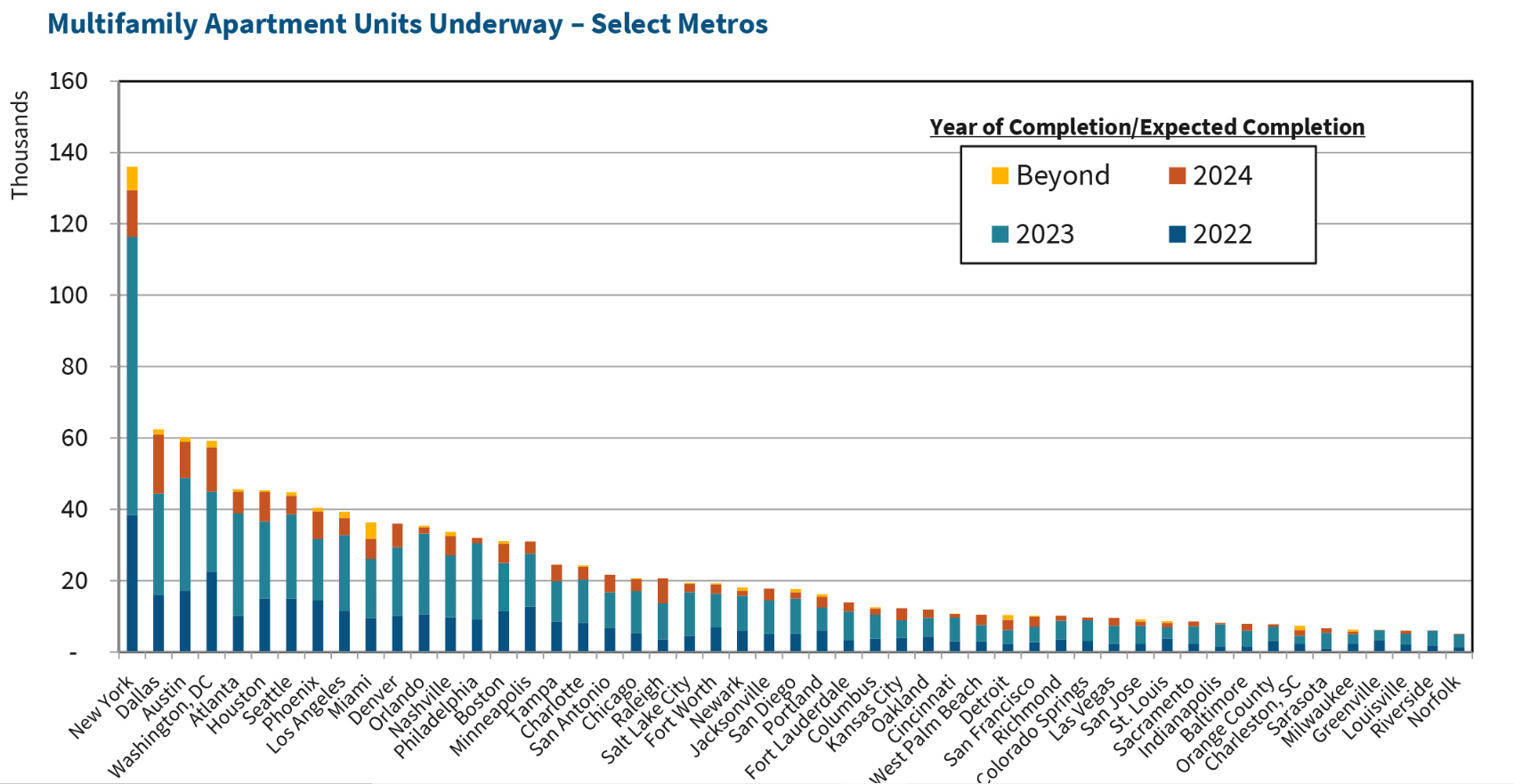
    This is another sample of problem with supply side. So every Joe and James and their uncle knows that, in 2023, the highest job growth is in Dallas.  We know that at this time the're open 100K-ish new job in Dallas , that's good and super good news. But will we invest in Dallas?  hold on, because if everything see the same data they would invest with the same logic and would do the same investing that at the end of the process it is causing oversupply. Now Dallas/Austin has the most rent unit supply in entire nation. Will I invest there ? NO...because it would be very hard to increase rent. I would however, invest to the city on the right side of equation, which has less supply like Louisville or Milwaukee.

Join the conversationCreate a free account to reply, vote on answers and follow this thread.