Is the need for affordable housing creating new markets?
Cory J ThorntonBusiness Member
Real Estate Agent · Raleigh, NC · Member since 2021 · 240 posts · 281 votesI have been thinking through housing, affordability, and the effect on what until the last few years have been dead markets. Any home with a decent commute to a decent market is not affordable.
Over the last few years, and even now, I am seeing investors put their capital to work in areas that locals have previously ignored.
It begs the question, in order to afford a rent, afford an investment property, or a primary home, will price start pushing people to forget the first three rules of Real Estate (location, location, location)?
As a local example, a recent study showing the migration patterns of folks leaving Raleigh, the #6 city most likely to pick up those residents was Rocky Mount NC. Five years ago, this was not the case and even three years ago people were still highly suspect of that area (myself included). Now I'm starting to see people push much further out to 3-4 layers away from primary job markets completely sacrificing location for cost of ownership or cost of living.
What do y'all think?
Is this something anyone else is noticing and if it is a trend, is there anything that will make it a short lived thing or is it going to continue longer term?
I have been thinking through housing, affordability, and the effect on what until the last few years have been dead markets. Any home with a decent commute to a decent market is not affordable.
Over the last few years, and even now, I am seeing investors put their capital to work in areas that locals have previously ignored.
It begs the question, in order to afford a rent, afford an investment property, or a primary home, will price start pushing people to forget the first three rules of Real Estate (location, location, location)?
As a local example, a recent study showing the migration patterns of folks leaving Raleigh, the #6 city most likely to pick up those residents was Rocky Mount NC. Five years ago, this was not the case and even three years ago people were still highly suspect of that area (myself included). Now I'm starting to see people push much further out to 3-4 layers away from primary job markets completely sacrificing location for cost of ownership or cost of living.
What do y'all think?
Is this something anyone else is noticing and if it is a trend, is there anything that will make it a short lived thing or is it going to continue longer term?
This is very common.
Lets say suburban purchased 50 miles radius outside of city center. Milleneal would purchase 75mile radius, rand 75-150 miles are areas where it's bought by genz. because of the disparity in buying power, people is buying even further and further away. That's good area to invest.
Anyone who works remote is probably going to loose their job in the next couple years to an AI. This is low-hanging fruit for AI, because no physical work.
If you think I am talking about something in the future, you have not kept up the last 8 weeks. Watch the presentation of the latest version of ChatGPT4o and if you don't have much time, skip to min 15 where "she" teaches him how to do math. Tell me your kid's teacher is that smooth explaining math! Link.
And if you think it is going to stop there than watch this: Figure1 robot demonstration. Remember these things are getting rapidly better. Google CEO estimates that we will see their capabilities double every 12-18 months.
Which means factory jobs are being next. Since we are talking about paradigm shifts, this will be the biggest of all. And it is happening faster than society can respond.
Nvidia is now higher valued as Apple at $3 trillion market cap. Yes, you have read that correctly. Ask 10 random people, 8 have never heard the name, that is how fast things are changing.
In my mind the outcome is crystal clear. Literally of the population will be unemployed. Anyone who works remote or online or does low skill manual labor. Which means as a society we will have to shift to a universal basic income system, like it or not, there is no other way. People need to eat and pay rent.
It's not going to happen like that. I know there's AI doomers and boomers, it's definitely going to carry some weight but when the boomers push this narrative it's not without a lot of issues that aren't being recognized.
For one, the power for this to happen would require massive, and I mean massive, energy capabilities that just aren't ready right now from a data center level. So while the technology may be running quickly, the ability to warehouse it and let it really conquer America are well behind the curve. I'm not talking a year or two, but a decade plus.
The biggest question in energy right now is data center electricity consumption and ownership. It's going north, but is it going to double in 2 years or could it go further? Because if it starts trending to double 2024 numbers in 26 or 27, we simply don't have the inputs to create that output. You're going to have AWS, ADS, Meta, all these data center giants fighting tooth and nail against the power grids across the country when we're already showing a great deal of vulnerability. That means AWS will take a nuke plant that is retired or active, and that a locality can't use for when weather becomes a concern.
The biggest headwinds in the worlds are energy security, acquisition, performance and land ownership. The growth of AI is dead track in the middle of that and while it's persevere it just won't happen in a year or two. One finding the data center locations and two, arguably the hardest, is getting the energy required. The former point is a lot harder than people realize, go with someone to find the land they want to buy for data centers there's so many intrinsic properties required of it's tough cause it's finite-- latency requirements, infrascuture for cooling methods,etc.. It's going to sneak up on the doomers quicker than they think, but it's not going to take over the world like the boomers think tomorrow.
And don't get me started on the political intervention of it...that's a whole other story. It's not coming tomorrow guys, it's coming sooner than you probably would figure but not immediately.
Good point. Energy is definitely a bottleneck, but also in that arena, we have a lot of new tech on the brink of commercialization. I am reading a lot about data centers in the future including their own energy generation. But you are right, these infrastructure developments take time and it remains to be seen how quickly they can be overcome.
Even if it takes longer, the outcome is the same: the employable part of society is going to shrink. The current labor shortage incenivices companies to adopt technology quickly. Not everyone has the ability to be re-trained. A displaced truck driver is not going to be a software engineer. This is where I see the difference: the internet created new jobs and industries, AI is mostly about the opposite. Especially the next wave, which is physical AI.
What makes the timeline unpredictable is the self-accelerating nature of AI. When you listen to Jensen Huang they are pushing internally for AI applications in almost every part of their operations, not only R&D. He said they could not have designed Blackwell without AI. You basically have AI advancing AI.
Anyone who works remote is probably going to loose their job in the next couple years to an AI. This is low-hanging fruit for AI, because no physical work.
If you think I am talking about something in the future, you have not kept up the last 8 weeks. Watch the presentation of the latest version of ChatGPT4o and if you don't have much time, skip to min 15 where "she" teaches him how to do math. Tell me your kid's teacher is that smooth explaining math! Link.
And if you think it is going to stop there than watch this: Figure1 robot demonstration. Remember these things are getting rapidly better. Google CEO estimates that we will see their capabilities double every 12-18 months.
Which means factory jobs are being next. Since we are talking about paradigm shifts, this will be the biggest of all. And it is happening faster than society can respond.
Nvidia is now higher valued as Apple at $3 trillion market cap. Yes, you have read that correctly. Ask 10 random people, 8 have never heard the name, that is how fast things are changing.
In my mind the outcome is crystal clear. Literally of the population will be unemployed. Anyone who works remote or online or does low skill manual labor. Which means as a society we will have to shift to a universal basic income system, like it or not, there is no other way. People need to eat and pay rent.
It's not going to happen like that. I know there's AI doomers and boomers, it's definitely going to carry some weight but when the boomers push this narrative it's not without a lot of issues that aren't being recognized.
For one, the power for this to happen would require massive, and I mean massive, energy capabilities that just aren't ready right now from a data center level. So while the technology may be running quickly, the ability to warehouse it and let it really conquer America are well behind the curve. I'm not talking a year or two, but a decade plus.
The biggest question in energy right now is data center electricity consumption and ownership. It's going north, but is it going to double in 2 years or could it go further? Because if it starts trending to double 2024 numbers in 26 or 27, we simply don't have the inputs to create that output. You're going to have AWS, ADS, Meta, all these data center giants fighting tooth and nail against the power grids across the country when we're already showing a great deal of vulnerability. That means AWS will take a nuke plant that is retired or active, and that a locality can't use for when weather becomes a concern.
The biggest headwinds in the worlds are energy security, acquisition, performance and land ownership. The growth of AI is dead track in the middle of that and while it's persevere it just won't happen in a year or two. One finding the data center locations and two, arguably the hardest, is getting the energy required. The former point is a lot harder than people realize, go with someone to find the land they want to buy for data centers there's so many intrinsic properties required of it's tough cause it's finite-- latency requirements, infrascuture for cooling methods,etc.. It's going to sneak up on the doomers quicker than they think, but it's not going to take over the world like the boomers think tomorrow.
And don't get me started on the political intervention of it...that's a whole other story. It's not coming tomorrow guys, it's coming sooner than you probably would figure but not immediately.
Yes it's expected DC electric consumption would double to 1000 TWH in 2026. Some of the most highest-use DC is located in Virginia, Milwaukee, Alabama, Illinois, Pennsylvania, Utah, and Mississippi. Our data center is located in Oregon actually. Most AI data modelers mostly use cloud-based data centers like mentioned above. They dont use Nvidia GPU directly. So when someone is doing something with GPT it just literally utilizes bandwidth in Virginia-located Amazon DC (and increases the power utililization). What's interesting is that, Data Center is part of real estate as well, and it's one of the subsectors of real estate that wasn't impacted by interest rate hikes, meaning the DC demand is just so exponential that it's not limited by rate hike or power consumption. As of this phenomenan. Due to that rising demand it causes increasing rent to in the area ( for example in Loudoun County Virginia. I read the electricity cost in this area is 10% cheaper than national average. Also, a colder climate is better for DC.
So from this aspect we can see something that's not too obvious, while the job and population is moving to the south, data center or internet data is actually moving to the north lol
In the GPT4o presentation, at end they said thanks to Nvidia for the GPU's....
In Nvidia's most recent presentation, introducing the newest GPU's, they out-right specify the focus for ai.
Anyone who works remote is probably going to loose their job in the next couple years to an AI. This is low-hanging fruit for AI, because no physical work.
If you think I am talking about something in the future, you have not kept up the last 8 weeks. Watch the presentation of the latest version of ChatGPT4o and if you don't have much time, skip to min 15 where "she" teaches him how to do math. Tell me your kid's teacher is that smooth explaining math! Link.
And if you think it is going to stop there than watch this: Figure1 robot demonstration. Remember these things are getting rapidly better. Google CEO estimates that we will see their capabilities double every 12-18 months.
Which means factory jobs are being next. Since we are talking about paradigm shifts, this will be the biggest of all. And it is happening faster than society can respond.
Nvidia is now higher valued as Apple at $3 trillion market cap. Yes, you have read that correctly. Ask 10 random people, 8 have never heard the name, that is how fast things are changing.
In my mind the outcome is crystal clear. Literally of the population will be unemployed. Anyone who works remote or online or does low skill manual labor. Which means as a society we will have to shift to a universal basic income system, like it or not, there is no other way. People need to eat and pay rent.
It's not going to happen like that. I know there's AI doomers and boomers, it's definitely going to carry some weight but when the boomers push this narrative it's not without a lot of issues that aren't being recognized.
For one, the power for this to happen would require massive, and I mean massive, energy capabilities that just aren't ready right now from a data center level. So while the technology may be running quickly, the ability to warehouse it and let it really conquer America are well behind the curve. I'm not talking a year or two, but a decade plus.
The biggest question in energy right now is data center electricity consumption and ownership. It's going north, but is it going to double in 2 years or could it go further? Because if it starts trending to double 2024 numbers in 26 or 27, we simply don't have the inputs to create that output. You're going to have AWS, ADS, Meta, all these data center giants fighting tooth and nail against the power grids across the country when we're already showing a great deal of vulnerability. That means AWS will take a nuke plant that is retired or active, and that a locality can't use for when weather becomes a concern.
The biggest headwinds in the worlds are energy security, acquisition, performance and land ownership. The growth of AI is dead track in the middle of that and while it's persevere it just won't happen in a year or two. One finding the data center locations and two, arguably the hardest, is getting the energy required. The former point is a lot harder than people realize, go with someone to find the land they want to buy for data centers there's so many intrinsic properties required of it's tough cause it's finite-- latency requirements, infrascuture for cooling methods,etc.. It's going to sneak up on the doomers quicker than they think, but it's not going to take over the world like the boomers think tomorrow.
And don't get me started on the political intervention of it...that's a whole other story. It's not coming tomorrow guys, it's coming sooner than you probably would figure but not immediately.
Good point. Energy is definitely a bottleneck, but also in that arena, we have a lot of new tech on the brink of commercialization. I am reading a lot about data centers in the future including their own energy generation. But you are right, these infrastructure developments take time and it remains to be seen how quickly they can be overcome.
Even if it takes longer, the outcome is the same: the employable part of society is going to shrink. The current labor shortage incenivices companies to adopt technology quickly. Not everyone has the ability to be re-trained. A displaced truck driver is not going to be a software engineer. This is where I see the difference: the internet created new jobs and industries, AI is mostly about the opposite. Especially the next wave, which is physical AI.
What makes the timeline unpredictable is the self-accelerating nature of AI. When you listen to Jensen Huang they are pushing internally for AI applications in almost every part of their operations, not only R&D. He said they could not have designed Blackwell without AI. You basically have AI advancing AI.
AI indirectly caused the layoff. Recent Microsoft layoffs occurred in data centre operation business. The same with Amazon. I think two trends converge simultaneously here, first is the interest rate hike (due to covid) and open AI announcement in 2022 ; both events are just accelerating the inevitable. However, the layoff occurred not directly because of AI, but because companies wanted to move to AI so they abandoned their older technology. Laying off older engineers and investing in AI. It's not AI replacing people per se. It's still "company speculation" to invest in the AI era. Most tech layoffs in 2022-2022 is impacting older folks actually ( > 50 y.o.) so to speak. But I would not surprised if the heaviest use of AI would be outside the US, specifically, it could be in the Middle East as they try to build the new city. The US still lot of politics or regulations that may delay the use of AI but next 20 years the AI used to build anything smart from ground zero could be massive.
At the end, AI would create more jobs, especially for GenZ, and most likely outside US.
In some cases, you will find that things which were previously impossible are now possible. But I find the thought that it’s going to make most jobs obsolete incredulous.
We have a robot vacuum, it does a pretty good job. But it doesn’t corners and edges very well. I find that I don’t spend much less time cleaning, but rather I have a cleaner house.
I have thought about trying to develop a painting robot, which could paint the inside or outside of your house. But you would still need someone to prep the house, initiate the robot. Initially it wouldn’t be able to do stairwells or trim (although are solvable problems). That’s to say, you would still need a human in the loop, but your paint crew is now one instead of 2-4.
In my field (which is remote) I don’t foresee AI making me obsolete per we, but I do see it making engineers 5-10x more efficient every 5-10 years. That is design work which is done by a team of 5 to 10 engineers currently will be done by a single engineer in 5-10 years. With that said, production ready tools are typically 10-20 years behind what has been demonstrated at research institutes. So I might be ambitious in what I am expecting .
Good point. Energy is definitely a bottleneck, but also in that arena, we have a lot of new tech on the brink of commercialization. I am reading a lot about data centers in the future including their own energy generation. But you are right, these infrastructure developments take time and it remains to be seen how quickly they can be overcome.
Globally what we are witnessing is Industrial Revolution 5.0 ; similar to like when electricity was invented. It's not about the job that's being replaced but they would need an enhanced type of new workforce (which could be similar). But if one sees it from the larger ecosystem for example, let's say Tesla , created demand for nickel in the nickel-producing country to build the battery. The battery supplier itself could be coming from US and China or Japan. Then they need massive R&D (either in Fremont, Austin or Bangalore doesn't matter), they also need fabrication, and then they buy more GPU to simulate FSD. In each process, it creates new jobs globally. What always happens is that, all these tech-related companies is always over-hiring than what they need and after some time, there's layoff, the rate hike is just a precursor. But it's very common too see that folks that's got laid off is rehired again in the same company or their competitor.
At the end it's also accelerating the development of new city that's being asked in this thread, it's just the process is not too obvious.
In some cases, you will find that things which were previously impossible are now possible. But I find the thought that it’s going to make most jobs obsolete incredulous.
We have a robot vacuum, it does a pretty good job. But it doesn’t corners and edges very well. I find that I don’t spend much less time cleaning, but rather I have a cleaner house.
I have thought about trying to develop a painting robot, which could paint the inside or outside of your house. But you would still need someone to prep the house, initiate the robot. Initially it wouldn’t be able to do stairwells or trim (although are solvable problems). That’s to say, you would still need a human in the loop, but your paint crew is now one instead of 2-4.
In my field (which is remote) I don’t foresee AI making me obsolete per we, but I do see it making engineers 5-10x more efficient every 5-10 years. That is design work which is done by a team of 5 to 10 engineers currently will be done by a single engineer in 5-10 years. With that said, production ready tools are typically 10-20 years behind what has been demonstrated at research institutes. So I might be ambitious in what I am expecting .
What AI would change most is not in the area of physical jobs but in the area of knowledge transformation and decision-making.
If google itself is done deal in 2024, there's chance 3 year high school education can be replaced by 6 months self-study in AI itself.
AI is a direct threat to inefficient processes & simple tasks. For it to intervene on arduous tasks or high level expertise, it'll require some of form government regulation. High school can't move to 6 months because aside from the educational aspect, AI can't help physically develop these individuals. The freshman to high school physical & emotional growth is arguably as important as the educational development.
We talk about REI on here-- the closing process will vastly be changed via AI. So will the buying/selling overall transactional process. It doesn't mean agents won't exist or people won't still be involved. Look at all the data we get now from say Redfin, versus even 7 years ago, in regards to population influx, climate risk, etc. It's going to change things, but I don't think it'll replace things we are assuming it will.
@Cory J Thornton it will continue as the middle class gets poorer and poorer. Salaries have not kept up with rising prices and inflation for 20 years.
And they will never again because AI and robots are here to stay a d are just getting warmed up.
COVID has kicked our butts out of the office onto the screen 📺 in to the burbs and further. Less to no commutes necessary.
Lower income means less affordable space. So either a hole in the wall in the cities (shared with others - co-living) or a small modular-, tiny-, mobile home or container in the boondocks.
Smaller dwellings are on the rise because something’s gotta give.
We source, acquire, subdivide and develop land for home builders or deploy prefab, hybrid, modular homes in the pathes of growth - nationwide.
Let’s chat 💬
AI is a direct threat to inefficient processes....
In some cases, you will find that things which were previously impossible are now possible. But I find the thought that it’s going to make most jobs obsolete incredulous.
We have a robot vacuum, it does a pretty good job. But it doesn’t corners and edges very well. I find that I don’t spend much less time cleaning, but rather I have a cleaner house.
I have thought about trying to develop a painting robot, which could paint the inside or outside of your house. But you would still need someone to prep the house, initiate the robot. Initially it wouldn’t be able to do stairwells or trim (although are solvable problems). That’s to say, you would still need a human in the loop, but your paint crew is now one instead of 2-4.
In my field (which is remote) I don’t foresee AI making me obsolete per we, but I do see it making engineers 5-10x more efficient every 5-10 years. That is design work which is done by a team of 5 to 10 engineers currently will be done by a single engineer in 5-10 years. With that said, production ready tools are typically 10-20 years behind what has been demonstrated at research institutes. So I might be ambitious in what I am expecting .
What AI would change most is not in the area of physical jobs but in the area of knowledge transformation and decision-making.
If google itself is done deal in 2024, there's chance 3 year high school education can be replaced by 6 months self-study in AI itself.
AI is a direct threat to inefficient processes & simple tasks. For it to intervene on arduous tasks or high level expertise, it'll require some of form government regulation. High school can't move to 6 months because aside from the educational aspect, AI can't help physically develop these individuals. The freshman to high school physical & emotional growth is arguably as important as the educational development.
Think it like this. Think you live in 1997, there's no cell phone at that time right lol, well there could be some PalmOS or BlackBerry. But 25 years later we don't know that something in our hand would become the command center for everything on how people going to communicate. So in 25 years we will have new device that change how people communicate and to work for good.
This AI, is human behavior transformation, since when people invent the book there's no major changes after that. We used to read book pages by pages to find answer. Say we need three days to read the book.
Now due these GPU , AI can simultaneously read all the book in the word, and summarize it to you , in second. And answer your curiosity in second as well.
The transformation of knowledge here is massive. Before this thread, I don't know exactly the location of Amazon DC (although I work bit on nvidia stuffs lol). But then without opening google, AI can let me know what is their exact location (in Virginia) and why the Amazon choose that place. Lol. Six months ago this tool is not even available.
Next generation would have more massive knowledge as the process (from reading the book) changes into getting all answers thru AI.
It's all CA/TX/FL/TN , what is interesting is city like Loomis or Tomball is within 45min-1hr from the larger MSA it serves. Tracking these company movement is good way to track new economic activity.
AI is a direct threat to inefficient processes....
Tevel produces fruit picking robots, they are basically AI driven drones, powered through a cord, work 24/7. If that thing picks as much as 10 people, but can work 24h instead of 8 it replaces 30 jobs. And the farmer has no HR issues, which are a huge pain to deal with for seasonal labor. Peaches, oranges, avocados, apples...
We will see a lot more like this in many more industries.
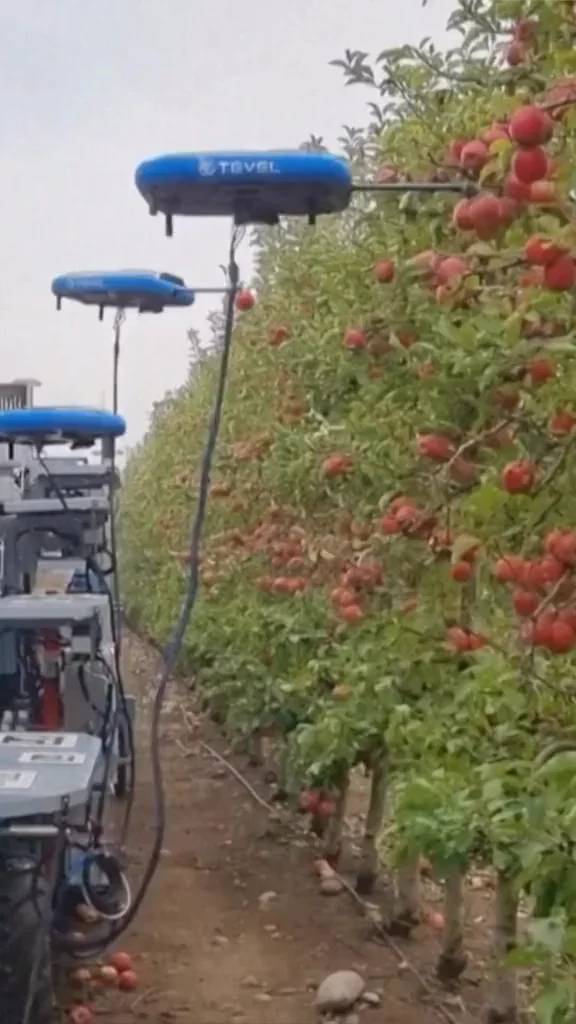
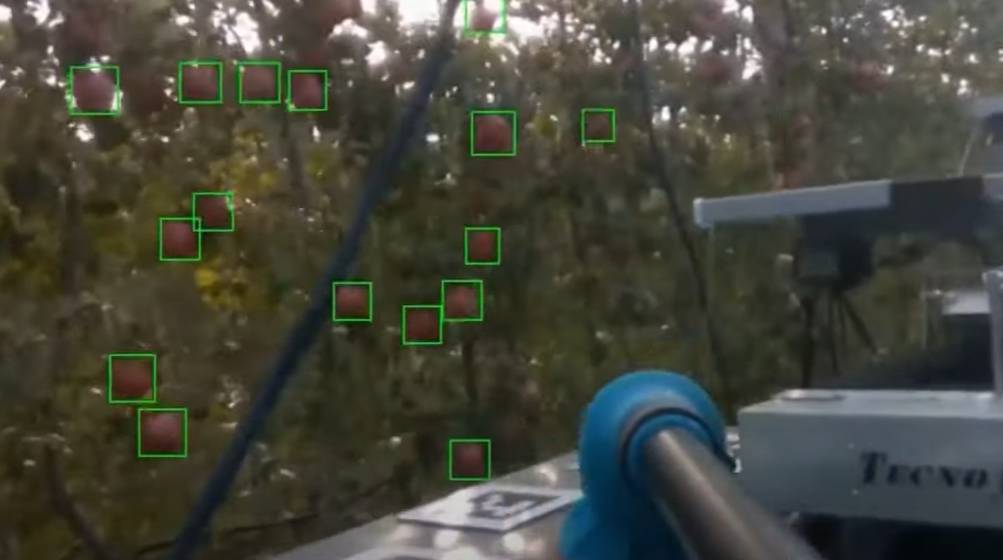
Tevel produces fruit picking robots, they are basically AI driven drones, powered through a cord, work 24/7. If that thing picks as much as 10 people, but can work 24h instead of 8 it replaces 30 jobs. And the farmer has no HR issues, which are a huge pain to deal with for seasonal labor. Peaches, oranges, avocados, apples...
We will see a lot more like this in many more industries.
AI is a direct threat to inefficient processes....
They call this massive data a "dataset", the learning group as "AI cluster", each chip has different parameters where you can input into this thing, the last nvidia blackwell can accept one mil parameters not small parameter space.
Thing is the requirement for chatbot parameters is different with a requirement for drug research for example. They are inefficient because the system has to be tuned in so much, that within that 100 mil dataset, perhaps only 18 combinations make sense to become a product. It would create new job actually, for example, Drug Research Specialist with AI background or Chatbot AI modellers ; or even AI field support. Also @Marcus Auerbach shown a tiny subset of what it can do but it can show its potential more than fruit picking. One city that would develop based on tons of AI would require tons of sensor or IOT-capable device and also a radar system. These are more like "Teslasition" of everything. So one home/field could have massive device.
It would create new workforce, new company and replace the incumbent (again). I think for most advanced company (such as Pfizer vs JohnsonNJohnson), their future lies in how much deep research or drug product they can find through AI.
I think that AI would replace a lot of managers and middle management, they need fewer decision makers; they would also replace a lot of white-collar professional jobs rather than seasonal workers.
There's a cost to generate AI products. Replacing a 20-dollar-per-hour employee doesn't make sense but replacing a recruiter in Google that do nothing and making 175k per year does make sense.
AI is a direct threat to inefficient processes....
They call this massive data a "dataset", the learning group as "AI cluster", each chip has different parameters where you can input into this thing, the last nvidia blackwell can accept one mil parameters not small parameter space.
Thing is the requirement for chatbot parameters is different with a requirement for drug research for example. They are inefficient because the system has to be tuned in so much, that within that 100 mil dataset, perhaps only 18 combinations make sense to become a product. It would create new job actually, for example, Drug Research Specialist with AI background or Chatbot AI modellers ; or even AI field support. Also @Marcus Auerbach shown a tiny subset of what it can do but it can show its potential more than fruit picking. One city that would develop based on tons of AI would require tons of sensor or IOT-capable device and also a radar system. These are more like "Teslasition" of everything. So one home/field could have massive device.
It would create new workforce, new company and replace the incumbent (again). I think for most advanced company (such as Pfizer vs JohnsonNJohnson), their future lies in how much deep research or drug product they can find through AI.
You gotta watch the recent Nvidia GPU unveil, it's gonna blow your mind.
The new advents make Blackwell look slow, slow like floppy disc vs SS drive slow, it's that much of an evolutionary leap they've taken. We are now well into the billions and entering the trillions.
And here is the key thing I think most don't get, and makes sense if don't have engineering background (like myself and few others on here have). ai is not only learning from prompts and virtual environments of trial and error, but also learning now from look-back study on how it learned previously and what the successful end was and how it could better have arrived to that end from start. Literally learning how to better learn, that's HUGE, very very huge step in ai machine learning.
We are right now in a kind of lull.
As these new nvidia GPU's get ordered, built, shipped, installed, and brought online. Once these are online, get ready for a massive surge of, IDK, but that level of increased computation power......
Look, to put it in terms, we are talking about the difference in a 2yr old toddlers ability to learn and reason vs a 45yr old Albert Einstein. Yeah, it's that big a leap in learning capability.
ai is not linear, I think that's the source of flawed or limited thinking in ai's potential. ai is exponentially compounding in it's learning and comprehension. As it learns and masters something it not only has learned that but it also learns from how it learned, why that correct end was the correct end, and all the little details and nuances around such.
ai is very literally learning and mapping human reasoning, that's the heart and essence of it. As human reasoning is at foundation of all human things and the earliest of issue for ai was existing in perfect logic.
We are now entering a phase of ai CORRECTLY reasoning all on it's own. Thats so huge it's beyond words. ai correctly taking a "problem" and sorting the answer 100% of it's own accord with 0 human input or redirection. And delivering it in a "human" way.
This is exactly what Nvidia speaks to when they say we have finally broken this last major barrier, the "code" barrier. This is ai operating in an autonomous manner.
Here's the two cities if one want to invest a land that has lot of AI talent lol:
San Francisco Bay Area:
San Francisco is the epicenter for AI startups, with AI and machine learning companies raising $12.8 billion across 219 deals through August 2023. 27% of AI professionals are employed in San Francisco, the highest concentration. San Francisco is home to 20 of the best-funded AI companies, more than the rest of America combined. There are 212 notable AI startups headquartered in San Francisco, including leaders like Cruise Automation, OpenAI, Anthropic, Databricks, and Adept AI.
Beijing:
Beijing is home to 1,048 "core AI companies" as of October 2022, making up more than one-third of the total number of such firms in China. Beijing has attracted more than 40,000 AI talents, accounting for more than 60% of China's total in the field. Notable Beijing-based AI startups include Megvii, Momenta, Didi Woya, and CloudMinds, many of which have raised over $1 billion in funding.
Seattle ranks second nationally in AI talent density, which measures how many workers have an AI specialty, according to data from Seattle-based recruiting platform SeekOut. Seattle is home to many fast-growing AI startups like Lexion, WellSaid Labs, Xembly, Fixie, OctoML, and CLIPr.
While the San Francisco Bay Area remains the undisputed leader, Seattle appears to have the most robust AI talent pipeline and industry presence among other major U.S. tech hubs based on the available data. However, cities like New York, Austin and Boston are not far behind in the race to attract top AI minds and companies.
These are the cities if one wants to do land acquisition based on data center/AI conviction:
What are dead markets?
What is affordable?
Outside investors don't always know where people want to live and what those people want. I think so many are just making wild guesses.
I think people forget the 1st 3 rules everyday. If there is land available, they will continue to balance price vs commute. This was proven over Covid where the 45 minute rule shifted to the 1.5hr rule when people did not have to go to the office every day. It will be interesting to see how this shakes out. Although the people who bought 1.5hrs away from the office are probably now the people pushing to WFH and maybe go to the office 1x week or 1x every two weeks.
One thing I noticed back in that 2008-2011 time frame in DFW where those remote bedroom communities were the hardest hit with foreclosures. We didn't get hit bad like some areas of the country, but those were the toughest I think. Cheaply built houses, with 105% financing, 30min-1hr from anyplace to work, builders also still building at near the original sales prices. That was not good. Seeing some of the same here now too. Super super cheaply built homes that will not wear well, built far away from any demand drivers. The other concern is that I feel like fuel prices are artificially low. Oil is $80 right now and some people predict $200. Many of those remote buyers will not be able to afford to fill up monster trucks and SUVs to make that commute to work.
I'll be interested to see how zoning changes/increased density actually works.
When I lived in CA almost all my staff lived with family. Maybe 1 guy out of 80 had his own small 100 year old apartment. Most had mom and dad, and 2-3 kids and their families and grandkids living in the same house. I guess 1 family per bedroom. I'm starting to see more of that here, but not pervasive yet. Instead of 3 families renting their own apartment, they'll rent a bigger house and move intogether. I think we will see more and more of that. Maybe that is the opportunity for Gen Z to make some money house hacking.
drivers. The other concern is that I feel like fuel prices are artificially low. Oil is $80 right now and some people predict $200. Many of those remote buyers will not be able to afford to fill up monster trucks and SUVs to make that commute to work.
I'll be interested to see how zoning changes/increased density actually works.
When I lived in CA almost all my staff lived with family. Maybe 1 guy out of 80 had his own small 100 year old apartment. Most had mom and dad, and 2-3 kids and their families and grandkids living in the same house. I guess 1 family per bedroom. I'm starting to see more of that here, but not pervasive yet. Instead of 3 families renting their own apartment, they'll rent a bigger house and move intogether. I think we will see more and more of that. Maybe that is the opportunity for Gen Z to make some money house hacking.
One thing that I do notice as when Bay Area expands, although the distance from a new home to the office is about 1 to 2 hours ; many of them use EVs like Tesla.
As Tesla is now cheaper than Camry/Corolla I don't know why oil $80 or $800 still a factor. Also supercharger is everywhere now just charging for 10 minutes and you get lot of juices. Combined with FSD an hour drive to office two or three times a week is nothing.
Also most tech company only really work Tuesday to Thursday. I hardly see any traffic on Monday lol.
These are the cities if one wants to do land acquisition based on data center/AI conviction:
These are the cities if one wants to do land acquisition based on data center/AI conviction:
4,000 MW of power for Northern Virginia data centers? That's the equivalent of a city with 4 million people.
These are the cities if one wants to do land acquisition based on data center/AI conviction:
They don't, but it's one of the businesses inside the real estate that's extremely profitable and has a lot of growth for the owner. Datacenter's CAGR is about 20%. Compare that to the Multifamily biz which only has CAGR of 1%. Their business growth is not impacted by employment or interest rates or any changes in economic policy. Our Oregon DC only employed a quarter of the soccer team lol. However, due to this future AI explosion, we expect more DC to be built on-premise or over the cloud. For example, a lot of large S&P has HQs in Minnesota, then expect each of those companies has started to build one inside the state.
SHUssshhhhhhhh! Were not mentioning MN....... lol
