Markets Are Pricing a Hike, Not a Cut, and Underwriting Has Not Caught Up

Markets Are Pricing a Hike, Not a Cut, and Underwriting Has Not Caught Up

Derek BrickleyBusiness Member
Lender · Ann Arbor, MI · Member since 2021 · 664 posts · 226 votes

Last week's inflation data did something that should change how a lot of people are modeling the next twelve months, and I do not think it got the attention it deserved.
Two Inflation Reports, Two Different Conclusions

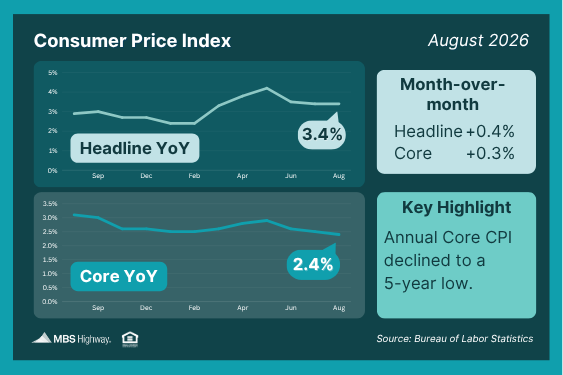
Headline CPI rose 0.4% in August, mostly gas and energy, with the annual rate flat at 3.4%. Core CPI rose 0.3% monthly and dropped to 2.4% year over year, which is the lowest in more than five years. If you only read that paragraph you would reasonably conclude the Fed is close to done.
Then the wholesale data landed. Headline PPI climbed from 4.8% to 5.4% year over year, coming in above expectations, and core PPI went from 4.3% to 4.6%. Diesel was a major driver. PPI is an imperfect leading indicator and the pass-through to consumer prices is neither reliable nor fast, but a rising producer series while core CPI is falling is exactly the kind of split that keeps a committee cautious rather than confident.

The Part That Cuts Against Consensus

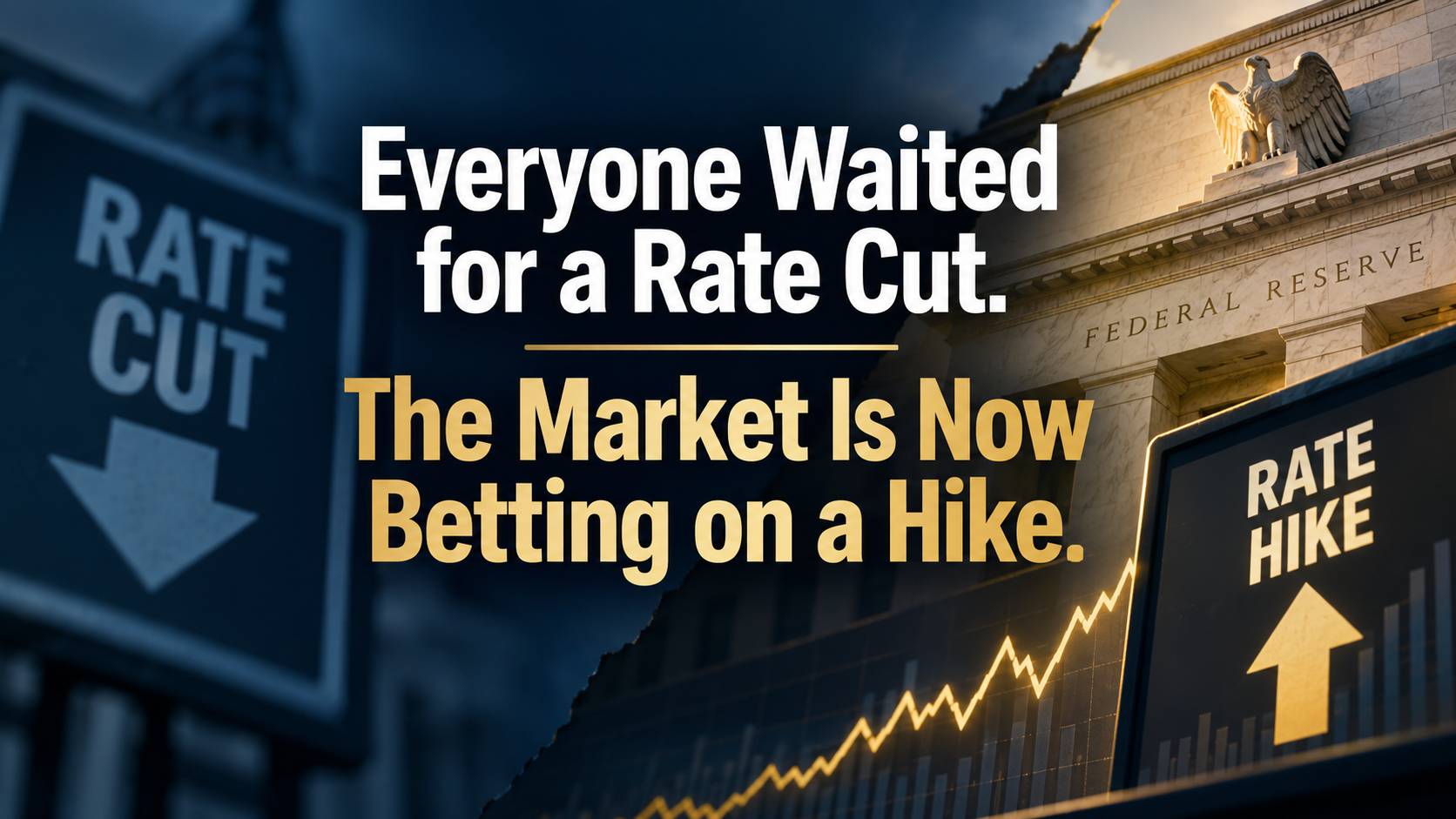
Current market expectations put the odds of a 25-basis-point hike at the September 16 meeting above 80%.

I want to be direct about how much that matters, because a lot of deal models built in the first half of this year quietly assume a lower rate at refinance in twelve to eighteen months. That assumption is now running against the market's own pricing. Not a slower cut. A hike.

If your exit or your refinance math requires cheaper debt, this is your signal to run the scenario where the cost of capital is higher than today rather than lower. A deal that only works at a rate the market is currently betting against is not a conservative deal.

The Labor Market Will Not Save the Trade

Initial claims are still low around 206,000, so this is not a layoff cycle. But that number may be understating separations, since displaced workers increasingly move into freelance and gig income instead of filing. Continuing claims remain elevated at 1.77 million, which describes a market where you keep your job but struggle to replace it.

That combination is soft enough to be a drag on household formation and buyer urgency, but not weak enough to force the Fed's hand toward easing. It is the worst of both worlds if you were counting on labor weakness to deliver you a rate cut.

Where the Actual Opportunity Is

Existing home sales fell 2% month over month in August, the third consecutive decline, to a 3.98 million annual rate and 1.2% below August 2025. Inventory rose 3.2% from July and is 5.9% above a year ago.
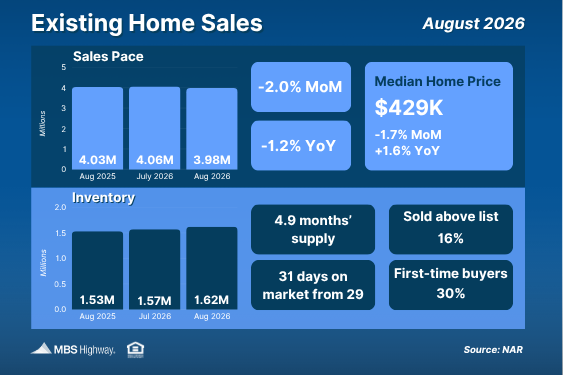
That is the number I would build around. Falling absorption with rising supply is a leverage shift, and leverage shows up in terms long before it shows up in an index. Longer days on market, more price reductions, more sellers willing to fund concessions or a rate buydown to get a deal closed. NAR's Lawrence Yun framed the sales dip as the normal inverse relationship with rates, and he is right, but the inventory build is the more actionable half of that report.

Worth noting the year is not negative: existing sales are still up 1.6% in 2026. This is a cooling, not a collapse, and you should not underwrite it as one.

Investor Takeaway

Underwrite to today's rate or worse, and stop treating a future cut as a base case when the market is pricing better than 80% odds of a hike this Wednesday. The opportunity in this data is not in the cost of capital, it is in the terms. Three straight months of falling sales against inventory up almost 6% year over year means sellers are carrying more holding risk than buyers are, and that is where your margin comes from right now: concessions, buydowns, repair credits, and price. Watch Wednesday afternoon closely, and watch Thursday's housing starts and Pending Home Sales for whether the supply build is being met by any demand at all.

Gold Star Mortgage Financial Group548 Reviews
4Reply
444 views

Most Popular Reply

Michael K GallagherBusiness Member
Real Estate Agent · Columbus OH · Member since 2018 · 1k+ posts · 1k+ votes
2w

thanks for putting this together, it will certainly be interesting to see the ramifications across different submarkets.

See this reply in the discussion

14 Replies

Jump to latestLatest
  • Jaron WallingPro Member
    Rental Property Investor · Indianapolis, IN · Member since 2018 · 4k+ posts · 4k+ votes
    2w

    I agree with almost all of your post. Some of the properties I've been watching on Zillow went pending over the weekend. The price vs. condition is razor thin right now. Just a $5k price difference is enough to get passed on. I bet most those buyers had locked rates (usually 30 days) lower than the recent bump or what's coming next. This rise in interest rates is going to kill so many deals.

    At the same time I've noticed multiple delisted properties. I'm not an agent but from what I see about 20-30% of listings go off market once they pass 60 days. I've not seen a market this "tight" since forever.

  • Michael K GallagherBusiness Member
    Real Estate Agent · Columbus OH · Member since 2018 · 1k+ posts · 1k+ votes
    2w

    thanks for putting this together, it will certainly be interesting to see the ramifications across different submarkets.

    • Derek BrickleyBusiness Member
      OP
      Lender · Ann Arbor, MI · Member since 2021 · 664 posts · 226 votes
      2w

      Absolutely! That's for sure. In the midwest, since things are still relatively affordable I don't believe it will have AS much of an impact but it'll still cause a stir for sure.

      Gold Star Mortgage Financial Group548 Reviews
  • Member since 2026 · 27 posts · 3 votes
    2w

    This is exactly why I have been more conservative with underwriting lately. If the deal only works because you assume rates will drop at refinance, the numbers are already too thin. I would rather underwrite at today’s rate or worse and treat any future rate cut as upside.

    • Derek BrickleyBusiness Member
      OP
      Lender · Ann Arbor, MI · Member since 2021 · 664 posts · 226 votes
      2w

      Yeah way too many people see it as a certain things, people have been baking cuts in for years now. The past couple weeks all the deals I'm looking at I'm underwriting as-is with rate cuts just being a benefit.

      Gold Star Mortgage Financial Group548 Reviews
  • Investor · Milwaukee - Mequon, WI · Member since 2010 · 5k+ posts · 7k+ votes
    2w

    My operating assumption is that the next decade will see more inflation than the last, maybe even double digit. The US spends 15% of it's federal budget just on interest payments. Imagine your credit car balance takes 15% of your income just for interest; you'll never get that balance paid down. You are over that tipping point.

    The gov tells people that the goal is to lower inflation, but they also know it's the only way out of 40T in debt. So we will de-value the dollar, pay screw our creditors by paying everyone back with worthless paper and bring our debt/GDP ratio down to healthy levels again. It will cost the dollar it's reserve currency status and damage the US reputation for a generation or two.

    My conclusion: long term fixed debt is worth the premium. Imaging you have a 7% loan when market rates are 15%. If you think that's impossible, look up mortgage rates in the 1980s.

    • Derek BrickleyBusiness Member
      OP
      Lender · Ann Arbor, MI · Member since 2021 · 664 posts · 226 votes
      2w

      Yeah absolutely, they're really never going to be able to get that under control. Definitely concerning!

      Gold Star Mortgage Financial Group548 Reviews
    • Member since 2018 · 113 posts · 135 votes
      2w

      @Marcus Auerbach this point you're making, predicting large inflation, is my #1 reason for investing in REI. I generally agree with this prediction, and am placing my bets by buying local real estate.

      The part I’m recently unsure about, is exactly how massive 15% inflation would affect US real estate. Because my recent research on AI says that throughout history, large inflation doesn’t always positively affect real estate investors. In different historical examples 1) inflation has helped REI investors helping them achieve larger than average returns, 2) in some scenarios it only helped hedge against inflation, and 3) in some scenarios, it actually negatively impacted REI investors… EG taxes/ins/costs rising faster than rents could rise, because renters can't afford the huge hikes).

      I follow your posts actively, and I'd like to hear from you…. If this inflation/dollar devaluing indeed happens, what do you think that will mean for US REI investors and your holdings?

    • Investor · Milwaukee - Mequon, WI · Member since 2010 · 5k+ posts · 7k+ votes
      2w

      When would that have been? Worst case is that RE prices remain flat adjusted for inflation, but that's already a win, because you are also devaluating your debt.

      Ultimately, it's the future and nobody knows. But personally I fell better with land and bricks than holding paper assets.

  • Investor · Pacific Northwest · Member since 2026 · 538 posts · 304 votes
    2w

    Derek, this aged well.

    The key point in your post was never really whether the market might price a hike—it was that investors were still underwriting refinances as though cheaper capital were inevitable. Two days later, the Fed actually raised the target range 25 bps to 3.75%–4.00%. (Federal Reserve)

    That turns your warning into an underwriting test: if the deal requires a future rate cut to produce the projected return, then the return is partly a macro bet. The property may still be good, but that assumption needs to be visible instead of buried in the refinance cell.

    I also think your point about shifting attention from rate to terms is where the opportunity is. You were already seeing falling sales alongside rising inventory and arguing that leverage may show up first through concessions, credits, buydowns and price rather than some dramatic headline decline.

    So I’d underwrite three things separately now: the asset at today’s cost of capital, the downside if capital gets more expensive, and the optional upside if rates eventually improve.

    Then negotiate the hell out of everything the seller can control.

    That’s very close to how our system looks at deals: separate what the property produces from what the capital markets might give you later. Feel free to reach out if you ever want to compare notes on the modeling.

  • Coral Springs, FL · Member since 2018 · 468 posts · 101 votes
    2w

    Derek, the timing on this post is almost funny — two days later the Fed actually hiked 25 bps and proved your point. I think a lot of people had rate cuts baked into their models for so long that they forgot to stress-test the other direction.

    I buy at tax deed auctions in South Florida, so everything is cash. I don't have the refinancing problem that a lot of you are dealing with. But what I've noticed is that the rate environment completely changes who shows up to auction and how aggressive they are. When rates were low, every flipper and BRRRR buyer had financing and were bidding up everything. Now that rates are higher, a lot of those buyers have pulled back, which means less competition for cash buyers like me. The distress pipeline is actually getting longer — more tax liens, more code violations, more properties that owners just can't afford to hold.

    Marcus's point about long-term fixed debt being valuable in an inflationary environment is spot on. The flip side is that if you're all cash at acquisition, you get to pick your moment to refinance. I'd rather own the property free and clear and decide later whether to pull equity out, than be forced into a rate I hate because my deal model required it.

    The underwriting discipline everyone is talking about — underwrite at today's rate or worse — that's just how you had to do it before 2020 anyway. The easy money era made people sloppy. Good to see the conversation coming back to basics.

Join the conversationCreate a free account to reply, vote on answers and follow this thread.