Investing without cashflow - Austin MTR
Most Popular Reply
Robin SimonBusiness Member
Lender · Austin, TX · Member since 2022 · 5k+ posts · 4k+ votesI don't think its bad - the correction has hurt some values here in Austin last year, but I have no doubt we will see a roaring back of appreciation soon - I think still smart to invest here

Harpoon Capital514 Reviews
60 Replies
- 2yV.G JasonPro MemberInvestor · Member since 2022 · 3k+ posts · 3k+ votes
Quote from @Carlos Ptriawan:
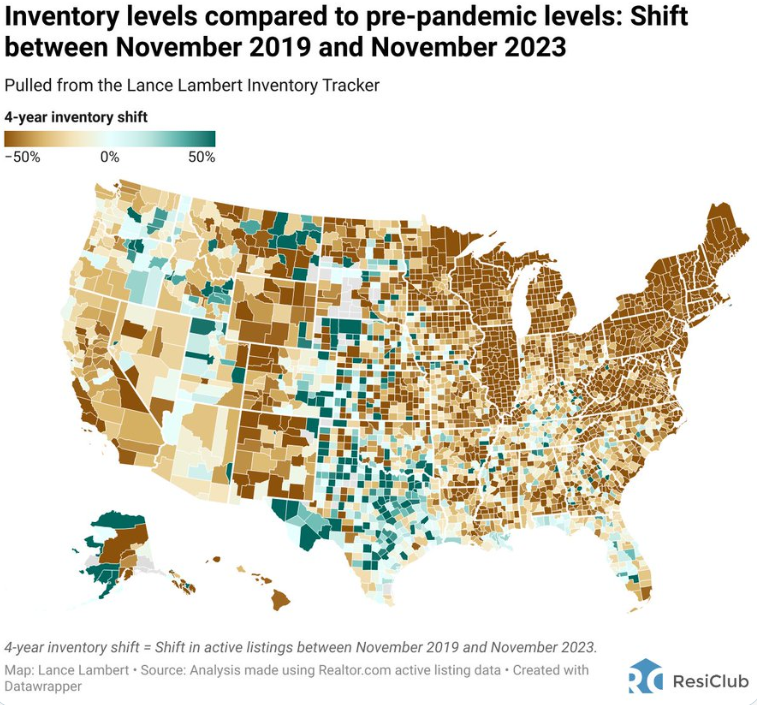
But Jason, do you know why the TX is the only state that has increased inventory 'state-wide' while there're massive migration into this state ? is that because there're just too many development in the last 5 years or so ?? this unique phenomenon is extremely niche. Or is it because the land is vast and considered cheap ??? I can only ask this question to fellow investor only though, if I ask to realtor they would be mad at me lol
Austin pushed up the ante for developments back in Q2 of 22. They did not believe even if 100% came to fruition, it'd still meet demand. The migration is there, just nowhere near what they thought it'd be.
The only reason it is not worse is because some even got stalled due to unexpected issues beyond supply chain(funding and taxes). I was literally getting this from a CRE guy here yesterday night. He was telling me it was top 10 of new construction going into H2 22, then creeped into top 5 for H2 2023 and will be top 3 likely into H2 2024.
My speculative belief is this overdelivery in 2023-2024 will cause an underdelivery in 2028-2030 and by then we'll see growth still be quite high.
- Morris County, NJ · Member since 2020 · 5k+ posts · 2k+ votes2y
I don't have a well formed or informed answer nor have much experience with TX markets... But, do you realize that TX also has good size migration OUT of the state? Its still net positive inflow. Last I checked, it was like 15% moving in, but 8% or 9% moving out. So net ~6%.
The areas by the Gulf have some high insurance premiums that are capping the prices... so not just mortgage rates.
It would be interesting to see the distribution of the national numbers on new home starts, if they are clustered in TX.
Anyway, I think perhaps with that much general "movement," the housing market in TX (its a massive state anyway), isn't entirely frozen like other markets.
- 2yV.G JasonPro MemberInvestor · Member since 2022 · 3k+ posts · 3k+ votes
Quote from @David M.:
I don't have a well formed or informed answer nor have much experience with TX markets... But, do you realize that TX also has good size migration OUT of the state? Its still net positive inflow. Last I checked, it was like 15% moving in, but 8% or 9% moving out. So net ~6%.
The areas by the Gulf have some high insurance premiums that are capping the prices... so not just mortgage rates.
It would be interesting to see the distribution of the national numbers on new home starts, if they are clustered in TX.
Anyway, I think perhaps with that much general "movement," the housing market in TX (its a massive state anyway), isn't entirely frozen like other markets.
That's really the crux of it, I think the view is we'd see consistent double digit migration net and we're seeing half of that.
- Member since 2019 · 7k+ posts · 4k+ votes2y
Quote from @V.G Jason:
Quote from @David M.:
I don't have a well formed or informed answer nor have much experience with TX markets... But, do you realize that TX also has good size migration OUT of the state? Its still net positive inflow. Last I checked, it was like 15% moving in, but 8% or 9% moving out. So net ~6%.
The areas by the Gulf have some high insurance premiums that are capping the prices... so not just mortgage rates.
It would be interesting to see the distribution of the national numbers on new home starts, if they are clustered in TX.
Anyway, I think perhaps with that much general "movement," the housing market in TX (its a massive state anyway), isn't entirely frozen like other markets.
That's really the crux of it, I think the view is we'd see consistent double digit migration net and we're seeing half of that.
so what may happen is the builder is overestimating the NET-migration causing short supply to be added.
- Member since 2019 · 7k+ posts · 4k+ votes2y
Quote from @V.G Jason:
Quote from @David M.:
I don't have a well formed or informed answer nor have much experience with TX markets... But, do you realize that TX also has good size migration OUT of the state? Its still net positive inflow. Last I checked, it was like 15% moving in, but 8% or 9% moving out. So net ~6%.
The areas by the Gulf have some high insurance premiums that are capping the prices... so not just mortgage rates.
It would be interesting to see the distribution of the national numbers on new home starts, if they are clustered in TX.
Anyway, I think perhaps with that much general "movement," the housing market in TX (its a massive state anyway), isn't entirely frozen like other markets.
That's really the crux of it, I think the view is we'd see consistent double digit migration net and we're seeing half of that.
also personally i am expecting a new wave of migration to texas from california due to these 500K white collar job losses in California, either they move to sacramento/seattle/vegas/texas or go to India.... if there's new uptick of migration to texas that would absorb the supply, but how fast it is, good to see...
- Member since 2019 · 7k+ posts · 4k+ votes2y
Quote from @David M.:
I don't have a well formed or informed answer nor have much experience with TX markets... But, do you realize that TX also has good size migration OUT of the state? Its still net positive inflow. Last I checked, it was like 15% moving in, but 8% or 9% moving out. So net ~6%.
The areas by the Gulf have some high insurance premiums that are capping the prices... so not just mortgage rates.
It would be interesting to see the distribution of the national numbers on new home starts, if they are clustered in TX.
Anyway, I think perhaps with that much general "movement," the housing market in TX (its a massive state anyway), isn't entirely frozen like other markets.
i'm very supply-demand person when investing anything rather than price or rate so I always trying to understand what's going on behind the surface, for example look at how the inventory is shifting in the last 3 years reveals something interesting ... it's not just TX that has supply increased but also oklahoma and nebraska, I thought in 2019 it should be the other way around.

- Morris County, NJ · Member since 2020 · 5k+ posts · 2k+ votes2y
okay... but what sort of supply/demand are we talking about now? According to your pic, its the active inventory data from Realtor.com. So, that just says there are lots of listings that may not be moving (depending on how they are taking the data). Maybe that reinforces my point that there is movement in the TX market. Meanwhile, the non-disclosure nature may make it difficult for sellers to realize that prices are dropping --- just spitballing here.
Anyway, this doesn't tell me anything directly about the new starts. Actually, trying to follow from this morning's discussion, this doesn't tell me anything right now...
- Investor · Fort Worth, TX · Member since 2021 · 68 posts · 57 votes2y
Outmigration from Texas dropped around 50% for 2022, and 2023 is still TBD of course. It has remained at the top for inbound migration for longer than that though. So Texas seems to be one of the most promising markets for the years to come I think. With all of the appreciation in the recent years, it's difficult for rent rates to keep up so there is a natural lag there.
Would you be managing the property yourself? If not, then some other areas in TX would be far more feasible for rentals and you wouldn't have to resort to out of state then.
- Member since 2019 · 7k+ posts · 4k+ votes2y
Quote from @Justin Vogelgesang:
Outmigration from Texas dropped around 50% for 2022, and 2023 is still TBD of course. It has remained at the top for inbound migration for longer than that though. So Texas seems to be one of the most promising markets for the years to come I think. With all of the appreciation in the recent years, it's difficult for rent rates to keep up so there is a natural lag there.
Would you be managing the property yourself? If not, then some other areas in TX would be far more feasible for rentals and you wouldn't have to resort to out of state then.
Buying locally is always better regardless the state, it develops the business skillset
- Financial Advisor · Miami nyc · Member since 2023 · 2 posts · 2 votes2y
Slow flip take 10-20% upfront, hope they don't pay rent, rinse repeat, 32% IRR, no landlord duties. Forget flipping in this market
- Austin · Member since 2018 · 108 posts · 47 votes2yThe issue I have is my real estate agent pushing for higher end SFH in order to push MTR rent as high as possible as LTR won't cashflow unless I buy 50% ARV with minimal rehab. Finding these at a discount is challenging as they are often flips pushing for the highest price in the neighborhood. On the other hand, I'm trying to avoid an extensive rehab in my first purchase in a new area with a new contractor. I guess I put myself in a bind that I need to somehow solve.
Quote from @Carlos Ptriawan:
Quote from @V.G Jason:
Quote from @Gil Segev:
I see what you're saying now. I reviewed the numbers with my real estate agent today and we saw a 25% drop in closing prices vs. the 2022 peak in the area I was looking at. There's no way for me to know whether prices will drop further in 2024 but I see no reason why they shouldn't get back up to at least what they were in the next 5 years so waiting for the market to drop seems fruitless to me at this point. If the market does drop, I'll just buy more :)Quote from @V.G Jason:
Quote from @Gil Segev:
@V.G Jason Austin was still very high on the list of fastest growing cities 2023 so I don't think demand is going away anytime soon.
You're not going to find a bigger fan of Austin than myself. Been here since early 2010s.
I am very bullish Austin, just I am bearish 2024. Which is why I am saying you can work this a bit harder & why I am getting in, in 2024. I could be entirely wrong though.
I am not recommending you wait for the market to drop. I'm recommending you buy deeper. I am buying as we speak-- I am not "waiting". The initial entry price is paramount in this.
As for the $520k house, reserve wise forget it with the %s. Just put aside 50% of capex stuff and about 6-8 months of lease time/vacancy from the get. Add a month per 15-18 months to that, and add 10-15% every 3 years to capex. The whole little 2-5% is just a way for people to scrounge or cook up ways to make it look different. You also need to allocate money to furnish the place, no?
yea you should get more discount in this market as inventory is adding up
- Austin · Member since 2018 · 108 posts · 47 votes2y
Quote from @V.G Jason:
Quote from @Gil Segev:
I see what you're saying now. I reviewed the numbers with my real estate agent today and we saw a 25% drop in closing prices vs. the 2022 peak in the area I was looking at. There's no way for me to know whether prices will drop further in 2024 but I see no reason why they shouldn't get back up to at least what they were in the next 5 years so waiting for the market to drop seems fruitless to me at this point. If the market does drop, I'll just buy more :)Quote from @V.G Jason:
Quote from @Gil Segev:
@V.G Jason Austin was still very high on the list of fastest growing cities 2023 so I don't think demand is going away anytime soon.
You're not going to find a bigger fan of Austin than myself. Been here since early 2010s.
I am very bullish Austin, just I am bearish 2024. Which is why I am saying you can work this a bit harder & why I am getting in, in 2024. I could be entirely wrong though.
I am not recommending you wait for the market to drop. I'm recommending you buy deeper. I am buying as we speak-- I am not "waiting". The initial entry price is paramount in this.
As for the $520k house, reserve wise forget it with the %s. Just put aside 50% of capex stuff and about 6-8 months of lease time/vacancy from the get. Add a month per 15-18 months to that, and add 10-15% every 3 years to capex. The whole little 2-5% is just a way for people to scrounge or cook up ways to make it look different. You also need to allocate money to furnish the place, no?
Your focus is spot on, you'll get a house. Just don't force the shoe to fit, you will definitely grab one with how active you're going at this and that's all it takes.
These are great advice here. I dropped the 520k property - like you mentioned, I don't want to force a deal to work by bending numbers around. Honestly I'm not sure how deep I should expect to buy. Here's a recent example:
I walked a 3/2 flip in a B- neighborhood that's been on the market over 6 months and is asking for 450k while my agent's comps says it's worth 420k. MTR should be ~$3200 so to break even with this property, I'd need to buy it at 310k (PITI 2246 + MTR PM 267 + capex and vacancy $500 + utilities $300 = $3,229). That's almost 30% under market value. - Austin · Member since 2018 · 108 posts · 47 votes2yThank you for the analysis! The 2 LTR OOS properties that cashflow $600 together each month represent roughly 4% ROI on the down payment. If we include equity being built we're probably still below 6%. My assumption that markets that cash flow today are going to appreciate at a lower rate than grow markets. Do you know of a market with solid cash flow that's likely to appreciate? (Queue in all the Columbus OH realtors :) but I'd rather not invest there for other reasons). With this ROI I'd probably go with a bank CD that's so much less work and practically risk free.
Quote from @Axel Meierhoefer:
Quote from @Gil Segev
Here are some updated numbers from a property I saw today:
4/2, 1600sqf
PP: 520k, 25% down, 6.5% interest
MTR: $4000
PITI: $3500
Rehab: 0, property just finished a high end rehab
CapEx: 2%, all major systems are new: roof, water heater, HVAC, electrical
MTR PM: $330 (8%)
Utilities: $300
Vacancy: $200 (5%)
Overall sightly underwater. Last year's comps were 25% higher so there's definitely room for appreciation.
Thanks for sharing the numbers. Here are a few things to consider, in my opinion:
1. Your investment makes relatively small cash flow and depending on how the numbers work out in reality might have negative cash flow.
2. You said you are willing to work with w third party PM for good reasons.
3. I believe your occupancy will fluctuate more and a 95% rate is too optimistic, if you ask me.
4. You are indicating that you are willing to put $105K - $130K into the deal.
5. I don't see the furnishing numbers anymore but I would assume $20K at least.
6. If it were me and I am willing to commit this amount of money I would apply (biased, I know) my OOSTK strategy. It stands for Out-of-State-Turnkey strategy. For $125k - $150K you can buy two properties with $300/month positive cash flow each, making $600/month on the same money, have them managed as LTR and no hope required about market movements.
If we are all here on BP are correct and interest rates will come down in the next 18-24 months, you could refi those two properties and increase cash flow even further.
I even have a way to get you up to three properties for the down payment you are willing to make if you are willing to reduce cash flow a little (still remaining positive)
In my opinion the ratio of rent to purchase price is not good enough in Austin to make it work, even as MTR and with 95% occupancy
I agree that the cash flow in Austin sucks and everything I'm seeing indicates I'll be in the red if I buy here. But the opportunity for appreciation.. 10% on that same 500k property that I buy 25% down is 50k in equity against the same 135k I invested right? - Member since 2019 · 7k+ posts · 4k+ votes2y
Quote from @Gil Segev:
Quote from @V.G Jason:
Quote from @Gil Segev:
I see what you're saying now. I reviewed the numbers with my real estate agent today and we saw a 25% drop in closing prices vs. the 2022 peak in the area I was looking at. There's no way for me to know whether prices will drop further in 2024 but I see no reason why they shouldn't get back up to at least what they were in the next 5 years so waiting for the market to drop seems fruitless to me at this point. If the market does drop, I'll just buy more :)Quote from @V.G Jason:
Quote from @Gil Segev:
@V.G Jason Austin was still very high on the list of fastest growing cities 2023 so I don't think demand is going away anytime soon.
You're not going to find a bigger fan of Austin than myself. Been here since early 2010s.
I am very bullish Austin, just I am bearish 2024. Which is why I am saying you can work this a bit harder & why I am getting in, in 2024. I could be entirely wrong though.
I am not recommending you wait for the market to drop. I'm recommending you buy deeper. I am buying as we speak-- I am not "waiting". The initial entry price is paramount in this.
As for the $520k house, reserve wise forget it with the %s. Just put aside 50% of capex stuff and about 6-8 months of lease time/vacancy from the get. Add a month per 15-18 months to that, and add 10-15% every 3 years to capex. The whole little 2-5% is just a way for people to scrounge or cook up ways to make it look different. You also need to allocate money to furnish the place, no?
Your focus is spot on, you'll get a house. Just don't force the shoe to fit, you will definitely grab one with how active you're going at this and that's all it takes.
These are great advice here. I dropped the 520k property - like you mentioned, I don't want to force a deal to work by bending numbers around. Honestly I'm not sure how deep I should expect to buy. Here's a recent example:
I walked a 3/2 flip in a B- neighborhood that's been on the market over 6 months and is asking for 450k while my agent's comps says it's worth 420k. MTR should be ~$3200 so to break even with this property, I'd need to buy it at 310k (PITI 2246 + MTR PM 267 + capex and vacancy $500 + utilities $300 = $3,229). That's almost 30% under market value.what you need to investigate further is future appreciation estimate based on zillow home index. Currently I see scenario where there's chance (it may not happen) that average price to reduce 3-5% ; wait til there's more stability in the market where you purchase at the exact bottom and buy distressed property at that time so you have large protection in case price going down more. It's all timing and calculation.
- Member since 2019 · 7k+ posts · 4k+ votes2y
what I am trying to say is you need to capture and project cash-flow and appreciation with analytical decision. If you said cash flow is not possible and appreciation going down then you're losing money in both front then you'd better invest at a CD. Try to become cash-flow master calculation and appreciation by using actual historical precedence to predict investment outcome. Don't invest just because you have to. If you do flip and number doesn't make sense just walk away. Criticize our own investment thesis is one of the best way not to lose money.
- 2yAxel MeierhoeferPro MemberRental Property Investor · Escondido, CA · Member since 2017 · 679 posts · 550 votes
@Gil Segev Remember that I said how important goals are?
If your goal is to make monthly payments for an anticipated appreciation of 10%, then investing in real estate in strongly appreciating markets is a good idea. I am not sure that Austin is that market but it could be one of them.
You are right that the cash flow markets I invest in appreciate closer to 3% or maybe 4%/year but I don't have to pay anything for it, get the tax benefits and the depreciation, spread my risk across 2 or 3 properties, and because TK providers manage them I have no work and don't need to furnish them.
A CD is a very poor example as it shows that you don't seem to look at all the other aspects residential real estate provides you, regardless of whether in the Austin deal or my deals. My friend Keith summarized it this way:
- Appreciation. You are aware of that
- Cash Flow. Your rent income minus all the monthly expenses (mortgage, property tax, insurance, property manager, repairs, vacancy, etc.) leaves you with $600 of residual income.
- Loan Paydown. Unlike your own home where you pay this, your tenant pays the monthly principal portion of your loan on this property! That means the balance goes down a little each month which adds equity to your proeprties.
- Tax Benefit. We’re talking about both the mortgage interest deduction and something called “depreciation” that you can typically use as a tax write-off against your income.
- Inflation-Hedge. This fifth way is one that even some advanced investors fail to consider. Just like inflation erodes the value of your lump of savings, it erodes the weight of your mortgage debt balance just the same. Your loan today has its “drag” diluted over time as more & more dollars circulate in an economy. Basically you pay the same amount each month but teh value of that money goes down over time.
You can add those parts together in % terms and probably end up in the area of 16-20%.
Funny side note: On the 6% of interest you get from the CD you see as an alternative you have to pay income tax so depending on your income it might only be 5% or even 4%.
In case you really mainly looking for a gain in value, you could also invest in stocks. If you had bought Tesla stock in Jan 2023 and sold it today your $150K would have doubled, so the gain would have been triple your appreciation of the $500K property in Austin.
The appreciation goal is a much shorter-term goal than my cash flow goal, where tenants buy me houses, create long-term passive income, and develop a portfolio I can turn over to my daughter when the time comes.
It's all in the goals you have.
- 2yAxel MeierhoeferPro MemberRental Property Investor · Escondido, CA · Member since 2017 · 679 posts · 550 votes
Quote from @Carlos Ptriawan:
Quote from @Justin Vogelgesang:
Outmigration from Texas dropped around 50% for 2022, and 2023 is still TBD of course. It has remained at the top for inbound migration for longer than that though. So Texas seems to be one of the most promising markets for the years to come I think. With all of the appreciation in the recent years, it's difficult for rent rates to keep up so there is a natural lag there.
Would you be managing the property yourself? If not, then some other areas in TX would be far more feasible for rentals and you wouldn't have to resort to out of state then.
Buying locally is always better regardless the state, it develops the business skillset
Curious, why is the business skillset better if I am running a company locally versus operating in a location away from where I live? I have been in business for 18 years and have always done business activities where the clients and the market is, not where I live.
- Real Estate Broker · Raleigh, NC · Member since 2023 · 79 posts · 57 votes2y
I think that an 8% management fee and 5% vacancy rate is too low for MTR. I have STRs and MTRs and have not seen anything this low. I also would consider that you'll need more than $15k to furnish a 3BR home, likely closer to $20k if you want to get the best pricing.
I would try connecting with some local MTR operators / managers in Austin to get additional perspective before you move forward. As with anything, a lot of this will depend on your goals. If you're doing MTR short-term and plan on holding onto the property for a long time these numbers may matter a lot less to buy an investment property in a good market.
- Austin · Member since 2018 · 108 posts · 47 votes2y
Quote from @Axel Meierhoefer:
@Gil Segev Remember that I said how important goals are?
If your goal is to make monthly payments for an anticipated appreciation of 10%, then investing in real estate in strongly appreciating markets is a good idea. I am not sure that Austin is that market but it could be one of them.
You are right that the cash flow markets I invest in appreciate closer to 3% or maybe 4%/year but I don't have to pay anything for it, get the tax benefits and the depreciation, spread my risk across 2 or 3 properties, and because TK providers manage them I have no work and don't need to furnish them.
A CD is a very poor example as it shows that you don't seem to look at all the other aspects residential real estate provides you, regardless of whether in the Austin deal or my deals. My friend Keith summarized it this way:
- Appreciation. You are aware of that
- Cash Flow. Your rent income minus all the monthly expenses (mortgage, property tax, insurance, property manager, repairs, vacancy, etc.) leaves you with $600 of residual income.
- Loan Paydown. Unlike your own home where you pay this, your tenant pays the monthly principal portion of your loan on this property! That means the balance goes down a little each month which adds equity to your proeprties.
- Tax Benefit. We’re talking about both the mortgage interest deduction and something called “depreciation” that you can typically use as a tax write-off against your income.
- Inflation-Hedge. This fifth way is one that even some advanced investors fail to consider. Just like inflation erodes the value of your lump of savings, it erodes the weight of your mortgage debt balance just the same. Your loan today has its “drag” diluted over time as more & more dollars circulate in an economy. Basically you pay the same amount each month but teh value of that money goes down over time.
You can add those parts together in % terms and probably end up in the area of 16-20%.
Funny side note: On the 6% of interest you get from the CD you see as an alternative you have to pay income tax so depending on your income it might only be 5% or even 4%.
In case you really mainly looking for a gain in value, you could also invest in stocks. If you had bought Tesla stock in Jan 2023 and sold it today your $150K would have doubled, so the gain would have been triple your appreciation of the $500K property in Austin.
The appreciation goal is a much shorter-term goal than my cash flow goal, where tenants buy me houses, create long-term passive income, and develop a portfolio I can turn over to my daughter when the time comes.
It's all in the goals you have.
@Axel Meierhoefer of course I see the benefits of owning real estate or I wouldn't be here :)
You are correct that following the example you provided of buying 2 TK properties, I was only making a point on the ROI of cash flow (3.5%) and equity built by loan repayment (2.2%) for the near term. I also wouldn't put all of my investment funds into a single CD for the long term..A better comparison would probably be what the funds would yield in a 20+ year prediction of SP500 vs. 2 TK properties being slowly paid down and appreciating. I personally believe real estate wins since we claim the whole appreciation while leveraging the bank's money for the initial purchase.
Would you mind sharing which market you are currently investing in that sees $300 per door for TK LTR? It's definitely something I'd like to consider.
- Austin · Member since 2018 · 108 posts · 47 votes2yThe 8% management fee and cost to furnish came from a real estate agent that offers this service here. Re. vacancy rate I agree.. Maybe I'm trying to force this to work when it really doesn't :(
Quote from @Alyson Gordon:
I think that an 8% management fee and 5% vacancy rate is too low for MTR. I have STRs and MTRs and have not seen anything this low. I also would consider that you'll need more than $15k to furnish a 3BR home, likely closer to $20k if you want to get the best pricing.
I would try connecting with some local MTR operators / managers in Austin to get additional perspective before you move forward. As with anything, a lot of this will depend on your goals. If you're doing MTR short-term and plan on holding onto the property for a long time these numbers may matter a lot less to buy an investment property in a good market.
- 2yV.G JasonPro MemberInvestor · Member since 2022 · 3k+ posts · 3k+ votes
Quote from @Gil Segev:
Quote from @V.G Jason:
Quote from @Gil Segev:
I see what you're saying now. I reviewed the numbers with my real estate agent today and we saw a 25% drop in closing prices vs. the 2022 peak in the area I was looking at. There's no way for me to know whether prices will drop further in 2024 but I see no reason why they shouldn't get back up to at least what they were in the next 5 years so waiting for the market to drop seems fruitless to me at this point. If the market does drop, I'll just buy more :)Quote from @V.G Jason:
Quote from @Gil Segev:
@V.G Jason Austin was still very high on the list of fastest growing cities 2023 so I don't think demand is going away anytime soon.
You're not going to find a bigger fan of Austin than myself. Been here since early 2010s.
I am very bullish Austin, just I am bearish 2024. Which is why I am saying you can work this a bit harder & why I am getting in, in 2024. I could be entirely wrong though.
I am not recommending you wait for the market to drop. I'm recommending you buy deeper. I am buying as we speak-- I am not "waiting". The initial entry price is paramount in this.
As for the $520k house, reserve wise forget it with the %s. Just put aside 50% of capex stuff and about 6-8 months of lease time/vacancy from the get. Add a month per 15-18 months to that, and add 10-15% every 3 years to capex. The whole little 2-5% is just a way for people to scrounge or cook up ways to make it look different. You also need to allocate money to furnish the place, no?
Your focus is spot on, you'll get a house. Just don't force the shoe to fit, you will definitely grab one with how active you're going at this and that's all it takes.
These are great advice here. I dropped the 520k property - like you mentioned, I don't want to force a deal to work by bending numbers around. Honestly I'm not sure how deep I should expect to buy. Here's a recent example:
I walked a 3/2 flip in a B- neighborhood that's been on the market over 6 months and is asking for 450k while my agent's comps says it's worth 420k. MTR should be ~$3200 so to break even with this property, I'd need to buy it at 310k (PITI 2246 + MTR PM 267 + capex and vacancy $500 + utilities $300 = $3,229). That's almost 30% under market value.Woah, don't drop the $520k property. Not if it's good. Just be a lower bid. When you buy put the capex & reserves aside, not as a monthly calc. And do the math like that, if you need a new roof in 2026 it isn't going to be 4% of NOI from 2024-2026. It's going to be $15,000 and you got to come up with it. So put capex aside, depending on age/health. Put reserves aside.
Then bid on it with fixed costs against 95% of expected revenue, and you want to truly buy a better location(B+ or better) that's slightly OTM but not terribly. Just enough, if you have the means to. The B- property really isn't B- if the MTR is that low, FYI. Maybe I am wrong but what area of Austin.
Location needs to play precedence, I know it's a slippery ratio when you're talking Austin and even more so when you're talking property taxes. You want to find something that'll move quick, if it was a liquid market and is ideally costing you about 10-15% of your PITI or less to subsidize. I know tons of folks will yell at me on the cash flow, but the focus is higher quality. It's all a flight to quality. You need to also put aside that later this decade when these houses do get appreciated on your tax basis will get hit.
Austin is a very difficult market, doable but difficult.
- Austin · Member since 2018 · 108 posts · 47 votes2yThe recommendation on the location came from the real estate agent who'll also be managing the MTR. The properties are all within minutes of the domain to ensure we have strong MTR demand. This area is developing quickly but is definitely not B+ yet. We believe it'll beat the market in appreciation but obviously there are not guarantees.
Getting this property to break even without capex would require buying it at 450k; 500k would have me ~10%*PITI in the red.
Overall I guess I'm having a hard time accepting that subsidizing or bleeding cash while betting on appreciation is the right play here. - Member since 2019 · 7k+ posts · 4k+ votes2y
Quote from @Axel Meierhoefer:
Quote from @Carlos Ptriawan:
Quote from @Justin Vogelgesang:
Outmigration from Texas dropped around 50% for 2022, and 2023 is still TBD of course. It has remained at the top for inbound migration for longer than that though. So Texas seems to be one of the most promising markets for the years to come I think. With all of the appreciation in the recent years, it's difficult for rent rates to keep up so there is a natural lag there.
Would you be managing the property yourself? If not, then some other areas in TX would be far more feasible for rentals and you wouldn't have to resort to out of state then.
Buying locally is always better regardless the state, it develops the business skillset
Curious, why is the business skillset better if I am running a company locally versus operating in a location away from where I live? I have been in business for 18 years and have always done business activities where the clients and the market is, not where I live.
when I invest locally I know which contractor is good, which market and which strategy is beneficial for me. When I invest out of nowhere in NowhereVille I only make few hundred per month. Now when I rehab locally I made hundred k or more per deal.
- 2yV.G JasonPro MemberInvestor · Member since 2022 · 3k+ posts · 3k+ votesPause. Don't align these two, you need to keep them separate.
Quote from @Gil Segev:
The recommendation on the location came from the real estate agent who'll also be managing the MTR. The properties are all within minutes of the domain to ensure we have strong MTR demand. This area is developing quickly but is definitely not B+ yet. We believe it'll beat the market in appreciation but obviously there are not guarantees.
Getting this property to break even without capex would require buying it at 450k; 500k would have me ~10%*PITI in the red.
Overall I guess I'm having a hard time accepting that subsidizing or bleeding cash while betting on appreciation is the right play here.
It'll keep the deal integrity way better, you're just sourcing their deal this way. You need to source your deal(directly or via that realtor) and marry it to someone(a PM) that'll independently verify it.
You want the property to put capex and reserves aside from the get so. So if it's a $500k house, and lets say roof, hvac, appliances, and water heater are 3 years old go put 50% of roof & appliances aside and 75% of your water heater &hvac aside. You don't take capex out, you just don't put in calc like that.
As for your 2nd part, agreed on the hard pill to swallow. So if you're not equipped, you either find a market with a lower barrier to entry, hope volume game will work for you, or find distressed and numbers that can work for you. Trust me, you're not the only one that may feel Austin is hard. It's one of the hardest, if not the hardest market. It's got appreciation, more or less, still priced in, high property taxes, and very strong support levels.
And don't confuse the market pricing it X% higher before means that's the resistance, it's not necessarily the case. And it's likely where it is now--in Austin specifically--is not the support. - Real Estate Broker · Raleigh, NC · Member since 2023 · 79 posts · 57 votes2y
Quote from @Gil Segev:
The 8% management fee and cost to furnish came from a real estate agent that offers this service here. Re. vacancy rate I agree.. Maybe I'm trying to force this to work when it really doesn't :(Quote from @Alyson Gordon:
I think that an 8% management fee and 5% vacancy rate is too low for MTR. I have STRs and MTRs and have not seen anything this low. I also would consider that you'll need more than $15k to furnish a 3BR home, likely closer to $20k if you want to get the best pricing.
I would try connecting with some local MTR operators / managers in Austin to get additional perspective before you move forward. As with anything, a lot of this will depend on your goals. If you're doing MTR short-term and plan on holding onto the property for a long time these numbers may matter a lot less to buy an investment property in a good market.
Possibly! I don't want to discourage you but I think 20-25% for MTR management is more of a going rate for someone that will work to maximize revenue and occupancy. I also think that vacancy would likely be no more than 30 days in a year once you get your first guest moved it. But I think to run realistic #s I would be a little more conservative than what you initially shared. It also might mean you need to be pickier about the property you buy but the strategy is otherwise solid.
I would try FB groups and see if you can get a second opinion from someone operating MTRs in your market because they'll have the best insight. Jesse Vasquez has an active MTR group that may be a good place to start.
Join the conversationCreate a free account to reply, vote on answers and follow this thread.