Does anyone use their cost segregation component breakdown for anything besides depre

Does anyone use their cost segregation component breakdown for anything besides depre

online · Member since 2026 · 99 posts · 44 votes

Had a cost seg study done last year and it broke the property into components with different depreciable lives, roofing, HVAC, flooring, etc. Great for the tax side, obviously.

What I hadn't expected is how useful that same component breakdown turned out to be for budgeting maintenance reserves. The components a cost seg study identifies are basically the same systems you need to track for a replacement reserve, just used for a different purpose. Feels wasteful to pay for that level of detail and only use it once at tax time.

Anyone else pulling double duty from a cost seg report, or is this not as useful outside of tax planning as I think it is?

1Reply
303 views

Most Popular Reply

Accountant · We serve all 50 states · Member since 2015 · 90 posts · 50 votes
1mo

A great thread! Another hidden tax benefit of doing a cost segregation study is that when a certain component goes out of service and is being replaced, you can write it off in the year when you replace it. For example, if you're getting a new HVAC unit, you can write off the adjusted basis of the original HVAC unit in the same year for an additional deduction.

See this reply in the discussion

7 Replies

Jump to latestLatest
  • Specialist · United States · Member since 2025 · 45 posts · 31 votes
    1mo

    @Giuseppe Cavucci Thank you for sharing this example of how cost segregation can be useful beyond the tax benefit. Cost segregation studies (detailed asset valuations) are also useful for maximizing and expediting accurate insurance claims.

  • Accountant · We serve all 50 states · Member since 2015 · 90 posts · 50 votes
    1mo

    A great thread! Another hidden tax benefit of doing a cost segregation study is that when a certain component goes out of service and is being replaced, you can write it off in the year when you replace it. For example, if you're getting a new HVAC unit, you can write off the adjusted basis of the original HVAC unit in the same year for an additional deduction.

  • Ashish AcharyaBusiness Member
    CPA, CFP®, PFS · FL · Member since 2017 · 5k+ posts · 3k+ votes
    1mo

    Giuseppe, I actually think that's a smart way to use the report. A cost segregation study already breaks the property down by major systems and components, so it gives you a solid starting point for building a CapEx and replacement schedule.

    The only thing I wouldn’t do is use the tax recovery periods as the actual replacement timeline. The tax life of an asset and its real-world useful life are not always the same. I’d add the current age, condition, warranty, estimated replacement cost, and expected replacement year for each major item. That turns the report into something you can actually use for annual reserve planning.

    It can also be useful when something is replaced later. Keeping the original component allocation, contractor invoices, and replacement records gives your CPA better information to review whether there may be any remaining tax basis tied to the old component.

    So no, I don’t think you’re overestimating its value. You’re just getting more use from information you already paid for.

    Happy to connect!

    INVESTOR FRIENDLY CPA®5241 Reviews
    TaxMD® | AI-Powered Tax Planning
  • Aaron ZimmermanBusiness Member
    Accountant · Chicago, IL · Member since 2018 · 2k+ posts · 1k+ votes
    1mo
    The cost seg report could be useful for partial asset dispositions in later years
  • Jason MalabuteBusiness Member
    Accountant · Los Angeles, CA · Member since 2016 · 2k+ posts · 901 votes
    1mo

    You're definitely not overestimating it, that component breakdown is useful well beyond the depreciation schedule. It's actually a solid starting point for building out a CapEx or replacement reserve plan since the study already splits the property into the same major systems you'd be tracking for reserves anyway. The one thing I'd be careful about is treating the tax recovery periods as your real replacement timeline, because an asset's tax life and its actual useful life aren't always the same, so it helps to layer in each item's age, condition, and expected replacement year. The other place it pays off is down the road when you replace one of those components: hanging on to the original allocation and the invoices lets you write off the remaining adjusted basis of the old part in the year you swap it out, so a new HVAC, for example, can throw off an extra deduction on top of the new one. How all of it applies really depends on your specific facts, so it's worth confirming with your own CPA.

    Malabute & Company CPAs525 Reviews
  • Rental Property Investor · Round Rock, TX · Member since 2016 · 1k+ posts · 971 votes
    1mo

    Wow, it's been a while since I posted on BP, I see the threads becoming desert of actual users, only "specialists" debating each other.

    @Giuseppe Cavucci - if you are tracking your capex for a replacement reserve, this is the kind of xls you need, for individual properties, and across porftolio:
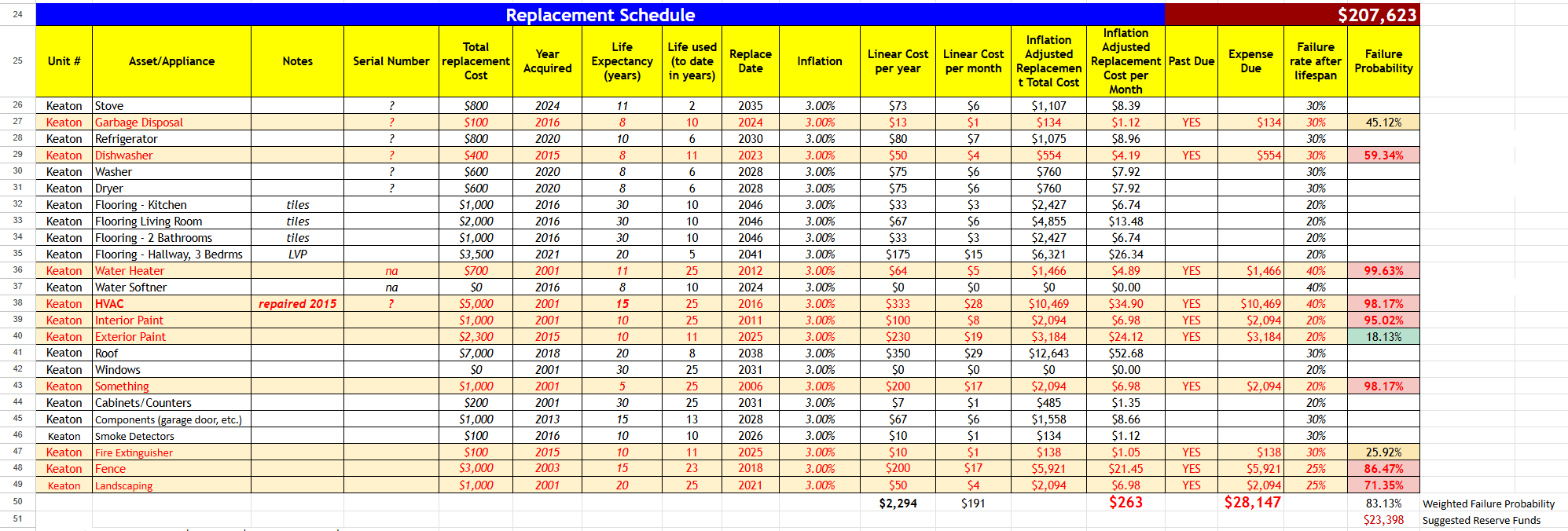
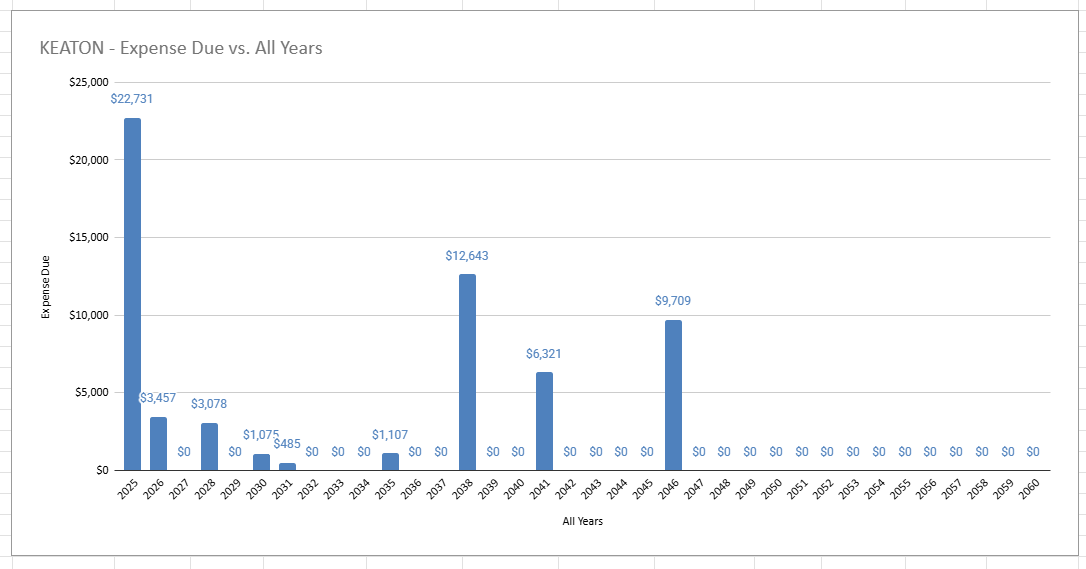
    Particularly useful to forecast big waves of expenses coming your way, or to make sell/keep decisions (before you sell a stabilized property, with little incoming expenses, but an apparent weak performer and keeping a rotten egg masquerading as "solid" performer about to hit you with major capex): 
  • Real Estate Investor · Austin, TX · Member since 2017 · 85 posts · 19 votes
    9h

    One use nobody's mentioned: insurance. After a fire or storm, carriers settle claims component by component, and the cost seg report is the only engineer-allocated breakdown of those systems you'll have on file. It also supports the loss amount if you claim a casualty loss. Keep a copy outside your tax file.

Join the conversationCreate a free account to reply, vote on answers and follow this thread.