Real Estate Agent · Kansas City, MO · Member since 2022 · 21 posts · 11 votes
Kansas City investor here, introducing myself to this side of the forum. I've completed 7 projects in the last 3 years, mostly renovations and BRRRR holds, and I'm at the stage where the quality of my lender relationships matters more than the quantity of deals I chase. I'm structuring my buys more deliberately now (single-purpose LLC, conservative leverage, private money in defined positions), and I want to know the lenders I work with by name, well before a closing date forces the introduction.
The other half of my why: I'm a dad of three boys, and our middle son, Thomas, is 5 and has Down syndrome. My long game in this business is accessible housing renovated right, and real, durable wealth for families like mine, including a funded future for Thomas built into the plan rather than hoped for at the end. That shapes the deals I pick and the people I want across the table.
So here's my genuine question for the lenders in this forum: are any of you parents, siblings, or close family to someone with Down syndrome, or do you have a disability connection that shapes how and why you lend? I'm not raising money and there's no deal attached to this post. I'm building a rolodex of people whose why rhymes with mine, and I'd rather start those conversations a year early than a week late.
And for any lender reading, connected or not: what makes a borrower worth calling back? The habits, the paperwork, the way a deal gets presented. I'm taking notes.
Grateful for this forum. I've learned plenty lurking; figured it was time to say hello properly.
— David Heyburn, 321 Properties Group, Kansas City
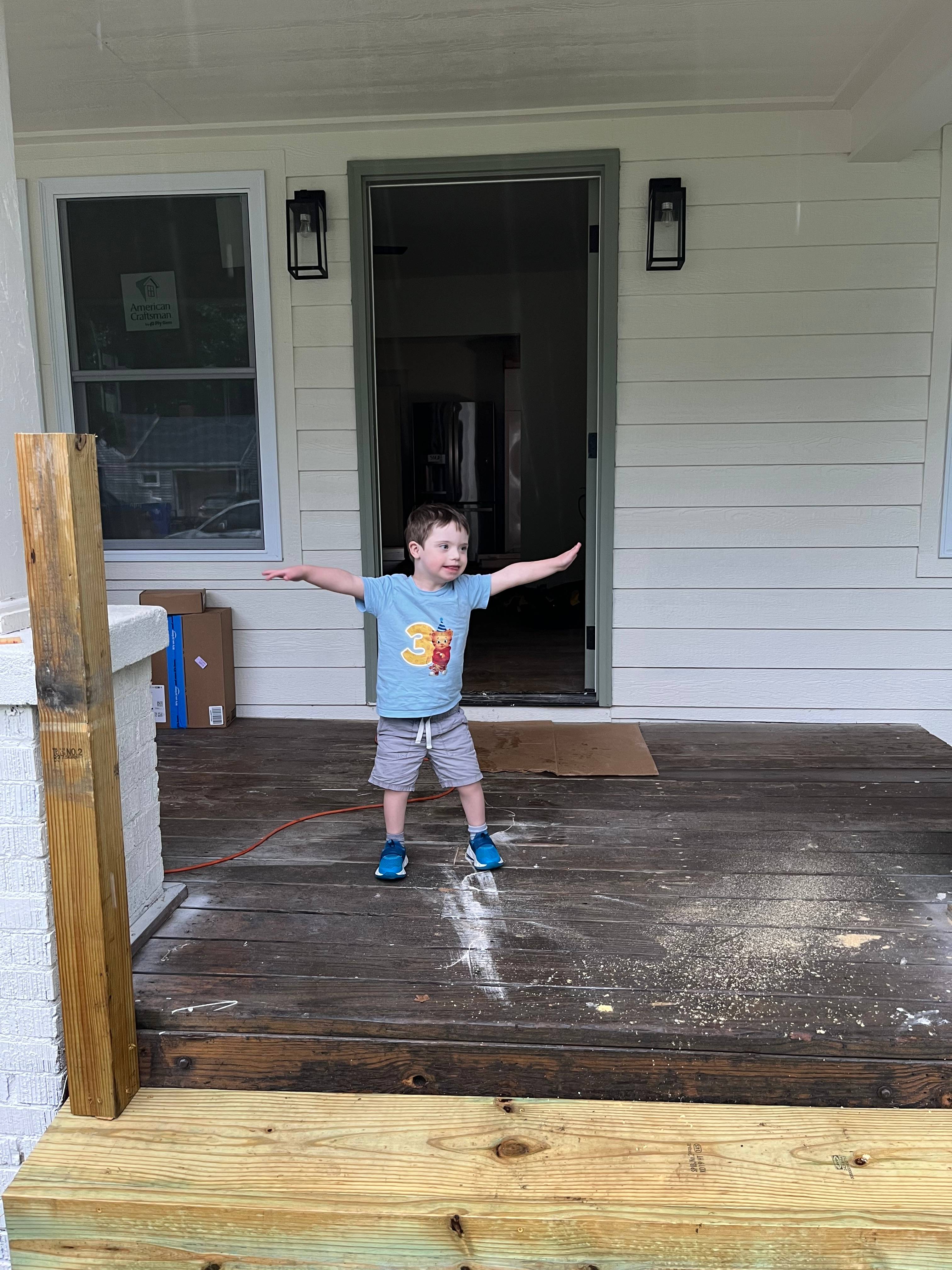
My son Thomas in front of project #5 in Olathe KS:
@David Heyburn — David — Kansas City investor here — introducing myself the other side — Boynton Beach private/hard money referral partner — 7 projects in last 3 years mostly renovations and BRRRR holds — that sentence alone tells me you are past the "chase" phase — you are in the "who do I want to work with for next 10 years" phase — that's exactly where lender relationships matter more than rate.
I read your other half twice — I'm a dad of three boys and our middle son Thomas is 5 and has Down syndrome — long game accessible housing renovated right and real durable wealth for families like mine including a funded future for Thomas built into the plan rather than hoped for at the end.
I don't have a Down syndrome connection in my immediate family to claim — so I won't manufacture one — but I want to answer your question honestly: what shapes how I lend is the same thing that shapes how you pick deals — funded future — not flip future. I place capital for private partners — we look at 1-5 unit borrowers who track like you — single-purpose LLC, conservative leverage, private money in defined positions — because those borrowers still own it in 10 years — when Thomas is 15 — not just at closing. Your framing — "what shapes the deals I pick and the people I want across the table" — is exactly how we underwrite character — not just credit.
So your two questions:
1. Connection that shapes lending?
For us — not a specific diagnosis — but a rule: we don't fund deals where the exit is "hope." You said funded future for Thomas built into plan rather than hoped for at end — we use same rule — if borrower's long-term hold plan doesn't show reserves for vacancy / insurance paid in full prior or at closing / tax — we pass — even if deal looks good. That discipline came from watching families lose rentals because they hoped. Your "accessible housing renovated right" — we get that — good doors, no step entry, wider bath — costs $800 more now — saves tenant — and saves you turnover — lenders who get that get you.
2. What makes a borrower worth calling back? — I'm taking notes — here is what gets same-day call back:
Entity clean: Single-purpose LLC — docs ready — EIN letter, Articles, Operating Agreement, ID front/back, no co-mingling — you already do this.
One PDF — not 10 texts: Application + deal — Address, Purchase, Rehab, ARV, Rent, Private money position defined — plus bank statements showing debt service reserves — not cost — reserves. You said conservative leverage — show it.
Habit: You tell me what you WON'T do — "I won't go above 70% ARV, I won't skip title" — more trust than what you will do.
Paperwork way presented: Labeled — "321 Properties Group - 123 Main - Olathe KS - Project 6 - $165k + $35k = $200k all-in / $285k ARV / $1,900 rent" — I can underwrite in 5 mins — vs hunting.
Early flag: "Insurance 2055 exterior-only — auction.com no interior" or "Thomas has therapy Tuesday — I close Wed not Tue" — human + deal blockers upfront — not at day 20.
I learned lurking too — then realized lender who knows your name before closing date forces intro — is worth 0.5 point more — because he picks up.
Your son in front of project #5 Olathe KS — that photo is your underwriting — you renovate right because he will see it — that's the borrower I call back first.
I'm not KC local — I fund FL — but I keep KC referral — if you ever need second eyes on structure — single-purpose LLC + private money defined — DM — I won't pitch — just structure — long game like you — year early conversations — like you said — I'd rather start those a year than a week late.
Respect for building it right — 321 Properties Group — Kansas City — that name will mean something in 10 years because of Thomas — not in spite of.
Congrats on seven projects in 3 years! and I agree the lender relationships matter more at that stage than the deal count.
I wouldn’t know the Bottom line answer to your first question, but I can speak for most lenders we are in the business to help and serve people of all creeds, types , backgrounds and disabilities. We abide by equal housing and funding for all, however choosing a lender that you can build a personal relationship is also very likely they will go above and beyond within their own legal guidelines.
To answer your second question, the borrowers who get called back are the ones who send the as is value, rehab budget, ARV, and projected rent in one email before anyone asks, with the exit (sell or refi into a rental loan) already decided.
Are your BRRRR holds sitting on private money right now, or have they already been refinanced into long term notes?
Building the rolodex a year early is the right order, and planning Thomas's future into the deals instead of hoping for it at the end is what will make your portfolio look different from most. One thing that sits right where your two goals meet. Accessibility work like wider doorways, a ramp or a roll-in shower often doesn't show up in the appraised value, because the appraiser is pulling comps that mostly don't have those features. On a BRRRR, budget them as cost you may not get back at the refi. The appraiser can only pay for what the comps show. And if the long game means moving a property out of the LLC into a family plan later, read the loan documents first, since most business purpose loans need the lender's consent before title changes hands.
Welcome David, and thats a great why - Thomas is lucky to have a dad building the plan around him on purpose. On the "worth calling back" side, honestly the borrowers I love working with are the ones who show up with a clean package before they need it - LLC docs (articles, operating agreement, EIN, good standing) already in a folder, a simple schedule of real estate owned, and on each deal a one page summary with purchase price, rehab budget, ARV and rent comps instead of just "what can you do for me?" The other big one is being upfront about anything messy (credit hiccups, seasoning, an appraisal that might come in light) right away, surprises late in the process are what kill deals and relationships. For your BRRRR holds, it also helps to know your refi exit going in - most DSCR Lenders are going to want to see the lease (or market rent from the appraisal) cover the payment at roughly a 1.00x-1.25x DSCR depending on leverage, so running that math before you buy saves a lot of headaches. Are you mostly refinancing out of private money into long term debt on these, or holding the private money longer?
David, you're doing this in the right order — a year early beats a week late, every time. From the lending side, here's what makes a borrower worth calling back: 1. The whole deal in the first message. Purchase price, as-is value, ARV, expected rent, and the exit — sell it or refi it — stated up front, before anyone has to ask. The borrowers I call back fastest are the ones whose first email doesn't come back with five questions attached. 2. Conservative leverage, honestly stated. 'I'm at 70% because the rent only supports 70%' beats 'I need 85% because that's what I want.' Lenders remember who tells them the truth about a deal. 3. Paperwork ready before it's requested. Entity docs, proof of funds, scope of work, contractor bid — when a lender asks and you already have it, you jump the line. 4. Responsiveness. Deals die in the gap between messages. A borrower who answers the same day gets the same treatment back. And the part that matters most: don't shop ten lenders on rate alone. Pick two or three whose process you trust, bring them real deals, and close what you say you'll close. That's how a borrower becomes the first call when a lender has capital to place. Your why is a good one — building the kind of housing you'd want your own family to live in is a filter that'll keep you out of bad deals. If you ever want a lender's read on a KC deal before you send it out, happy to take a look — Dan
@David Heyburn — David — Kansas City investor here — introducing myself the other side — Boynton Beach private/hard money referral partner — 7 projects in last 3 years mostly renovations and BRRRR holds — that sentence alone tells me you are past the "chase" phase — you are in the "who do I want to work with for next 10 years" phase — that's exactly where lender relationships matter more than rate.
I read your other half twice — I'm a dad of three boys and our middle son Thomas is 5 and has Down syndrome — long game accessible housing renovated right and real durable wealth for families like mine including a funded future for Thomas built into the plan rather than hoped for at the end.
I don't have a Down syndrome connection in my immediate family to claim — so I won't manufacture one — but I want to answer your question honestly: what shapes how I lend is the same thing that shapes how you pick deals — funded future — not flip future. I place capital for private partners — we look at 1-5 unit borrowers who track like you — single-purpose LLC, conservative leverage, private money in defined positions — because those borrowers still own it in 10 years — when Thomas is 15 — not just at closing. Your framing — "what shapes the deals I pick and the people I want across the table" — is exactly how we underwrite character — not just credit.
So your two questions:
1. Connection that shapes lending?
For us — not a specific diagnosis — but a rule: we don't fund deals where the exit is "hope." You said funded future for Thomas built into plan rather than hoped for at end — we use same rule — if borrower's long-term hold plan doesn't show reserves for vacancy / insurance paid in full prior or at closing / tax — we pass — even if deal looks good. That discipline came from watching families lose rentals because they hoped. Your "accessible housing renovated right" — we get that — good doors, no step entry, wider bath — costs $800 more now — saves tenant — and saves you turnover — lenders who get that get you.
2. What makes a borrower worth calling back? — I'm taking notes — here is what gets same-day call back:
Entity clean: Single-purpose LLC — docs ready — EIN letter, Articles, Operating Agreement, ID front/back, no co-mingling — you already do this.
One PDF — not 10 texts: Application + deal — Address, Purchase, Rehab, ARV, Rent, Private money position defined — plus bank statements showing debt service reserves — not cost — reserves. You said conservative leverage — show it.
Habit: You tell me what you WON'T do — "I won't go above 70% ARV, I won't skip title" — more trust than what you will do.
Paperwork way presented: Labeled — "321 Properties Group - 123 Main - Olathe KS - Project 6 - $165k + $35k = $200k all-in / $285k ARV / $1,900 rent" — I can underwrite in 5 mins — vs hunting.
Early flag: "Insurance 2055 exterior-only — auction.com no interior" or "Thomas has therapy Tuesday — I close Wed not Tue" — human + deal blockers upfront — not at day 20.
I learned lurking too — then realized lender who knows your name before closing date forces intro — is worth 0.5 point more — because he picks up.
Your son in front of project #5 Olathe KS — that photo is your underwriting — you renovate right because he will see it — that's the borrower I call back first.
I'm not KC local — I fund FL — but I keep KC referral — if you ever need second eyes on structure — single-purpose LLC + private money defined — DM — I won't pitch — just structure — long game like you — year early conversations — like you said — I'd rather start those a year than a week late.
Respect for building it right — 321 Properties Group — Kansas City — that name will mean something in 10 years because of Thomas — not in spite of.
@David Heyburn Thanks for calling that out, man. You are right, I used too many dashes. My bad.
Appreciate you reading it though. The main point I wanted to make is simple. I respect what you are building for Thomas and for your investors in KC. Seven projects in three years, single purpose LLC, conservative leverage, that tells me you think long term.
I do not have a Down syndrome connection in my family, so I will not claim one. What shapes how I lend is funded future, not flipped future. That is why your line about funded future built into the plan hit me.
If you ever want a second set of eyes on structure, LLC plus private money defined, just DM. No pitch. I fund FL, but I keep KC referral.
Respect for project 5 in Olathe. That photo with Thomas on the deck is the best underwriting I have seen.
Hey David! First off, I really appreciate your post. It's refreshing to see someone in this business who is so intentional about not just building wealth, but building something meaningful for their family and others.
A little about me: I've been a mortgage broker for over 6 years now with Edge Home Finance. I've built a great team around me that helps keep everything running smoothly, because I believe communication, consistency, and relationships are just as important as getting a deal closed.
I'm also a father of three and a brain cancer survivor, so your message about having a bigger "why" really hit home with me. Going through something like that changes your perspective on life, family, and what actually matters. I may not share your exact experience with Thomas, but I can absolutely relate to wanting to build something lasting for your kids and make a positive impact along the way.
On the lending side, I work with real estate investors on everything from investment property financing to DSCR loans and cash-out refinances. With your BRRRR strategy, I think one of the biggest advantages is having your long-term financing figured out before you even purchase the property. Understanding the refinance options, seasoning requirements, and how the property will qualify on the back end can make a huge difference.
As far as what makes a borrower worth calling back? For me, it's communication, transparency, and having a plan. I don't expect every deal to be perfect, but I value investors who know their numbers, understand their exit strategy, and treat their lending partners like part of the team.
I also really respect that you're looking to build relationships before you actually need financing. That's exactly how I prefer to do business.
I'd genuinely enjoy connecting, learning more about what you're building with 321 Properties Group, and seeing how we might be able to help each other down the road. No deal or immediate opportunity needed.
And most importantly, much respect to you and your family. What you're building for Thomas and others is bigger than real estate. That's the kind of purpose I can get behind.
David, first off, thank you for sharing your story. Seven projects in three years is an accomplishment, but what stood out to me wasn't the deal count. It was the fact that you've tied your investing goals to a bigger purpose.
From the lending side, the borrowers who stand out aren't usually the ones chasing the highest leverage or the fastest close. They're the ones who have a clear vision, a repeatable process, and a long-term mindset. Reading your post, that's exactly what comes across.
As for your question about what makes a borrower worth calling back, a few things consistently rise to the top:
• They communicate early, not just when they need money.
• They know their numbers and can explain them clearly.
• They present a realistic budget and timeline instead of a best-case scenario.
• They acknowledge risks and have a plan if things don't go perfectly.
• They close the loop after a project, sharing what worked, what didn't, and how the deal ultimately performed.
Honestly, relationship-building starts long before the loan application. The borrowers lenders remember are often the ones who spend time getting to know us before they have a deal under contract. That gives both sides confidence when an opportunity does come along.
I also think your focus on accessible housing is unique and meaningful. Most investors can talk about cash flow and equity growth. Far fewer can articulate why they're building wealth and how it ties into their family and community. That mission won't replace strong underwriting, but it absolutely influences the types of relationships people want to build around you.
One thing I've learned over the years: lenders aren't just evaluating deals. We're evaluating sponsors. When a borrower consistently does what they say they're going to do, submits complete information, and treats the relationship as a partnership rather than a transaction, they tend to move to the top of the call-back list very quickly.
Wishing you and your family continued success. It sounds like you're building something much bigger than a real estate portfolio, and those are often the most rewarding relationships for lenders to be a part of.