
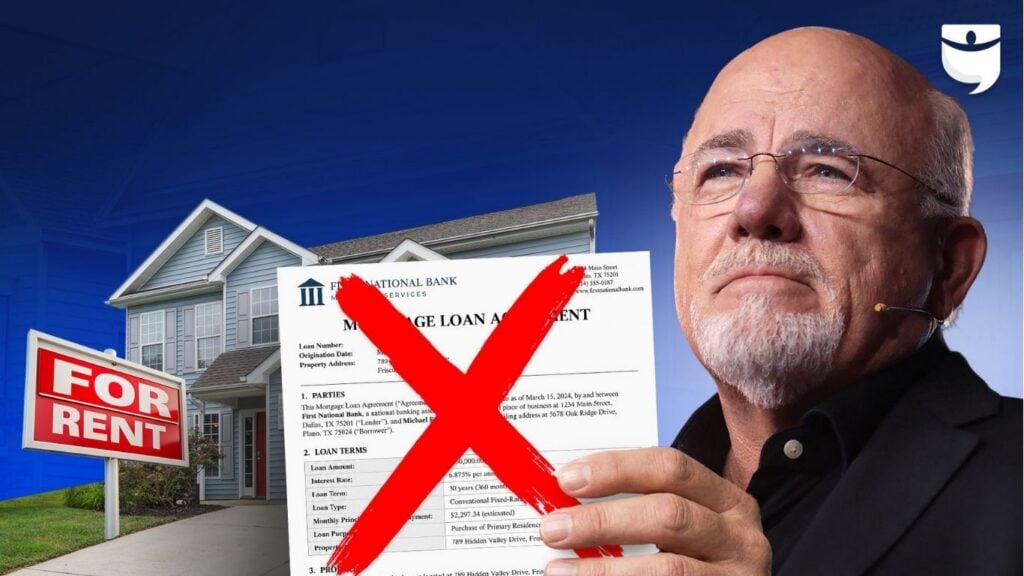
You want to buy a rental property, so you put 20% down and get a mortgage to cover the rest. This is how most investors buy real estate, but some (Dave Ramsey) think you can do it without debt—or at least less of it. Can you actually build a real estate portfolio with cash? Will a shorter note kill your cash flow? Today, we’re putting these two investing philosophies to the test!
We’re answering more questions from the BiggerPockets Forums—this time, with help from Deandra McDonald, the investor who went from $4,000 to financial freedom with rental properties. After a debate on using leverage in real estate, we’ll field questions from a couple of self-managing landlords who are struggling with tenant screening and turnovers. Should you approve a “questionable” tenant if they’re pre-paying the year’s rent? How do you keep contractors on schedule when doing repairs?
If you’re trying to get into real estate investing with very little money, what should you do? We’ll discuss whether it’s better to raise capital from family and friends to invest today or hold off until you’ve saved up your own down payment. Finally, an investor wants to try their hand at hotel conversions. With this being right in Deandra’s wheelhouse, she shares the investing strategies that have (and haven’t) worked for her!
Ask Your Question on the BiggerPockets Forums!
Click here to listen on Apple Podcasts.
Listen to the Podcast Here
Read the Transcript Here
Henry:
Is Dave Ramsey actually right about rental properties? You want to buy a rental property, it’s $300,000, so you save roughly $60,000 for a down payment and get a mortgage to cover the rest. Now you control an appreciating cash flowing asset and you bought it with only 20% down. This is how most investors buy rental properties. But if you were to ask Dave Ramsey, he’d probably tell you you’re wrong. After all, debt is bad, right? Instead of paying hundreds of thousands in interest and taking on the extra risk, wait a little longer, work a little harder and own the same property free and clear. But does the Dave Ramsey way actually work? Can the average person build a rental portfolio buying properties with only cash? Or let’s say you do use leverage, but you use Dave’s preferred method of a 15-year note. Can you really find properties that will still cashflow with that kind of mortgage payment?
What’s up everybody? I am Henry Washington, co-host of the BiggerPockets Podcast. And today I’ve got a guest co-host, Deandra McDonald, and we are going to be answering that exact Dave Ramsey question plus more in today’s BiggerPockets Forums Q&A episode. So let’s jump in with Deandra.
Deandra:
Hello. Hello, ladies and gentlemen. I’m glad to be back. It’s
Henry:
Going to be fun. You can hear Deandra’s full investor story on episode 1105. That was back in April of 2025. But for anyone who missed it, can you tell them a little bit about who you are and what you do?
Deandra:
My name is Deandra McDonald. I am a commercial real estate investor in Central Virginia. I was introduced to you guys back in maybe 21, 22 when I was flipping motels into residential properties. I’ve grown since then. I’m excited to answer y’all’s questions.
Henry:
Well, thank you for being here. I’m super excited. As you can tell, we do not lack for energy on this episode. Not in this life. Buckle up, folks. Buckle up. It’s going to be a ride. All right. Our first question comes from Jimmy in Phoenix and he asks… I love starting out with something like this. He asks, “What’s your opinion on Dave Ramsey’s method for success? He mentions it’s best to buy real estate with cash, with no debt or a 15-year mortgage as a last resort. But for most that are just getting started, it’s almost impossible to have over a couple hundred thousand dollars to invest in real estate with cash.” All right. If you are new, don’t let the fact that you don’t have a ton of cash stop you.
Deandra:
Yeah.
Henry:
All right? There are hundreds of thousands, if not millions of real estate investors who got into this business, built wealth, and did it without paying cash for properties. Now, most people want to grow and scale. And to grow in scale, you have to do it with leverage, right? Unless you just got mountains of cash, if you want to grow and scale a real estate business, you’ve got to do it with leverage. And Dave sees leverage as something that’s bad. And to me, debt is a tool. And like any tool, if you use it properly, you can get a job done efficiently and effectively. And if used improperly, you can injure yourself, right? Now, one thing I will say, Dave also says that you need to pay off all your debt before you start to invest. My general thoughts are you need to pay off high interest debt,
But smart investors don’t pay off medium to low interest debt before investing. My thought has always been, if I can get a better return on my money through the real estate asset and that return is higher than the interest that I’m paying on the debt, it makes more sense to buy the asset, use the asset to pay off the debt than it does to pay off all your debt and then invest. Because if you pay off every single ounce of debt you have and you’ve bought no assets along the way, then you are debt free in a shoebox. You don’t have anything to show for it. It’s just my two cents.
Deandra:
I agree in some points. I disagree on some. Something I tell the people I work with is Dave Ramsey is for addicts and I think you have to have that mindset, right? Because he was talking to people who got pre-approved and bought an 18 bedroom home and a pool and a two acre lot and never… He was talking to people who had a quarter million dollars in undergrad student loans, somehow got qualified for $95,000 in credit cards. Those people do need to pay off their debt or handle it, I guess, because they are addicts. And so the way you racked up $100,000 in credit card debt, you are going to go after pretty properties that don’t necessarily profit. Now, if you are not an addict and/or have a plan for your debt, so you have a lot of student loan debt, but you’re on the PSLF and you plan to pay it off in these 10 years or these are the minimum payments graduated doesn’t happen for two or three years.
You are not increasing your credit card debt on things that are not making you money. You are not spending 50 to 60% of your income on your personal home mortgage, then yeah, I think it is totally reasonable to take out debt and to buy a property for sure. But sometimes one of the reasons you have no money and you have to take out the debt so you keep spending on other stuff. You don’t have no capacity for it. And that’s where I agree with Dave of part of being a real estate investor is having the capacity to flow. And so if it can only work this one way because all your money is taken up somewhere else, you might have to pay down debt for a little bit, get yourself together and then get into that world.
Henry:
If you’re bad with debt, if you’re sitting on mountains of credit card debt right now and you’re paying 20 something percent interest on those credit cards, yeah, you need to focus on paying those off before you go buy a rental property.
Deandra:
And don’t blame Dave Ramsey because you’re spending up these credit cards and he’s not giving you the out you want. Okay? Okay.
Henry:
Oh man. All right. Good start. Good start, Deandra. I like it. I like it. All right, moving on to our next question. We have Mike in Washington DC and he asks, “For landlords who manage their own rental turnovers, what part usually creates the biggest delay? Getting access to the property, completing the inspection, building the scope, waiting for estimates, making repair decisions, contractor scheduling, change orders or final quality control. In my experience, missing information between each stage is what stretches the timeline and creates additional vacancy.” I would love to hear your perspective as somebody who is a professional landlord.
Deandra:
Okay. I would say it’s going to vary between expected turnover and unexpected turnover. Expected turnover is I know the tenant is leaving. They’re agreeing to leave. We’re all aware of the date and the condition. That is an expected turnover. Someone has decided to not renew their lease or cash for keys or, “Hey, we have a court date and it’s coming whether you want it or not.” Versus if I show up and the unit is abandoned, question mark.
Henry:
That’s always
Deandra:
A fun day. If I show up to an eviction and I can hear them breaking stuff inside, if I don’t know that someone has been left, I hear a dog, but I don’t see the person and I smell a cat, but they shouldn’t have had one, that’s when things extend. And so I would say with unexpected turnovers, the hardest has been getting the keys. How do I have legal access to this unit to remove the stuff, to turn over utilities, change the locks, lock the windows? Because I can think it’s abandoned, but I have to go through the legal process to make sure it’s abandoned. I can think the tenant is gone, but until the sheriff comes and gives me the all clear, I can’t remove their stuff. I can’t just decide it’s time for me to enter. And because that stuff is usually still in there, I don’t know the condition.
So even trying to talk with a contractor, are we just doing paint? Are we doing drywall? Do we have to replace the floors? Are the appliances good? I don’t have the answer to any of that until I have full access. But expected turnover, if there’s just cleaning, painting, delivery of new appliances, that’s pretty easy to schedule. That’s not difficult. But if it’s, “Oh, I didn’t know I had to redo the floors. Can I get on your schedule? It’s the summertime.” And my contractor’s like, “No, you absolutely can. It’s the middle of May. No, I can’t fit you in for this 600 square foot job.” So that would be the harder of it’s not baseline things that I know how to do or I can have my team do, but I don’t know if I can get on their schedule.
Henry:
Yeah, that’s a great point. For me, this is the same with rental properties and with flips. When I’m turning over a unit or when I’m renovating a property, it’s not the full renovation that takes the longest. It is the last 5%, the last blue tape touch up, something wasn’t done right and I got to get the contractor back out there. That’s the stuff that lingers and takes longer. I can schedule a renovation. I can walk into a place and say, “Oh yeah, paint floors, new appliances, call the guy, they do the bid, they go do the work.” It’s when they say, “Hey, we’re all done,” and then I go and they’re not all done. So now we’re fighting over this little thing and that little thing and, “Hey, I need you to come back out here and fix this,” but they already started another job and they’re lollygagging to get back out there.
And so I’ve had to learn different tips, tricks, tactics to ensure that I get those people back out. And sometimes what even happens is you finish a renovation or you finish a turnover and you get in there and you’re like, “You know what? I should have replaced that flooring. I didn’t think I needed to, but now that the place is all painted and turned over, I just don’t like the way it looks.” That last 5% kills you because now I got to go find a guy to do this very small job and to do it quickly and I’m calling him and I already need it done when I call him. I need it yesterday and I’m calling him today and then there’s a two week delay before he gets out there and then he does it and then you have to go and check on it.
So some of the things that we do, I always withhold a final payment until we are all done. Everything is done, we’re checked off, you fixed all the things, it’s good to go. A lot of contractors, the minute they put down the hammer or the paintbrush and walk out of that unit, they’re hitting you up for a check, you can’t pay them everything.
Deandra:
That’s
Henry:
Right. You got to withhold a thousand bucks at a minimum. So enough that they’re going to want to come back and finish so they can get their money after you check it.
Deandra:
I like the tips and tricks of how to minimize it because I forget that that has been happening. For example, for me, flooring was huge in between turnover. If they’re scratching this laminate, then this is going to extend it. So I’m going to actually switch to tile. So now we don’t have the scratch no more. I won’t ever have this issue or I’ll start walking the properties a month or two before they’re out and pull up a rug, move a couch so I can get on his schedule four weeks in advance to minimize that. That’s good.
Henry:
All right. Well, it’s good to know I’m not the only one that struggles with that misery loves company. Thank you, Deandra. We’ve got more questions from the BiggerPockets community and Deandra and I will be back after this break to answer those. We are back on the BiggerPockets podcast. Deandra and I are answering forum questions that you guys have submitted and it has already been a good time. So hope you stayed buckled. We got a few more to go. Our next question comes from BiggerPockets community member, Miguel, and he asked us in the forums, “I have a potential tenant who is willing to pay a full year of rent in advance. She told me ahead of time that she has bad credit and might have a domestic charge from a past relationship with her ex. She wants a year to get her credit better to buy a house.
What do you think?” Now, I have been paid a year in advance and it was lovely. I loved everything about it and I would love for everyone to pay a year in advance. So if you have a good tenant or a prospected good tenant because they may be new to you, you haven’t had them yet, but everything checks out in terms of their application and everything that’s been going well so far and they want to pay you all your rent on day one, give it to me. I’ll take it. I will take it. Absolutely. I don’t have a problem with that. The caveat to this question is she told me ahead of time that she doesn’t have great credit and she might have a charge from a past relationship, but she wants to use the year to get her credit better to buy a house.
So this leads me into the red flags on tenant selection conversation because here’s the thing. I don’t necessarily rule out a tenant because they have bad credit. There’s a lot of things that cause bad credit that I don’t hold against you. If anybody’s ever been through a divorce, they can probably tell you that it destroys your credit. Now I’ve never been through one, but I’ve evaluated plenty of tenants who have been through divorces, terrible, terrible credit. Doesn’t mean they’re bad people, doesn’t mean they’re not going to pay their bills. Medical debt. Medical debt’s crazy in this country. Some people just literally cannot afford to pay it and it’s hurting their credit scores. So I look past some of those things. So my answer to Miguel would be based on how do you think she fares as a tenant based on your review process? And if you think she’s a decent tenant and you would rent to her, whether she’s paying monthly or whether she’s paying yearly, then I would say go for it.
But if you’ve got some concerns with her as a tenant, regardless of what she’s trying to pay you, then I would say listen to your gut and don’t do it.
Deandra:
I’m pretty much on the same page as Henry. Nothing in her application would have said no to me. I run her credit. I’m not picky about credit. Income, depending on her job, but she’s paying me all up front. Now her background check might be concerning. I’m glad you read it out loud. When I read that question, I thought she was running, not that she was the incident. We’re going to find out what this may mean. We’re going
Henry:
To
Deandra:
Find out. We’re going to find out. We may check this maybe, especially my multifamily properties because I don’t know what’s triggering you. I don’t know what the cause of this. You’re going to be living with a bunch of different people, right? So we need to know what’s going on. Now, depending on what comes back, criminals are not a protected class. I can decide, “Hey, this is a good fit for this building or this single family or unfortunately, no, it’s not a good fit.”
The one thing I would just warn people about is if it doesn’t go according to plan, legally, do you know what you have to return? Because I don’t want you to say, “Hey, the rent is $1,500. I got a check for 18 grand. You know what I did? Henry’s taught me how to get to the clothing table.” Buy me another house. I went out and bought me a flip. And then she decides to break her lease six months in and sues you for the rest of that money and you can’t produce it. So make sure that if something goes left, you either still have that money in a high yield savings account of some sort, or you know if you have to give it back or not.
Henry:
That’s a great point. Hadn’t even thought that, but that’s a fantastic point. And I love what you said about checking out their criminal history because again, what we’re really talking about here, folks, is the most important job of a landlord and that is being very good at tenant screening and tenant selection. That our job, that’s our responsibility. But I don’t necessarily rule anybody out because they have a criminal background or a criminal conviction on their record. It depends on what it is for, right? My best tenant to this day, probably my longest standing tenant now to this day, is a convicted felon who did 14 years for a nonviolent drug offense. Oh
Deandra:
Wow.
Henry:
When I tell you this man was almost in tears when we agreed to rent to him because he had wasted so much money on applications and things and people just to turn him down just because he was a convicted felon. So there are tons of good people who were actually rehabilitated or weren’t even in that big of a trouble to begin with based on what they did and they need a place to live. So I don’t rule them out. We got to be good at tenant selection. I also love what you said. It’s a multifamily that you might have been looking at and so there’s other people that live there. So it matters what they did. You don’t want to put a sex offender into a multifamily where there’s kids. You have to pay attention to these things as a landlord.
Deandra:
One of my longest tenants has a DUI, but the DUI is from 99. We’re 25 years past that, but it’s still on her record. It has been expunged. It has been removed and it gets dinged. And if you don’t open to just see what the ding is, you will say, “Oh, this thing you haven’t gotten in trouble for 25 years when you’re 19 is still causing you a problem.” But yes, let me also say for everybody, the criminal charge matters. So number one, yes, sex offenders are also supposed to ask you as a landlord if they’re children in the building because it is their responsibility to figure it out. But I had somebody who come and he was beating up Black people. I said, “Well, number one, this is not going to work.” This idea works. I
Henry:
Don’t know if you are aware, but…
Deandra:
But number two, I can’t have you in this building. That charge was two years ago. No. If you have a hate crime on your record, unfortunately, you will not be in these buildings. Not with me. Absolutely not. So check those criminal records. There are a lot that you can excuse, but there are a lot that you can’t, and it’s okay to say no.
Henry:
That is right. All right. We’ve got another one. This one comes from Kyle and Dayton. Kyle’s 18 years old, very little credit history. I mean, that makes sense. He’s only 18. Yeah.
Very little credit history and very little capital. He says, “I’m eager to start, but can’t get around the glaring issue of not having enough capital. So I was wondering if there are any methods you would use to raise capital or is it just time to put my head down and put in long hours?” I got thoughts, but I want to hear what you got to say because young investors, hey, I love it. I love that you’re even thinking about this at 18 years old. Energy. I can tell you at 18 years old, this wasn’t nowhere on my radar. Not
Deandra:
At all. Not even longer.
Henry:
Proud of you for even thinking about these things.
Deandra:
Okay. There are two things that his message kind of flared up for me. One, he wanted to raise the down payment. My concern with a lot of people who just want to raise a down payment is you are now 100% leveraged and you don’t know how to make money, right? So you are 100% in with now two different groups of money because if you have the down payment, you plan to loan or get a loan for the other 75 to 80%. You are 100% all in and you don’t have no money on your own. So if anything goes left, and it will, babes, it’s your first property. If anything goes left, you can’t get out of it. I only do private money deals at this point, and I do 100% financing on my private money deals at this point. But you know what? I have money.
So if something goes left or not according to plan on that roof, I though I had another eight years, I don’t. I can pay for it if I needed to, or there’s space in the deal for me to use the property to pay for itself. The second thing that came up was he said, “Or should I just work?” And I said, “Oh, so you haven’t been. Okay.
Then why was the first jump other people’s money?” And part of it is BiggerPocket’s fault. It’s our fault because we love OPM and I love it too. I
Henry:
Use it
Deandra:
Exclusively at this point.
Henry:
You do too.
Deandra:
However, OPM at 100% financing from individuals is not an intro level strategy because you don’t know how to balance other people’s money like that.
Henry:
You’ve got no fallback if you got to pay back your lenders and your deal’s not done yet.
Deandra:
100%. And I’ve told my members, and I’m not getting trouble, but that’s okay. This is not my business. I don’t mind if you lose the big bank’s money, right? They have a whole foreclosure process. They know how to do all that. They’re going to take your property, get your money back. Please don’t lose your grandmothers. Please lose your friends. That’s a whole different world because they don’t have the resources to take it back. They don’t know if you’ve set it up right to take it back. So my two things are, hey, 100% leverage feels wild for your first few properties if it’s not your primary residence. And number two, if you are asking if you have to work, the answer is yes.
Henry:
I agree. I’ve said this before on many episodes. It is absolutely possible to buy real estate without using a ton of your own money. It is not possible to own real estate with none of your own money.
Deandra:
Absolutely.
Henry:
You cannot own an asset with no money because 30 days after you close on that house where you didn’t have to put a down payment down, what do they want? They want your first mortgage payment. Where’s that going to come from? You need to have some money. If something breaks in that first month, two months, three months, like me on my second or third rental property, literally the first week after I put a tenant in there, the HVAC went out. Somebody had to come up with $8,000 out of nowhere. Did I budget for that? Yeah, I bought the property right. I underwrote it and bought it at a discount so that I could afford to replace an HVAC. But all that really means is I bought the property a little cheaper so that the property as it appreciates, it pays for itself over time. But I hadn’t owned it long enough for it to produce enough cash flow for me to pay for an HVAC yet.
So it had to come out of my pocket. So just because you can finance a deal 100% doesn’t mean you should. All right.
Got that on the table. Now I understand. Kyle, dude, you are 18 and that is awesome. You are giving yourself such a head start. Raising private capital is fun, but it is also stressful because now you’ve got the burden of not messing up somebody else’s money. And if you are 18, it is going to be very challenging for you to raise private money from people who don’t know, love or like you. Now, you can absolutely probably go raise private money from family, close friends, or maybe they don’t know you, but they know your friends and your family and where you come from. They might give you some money, but the smart ones, even in those circles, are going to be a little cautious because you don’t have a track record yet and you’re going to make mistakes and screw up and they don’t want you learning lessons on their dime.
So it’s probably going to be a little challenging to raise capital until you get some deals under your belt. I’m not saying you can’t do it. You probably could get some money. Should you do it is another question. The last thing you said is, “Should I just put my head down and put in the long hours?” I know I just sound like the old man who’s like, “You just need to pull yourself up by your bootstraps and work hard.” But the one resource you have that a lot of us don’t have as much of is time and youth, which means you can work hard. If you don’t have a wife and kids, it’s just you. You can work two and three jobs. We interviewed a guy on this podcast. His name was Neil Whitney. Neil was in his, I think it was late 40s, early 50s.
I can’t quite remember, but he wanted to invest. His wife said, “Cool, you can do that if you don’t touch our money. You got to go make other money and invest with that.” So Neil drove Uber to raise the money he needed to buy his first rental property. Okay? So Kyle, you’re 18. Just work, save the money. First thing you should do is if you live at home, stay there and then pay rent, but pay it to your savings account. Because what a lot of people do when they don’t have a living expense is they absorb that into their lifestyle. They get used to not having a living expense, and then when you have to move out, it’s a shock to the system. So if you’re living at home now, cool. What would it cost you to live in an apartment by yourself in that same city?
Whatever that average amount is, that’s what you need to be paying every month. Pay it to yourself in a savings account. That’s how you start saving up number one. Then start working and doing extra jobs and saving and building up some of that money. Do your first deal with that money. Get a track record, learn some lessons on your own dime, and then go try to raise some money. I’m not saying you can’t have capital raising conversations with your friends and family in the meantime, and it’ll go a lot smoother if they see you working, saving, hustling, and having a plan for the money and putting it to use. It’ll be so much easier for you to get the money from people if they see you actually doing work, saving money, putting in the effort. But the fact that you’re thinking about these things at 18 and going to put a plan into place, you’re going to give yourself such a head start in life.
But use the resources you have at your disposal right now. You’ve got time and youth. Go make some money, my friend.
Deandra:
Can I also add, if you have no responsibilities, a way to double dip here is also for the work you are about to do to be on your own property. So if you are able to, as a regular, I don’t know, Starbucks, Chipotle, whatever employee, if you’re able to qualify for a little handyman special,
If your extra three hours a night are all learning how to replace this floor and learning how to put in some crown molding and replace a vanity and update some paint, in two years, when you go to sell that property, anything you have made is now tax-free, right? Now I’m guessing it’s not going to be $125,000 in profit in this first property, but anything under that threshold now is just yours. And you would not have made that about working extra as a delivery driver at night past your job. So if you can qualify for a property, because hopefully you have no debt, you have no student loan debt, you didn’t go to college, then buy yourself a good little starter property, fix it up for two years, and now you have that 30 or 40,000 you could use to the next deal.
Henry:
Boom. Sounds like you got some good advice to get you started there, Kyle. I hope it goes well for you. I hope you turn into the most awesome real estate investor that you want to be and it provides you the life that you are dreaming of. All right. Our next question is right up Deandra’s alley, and I can’t wait for her to chime in on it, but we’re going to do that right after this break. All right, we’re back on the BiggerPockets podcast. Investor Deandra and I are answering your questions in the BiggerPockets forums, and right now I have got one that’s basically a slow underhand pitch right down the fast lane for you to knock it out of the park. This question comes from Priyan Shu. He is a real estate agent in Columbus, Ohio, and he posted this question, “I’ve been watching the commercial space and it feels like we’re hitting a tipping point with distressed hospitality assets.
I’ve been heavily focused on converting underperforming hotels into workforce housing or senior living communities. It’s amazing how much the valuation math changes when you re-underwrite the asset based on long-term residential cash flow.” Is anyone in the commercial space looking at a hotel to housing conversions right now? If you’ve done one, what is the biggest hurdle you’ve run into? Was it zoning, heavy CapEx conversion, or something else entirely?
Deandra:
I do do this. So this is where I really expanded my portfolio, was focusing on rundown motels that were no longer performing and transitioning them into not necessarily workforce housing, but just housing in general. And I am totally in it. I’m all about it. It is my favorite type of conversion. It is my favorite type of project. Now, those motels are not as distressed as they were during COVID.
Henry:
Oh, you fixed them all. You fixed them all, is what youre saying.
Deandra:
That’s right. I found them
Henry:
All,
Deandra:
You fixed them. But it is a great solution. There are some issues like you brought up, Priyanchu. The first, I would say largest that I tend to stay away from is zoning. There are some motels that are just not zoned for 30 day stays. The city will not allow it. The county will not allow it because that is part of their five-year plan, their 10-year plan to keep all the motels and hospitality in one section so it doesn’t spill into the rest of the community. For some people, they want it to all be intertwined streets, some are Airbnbs, some are regular rentals, some are housing run by the government. But a lot of counties who have that strict zoning, I would say don’t get involved. It is not for you. Unless you want this long-term plan, don’t do it. It’s not worth it. In terms of the capital to fix it, I would argue it’s no different from a large multifamily property.
I try to go after motels and hotels that are more suite style living so that the setup is already kind of there. I’m not necessarily busting down walls.
Henry:
So it already has a living room, bedroom situation?
Deandra:
Yes. Or if it’s going to be a large studio, there’s already a kitchen with a sink and a spot for a fridge.
Henry:
Oh, that probably saves a ton.
Deandra:
I cannot explain because now I’m just more upgrading everything for long-term living than I am building out a brand new space.
Henry:
For those who are listening, when you think about motel conversions, the part that gets expensive is they’re usually on concrete slabs. So if you need to add plumbing, you’re tearing up the foundation.
Deandra:
Everything.
Henry:
Yeah. And a lot of these have cinder block concrete walls. So it is extremely hard to add plumbing because you got to go through concrete on the floor and on the walls. And so your renovation bill just skyrockets.
Deandra:
Now you’re pulling permits because you have to replace this stuff and the city’s like, “Oh, well, what bodies are in these walls?” You’re like, “Oh, I’m so sorry. If you could not look over there and just focus on the one thing that’s coming out, just the pipe, that’d be great.
Henry:
Please stay focused on the man over here, not the man. It’s fine. Don’t worry about him.
Deandra:
In terms of senior housing, I thought when I started buying these hotels, oh, this is going to be great. We have the silver wave coming. This is going to be a great thing for me to transition into.” It’s not as an investor myself. So let me tell you, let me say. It’s not. It’s not because I don’t know what they need. If I’m going to go that route, I need to be working with a nursing home to give me much more specifics because my brain just doesn’t know. I’m not in the care field like that. Even when I think about my elderly grandma, she might have mobility that they need more than that, or she might have strength and they need more, or they have to be a different sprinkler system or intercom system, all of these pieces that –
Henry:
Commercial kitchens.
Deandra:
It never crossed my mind. The driveway, the wheelchair access, the cost of that is not just, oh, assisted living or workforce housing, either or, which is what I naively though when I first went into it. So if that is what you’re going to do, great. I would work with the care facility already and be like, “Hey, I’m just going to be the landlord.” But what do you need in order to run your business well?
Henry:
I love the point about the city. You said if it’s not in their plan. Working with cities is challenging. It is very hard, very hard to get a city, county, municipality to change their mind on what they want. It is a whole lot easier for you to get approval to do what you want to do if it fits within what they are already doing or what they want to do. And then they can be the best assets and allies on your side. You’re helping them accomplish their goals. The whole dynamic changes. But I think a lot of investors spend a lot of time trying to convince the city on why their plan is what the city should do. And a lot of the times they look at you like, “I do this every day. This is my job. I work here. I improve this city.
And you’re telling me what needs to happen in my city.” There’s tension upfront already. So do the research, learn before you go buying an asset or even making an offer on an asset, try to get some sense of what is that city or municipality wanting to do in that area of town?
Deandra:
Absolutely. I had a visceral reaction when Henry said, “You can’t get what the city doesn’t want.” I remember sitting in a meeting and the guy said, respectfully, “We pay more consulting than you are about to buy this property. You’re not budging us on this.” Right. Got it. My bad. I said, “Let me…”
Henry:
Let me see my way. Thank you.
Deandra:
You’re right. You’re right. And had to sit with Deandra. I get that you’re energetic. You want to do something big and this is really cool. People live here. You don’t even live in this city. No, they care about their place. So take it as that too. Because sometimes take it as you guys don’t want growth. Y’all actually care deeply about it. So what Deandra has done is Deandra has got on those boards. So the town meetings Henry’s talking about, I’m on them now. So I can see in real time, I get to make the decision and also understand that these are real people and when I’m alive, what they’re trying to do, life’s a lot better.
Henry:
Absolutely. All right. Well, thank you so much, Deandra. That was fantastic information. I mean, we wouldn’t expect anything less.
Deandra:
Thank you for having me, Henry. This was great.
Henry:
Absolutely. I’ve enjoyed this so much. Hopefully you guys have enjoyed this as well and gotten great information out of it. For the folks that are listening and they’re like, “Man, Deandra’s pretty awesome. Where can we learn more about her?” How do they do that?
Deandra:
Well, if you want to follow me on Instagram, you can follow me at Deandra McDonald, or if you want to follow me on TikTok or YouTube, simple real estate is my handle.
Henry:
Awesome. All right, everybody. Thank you so much for listening to this episode of the BiggerPockets Podcast. And before we go, as a reminder, these questions are from the BiggerPockets Forums. So if you have real estate questions of your own, you can go to biggerpockets.com/forums. You can get advice from over three million members of the community totally for free, and maybe one day in the future we’ll pick your question and answer it right here on the BiggerPockets Podcast. Thank you so much for listening to this episode. We’ll see you on the next one. Bye.
Help Us Out!
Help us reach new listeners on iTunes by leaving us a rating and review! It takes just 30 seconds and instructions can be found here. Thanks! We really appreciate it!
In This Episode We Cover:
- Whether Dave Ramsey is right (or wrong) about using leverage in real estate
- The easiest (and most difficult) aspects of rental turnovers
- Common red (and green) flags to watch out for when screening tenants
- How to come up with your first (or next) down payment from scratch
- What to know before tackling a hotel conversion project
- And So Much More!
Links from the Show
- Join BiggerPockets for FREE
- Join us at the BiggerPockets Conference October 2-4 in Orlando. Buy tickets
- Let Us Know What You Thought of the Show!
- Sign Up for the BiggerPockets Real Estate Newsletter
- Find an Investor-Friendly Agent in Your Area
- Sign Up for the Investor Brief Newsletter
- BiggerPockets Agent Finder
- Apply to Be a BiggerPockets Podcast Guest!
- BiggerPockets Pro Membership
- Connect with Henry
- Connect with Deandra
- BiggerPockets Real Estate 1105 – Buying ONE Rental Changed My Life: 4 Years Later, I Quit My Job w/ Deandra McDonald
- BiggerPockets Real Estate 1231 – Paycheck to Paycheck in His 40s, Millionaire in His 50s with “Boring” Rentals w/ Neil Whitney
- Deandra’s Instagram
Interested in learning more about today’s sponsors or becoming a BiggerPockets partner yourself? Email [email protected].
