
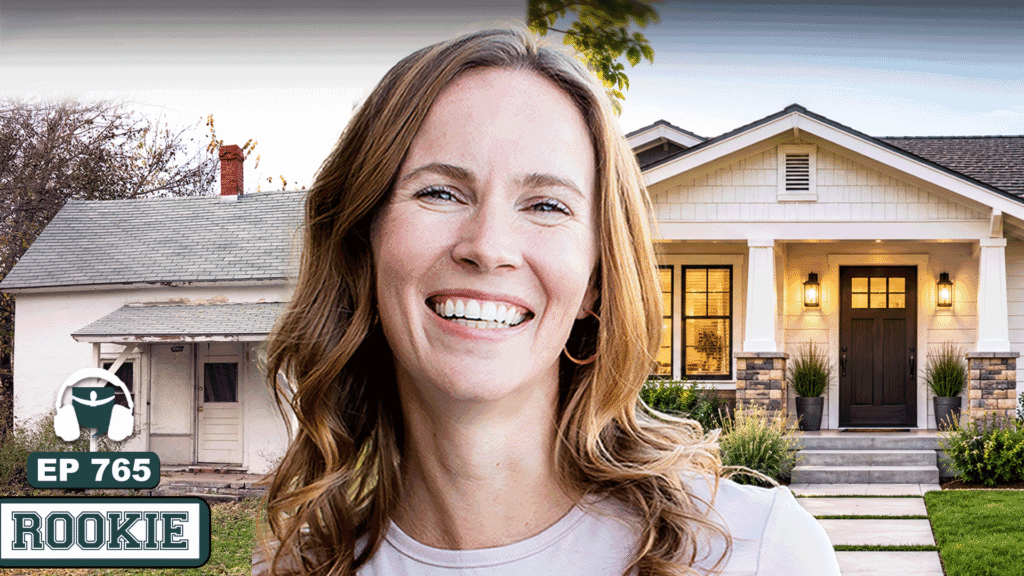
Builders are currently offering huge incentives on new construction homes, to the point where buying “new” might be actually cheaper than buying an existing rental property in your market right now. Today we’re breaking down how this overlooked investing strategy is saving rookies much more than you realize!
Welcome back to the Real Estate Rookie podcast! This week, we’re making the case for new builds as a very strong rental strategy: why builders are currently offering incentives that are hard to pass on, how to negotiate on a spec home, how to buy them with low money down, and the difference between buying new inventory and building from the ground up.
We’re also digging into walk-in equity and how getting into an early phase of a new community can put you ahead on day one. We’ll also walk you through what to actually budget for land, financing, permitting, and your team before you even commit to a ground-up build.
If you’re weighing building versus buying for your next rental, this episode will help you make up your mind. New doesn’t have to mean expensive. Sometimes it means a better deal that’s just hiding in plain sight!
Click here to listen on Apple Podcasts.
Listen to the Podcast Here
Read the Transcript Here
Ashley:
Most rookies start with the same assumption. If you want a rental, you search MLS and buy a house someone else already built. But in this market, that older house may come with a higher price aging systems and a renovation budget before your first tenant ever moves in.
Tony:
Meanwhile, builders all across the country are sitting on inventory, cutting prices and offering rate buydowns. In the latest national releases, the median new home sold for about $398,000 while the median existing home sold for about $434,000. Now, those are not apples to apples properties for the same reporting month, but the gap is big enough that rookie should stop assuming new automatically means more expensive.
Ashley:
Today we’re comparing two routes, buying a builder’s finished inventory and building a rental from the ground up. We’ll spend most of the episode on how to build, including the land, team, financing timeline, and mistakes that determine whether that promised walk-in equity is actually true. This is the Real Estate Rookie Podcast. I’m Ashley Kehr.
Tony:
And I’m Tony J. Robinson. With that, let’s get into why new construction might be worth a fresh look. So first let’s talk about some of the data here. So I’m going to read off a few stats here. So again, we’re recording this in August of 2026, but I’m going to give you some data here from June of 2026. So for newly constructed homes, the median price was $398,000. In terms of the number of homes that were for sale, there were 485,000 new construction homes for sale, which is about a 9.3 months of supply. Now, if we look at existing homes, homes that are existing, median price is $434,000. That’s about a $36,000 difference between those two national medians. Now again, no data set is perfect and those are actually straddling two different months, so there’s a little bit of imperfectness in the data, but even if we set that aside, the reason that this is important is because it’s showing that there’s some trends here around the affordability of new construction homes that maybe we’ve been overlooking.
And that’s the entire reason of today’s episode is to talk about why this is an important thing to focus on for rookie investors.
Ashley:
And I think a little disclaimer before we get into more of the weeds of it is this is very local. So we’re going to look at the national average and look at overall across the country, but in your specific market, it may be different. So make sure you’re actually analyzing your neighborhood, looking at the median cost of a home for a new build versus what it is to actually purchase a comparable property that’s already built and ready to go. So just a little disclaimer there. But one of the reasons that we’re actually seeing some advantages to buying a new build is because of builder incentives. So builders are actually adding in some deals for you so that it gives you more of an incentive to actually come and purchase a new build. So 63% of builders offered sales incentives in August 2026. Again, once again, this is something very market specific, but if you don’t go and ask builders what their current incentives are, you’ll never know.
Also, 35% of builders cut their prices, so they decrease their prices to try and attract more buyers in their market too. So the average reported price reduction was around 6% that they cut the price by.
Tony:
So when we talk about incentives, just to define what that means, it means the builder is giving you something in order to encourage you, in order to incentivize you to buy that property. And sometimes an incentive could be, “Hey, we’re going to give you some credit towards your closing costs,” or, “Hey, we’re going to give you some additional upgrades to the house that maybe someone else would’ve had to pay for beforehand.” Or a big one, “Hey, we’re going to help you buy down your rate, and that’s how we make the house more affordable for you because we’re giving you this big chunk of cash upfront to buy down the rate on your note.” I live in an area where there just happens to be a lot of new construction. And as I’m driving around my neighborhood, I see a lot of builders with banners outside their subdivisions, their new communities that says 3.99 rate.
And for a lot of people that are shopping right now, we’re in the sixes, maybe low sevens in a lot of scenarios or maybe even high sevens depending on where you’re at. But 3.99, that’s incredible. So the builders are offering all of these incentives to make it easier, to make it more attractive for people to buy their properties. And the reason that they do that is that generally, especially in these larger kind of subdivision build outs, they usually release the homes in phases. So when we bought our first primary residence, I believe there were 18 phases for the community that we bought in. We were phase 18. We were one of the last houses. So we caught the tail end of this, but with every subsequent phase, the builder typically wants to try and increase the pricing. And in order for them to do that, in order for them to move that inventory, they generally don’t want to offer these big price discounts.
So they’d rather offer these incentives where they’re still losing a little bit of money on that deal, but it protects the second phase and the third phase and the fifth phase from still being able to increase the prices. So that’s the psychology behind it, but you see a lot of really, really cool opportunities because of that desire for the builders to protect their pricing.
Ashley:
Now we’re going to give you a couple examples of how you can find builders that may be more, they may have more incentive to negotiate with you. And the first thing is they already have completed spec homes. So these are the model homes, usually one of the first lots in the neighborhood where when they’re starting to build, they take people through and show them what the finishes look like, what layouts can look like, things like that. And if they have these houses sitting in these model homes that aren’t sold yet, that can be an incentive to either get into these model homes and buy them. I had a friend who just bought the model home in a new, brand new neighborhood, and she said she bought it because she didn’t want to make all the decisions that come with the design options and the choices.
And she said that if she really was going to pick what she wanted, it would’ve inflated the price by so much. So they actually just went and bought the spec home because it was cheaper because you couldn’t pick any of the finishes and they’re just going to go and remodel it along the way to make the finishes how they want, like swapping out light fixtures and things like that and just doing that themselves or over time because it was way more expensive to actually build the home the exact way they wanted. So that’s also quick move in inventory. The next thing is if it’s around the quarter end or year end, they have more incentive to make sales, to make their financials look good. A lot of times I did a little work in the auto industry and this was the same thing the month end.
They wanted to always have their car sales up because they would get bonuses from the auto dealer if they sold X amount of new cars or this type of car. So they’re always pushing that last, the end of the month or the end of the quarter or the end of the year to hit their financial numbers. And with a builder, I would assume it’s probably pretty similar to the auto industry where when you see all the cars on the lot, the dealer doesn’t own all those cars outright. They don’t go and pay cash. They have a floor plan, which is the financing, almost like a line of credit where they go and buy a car from the factory with their line of credit from the bank. And then the bank holds the car on their line of credit until it’s sold. And then when the car is sold, the dealer pays off the line of credit and they’re paying interest along the way.
So the longer the cars sit on the lot, the more interest they’re paying on that vehicle. So I would assume builders probably have lines of credits to pay for materials to cover the cost to build before somebody actually buys it. And with the dealers, they had to have so much, almost like a debt to income. I don’t know exactly what they called it in the industry, but they had to have so much cash at every time, like a cash management where they had to have X amount of cash, they had to have certain debt to income and things like that. And if they fell below, they could lose their financing on the things. So I could see that also happening with builders where they need to make income, they need to make sales in order to stay within the range of these ratios that are required from their financing.
And you’ll see that on the commercial side of lending too. The next thing is looking for communities that maybe have lots that aren’t sold, a lot of lots that are still available that haven’t sold, and then getting separate quotes for each of these different incentives. So what would they incentivize you for the price cut, the rate buydown, the closing credits, the lot premiums, the appliances, the upgrades, and getting those all separated out as to maybe looking and seeing which one has the biggest advantage to you and which one they’re actually maybe willing to give you the best deal on too.
Tony:
I think the last thing on that piece too, Ash, is just I’ve seen differences between the smaller builders and the big national builders. And typically the bigger the builder, the more ability they have or the higher their ability to offer some of these larger incentives. So if it’s a smaller player who’s a builder who’s just maybe doing random infill lots in different parts of your town, that’s very different than the large national builder who’s clearing a bunch of acreage and they’re putting in streets and sewage and all these different things to build this whole master plan community. So at least from what I’ve seen, the larger the builder, the more likely they are to be able to offer these incentives because they’re doing the volume to be able to make up for it. So something to keep in mind.
Ashley:
So now we have two options as far as buy new or build new. So you’re buying new, it’s completed. The builder has already done it. So this would be like your spec home, the model home, the builder controlled the plans, the finishes, things like that. And as the investor, as you coming in and buying this property, you get to negotiate the price, the financing incentives, the upgrades, the closing costs and the timing. So this could be really good for a rookie investor that’s ready to go on a property who wants brand new property. So hopefully less maintenance, less repairs. And also you don’t want to have to wait for the completion of the actual new build property too. And like some of the examples we gave, you’re probably going to get this new build cheaper that’s already completed than if you’re going and picking out the finishes on your own.
So when you’re looking at new builds, a lot of them are in communities and a lot of those communities can come with an HOA. So make sure you are verifying what the rules and regulations are around whichever strategy you’re going to be doing for this home. Can you long-term rent it? Can you short-term rent it? Also, what are the HOA fees? Any other fees associated with this property or the community? What are the utilities? What will your utility costs be? So make sure you’re understanding all of these because in a new community, you’re not going to know, and it’s a new build, you’re not going to be able to call the gas company and say, can you give me an annual billing average for this property because no one’s occupied it in the last 12 months and they’re not able to give you that average to give you an idea of what your utility costs are going to be too.
Tony:
Yeah. And then the other option is just going out there and building something from the ground up yourself. I’ve personally never done this. I’ve done the first route where we’ve purchased from smaller builders, even some that are still in the construction phase where we can have a little bit of insight on how the finished product looks. But the benefit to building something yourself is that you’ve just got all the control. You get to decide layouts and finishes and all those different elements. The downside’s that though, you’re kind of taking on a little bit more risk and there’s a little bit more that goes into managing a project with that scope. So my advice would be like, hey, if you are building it from the ground up, A, make sure that you get a contractor who really, really understands not only building, but building in that specific city or county who knows how to work with the local officials to get the right approvals and move things quickly because I’ve seen a lot of deals kind of get stuck in no man’s land.
And then someone who knows the person who go in there and shake hands with Bob, the kids play football together and they’ve got a good relationship. So finding a builder who not only knows how to build, but knows the local cities and counties and can kind of point you in the right direction and say,” Hey, don’t go into this county because they’re terrible, but go into this county because they’re better seems to be helpful as well.
Ashley:
And when you’re looking at building a property, a lot of times builders themselves will go out and buy the lot. So even if it’s not in a community, some builders will go out and buy lots in different places and then they’ll sell the lot to you with you having to build on the property with them as the builder. So they’ll actually wrap it into the purchase price of the home. So instead of you going out and purchasing the land and then going and finding a builder, they already have lots available in different places and then they wrap that lot into the build too. So we’re not just talking about cul-de-sacs and communities. This could also be if you’re in more rural areas or the suburbs where it’s not even in the community, it’s just different lots, different places. So when you’re shopping for land, you may see that where they show a drawing of a home and say starting at X amount or whatever, and then you buy the lot and then they help you design the house and then they actually build it for you.
And a lot of times the builder won’t sell you the lot unless you are building with them because they want to make a profit on it and make that extra money of having that new build too. So just watch out for that if you are shopping for land. Now let’s talk about why investors actually consider building. And there’s this thing called walk-in equity. And Tony kind of touched on this a little bit of getting into phase one because the builder wants to keep increasing the price as each phase comes along. Well, if you get into one of those early phases, you are getting that walk-in equity by just these other properties selling for more and more as more get built. You didn’t do any renovations, you didn’t do any updates. You’re just having almost like a forced appreciation in a sense on these properties. You’re also having less repairs and maintenance.
So that’s more money that’s going to stay in your pocket because you’re not doing continuous repairs and maintenance. You may also get a home warranty where if there are repairs and maintenance that come up, the home warranty is taking care of it. And Tony, you actually did that in your primary residence, right? You had a home warranty that came with it and you actually needed it too, right?
Tony:
Yeah. The builder luckily offered like a year warranty for a bunch of different things. And we were like 10 months into that first year and there was a leak in our second story bathroom, in our guest bathroom on the second story. And they basically had to cut out the entire bathroom, replace all the drywall, repair the ceiling in the first floor because all this water had leaked through and it was covered under the warranty from the builder. So it definitely helped having that included. But that scenario though is also, I guess it’s a different way because that’s me buying from the builder. But the other way that you get walk-in equity is if your build costs are meaningfully lower than the potential appraised value of that property as well. And there’s a previous guest we had on the podcast, Chase and April. They actually, friends of mine who lived in my neighborhood, but they also invest.
And they had this beautiful property they built in Northwest Arkansas as a short term rental. And I want to say their build costs all in was somewhere around like 400K, somewhere in that ballpark. And I want to say when the bill was done, it appraised for like 600. So they’re all in costs, land, building, everything was like 400, maybe 450 and it appraised for close to 600. In a lot of situations, banks will allow you to kind of pull back out the capital you put into the build costs to basically do this infinite burr on the new construction. So we think about burr just in terms oftentimes of buying an old property, renovating it, rehabbing it and refinancing it that way, but you can also basically burr new construction where you go out there, you buy the land, you put up all the costs to it to get it built out and you refinance on the back end and you’re able to get back the majority of your capital.
So I know quite a few investors who have built their portfolios that way of just recycling the same capital, not into burr strategies, not into burr properties, but into new construction. And you can have your equity built in that way as well. So let me give you guys a quick hypothetical example. And editors, let’s show this on the screen as we’re going through here, but let’s say that your land and acquisition costs are 55K. The site work and utility is like another 35K. The actual hard construction stuff is another 220. Plans, engineering permits and all those other soft costs, maybe another 18,000. You got interest, lender fees, taxes, insurance, and your carrying costs are another 12K. Put in a little buffer there of 10K, which maybe we can increase or decrease, but 10K is a minimum. So your total cost going in is 350,000 bucks.
And let’s say that after everything’s all said and done, everything’s built out, you have a value of that build to be 450,000. So you’re all in costs for 350, basically your after billed value, your completed value is 450. You’ve got a hundred thousand dollars in paper equity. Now, this isn’t profit that you just made, but just like when you buy a property and there’s equity built in, it’s equity on paper. So again, maybe it allows you to refinance like April and Chase did. Or maybe once you’re done, you’re like, maybe I do want to sell this. And now you’ve got some equity you can play with to sell that property. So the benefit of the building process is oftentimes if done right, you can have some paper equity built in on day one.
Ashley:
Now let’s talk about the fun part, the design of the property, if you’re actually going to build the house and be part of the planning process, because there are some factors that you need to think about because remember, this may be your primary home for a year or so, and then it may be turned into a rental and you want to think exit strategy. So whether that’s turning into a rental or that’s selling the property, what is going to actually get you the highest rent? What is actually going to make you the most profit on selling this property? So one of the things you need to do is look at comparables, look at the comps in your area. What do the houses have they’re selling for the highest amount? What do the houses have that have the higher rents? What is it that are attracting renters or buyers?
What are those amenities, those things about the property? What are things that maybe none of these properties have that probably won’t increase your rent or won’t increase the sale of the property? So one example I can think of in my market, if I were doing a new build, having two walk-in closets in the master that’s taking up a little extra square footage, I am not going to be able to charge more in rent because it has that second closet in the master. The tenants will not pay extra for that. But if I have a garage on the property that is going to be way more, even just a single car garage, and I know those aren’t comparable costs. Obviously a garage is going to cost more to build. There’s different things that will actually add value in my market for renters compared to other things.
Bedroom count, bathroom count, square footage, parking, location. So no shared driveways. I wouldn’t do a shared driveway with anyone. I would definitely do a garage. Square footage, if I was going to maximize the rental potential without going overboard, it would be less than 1,500 square feet and it would be a three bed, two full bath. And then also building on functionality, not design, you’re not putting arches in your doorways, things like that. Now, when I built a primary house, we just used a general contractor that was actually our neighbor. He builds two houses a year. He pretty much does everything himself for this. Amazing, amazing, amazing. Best contractor I’ve ever used. And when we were designing our house, he looks at the floor plan and he says, “Every corner is going to cost you more.” So we went back and tried to simplify it so there wasn’t as many corners and curb appeal on the outside.
It wasn’t my dream thing to look at, but we saved a lot of money by that little piece of advice that every time you make a corner, that’s going to cost you more instead of just going straight. So simplifying the roof lines, the foundations, things like that, the landscaping. I always say that I love a rental with a smaller yard. Yes, in some markets that may not work because you have a lot of renters that are families and they want large yards for their kids and things like that. That’s also something else that needs to be maintained or you need to make sure your tenants are maintaining it. And if they’re not, when they move out, then it’s your landscaping to fix. So low maintenance landscaping, making sure the driveway is easy to plow, that there’s easy access in and out, mechanical systems. Where are they located?
Are they easy to get to? I’m doing a house right now where we put an HVAC in the basement and we put an HVAC in the attic of the property and it’s accessible by a pull down ladder. I have other houses where you literally have to climb up the pantry shelves and pop open a little wood paneling and to climb up into the attic, which not easily accessible. And if I ever had an HVAC or something up in there, it’s going to be pretty hard to convince someone to climb on up in there. But these are different things you need to think about, but the best starting point is looking at comparable properties in your neighborhood and what do people actually want and what are they willing to pay for?
Tony:
Let’s talk about the next up here, which is what you need to know before actually building. And there’s two episodes that we’ve recorded in the past that I want to point you guys for because both were about building from the ground up. We had Donovan Adesara who was episode 123, and then we also had Terry Harris who was episode 153. So 123 with Donovan, 153 with Terry. We also had Katie Neeson, I can’t recall her episode number, but all three of those episodes just went really, really deep into their process for building out new construction. But this is kind of the quick and dirty of what you want to know. So first is the market and the product. So we start with trying to understand if we’re building to rent, what kind of rent comps are we looking at? What kind of sales comps we understand the value once we’re done?
And we use those numbers to put guardrails around the type of property that we should build. If there isn’t a good return on building five bedroom rentals in that market, then let’s not build a five bedroom. If the best return is maybe building a three bedroom, two bath, well then let’s go there. So understanding your market and knowing what product makes the most sense. For example, Donovan’s strategy was building side-by-side duplexes, and I want to say there were three twos on each side, but that was his product. And he just went around his town finding lots where he could dump a side-by-side duplex with a three-two on each side, and that’s what worked well for him. So understanding where the market actually supports the right type of product. Next is, I’ll kind of put all these together, but it’s really understanding maybe the rules and regulations for building in your specific market, understanding what is a county, what does the city require of you of someone who’s going to build on that piece of land?
What does the permitting process look like? Who do you need to talk to? What kind of surveys you need to complete, so on and so forth. So understanding that piece. Next is the land feasibility. Again, you get a lot of this when you’re talking with the city and the county, but zoning, setbacks from the road, right? People might think, “Hey, I’ve got a two acre parcel,” but then when you talk about setbacks and how far you have to be from these different places and easements and utility and where we can drop the septic tank, you realize that maybe the actual usable space is a lot different than what you’d immediately or initially thought about. So land feasibility is a big one. Concept and budget, right? So the site plan, again, the buildable footprint, getting bids for your hard costs and your soft costs. So putting all those together in an actual budget, which comes from the next point of actually building out your team, engineers, surveyors, architects, your general contractor, obviously, insurance, the lender.
So there’s a lot of people that you have to put together from a team perspective to make this work. And the final piece to consider is the actual financing. So a lot of lenders will allow you to take the land cost and use that as collateral toward the actual build out. So let’s say that you buy the land and it’s, I don’t know, $100,000. Let’s say your total build cost is 500. Okay, well, that’s 20% of your total build cost right there that they’ll allow you to use as down payment. So maybe you just need to buy the land and you don’t have to put any additional capital up for the actual build out, but understanding how your lender works and what their terms are, and then what your backend strategy is. If you’re building to rent, okay, what does that refinance process look like on the back end?
If you’re building to sell, okay, do we have a really clear picture of what the comps look like for our finished product? So those are the steps I’d move through if I were trying to build this out. But again, Terry’s episode, Donovan’s episode, Katie’s episode, really great deep dives in the full process from start to finish.
Ashley:
One thing too, if you go through a big builder, they’ll usually guide you through a lot of this stuff, like the land feasibility, what permits you need, things like that, which can be really helpful. At one of my properties, there’s been vacant land for sale next to it, and the land was for sale when I bought my property last year, and I’ve just never looked into it. It looks kind of swampy, to be honest, and not really usable land. And the neighbors have told me that it’s not a buildable lot. Well, it went under contract and we see a home builder’s van out there starting to mark the road and put stakes in and things like that. So we’re getting all panicky now that somebody’s going to be building on this lot right next to our property, which makes it less desirable because then there’s going to be a neighbor right next to you.
Well, come to find out, I get a text from a real estate agent, how she got my number? I’m not sure, but just saying that she’s the real estate agent for the vacant lot next to us. They were under contract on the property. It fell through because they found out that it’s not a buildable lot. And the reason it’s not a buildable lot is because you have to build a hundred feet from the road. Even though the acreage is there, there is a drop off on the property where there’s a flat part and then it drops down and there wouldn’t be enough room to build a house. They’d either have to just bring in tons of dirt, tons of dirt, and kind of build up from that ravine to create more space, but it’s not a buildable lot. They had this listed at $40,000. They dropped the price to $10,000 and we offered 3,000 and they said, no, it’s too low.
And it’s like, well, who else is going to buy it? You can’t build on it and there’s only us and one other person on the other side of them, and then it backs all the way up to the next road and there’s no frontage there that can be built either. So I think really, if you are not sure of a lot of these things, don’t get stuck with land that you can’t even build on. Maybe it is more beneficial to go with a builder who actually is going to walk you through a lot of these things.
Tony:
And Ash, I think that flows right into our fifth point here, which are some of the hiccups that can maybe kill your build to rent deals. And like you just talked about understanding that a lot that’s priced well, it doesn’t necessarily mean that you’ve got a lot of usable space. I think the other piece is, and this is true for all types of rookie projects, but it’s just the budget risk, especially if you’re doing this for the first time, you don’t know what you don’t know. And sometimes we may budget for the things that we’re aware of, but not even realize there were other elements that we didn’t account for. So for me, I really want to build a short-term rental, but instead of me doing it by myself, I went to one of my who’s already done this a few times and said, “Hey, can we build something together?” So he and I are kind of searching for a lot to build something out together, but I did that because I’ve never built before.
So why take the risk of trying to cut my own teeth when I can work with someone who can point out all those potential landmines? So just the budget risk is making sure you’ve got a nice big contingency built into your budget because there’s a good chance that there are things that you’ve overlooked that a more experienced builder wouldn’t. The contractor risk. Again, this is true for whether you’re doing a new build or whether you’re doing renovations, but working with the wrong person can derail any project. So how many deals have they done? Can you actually find someone who can vouch for them multiple, multiple times? And even then, it can get a little tricky. I was just talking to someone this morning and there was a contractor who was recommended from a realtor, and I’d actually met this contractor. We walked a few properties together, seemed like a super great guy.
And that realtor just told me that that same contractor stiffed one of their other clients for like 10 grand. And this is someone who she had been recommending to other people. So even then it gets a little tricky. So just really, really spending a lot of time to find the right contractor, even if they’re a little bit more expensive. I think that’s where a lot of rookies get stuck because they fixate on cost, not really focusing on value. And sometimes the contractor who’s the cheapest that can start tomorrow, there’s a reason they’re not busy. So really taking your time to pick the right person I think is an incredibly important thing to do, especially if we’re talking new construction for a first time rookie
Ashley:
Investor. So there’s three things I really want rookies to focus on if you’re going to go the new build route. And the first one is a very clear written scope and specifications that are detailed enough that say exactly what’s going to happen, what’s included, what’s not included. And it’s very clear what this scope of work is. And I’ll give you an example. My sister just had to do a new septic tank at a property she purchased and they hired, the guy said, “I’m going to follow the county’s plans, what they want. This is your price. It’s all included.” What they didn’t realize was they just got the tank and basically the hole in the ground. This contractor did not include any of the gravel, the topsoil, the fill, any seed to replant their grass and whether that should be included or not, they didn’t think about it.
And so that was a lot more money they had to spend on top of what they were already spending for the septic just because they weren’t clear. If they would’ve asked the questions ahead of time and it had been clear like, “No, that’s not included.” They could have planned for it better or maybe gotten quotes where it was included or whatever it may be. But make sure you’re going from A to Z on the house build and everything that you want it to be completed. What do you picture as a new build and make sure that it’s going to be that completed project or product, I should say. A draw and change order process. So maybe you decide you want to switch something up mid-stage of this build. What is the process to actually submit a change order to get it approved and how are they charging you on?
Is it an hourly rate to actually make that change? Are there fixed costs? Do they just give you an estimate of what that would cost and then you approve or deny? Be very clear. Are there any fees associated to having change orders on top of just the labor and material? Is there administrative fee to actually process the change order? And then the third thing is a real contingency plus separate operating and lease up reserves. So just because you are paying your down payment doesn’t mean you’re done, you’re set, you bought the house, you need to make sure you’re covered for expenses such as paying your mortgage, your insurance, your property taxes, maintaining the property. Do you need to pay someone to cut your grass, to snowplow? And then just having your reserves in place to cover expenses of three to six months and also just continue to save for capital improvements that come up.
So make sure it’s very clear what this house is going to cost you monthly above and beyond what just your mortgage payment is. All
Tony:
Right. So let’s wrap all this up guys with the answer of what do we build or what do we buy? When do we make those decisions? So again, we can either build ourselves, we can buy from a builder or we can buy resale. So how do we make those determinations? So build yourself, do your own ground that build when the land leaves enough room for all of the additional costs associated with building out your soft costs and your hard costs. When the demand is clear for the type of product that you’re actually looking to bring to the market, you can see there’s a gap or strong demand for this type of product in that market. You found a really, really strong local team that you trust, that you vetted, that can execute and actually building this thing out and that you feel that you’ve got enough runway and time in your life to really manage a project of this scope.
Because again, a rehab is one thing, new construction, typically the runway’s a little bit longer. So can you commit the next six to 12 months maybe kind of chasing this deal down? So that’s when you would build from the ground up.
Ashley:
Well, thank you guys so much for joining us on this episode of Real Estate Rookie. If you have questions about new builds, go ahead and put them into the comments of the YouTube channel or you can head over to biggerpockets.com and check out the forums and most likely you’ll have somebody, an experienced investor respond to you right away with an answer to whatever question you may have. Make sure you’re subscribed to our YouTube channel and if you’re not already, follow us on Instagram @biggerpocketsrookie. I’m Ashley, he’s Tony, and thank you so much for joining us today.
Watch the Episode Here
Help Us Out!
Help us reach new listeners on iTunes by leaving us a rating and review! It takes just 30 seconds and instructions can be found here. Thanks! We really appreciate it!
In This Episode We Cover:
- Why many new construction homes are cheaper than resale homes in 2026
- Why builders are offering massive incentives (and how to negotiate them!)
- The differences between buying a spec home and building from scratch
- How walk-in equity works, and how to actually get it on your next property
- What to budget for land, permits, and your team before you build
- And So Much More!
Links from the Show
- Ashley’s BiggerPockets Profile
- Tony’s BiggerPockets Profile
- Join BiggerPockets for FREE
- Real Estate Rookie Facebook Group
- Real Estate Rookie YouTube
- Ask Your Question for a Future Rookie Reply
- “Like” Real Estate Rookie on Facebook
- Follow Real Estate Rookie on Instagram
- Join us at the BiggerPockets Conference October 2-4 in Orlando. Buy tickets
- Sign Up for the Real Estate Rookie Newsletter
- BiggerPockets Pro Membership
- Real Estate Rookie 123 – ‘Building’ Wealth as a 24-Year-Old with 12 New Construction Projects w/ Donovan Adesoro
- Real Estate Rookie 153 – 20 Deals in a Year as a Professional Basketball Player w/ Terry Harris
- Real Estate Rookie 537 – BUILD, Don’t Buy: The Rookie-Friendly Investing Strategy with 6-Figure Upside w/ Katie Neason
Interested in learning more about today’s sponsors or becoming a BiggerPockets partner yourself? Email [email protected].
