

Ask questions that show whether the agent has investor experience: whether they work full time, how many investment properties they helped clients buy in the last 12 months, and whether they invest themselves.
Then ask how they work: how they find deals that aren’t listed for sale, how they run the numbers on a deal, and how they get paid.
Interview two or three agents and compare their answers.
What makes a real estate agent investor-friendly?
- An investor-friendly real estate agent is an agent who helps you find deals, run the numbers, line up contractors, and get funding.
- A license alone doesn’t make an agent right for investment purchases. Buying a rental or a flip takes different factors and math than buying a home to live in.
- Many investor-friendly agents invest themselves, which is why it’s one of the questions below.
16 questions to ask a real estate agent
- Here are questions to ask a real estate agent show whether an agent can help you buy and sell investment property. Interview two or three agents and ask each one the same questions.
| Question | Why an investor asks it | A good answer | A red flag |
|---|---|---|---|
| 1. Are you a full-time agent? | Deals move fast, and a part-time agent can miss the moment a property comes up | Real estate is their full-time job | Real estate is a side job and they’re hard to reach |
| 2. How many investment properties have you helped clients buy in the last 12 months? | An agent can say they specialize in investment property without the experience to back it up | A specific number of closed investment deals | A vague answer, or one sale years ago |
| 3. How many clients are you working with? | Too many clients can mean less attention for you | A client load that fits the service you expect | They can’t say, or they’re stretched thin |
| 4. Are your clients mostly buyers or sellers? | You need a buyer’s agent to buy and a seller’s agent to sell | A clear answer that fits what you need now | They can’t say |
| 5. Do you invest in real estate yourself? | Agents who own investment property understand the process from your side | Yes, ideally with a different strategy than yours | No, and they can’t explain what makes a good deal |
| 6. Do you have a team, and what role do you play? | You want to know who handles the key details of your deal | A clear split of what they do and what they hand off | You won’t know who is calling you |
| 7. How well do you know the local market? | Rentals depend on schools, transportation and stores nearby | Specifics on the neighborhoods you’re looking at | General talk about the city with no details |
| 8. What is your purchase price to list price ratio? | It shows how close to the asking price their deals close | A number, and what it means for you as a buyer or seller | They don’t know the number |
| 9. What fees must I pay? | Commission is negotiable, and other fees add up | Their rate in writing, plus a list of fees | They won’t talk about how they’re paid |
| 10. Can you provide references from past clients? | Past clients tell you more than a sales pitch | Names, offered right away | They won’t give references |
| 11. Do you find properties that aren’t listed on the MLS? | Waiting for a listing can be too late, especially for flips and short sales | They name their sources and how many off-market deals they saw or closed last year | “I have a great network,” with no details |
| 12. How do you run the numbers on a deal? | A rental’s cash flow changes once you count every expense | Cash flow after taxes, insurance, vacancy and repairs, plus cash-on-cash return | Rent minus the mortgage and nothing else |
| 13. What is your marketing plan? | Their plan has to fit your property and the buyers you want | A plan that matches your property type and price | A plan built for a different kind of property |
| 14. Can you help me find other professionals? | You’ll need lenders, contractors, lawyers, and property managers | Names of people they’ve worked with | No network |
| 15. How often will I hear from you? | Timing matters when a deal comes up | A schedule that matches what you expect | Updates only when you chase them |
| 16. Why are you a good fit for me? | It shows whether they got to know you and your strategy | An answer tied to your strategy and market | They can’t answer |
1. Are you a full-time agent?
Real estate investors need full-time agents with a 100% focus on real estate. While many agents work part-time and do well at it, real estate investors need top-performing agents who are 100% dedicated to real estate.
The home buying process is intense, and if you work with an agent who doesn’t work full-time, you may not get the attention to detail you need. An agent who is distracted by other jobs or responsibilities may miss the crucial moment a property becomes available, thereby handing it over to the competition because they weren’t on the job at the time.
2. How many investment properties have you helped clients buy in the last 12 months?
Suppose you have the choice between a prospective agent who has only sold one investment property versus another prospective Realtor with years of experience buying and selling investment properties. In that case, you’ll likely go with the agent with more recently sold homes. Don’t be afraid to ask intimate questions about an agent’s experience.
A real estate agent can say they specialize in real estate investment properties, but that doesn’t mean they have experience in it. Ask real estate professionals how many investment properties they’ve successfully closed within the last 12 months.
3. How many clients are you working with?
Knowing how many buyers and sellers a real estate agent accepts at once is important. Compare the number of clients the agent takes on at a time to the level of service you expect.
A great agent can handle many clients simultaneously, but you must compare it to what you expect when house hunting or selling properties. If an agent has too many clients, it can affect the level of service you receive.
4. Are your clients mostly buyers or sellers?
A buyer’s agent represents you when buying a home. They are the agents with their ears to the ground, waiting for the perfect property to hit the market.
These agents negotiate the deal for you and help you seal the deal. They are your eyes and ears out in the market.
A seller’s agent works for the seller, marketing the property based on the listing agreement. A home sells when a real estate agent sets the right selling price and markets the property appropriately.
Since you’re investing in real estate to make a profit, you want an agent who will get as much money as possible for the home and market it so that it sells fast.
5. Do you invest in real estate yourself?
Working with real estate agents who invest in real estate themselves brings a whole new level to the support they can provide.
Like anything in life, you learn more by doing, so working with someone who understands the ins and outs of owning investment real estate is a game changer. They’ll understand the buying and selling process and can help make investing in real estate easier for you.
Of course, you don’t want to hire an agent with the same real estate investing strategy as you, as that would create a conflict of interest.
6. Do you have a team, and what role do you play?
Working with a real estate team may be a good idea, but if you choose an agent who doles out all the responsibilities to the team and never has any hands-on experience with you, it might not be what you want. Ask an agent specifically which tasks they delegate and which they handle themselves. For example, will the agent call you about new properties themselves, or will they give that task to an administrative assistant? Also, ask who will answer your questions and concerns when they arise.
This doesn’t mean team members aren’t up to the task, but when you hire an agent, that’s who you want to work with on the most important details of the process.
7. How well do you know the local market?
If you’re investing in an area you aren’t familiar with, you need an agent who is familiar with the area. This is especially important if you’re buying a rental property. You must know about the quality of the schools, the proximity to highways and public transportation, and the accessibility of amenities like grocery stores, churches, and other basic needs. Using real estate comps is also essential.
8. What is your purchase price to list price ratio?
The purchase price to list price ratio compares the final sales price to the last listing price and tells you how often the agent can help their sellers get the highest selling price for their home. This may not reflect the original listing price if the price changes, but it will give you a good idea.
Numbers below 100% mean the agent often sells the house for less than the asking price, and any number above 100% means the agent sells the house for more than the asking price.
If you’re selling homes, you want an agent with a high sale-to-list-price ratio, and vice versa if you’re buying homes.
9. What fees must I pay?
Both buyers and sellers may be responsible for fees such as:
- Appraisals
- Attorney fees
- Closing costs
- Credit reports
- Title insurance
Ask the agent what fees are included in the real estate transaction and which you’d be responsible for if you chose them as your agent. Also, ask what the written buyer agreement says about how the agent gets paid.
Finally, ask the agent if their commission fees are negotiable, especially if they are higher than other agents’ fees.
10. Can you provide references from past clients?
Nothing tells you more about an agent’s abilities than the words of past clients. Consider it a red flag if you ask a real estate agent for referrals and they don’t offer them.
A good agent should happily hand over referrals to get more business—unless they didn’t do a good job and are worried about what previous clients will say to you.
Of course, you can also read online reviews from satisfied clients (or unsatisfied clients), but hearing from people who have worked with this particular person can give you a better feel for what an agent offers. Ask for references from clients who invest.
11. Do you find properties that aren’t listed on the MLS?
A big part of success in real estate investing is finding properties at the right time. Waiting until properties hit the MLS can be too late, especially if you invest in fix-and-flip properties or look for short sales.
Finding an agent with resources outside the MLS can make all the difference in your transactions because it is such a competitive market.
If you find an agent who finds properties outside the MLS, ask what strategies they use and what types of homes they find. Ask how many off-market deals the agent saw and closed in the last year, so they get a real number instead of a vague claim about a great network.
For example, do they locate abandoned properties for fix-and-flips or target people about to enter foreclosure, helping their buyers purchase short-sale properties?
12. How do you run the numbers on a deal?
A good answer includes: cash flow after taxes, insurance, vacancy and repairs, plus cash-on-cash return (the yearly cash flow divided by the cash you put in). For a flip, it also includes the after-repair value (ARV), which is what the property will be worth once the work is done. Rent minus the mortgage looks like cash flow until you subtract the other expenses.
13. What is your marketing plan?
Working with a full-time agent isn’t enough; you need to find an agent with a solid marketing strategy.
Ask agents about how they market homes they sell and how they find homes for and target buyers. Ensure the strategy fits your investment needs and will help you find the right properties.
For example, it wouldn’t be a good fit if you’re selling a small starter townhouse and the agent specializes in luxury homes.
14. Can you help me find other professionals?
Real estate investors need to work with other professionals, such as:
- Appraisers
- General contractors
- Lawyers
- Lenders: 9 Questions to Ask a Mortgage Lender Before Buying
- Moving companies
- Property managers (an agent who manages property, or knows property managers, often hears early when a landlord wants to sell)
Ask about an agent’s network to ensure they have the professionals on board to help you succeed in real estate transactions.
15. How often will I hear from you?
Time is of the essence in real estate. When looking for real estate agents, have a definition of what a timely manner is in your mind, and see how it compares to what potential real estate agents offer.
16. Why are you a good fit for me?
Of course, the most important question you can ask any real estate agent is why they are a good fit for you.
Let them sell you the reasons they should be the person you pick for the important job of finding real estate properties. Look for agents who take pride in their work and specialize in the areas you need, such as fix-and-flips or finding rental properties, so you get matched with the right person for you.
If an agent can’t answer the question, that means they didn’t get to know you well enough or don’t take enough pride in their work.
You want someone who will proudly say why they stand apart from most agents and how they can help you with your home sale or purchase to achieve your real estate goals.
Next steps
Learn the other ways to find an agent: 5 Ways to Find an Investor-Friendly Real Estate Agent.
Run the numbers before you call an agent: Rental Property Calculator.
Learn to analyze a deal yourself: Real Estate Investment Analysis.
Build the rest of your team: the Property Manager Finder.
FAQs
- What are some questions to ask a realtor when selling a house? Ask what their purchase price to list price ratio is, how they will market your property, and how many listings like yours they sold recently. Ask how often they will update you, who on their team handles showings and offers, and what their commission is. Get the commission and fees in writing before you list.
- How much would a real estate agent make on a $300,000 house? Answer with the typical commission from a current source. Say the date and link to the source. Explain that commission is negotiable, that it’s set in the listing agreement or the buyer agreement, and that it’s usually split between the brokerages and then between each agent and their broker. Tell readers to ask each agent for their rate in writing.
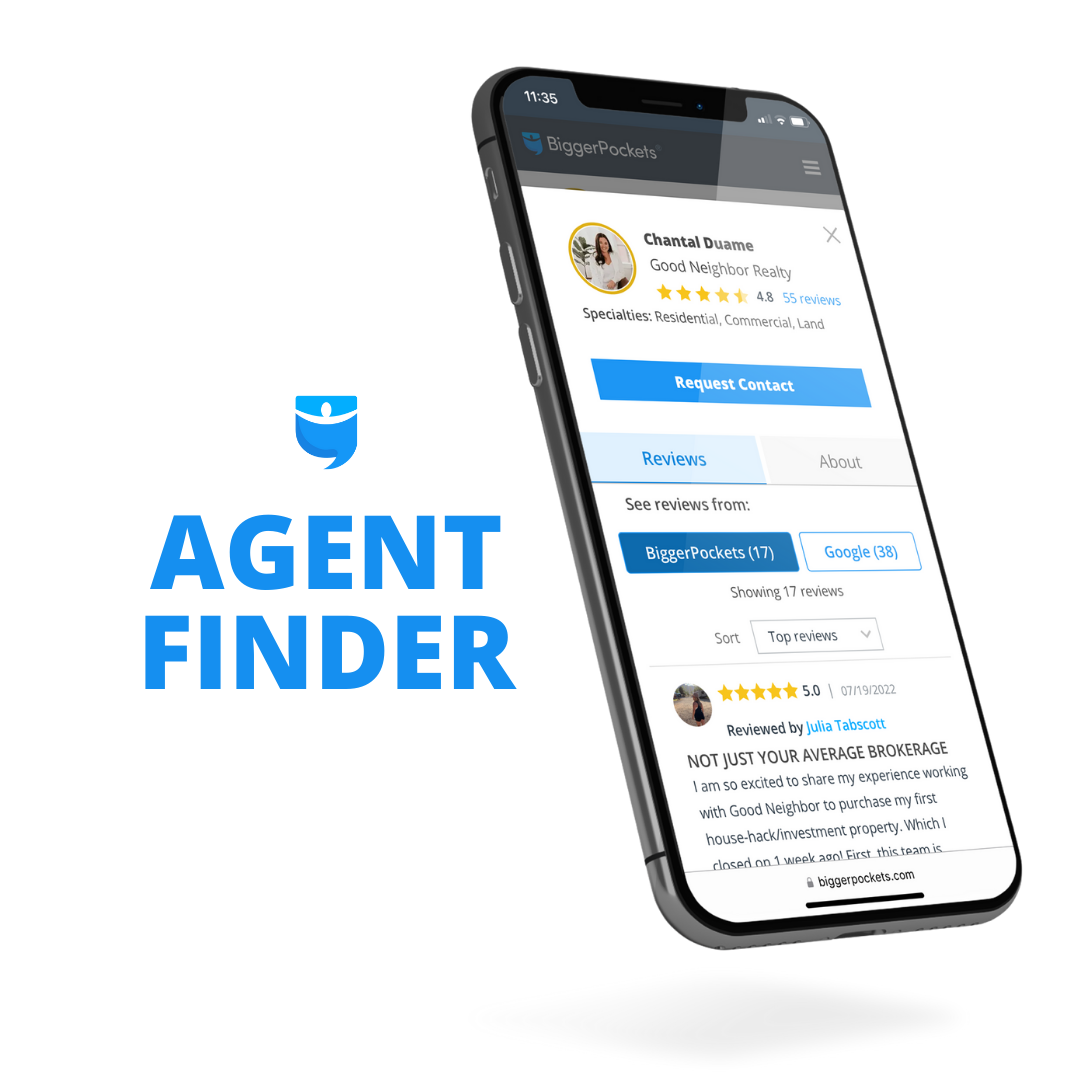
- How do you find investor-friendly real estate agents? Start with the BiggerPockets Agent Finder, which matches you with investor-friendly agents in your market. You can also ask in the BiggerPockets forums, join a local real estate investing group, talk to property management companies, and ask investors you know for referrals. Then interview two or three agents and ask each one the same questions.
Join the community
Ready to succeed in real estate investing? Create a free BiggerPockets account to learn about investment strategies; ask questions and get answers from our community of +2 million members; connect with investor-friendly agents; and so much more.
