1st R/E investment question - Remote Deal or Local Only?

1st R/E investment question - Remote Deal or Local Only?

Investor · Dallas, TX · Member since 2021 · 1 post · 0 votes

Hi guys, I'm brand new here (both to R/E investing and w/ BP) and I have a quick question as I'm reviewing deals from all sources.  While my plan and financials does include property management for any location - for my first home, should I ONLY look locally in Dallas Tx area for my first deal, or can I look nationwide for the best deal?  My plan is to focus on cash flow since the plan is to replace my W2 and Texas r/e taxes are high so tough on the cash flow but amazing on equity.   Any advice?  Anyone start with their first deal in another state?  
Thank you guys!

0Reply
22 views

Most Popular Reply

Eric FernwoodBusiness Member
Realtor · Las Vegas, NV · Member since 2014 · 994 posts · 1k+ votes
4y

Hello Diogenes,

Excellent questions. I split my answer into two parts:

  • Where is the best place to invest?
  • What is the best approach to maximize future cash flow while minimizing income taxes.

Where Is the Best Place to Invest?

Location is the most important investment decision you will make, not the property. I recommend selecting a location that best meets the following criteria.

  • Appreciation - The number one criteria in location selection is appreciation. Inflation is constantly eroding buying power; each year, it costs more to buy the same set of goods. If you buy in a location where prices and rents are rising faster than the inflation rate, you will be able to buy the same set of goods because you will have the additional dollars you need from increased rents. When you are evaluating appreciation, ignore the COVID period. During the last year+, locations with low appreciation rates suddenly started performing. This is a blip and not a long-term change. If you buy in a location where prices and rents are increasing below the inflation rate, the amount of goods you can buy will decline over time.
  • Population Size - Greater than 1 million. Small towns may rely too much on a single business or market segment.
  • Population Growth - If people are moving into a location, many things have to be right. I would not invest in any location where the population is stagnant or declining.
  • Crime - People and companies will not move to locations perceived as dangerous. One source of cities to avoid is Neighborhood Scout's 100 most dangerous cities. Avoid any city on this list.
  • Disaster Risk - Some parts of the country are more prone to natural disasters. The best indicator for natural disaster probability is homeowners insurance cost. I would avoid states with high insurance rates. Note, even if insurance pays for all the damage your property suffers, you still lose. When a significant disaster occurs, people and jobs move to locations where they can make money today. The location may take years to recover, or it may never recover. ValuePenguin is a good source for the relative cost of insurance by state.
  • Operational Costs - Costs like property taxes, insurance cost, state income taxes, regulatory costs (ex: time and cost to evict), inspections, rent control, etc., have a tremendous impact on your return. Select a location with relatively low operational costs. Operational costs are a direct hit on profitability.

The Impact of Operational Costs on Return

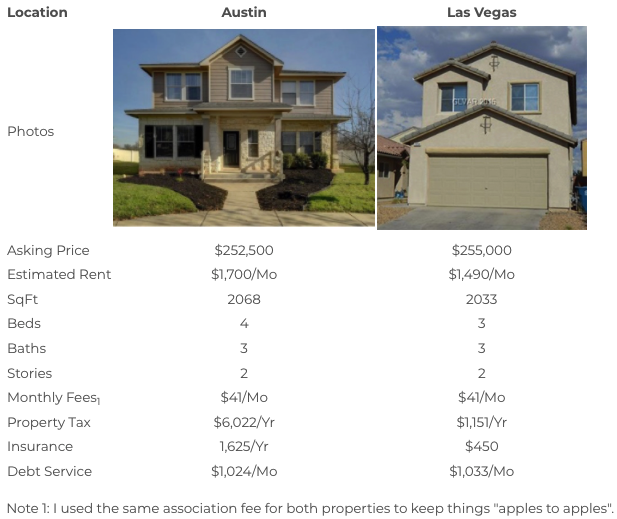
To demonstrate the impact property taxes and insurance can have on return, I put together the following example. This comes from an article I wrote a few years ago comparing two similar properties, one in Austin and one in Las Vegas. The formulas used in the example are:

  • ROI = (Income - DebtService - ManagementFee - Insurance - RETax - PeriodicFees) x (1 - StateIncomeTax) / ( DownPayment + ClosingCosts)
  • Cash Flow = (Income - DebtService - ManagementFee - Insurance - RETax - PeriodicFees) x (1 - StateIncomeTax)

Note:

  • Neither Texas nor Nevada have a state income tax, so I left the state income tax out of the calculations.
  • When comparing properties, you are unlikely to know about property-specific costs, like maintenance, vacancy, or renovation costs. The best approach is to leave these costs out of the comparison calculations. Once you zero in on a specific property, you want to include these costs.

Below are the assumptions for both properties.

  • 20% down
  • 4.5% rate
  • 30-year term
  • 3% closing cost
  • 8% property management
  • 0% state income tax. Neither Texas or Nevada have a personal state income tax.

Calculations for the Austin property:

  • ROI = (1700 x 12 - 1024 x 12 - 1700 x 12 x 8% - 1625 - 6022 - 41 x 12) / (3% x 252500 + 20% x 252500) = -2.9%
  • Cash Flow = (1700 x 12 - 1024 x 12 - 1700 x 12 x 8% - 1625 - 6022 - 41 x 12) = -1659/Yr. or -139/Mo.

Calculations for the Las Vegas property:

  • ROI = (1490 x 12 - 1033 x 12 - 1490 x 12 x 8% - 450 - 1151- 41 x 12) / (3% x 255000 + 20% x 255000) = 3.3%
  • Cash Flow = (1490 x 12 - 1033 x 12 - 1490 x 12 x 8% - 450 - 1511- 41 x 12) = 1,600/Yr. or $133/Mo.

As you can see, the higher cost of insurance and property taxes in Austin had a huge impact on profitability. You have to consider all the costs when you are evaluating properties.

Investment Team

Wherever you decide to invest, you will need a good investment team. If you needed surgery, you would not start medical school. You would go to a surgeon. The same is true with real estate investing. The diagram below shows the skills and resources required for successful real estate investing.
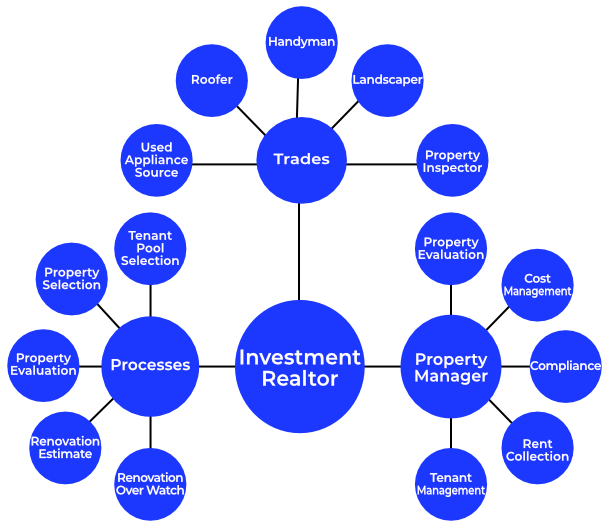
Working with an investment team costs you nothing and will save you time, money, and risk. If you would like qualification questions for evaluating a potential investment Realtor, contact me.

Also, if you have a good investment team in your chosen location, it does not matter whether you invest locally or remotely.

Appreciation or Cash Flow?

Whether it is better to focus on cash flow or appreciation depends on the location. Look at the pre-COVID appreciation rate. During COVID, locations that have had flat or declining property prices started increasing. So, ignore this period of insanity. Over the next few years, appreciation rates will likely fall back to what it was before COVID.

If a location has a high appreciating rate, focus on high appreciating properties. Rents will increase proportionately to prices, so cash flow will increase over time as well. When you have accumulated enough equity, refinance the property and buy another property. Refi loans are not taxed, so you can use all the accumulated equity. This is the fastest and most reliable way to acquire a long-term reliable income stream.

If the appreciation rate was below the inflation rate, buy properties for high cash flow. Inflation is constantly eroding buying power, so your initial cash flow will be the highest you will ever receive (adjusted for inflation) from that property. If the cash flow is high enough and you plan to hold the property for a short period, this approach also works. Just factor into your calculations that all rental income is taxed at regular income rates, and you will have additional costs when you sell the property.

I frequently hear, "You can only count on initial cash flow." To a degree, this is true. However, suppose you buy in a location that appreciates below the inflation rate. Almost nothing can reverse the downward trend; you can count on the market to continue declining along with your inflation-adjusted income.

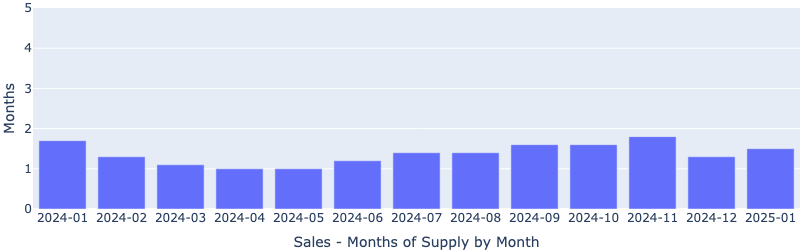
Can you count on a rapidly appreciating market to continue? It depends on what is driving the appreciation. If appreciation is driven by an increasing population combined and an increasing number of good jobs, it will likely continue. The best indicator of a solid market is if inventory levels are symmetrical to price increases. Below are two charts: one showing appreciation and the other months of inventory for the property profile we target in Las Vegas.

Sales - Median $/SF by Month img Sales - Months of Supply img
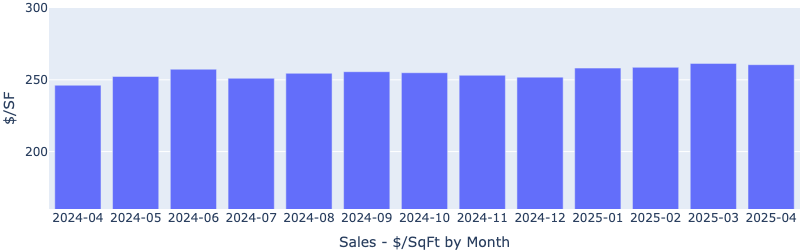
As long as you see such symmetry between prices and inventory, it is real, not a bubble. During the 2008 crash, prices were rising rapidly, and so were inventory levels. This demonstrated that prices increases were driven by speculation, not real demand. It was a bubble.

Diogenes, I hope this helped.

...Eric

FERNWOOD Team, KW VIP Realty520 Reviews
See this reply in the discussion

6 Replies

Jump to latestLatest
  • Investor · Corpus Christi, TX · Member since 2012 · 2k+ posts · 1k+ votes
    5y

    Stay local until you have the experience, knowledge and relationships to expand to other areas. Paying a PM for a single property in another state or city (more than one hour away from you personal residence) won't make financial sense and will eat up cash flow, and many PM's have to be watched over carefully to ensure they're doing their jobs. 

  • Realtor · Dallas, TX · Member since 2016 · 29 posts · 24 votes
    5y

    The vast majority of people start local to gain experience and limit the downside risk.  On top of that, it's easier to know areas or visit potential properties in your own backyard.  I'm biased towards DFW, but starting local doesn't mean you always have to invest locally, and there's plenty of opportunities to start in DFW especially in single family.  Hope this helps!

  • Real Estate Agent · Dallas, TX · Member since 2018 · 63 posts · 43 votes
    4y

    If you buy locally are you going to house-hack it? If so that advantage makes it worth staying local. If you can self-manage locally and are willing I'd also stay local for that reason, saving 8-10% on a PM and getting firsthand knowledge of how to properly manage a property will help you a ton once you do upgrade to using a PM.

    As others have said, there are other risks associated with buying out of state, if you have the capital to manage and weather any storms you may run into from afar its not out of the question as to whether it is worth it but as a new investor you truly do not know what you do not know so I wouldn't recommend investing long-distance. That being said its not impossible for it to not work out and for many investors living in places like San Francisco or LA it only really makes sense for them to invest long-distance. 

  • Dallas, TX · Member since 2021 · 13 posts · 11 votes
    4y

    Stay local. DFW is a fantastic area with lots of great appreciation so figure it out in your area first and then expand. You are correct on the cash flow issue here, but that’s not necessarily a bad thing. Just don’t plan on the cash flow retiring you. It’s the appreciation you get from the home that will eventually retire you. It’s a get rich slow play and there’s nothing wrong with that! 

  • Lee RipmaPro Member
    Rental Property Investor · Prairie Village, KS · Member since 2015 · 2k+ posts · 2k+ votes
    4y

    @Diogenes M. I started out of state. I think there are pros to learning about RE on a place you live in but you can learn about it without living in RE. Whatever it takes to get started! 

  • Eric FernwoodBusiness Member
    Realtor · Las Vegas, NV · Member since 2014 · 994 posts · 1k+ votes
    4y

    Hello Diogenes,

    Excellent questions. I split my answer into two parts:

    • Where is the best place to invest?
    • What is the best approach to maximize future cash flow while minimizing income taxes.

    Where Is the Best Place to Invest?

    Location is the most important investment decision you will make, not the property. I recommend selecting a location that best meets the following criteria.

    • Appreciation - The number one criteria in location selection is appreciation. Inflation is constantly eroding buying power; each year, it costs more to buy the same set of goods. If you buy in a location where prices and rents are rising faster than the inflation rate, you will be able to buy the same set of goods because you will have the additional dollars you need from increased rents. When you are evaluating appreciation, ignore the COVID period. During the last year+, locations with low appreciation rates suddenly started performing. This is a blip and not a long-term change. If you buy in a location where prices and rents are increasing below the inflation rate, the amount of goods you can buy will decline over time.
    • Population Size - Greater than 1 million. Small towns may rely too much on a single business or market segment.
    • Population Growth - If people are moving into a location, many things have to be right. I would not invest in any location where the population is stagnant or declining.
    • Crime - People and companies will not move to locations perceived as dangerous. One source of cities to avoid is Neighborhood Scout's 100 most dangerous cities. Avoid any city on this list.
    • Disaster Risk - Some parts of the country are more prone to natural disasters. The best indicator for natural disaster probability is homeowners insurance cost. I would avoid states with high insurance rates. Note, even if insurance pays for all the damage your property suffers, you still lose. When a significant disaster occurs, people and jobs move to locations where they can make money today. The location may take years to recover, or it may never recover. ValuePenguin is a good source for the relative cost of insurance by state.
    • Operational Costs - Costs like property taxes, insurance cost, state income taxes, regulatory costs (ex: time and cost to evict), inspections, rent control, etc., have a tremendous impact on your return. Select a location with relatively low operational costs. Operational costs are a direct hit on profitability.

    The Impact of Operational Costs on Return

    To demonstrate the impact property taxes and insurance can have on return, I put together the following example. This comes from an article I wrote a few years ago comparing two similar properties, one in Austin and one in Las Vegas. The formulas used in the example are:

    • ROI = (Income - DebtService - ManagementFee - Insurance - RETax - PeriodicFees) x (1 - StateIncomeTax) / ( DownPayment + ClosingCosts)
    • Cash Flow = (Income - DebtService - ManagementFee - Insurance - RETax - PeriodicFees) x (1 - StateIncomeTax)

    Note:

    • Neither Texas nor Nevada have a state income tax, so I left the state income tax out of the calculations.
    • When comparing properties, you are unlikely to know about property-specific costs, like maintenance, vacancy, or renovation costs. The best approach is to leave these costs out of the comparison calculations. Once you zero in on a specific property, you want to include these costs.

    Below are the assumptions for both properties.

    • 20% down
    • 4.5% rate
    • 30-year term
    • 3% closing cost
    • 8% property management
    • 0% state income tax. Neither Texas or Nevada have a personal state income tax.

    Calculations for the Austin property:

    • ROI = (1700 x 12 - 1024 x 12 - 1700 x 12 x 8% - 1625 - 6022 - 41 x 12) / (3% x 252500 + 20% x 252500) = -2.9%
    • Cash Flow = (1700 x 12 - 1024 x 12 - 1700 x 12 x 8% - 1625 - 6022 - 41 x 12) = -1659/Yr. or -139/Mo.

    Calculations for the Las Vegas property:

    • ROI = (1490 x 12 - 1033 x 12 - 1490 x 12 x 8% - 450 - 1151- 41 x 12) / (3% x 255000 + 20% x 255000) = 3.3%
    • Cash Flow = (1490 x 12 - 1033 x 12 - 1490 x 12 x 8% - 450 - 1511- 41 x 12) = 1,600/Yr. or $133/Mo.

    As you can see, the higher cost of insurance and property taxes in Austin had a huge impact on profitability. You have to consider all the costs when you are evaluating properties.

    Investment Team

    Wherever you decide to invest, you will need a good investment team. If you needed surgery, you would not start medical school. You would go to a surgeon. The same is true with real estate investing. The diagram below shows the skills and resources required for successful real estate investing.

    Working with an investment team costs you nothing and will save you time, money, and risk. If you would like qualification questions for evaluating a potential investment Realtor, contact me.

    Also, if you have a good investment team in your chosen location, it does not matter whether you invest locally or remotely.

    Appreciation or Cash Flow?

    Whether it is better to focus on cash flow or appreciation depends on the location. Look at the pre-COVID appreciation rate. During COVID, locations that have had flat or declining property prices started increasing. So, ignore this period of insanity. Over the next few years, appreciation rates will likely fall back to what it was before COVID.

    If a location has a high appreciating rate, focus on high appreciating properties. Rents will increase proportionately to prices, so cash flow will increase over time as well. When you have accumulated enough equity, refinance the property and buy another property. Refi loans are not taxed, so you can use all the accumulated equity. This is the fastest and most reliable way to acquire a long-term reliable income stream.

    If the appreciation rate was below the inflation rate, buy properties for high cash flow. Inflation is constantly eroding buying power, so your initial cash flow will be the highest you will ever receive (adjusted for inflation) from that property. If the cash flow is high enough and you plan to hold the property for a short period, this approach also works. Just factor into your calculations that all rental income is taxed at regular income rates, and you will have additional costs when you sell the property.

    I frequently hear, "You can only count on initial cash flow." To a degree, this is true. However, suppose you buy in a location that appreciates below the inflation rate. Almost nothing can reverse the downward trend; you can count on the market to continue declining along with your inflation-adjusted income.

    Can you count on a rapidly appreciating market to continue? It depends on what is driving the appreciation. If appreciation is driven by an increasing population combined and an increasing number of good jobs, it will likely continue. The best indicator of a solid market is if inventory levels are symmetrical to price increases. Below are two charts: one showing appreciation and the other months of inventory for the property profile we target in Las Vegas.

    Sales - Median $/SF by Month img Sales - Months of Supply img

    As long as you see such symmetry between prices and inventory, it is real, not a bubble. During the 2008 crash, prices were rising rapidly, and so were inventory levels. This demonstrated that prices increases were driven by speculation, not real demand. It was a bubble.

    Diogenes, I hope this helped.

    ...Eric

    FERNWOOD Team, KW VIP Realty520 Reviews
Join the conversationCreate a free account to reply, vote on answers and follow this thread.