Investor · Lansing, MI · Member since 2021 · 55 posts · 22 votes
Hello everyone,
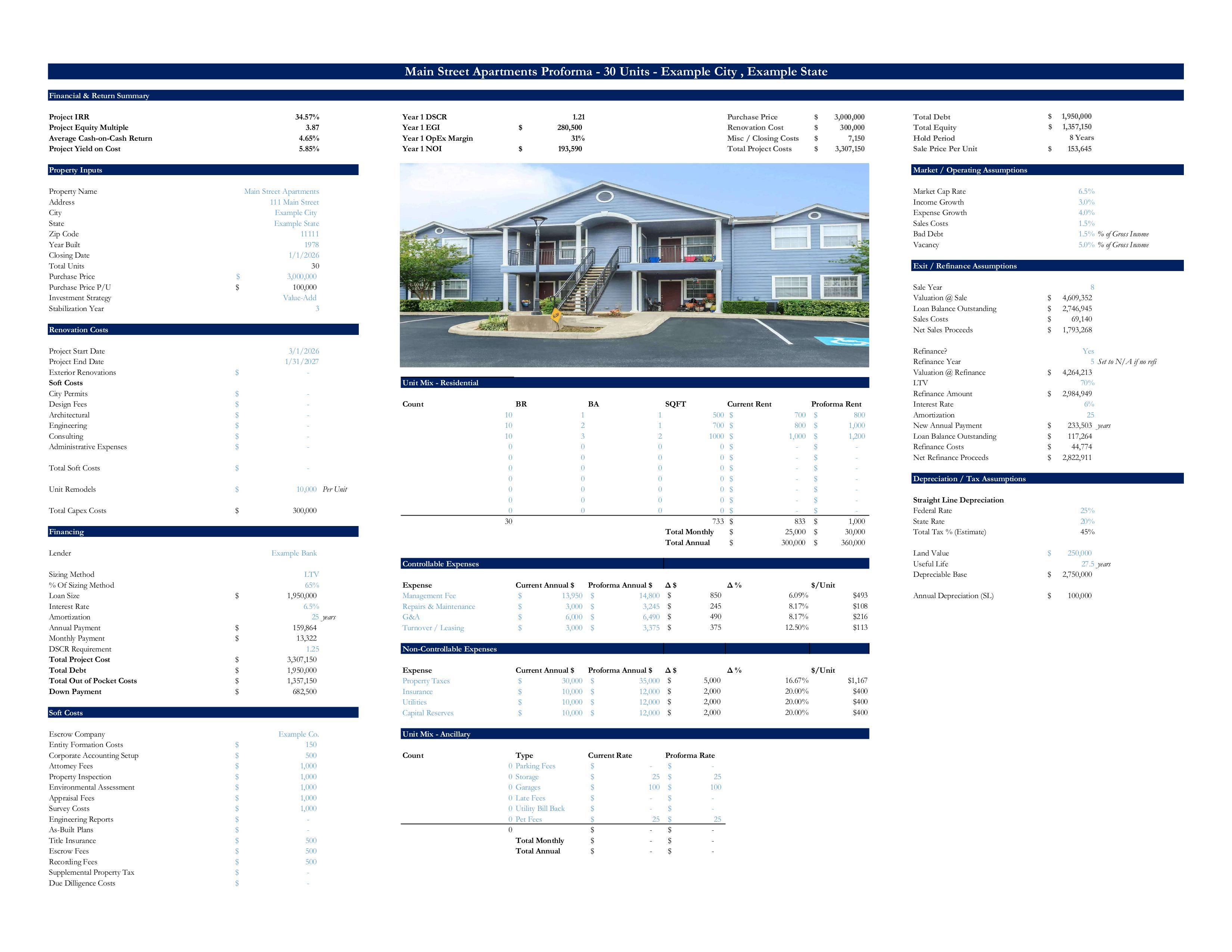
After sharing a small multifamily deal analyzer here recently and receiving some helpful feedback, I’ve been working on a more advanced underwriting model for larger value-add multifamily projects and wanted to share a quick preview as I continue refining it.
The goal has been to maintain a clean, user-friendly structure while allowing for more detailed, real-world analysis. This version incorporates:
- Value-add renovation underwriting
- Dynamic rent and expense assumptions
- Refinance logic and DSCR testing
- A full 10-year proforma with key return metrics
- Deal dashboard with key return metrics and indicators of success
I’m attaching a screenshot of the inputs and dashboard page so you can get a sense of how it’s structured.
For those actively underwriting multifamily deals, I’d be interested to hear:
What do you wish most models handled better in practice?
Happy to share more context with anyone who finds this useful.
Rental Property Investor · SE Michigan · Member since 2014 · 4k+ posts · 6k+ votes
10mo
In large apartments, very few people can buy them on their own. Most are acquired as syndications or partnerships. The financial models those groups use are customized to the philosophies of the group because having a one-size-fits-all model creates too many options.
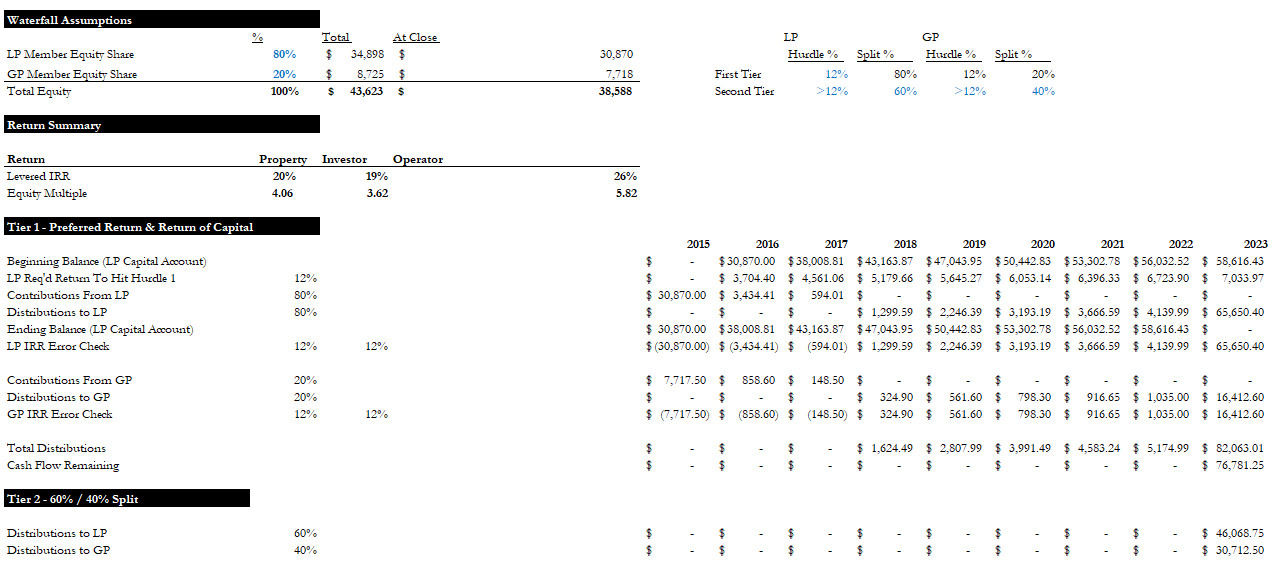
Some groups have lots of fees, waterfall returns, and even different waterfall returns depending on how much a person invests. Those spreadsheets are fairly complicated on their own.
We do something very different. We've always taken a flat percentage, and the only other fee was for managment. That spreadsheet is much simpler than the above.
If you have a straight partnership, the proceeds might be a simple split.
Creating a spreadsheet that could effectively handle both types of structures adds a further layer of complexity.
Investor · Lansing, MI · Member since 2021 · 55 posts · 22 votes
10mo
@Greg Scott Thanks for the advice! I've been building cash flow waterfalls outside of this model for practice... now to find a way to incorporate them.
Rental Property Investor · Philadelphia, PA · Member since 2021 · 774 posts · 500 votes
8mo
@Gabe Goudreau - Does you model incorporate renovation timelines and when units come active/on board for lease after renovations are complete? Most models I've seen treat each year with the same vacancy rate, but if you're undergoing a renovation/value add project there are units becoming active/available every month.
Investor · Lansing, MI · Member since 2021 · 55 posts · 22 votes
8mo
@Greg Kasmer It has current rent vs. pro forma rent inputs tied to a defined stabilization year, all on the inputs tab. There’s also a market rent growth assumption, so in-place rents & post-renovation rents grow annually even prior to stabilization.
For smaller properties, I’ve built a version that models rent at the unit level, where each unit’s annual rent is calculated individually and vacancy is explicitly factored in. For larger properties, I intentionally keep it more high-level and annualized for usability and speed, with the tradeoff being less granular lease-up timing. I’m exploring ways to bridge that gap cleanly at scale.