2022 rate increases: What will happen to housing prices?

2022 rate increases: What will happen to housing prices?

Investor · Chicago · Member since 2020 · 66 posts · 55 votes

The fed just announced 3 rate hikes in 2022 vs the original plan to hike only once at the tail end of 2022. What are your thoughts on how that will affect housing prices in 2022? Very low appreciation?

I have a off market triplex under contract with a long close (5/2/22) due to my recent FHA purchase. Im wondering if rates increase in early 2022, would I have been able to acquire this property for less if I waited a little longer? Could I have squeezed the seller more due to the market cooling off? A lot of hypotheticals but I'm curious to see what people think about these rate hikes the Fed just announced.

0Reply
171 views

Most Popular Reply

Investor · Las Vegas, NV · Member since 2013 · 8k+ posts · 10k+ votes
4y

@Account Closed

The problem with building in small towns, at least in small towns in MN. (I’ll be in Canby, Mn population 1600 for the holidays.) is existing homes (all 4 of them) are selling for between $55-$62/sf. What’s the cost to build new? Double? Triple that? I don’t know how you convince a bank to borrow you money unless you pay cash. And you better bring your own job because as desperate as they are for workers, it’s the $10/hr employee openings they have. 

But I will agree with you on this part of it. I HATE hearing about how we have to make affordable housing in NYC or San Francisco. If I can’t afford to live there, why should people who make 1/4th of what I make be able to live there? Yes, those people should be told you make plenty of money to live in Vegas, or Bakersfield, or most of Florida and Texas. You don’t make enough to live in the most expensive part of America. And just because you were born here or moved here doesn’t mean we pay your way. 

It’s like asking the mc Donald’s employee to pay more taxes so we can forgive the student loans of doctors, lawyers or other high paid individuals. 

See this reply in the discussion

27 Replies

Jump to latestLatest
  • Investor · Las Vegas, NV · Member since 2013 · 8k+ posts · 10k+ votes
    4y

    I assume you’re paying way over market or the seller wasn’t thinking when they let you have a 6 month close. They are probably going to lose $20-$30k in appreciation? And if prices do drop you walk away because it won’t appraise  so lose lose for the seller  

    If rates go up the only person who pays less for a house is the one playing cash. I think buyers would be lucky if prices stalled if rates went up 1/w a percent but they probably would only slow. 

    A $300k house at 3.5% is cheaper than a $285k (a 5% drop) at 4% interest. Most shoppers buy based on the payment they can afford. Unless inflation is magically solved tomorrow houses will have increased more than 5% by may 2022. 

    So if I am wrong and they do drop 5%, you’d be paying today’s prices with a higher interest rate. 

  • Lender · Boca Raton, FL · Member since 2017 · 35 posts · 15 votes
    4y

    In my opinion, the serious lack of (quality) inventory will keep prices high for a bit. Where we saw 15-20% growth in some markets we may see slightly slowed appreciation as inventory increases and affordability comes down. I'm thinking 8-10% Year over Year by 2023-24 then maybe 6-8% steadily afterwards. 

    If you're in it for growth/appreciation your plans will change slightly but if its a cashflow deal then short term volatility in prices shouldn't make or break you.

    Housing market is still super strong. Its hard for me to see drastic drop in prices any time soon. Best of luck

  • Member since 2021 · 217 posts · 190 votes
    4y

    Crystal ball forecasting question which I'm sure someone will be along to answer shortly. Won't be me.

    However-
    median family income 2000: 50,732      median home price 2000: 172,900    3.41x income
    median family income 2006: 58,407      median home price 2000: 245,400    4.2x   income
    median family income 2014: 66,632      median home price 2000: 298,900    4.49x income
    median family income 2021: 84,008      median home price 2000: 404,700    4.82x income

    Appreciation from here you ask? when peoples homes cost 5,6,7,or 8x their annual income? Maybe they'll keep getting loans at 10x. Or maybe not.

    One thing is for sure, years ago there was a hell of a lot more runway. Probably be more reasonable with muted expectations at this point.

  • Investor · Las Vegas, NV · Member since 2013 · 8k+ posts · 10k+ votes
    4y

    You forgot something in your math David. 1/2 the people rent. So if you remove the bottom half that can’t afford to buy you still have the median income buyer able to afford the 1/2 the houses below median that are all available. 

    Let’s pretend that isn’t true and suddenly 20% of the buyers can’t afford to buy. They can either be homeless, or rent. If they rent, what does that do to median rents if you add 40% more renters? (You’re adding 20% to 50%, not 100%.) rents “have to” skyrocket. They won’t just increase 20% because the rental units just aren’t available, you can’t make more like when there’s An increase demand for a consumer good. And you can’t swap it out with a replacement item, like when a certain brand raises it prices. 

    Then you either make it possible for landlords to pay more, or you make buying even at higher prices cheaper than renting. You’re combining inflation that 1/2 the people in America have never seen, with a supply that has been under built for 20 years, with local governments doing everything in their power to siphon out every last dollar they can (permits, fees, studies, taxes, etc etc…) from every new development they can’t stop with rules/regulations and restrictions. 

    I just heard the average age of a SFR in the US is now 40 years. What happens when those houses can't be replaced for market value? Those who live in areas where the land is worth more than the home and it's common to see a million dollar home torn down. Don't understand there are almost entire states (outside of their 2 or 3 "big cities") where you could not build a replacement home for a profit.

  • Lender · Seattle, WA · Member since 2014 · 2k+ posts · 899 votes
    4y

    I don't think multifamily values in  Seattle area will suffer  ...but I  do see mortgage rates  being  .5% +  higher  by July  2022

  • John MorganPro Member
    Rental Property Investor · Grand Prairie, TX · Member since 2018 · 2k+ posts · 2k+ votes
    4y

    We have a shortage of 4 million homes nationwide. Builders in my area (Dallas) can't keep up. And they're only building more expensive homes over 400k. So with a severe shortage of SFH under 250k already, I see home prices to continue to go up 5-10% here. It's all about supply and demand. Half of California seems to be moving here due to Texas being a business friendly state with a fairly low cost of living compared to many states. Rent will increase another 8-12% as well. Maybe more if current renter aren't able to afford to buy a home of their own. Not enough affordable housing here under $1800/month. So rents will keep going north. Great for investors. Terrible for renters who can't afford or qualify to buy.

    Areas that aren’t growing may cool off a bit or just plateau with their appreciation. Especially with interest rates climbing half a percent next year.

  • Realtor · Dallas - Fort Worth Metroplex, TX · Member since 2016 · 1k+ posts · 925 votes
    4y

    @Michael Johnson personally I think it depends on where the property is. For some markets like DFW we still have a ways to go before we see prices settling. There is too much cash in the market as well.

  • Guy with Great Hair · Austin, TX · Member since 2013 · 2k+ posts · 4k+ votes
    4y

    I personally think the low supply narrative is a bit overstated, and I think the runway for further appreciation is low. 

    However, as Bill stated, people buy on payment and rate hikes will increase payments but slowly and in small amounts. I find it unlikely that this will reduce home prices but it could very well reduce volume of transactions, which could lead to further increased prices. 

  • Bruce WoodruffPro Member
    Contractor/Investor/Consultant · San Diego / Phoenix · Member since 2021 · 12k+ posts · 15k+ votes
    4y
    Originally posted by @Michael Johnson:

    The fed just announced 3 rate hikes in 2022 

    The news story I saw said at least 3 hikes in 2022. They are leaving room to move. I think interest rates are 2 points higher by this time next year......

  • Investor · Scottsdale Austin Tuktoyaktuk · Member since 2021 · 4k+ posts · 4k+ votes
    4y
    Originally posted by @Lucia Rushton:

    @Michael Johnson personally I think it depends on where the property is. For some markets like DFW we still have a ways to go before we see prices settling. There is too much cash in the market as well.

    You are exactly right. It depends on the market. May I point out that it is over crowded in the USA  and that will cause prices to go up, . . . NOT! That is only a perspective of city dwellers.

    Montana, Wyoming, Idaho, New Mexico, Utah, N. Dakota, S. Dakota, Colorado, Kansas, Oklahoma, Nevada, Arizona, MInnesota, Iowa are mostly . . . Empty. Plenty, Plenty, Plenty of affordable land to build.

    If people want affordable housing they will migrate to smaller towns and create new towns.

    I'd be more concerned about the dollar losing ground against all products. Your income to expense ratio, more so than interest rates, will determine your ability to borrow in the future. Most people's relative income to the market will be dropping.

  • Investor · Las Vegas, NV · Member since 2013 · 8k+ posts · 10k+ votes
    4y

    @Account Closed

    The problem with building in small towns, at least in small towns in MN. (I’ll be in Canby, Mn population 1600 for the holidays.) is existing homes (all 4 of them) are selling for between $55-$62/sf. What’s the cost to build new? Double? Triple that? I don’t know how you convince a bank to borrow you money unless you pay cash. And you better bring your own job because as desperate as they are for workers, it’s the $10/hr employee openings they have. 

    But I will agree with you on this part of it. I HATE hearing about how we have to make affordable housing in NYC or San Francisco. If I can’t afford to live there, why should people who make 1/4th of what I make be able to live there? Yes, those people should be told you make plenty of money to live in Vegas, or Bakersfield, or most of Florida and Texas. You don’t make enough to live in the most expensive part of America. And just because you were born here or moved here doesn’t mean we pay your way. 

    It’s like asking the mc Donald’s employee to pay more taxes so we can forgive the student loans of doctors, lawyers or other high paid individuals. 

  • Real Estate Agent · Jacksonville, FL · Member since 2015 · 1k+ posts · 1k+ votes
    4y

    My prediction is that 2022 is another solid year for Real-Estate investors.  Much beyond that, my crystal ball is fuzzy.

    How the rest of the economy does in 2022 and beyond, is anyones guess.  Prices and rents continue to rise.  The pace of growth can not continue, 20% in a year is unsustainable.  Rates will go up and the market has begun pricing it in.  Given the already sky high prices, rates will push a lot homeowners out of the market.  It will shake out marginal deals as well.  Tightening up the money supply will slow things as well.  In a measured and controlled way, this could bring back some stability in a heated market.   

    As fed chairman often say, "we need to take away the punch bowl when the party is just getting started."

    Supply chain issues are slowing everything down.  I expect that product availability should return to normal in 2022.  This should alleviate a lot of the inflation we are seeing.  

  • Rental Property Investor · Boston, MA · Member since 2019 · 2k+ posts · 1k+ votes
    4y

    @Michael Johnson to the moon! 🚀

  • Coppell, TX · Member since 2015 · 485 posts · 310 votes
    4y

    I'm sure Mortgage folk can chime in, but the fed rate doesn't directly drive mortgage rates, it's the bond yields I thought.

  • Russell BrazilBusiness Member
    Moderator
    Real Estate Agent · Washington, D.C. · Member since 2012 · 17k+ posts · 30k+ votes
    4y

    Rates are just about a  full 1% higher than they were a year ago.  Would you say prices went up or down over the last year with those rising interest rates?

  • Real Estate Broker · Minneapolis, MN · Member since 2011 · 5k+ posts · 6k+ votes
    4y
    Originally posted by @Account Closed:
    Originally posted by @Lucia Rushton:

    @Michael Johnson personally I think it depends on where the property is. For some markets like DFW we still have a ways to go before we see prices settling. There is too much cash in the market as well.

    You are exactly right. It depends on the market. May I point out that it is over crowded in the USA  and that will cause prices to go up, . . . NOT! That is only a perspective of city dwellers.

    Montana, Wyoming, Idaho, New Mexico, Utah, N. Dakota, S. Dakota, Colorado, Kansas, Oklahoma, Nevada, Arizona, MInnesota, Iowa are mostly . . . Empty. Plenty, Plenty, Plenty of affordable land to build.

    If people want affordable housing they will migrate to smaller towns and create new towns.

    I'd be more concerned about the dollar losing ground against all products. Your income to expense ratio, more so than interest rates, will determine your ability to borrow in the future. Most people's relative income to the market will be dropping.

    HOLD up there buck-a-rooh, Minnesota is "mostly empty", lol. Aaahhhh, I suggest maybe exiting that cave for a moment and looking around a bit. A little FYI on Minnesota being "mostly empty", we have development at MASSIVE scale going, an EPIC level housing shortage, and the economist, quants and builders looking that we "might" achieve parity (supply meeting demand) in best case scenario 7 years, and that was stated as a best case scenario, with no more impactors, and continued GROWTH to building out-put on pace, and relief of supply constraints. Real numbers they are looking at 10 years. 

    If you talking about stacking people like cord-wood sure, plenty of space, but in a reality terms, not so much. 

    As for "mostly empty" Minnesota, I am guessing your not aware that the Twin Cities is projected to soon overtake Chicago. I am not sure how that = "mostly empty". 

  • Real Estate Broker · Minneapolis, MN · Member since 2011 · 5k+ posts · 6k+ votes
    4y

    First item of importance on this conversation, it crosses lines of 2 economic factors, with the added fun of Gov. actions as a 3rd force factor, and this is why 99% of people get it wrong as they get tunnel vision on just 1 segment and disregard the relation between all of them as a whole. 

    First item, INTEREST RATES, let's start there as this drives most everything else. The common novice panic is "OMG, interest rates going up, so, so, so, what if they SHOOT up, what if we see 8%, 12%, 14%!!!!, AAAAHHHHHH!!!". Firstly know those of us old enough to remember simply refer to that as "the 80's", and the world didn't grind to a halt. Secondly, and most importantly, that WON'T happen, it's a mathematical improbability to the extent of impossibility. 

    The reason why interest rates will NOT tick up all that high is simple, the National Debt, and servicing there of. When interest rates tick up they do not exclusively apply to just U.S. consumers, they hit across the board, most of important of which is the #1 borrower in the world good Ole Uncle Sam. Currently the U.S. barely can service our debt load as it is, with rates as low as they are. Rates at 8%, it's done, over, the U.S. can not service our national debt. If/when the U.S. can not service it's debt, the first second, will be a WORLD-wide economic collapse unlike human species has ever seen. The U.S. dollar will collapse in a blink. We are talking apocalyptic level collapse. 

    Now remember, the U.S. dollar is the prevailing world currency, collapse the dollar and you collapse all holding it. Your talking collapsing the vast majority of corporations in the world, collapsing country after country. 

    So simply put, do you think all these corporations and world leaders are ignorant of this fact of math? Secondly, do you think they would allow such? No, of course not, hence why they are masters of can-kicking. 

    Whats the alternative? Well, we are experiencing it now, they are trying to inflate our way out of inflation. You giggle, but it's happening, now, today. This is why we are told inflation does not = inflation, it's like being told don't worry fire is not hot, water is not wet. Reason being, they very literally have no other choice. 

    Yes, chickens will one day come home to roost but rest assured, the powers that be will go to the greatest extent to kick that can in perpetuity, as none have a will to accept the consequences. 

  • Investor · Scottsdale Austin Tuktoyaktuk · Member since 2021 · 4k+ posts · 4k+ votes
    4y
    Originally posted by @James Hamling:
    Originally posted by @Account Closed:
    Originally posted by @Lucia Rushton:

    @Michael Johnson personally I think it depends on where the property is. For some markets like DFW we still have a ways to go before we see prices settling. There is too much cash in the market as well.

    You are exactly right. It depends on the market. May I point out that it is over crowded in the USA  and that will cause prices to go up, . . . NOT! That is only a perspective of city dwellers.

    Montana, Wyoming, Idaho, New Mexico, Utah, N. Dakota, S. Dakota, Colorado, Kansas, Oklahoma, Nevada, Arizona, MInnesota, Iowa are mostly . . . Empty. Plenty, Plenty, Plenty of affordable land to build.

    If people want affordable housing they will migrate to smaller towns and create new towns.

    I'd be more concerned about the dollar losing ground against all products. Your income to expense ratio, more so than interest rates, will determine your ability to borrow in the future. Most people's relative income to the market will be dropping.

    HOLD up there buck-a-rooh, Minnesota is "mostly empty", lol. Aaahhhh, I suggest maybe exiting that cave for a moment and looking around a bit. A little FYI on Minnesota being "mostly empty", we have development at MASSIVE scale going, an EPIC level housing shortage, and the economist, quants and builders looking that we "might" achieve parity (supply meeting demand) in best case scenario 7 years, and that was stated as a best case scenario, with no more impactors, and continued GROWTH to building out-put on pace, and relief of supply constraints. Real numbers they are looking at 10 years. 

    If you talking about stacking people like cord-wood sure, plenty of space, but in a reality terms, not so much. 

    As for "mostly empty" Minnesota, I am guessing your not aware that the Twin Cities is projected to soon overtake Chicago. I am not sure how that = "mostly empty". 

    Your Comment: "If you talking about stacking people like cord-wood sure, plenty of space, but in a reality terms, not so much.

    As for "mostly empty" Minnesota, I am guessing your not aware that the Twin Cities is projected to soon overtake Chicago. I am not sure how that = "mostly empty".

    My Response: Have a nice Christmas!
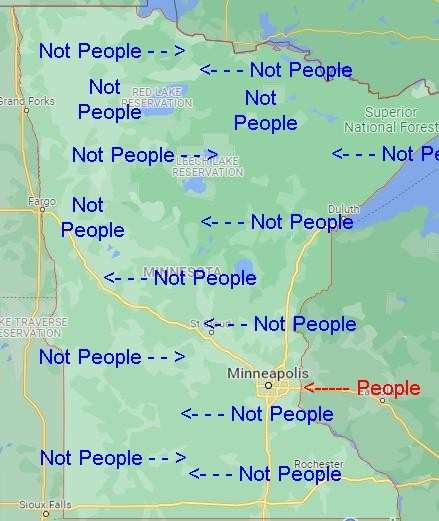
  • Real Estate Broker · Minneapolis, MN · Member since 2011 · 5k+ posts · 6k+ votes
    4y
    Originally posted by @Account Closed:
    Originally posted by @James Hamling:
    Originally posted by @Account Closed:
    Originally posted by @Lucia Rushton:

    @Michael Johnson personally I think it depends on where the property is. For some markets like DFW we still have a ways to go before we see prices settling. There is too much cash in the market as well.

    You are exactly right. It depends on the market. May I point out that it is over crowded in the USA  and that will cause prices to go up, . . . NOT! That is only a perspective of city dwellers.

    Montana, Wyoming, Idaho, New Mexico, Utah, N. Dakota, S. Dakota, Colorado, Kansas, Oklahoma, Nevada, Arizona, MInnesota, Iowa are mostly . . . Empty. Plenty, Plenty, Plenty of affordable land to build.

    If people want affordable housing they will migrate to smaller towns and create new towns.

    I'd be more concerned about the dollar losing ground against all products. Your income to expense ratio, more so than interest rates, will determine your ability to borrow in the future. Most people's relative income to the market will be dropping.

    HOLD up there buck-a-rooh, Minnesota is "mostly empty", lol. Aaahhhh, I suggest maybe exiting that cave for a moment and looking around a bit. A little FYI on Minnesota being "mostly empty", we have development at MASSIVE scale going, an EPIC level housing shortage, and the economist, quants and builders looking that we "might" achieve parity (supply meeting demand) in best case scenario 7 years, and that was stated as a best case scenario, with no more impactors, and continued GROWTH to building out-put on pace, and relief of supply constraints. Real numbers they are looking at 10 years. 

    If you talking about stacking people like cord-wood sure, plenty of space, but in a reality terms, not so much. 

    As for "mostly empty" Minnesota, I am guessing your not aware that the Twin Cities is projected to soon overtake Chicago. I am not sure how that = "mostly empty". 

    Your Comment: "If you talking about stacking people like cord-wood sure, plenty of space, but in a reality terms, not so much.

    As for "mostly empty" Minnesota, I am guessing your not aware that the Twin Cities is projected to soon overtake Chicago. I am not sure how that = "mostly empty".

    My Response: Have a nice Christmas!

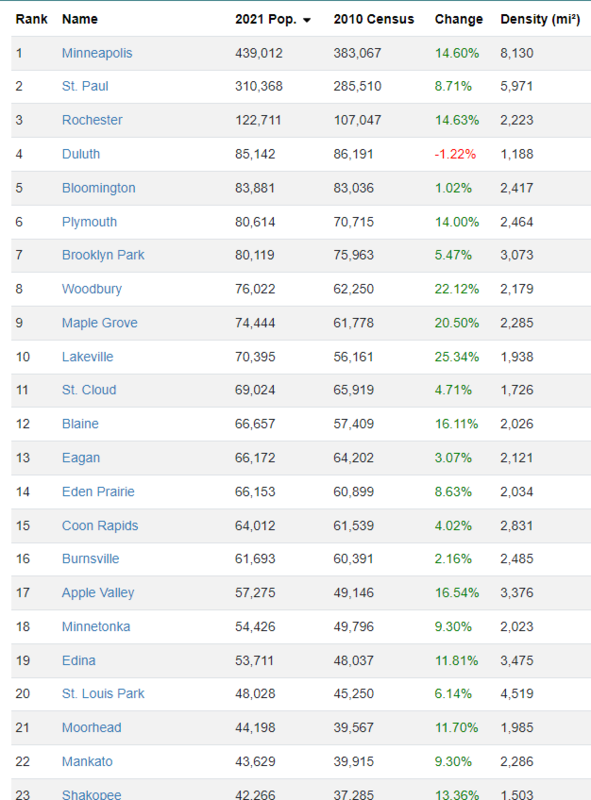
    Not to burst your bubble with this little thing I like to call "reality" but.......
  • Investor · Scottsdale Austin Tuktoyaktuk · Member since 2021 · 4k+ posts · 4k+ votes
    4y
    Originally posted by @James Hamling:
    Originally posted by @Account Closed:
    Originally posted by @James Hamling:
    Originally posted by @Account Closed:
    Originally posted by @Lucia Rushton:

    @Michael Johnson personally I think it depends on where the property is. For some markets like DFW we still have a ways to go before we see prices settling. There is too much cash in the market as well.

    You are exactly right. It depends on the market. May I point out that it is over crowded in the USA  and that will cause prices to go up, . . . NOT! That is only a perspective of city dwellers.

    Montana, Wyoming, Idaho, New Mexico, Utah, N. Dakota, S. Dakota, Colorado, Kansas, Oklahoma, Nevada, Arizona, MInnesota, Iowa are mostly . . . Empty. Plenty, Plenty, Plenty of affordable land to build.

    If people want affordable housing they will migrate to smaller towns and create new towns.

    I'd be more concerned about the dollar losing ground against all products. Your income to expense ratio, more so than interest rates, will determine your ability to borrow in the future. Most people's relative income to the market will be dropping.

    HOLD up there buck-a-rooh, Minnesota is "mostly empty", lol. Aaahhhh, I suggest maybe exiting that cave for a moment and looking around a bit. A little FYI on Minnesota being "mostly empty", we have development at MASSIVE scale going, an EPIC level housing shortage, and the economist, quants and builders looking that we "might" achieve parity (supply meeting demand) in best case scenario 7 years, and that was stated as a best case scenario, with no more impactors, and continued GROWTH to building out-put on pace, and relief of supply constraints. Real numbers they are looking at 10 years. 

    If you talking about stacking people like cord-wood sure, plenty of space, but in a reality terms, not so much. 

    As for "mostly empty" Minnesota, I am guessing your not aware that the Twin Cities is projected to soon overtake Chicago. I am not sure how that = "mostly empty". 

    Your Comment: "If you talking about stacking people like cord-wood sure, plenty of space, but in a reality terms, not so much.

    As for "mostly empty" Minnesota, I am guessing your not aware that the Twin Cities is projected to soon overtake Chicago. I am not sure how that = "mostly empty".

    My Response: Have a nice Christmas!

    Not to burst your bubble with this little thing I like to call "reality" but.......

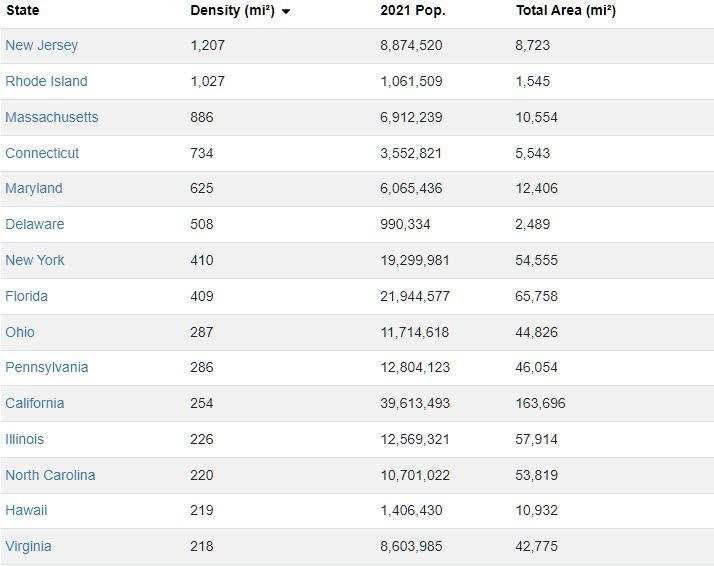
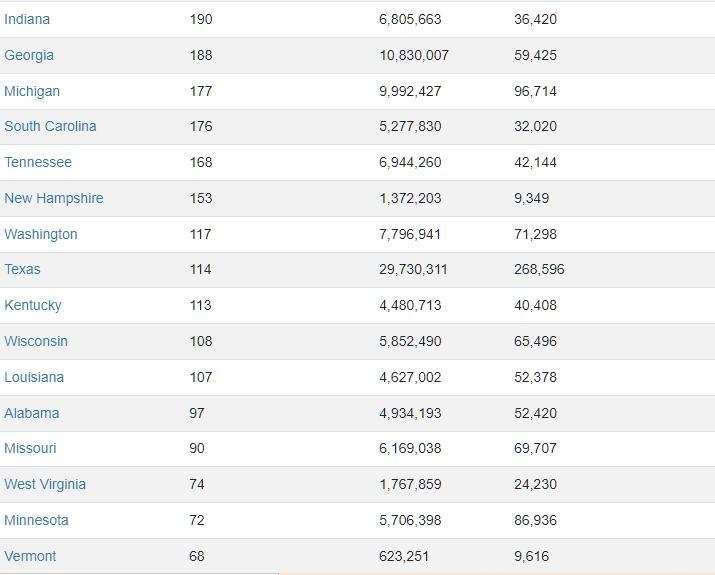
     You should really stop embarassing yourself. It isn't good for your marketing. The comment was that Minnesota has a LOT of empty space, which it does. I don't know why you insist on focusing on a small, small small, part of Minnesota. Open your eyes, it's a big, big world. 

    In fact Minnesota has so much space its density is only 72 peole per square mile, just above Vermont. Waayyyyyy down the list.
  • Real Estate Broker · Minneapolis, MN · Member since 2011 · 5k+ posts · 6k+ votes
    4y
    Originally posted by @Account Closed:
    Originally posted by @James Hamling:
    Originally posted by @Account Closed:
    Originally posted by @James Hamling:
    Originally posted by @Account Closed:
    Originally posted by @Lucia Rushton:

    @Michael Johnson personally I think it depends on where the property is. For some markets like DFW we still have a ways to go before we see prices settling. There is too much cash in the market as well.

    You are exactly right. It depends on the market. May I point out that it is over crowded in the USA  and that will cause prices to go up, . . . NOT! That is only a perspective of city dwellers.

    Montana, Wyoming, Idaho, New Mexico, Utah, N. Dakota, S. Dakota, Colorado, Kansas, Oklahoma, Nevada, Arizona, MInnesota, Iowa are mostly . . . Empty. Plenty, Plenty, Plenty of affordable land to build.

    If people want affordable housing they will migrate to smaller towns and create new towns.

    I'd be more concerned about the dollar losing ground against all products. Your income to expense ratio, more so than interest rates, will determine your ability to borrow in the future. Most people's relative income to the market will be dropping.

    HOLD up there buck-a-rooh, Minnesota is "mostly empty", lol. Aaahhhh, I suggest maybe exiting that cave for a moment and looking around a bit. A little FYI on Minnesota being "mostly empty", we have development at MASSIVE scale going, an EPIC level housing shortage, and the economist, quants and builders looking that we "might" achieve parity (supply meeting demand) in best case scenario 7 years, and that was stated as a best case scenario, with no more impactors, and continued GROWTH to building out-put on pace, and relief of supply constraints. Real numbers they are looking at 10 years. 

    If you talking about stacking people like cord-wood sure, plenty of space, but in a reality terms, not so much. 

    As for "mostly empty" Minnesota, I am guessing your not aware that the Twin Cities is projected to soon overtake Chicago. I am not sure how that = "mostly empty". 

    Your Comment: "If you talking about stacking people like cord-wood sure, plenty of space, but in a reality terms, not so much.

    As for "mostly empty" Minnesota, I am guessing your not aware that the Twin Cities is projected to soon overtake Chicago. I am not sure how that = "mostly empty".

    My Response: Have a nice Christmas!

    Not to burst your bubble with this little thing I like to call "reality" but.......

     You should really stop embarassing yourself. It isn't good for your marketing. The comment was that Minnesota has a LOT of empty space, which it does. I don't know why you insist on focusing on a small, small small, part of Minnesota. Open your eyes, it's a big, big world. 

    In fact Minnesota has so much space its density is only 72 peole per square mile, just above Vermont. Waayyyyyy down the list.

    Please, keep talking, I really don't have to say much of anything the more you embarrass yourself. 

     Not only have you been saying how "empty" MN is, but adding a map covered in "empty", even pointing out an area with over 120k population as "empty". I can only assume your idea of a "normal" population level is something like Tokyo Japan, with person stacked upon person? 

    You very clearly without any kind of education, degree, expertise or experience of any kind in anything real estate, all your statements are highlighting that in dazzling clarity. My greatest question is why does, say a Jiffy Lube mechanic, believe after reading A book (ok, let's be honest, the back cover summary of the book) and with that "depth of knowledge" is now an expert in all things real estate, economics etc?? Or was it a La Quinta Inn & Suites stay that entuned the mastery? 

    I can pick very literally any country on earth, any state, province, region, and have no problem picking out areas of sparse population density, these area are commonly referred to as nature Preserves, or Agricultural lands, water sheds etc.. Yes, in theory you could stack humans should to shoulder across the globe, the only cost is no food, no water and no air to breath but hey, yup could stack humans like that. 

    Let's take New York, is new York empty, or densely populated? I can also draw some fancy "empty" lines all over areas of New York also. How about Washington state, how about California cause guess what buddy, L.A. is not the entire state of CA it is also the vegetable capital of the U.S. with acres upon acres of Ag land bud. 

    Minnesota has a population in excess of 5.7 MILLION people, if that's what "empty" looks like, well, I suppose almost everywhere is "empty" by your standards. 

  • Real Estate Broker · Minneapolis, MN · Member since 2011 · 5k+ posts · 6k+ votes
    4y
    Originally posted by @Account Closed:
    Originally posted by @James Hamling:
    Originally posted by @Account Closed:
    Originally posted by @James Hamling:
    Originally posted by @Account Closed:
    Originally posted by @Lucia Rushton:

    @Michael Johnson personally I think it depends on where the property is. For some markets like DFW we still have a ways to go before we see prices settling. There is too much cash in the market as well.

    You are exactly right. It depends on the market. May I point out that it is over crowded in the USA  and that will cause prices to go up, . . . NOT! That is only a perspective of city dwellers.

    Montana, Wyoming, Idaho, New Mexico, Utah, N. Dakota, S. Dakota, Colorado, Kansas, Oklahoma, Nevada, Arizona, MInnesota, Iowa are mostly . . . Empty. Plenty, Plenty, Plenty of affordable land to build.

    If people want affordable housing they will migrate to smaller towns and create new towns.

    I'd be more concerned about the dollar losing ground against all products. Your income to expense ratio, more so than interest rates, will determine your ability to borrow in the future. Most people's relative income to the market will be dropping.

    HOLD up there buck-a-rooh, Minnesota is "mostly empty", lol. Aaahhhh, I suggest maybe exiting that cave for a moment and looking around a bit. A little FYI on Minnesota being "mostly empty", we have development at MASSIVE scale going, an EPIC level housing shortage, and the economist, quants and builders looking that we "might" achieve parity (supply meeting demand) in best case scenario 7 years, and that was stated as a best case scenario, with no more impactors, and continued GROWTH to building out-put on pace, and relief of supply constraints. Real numbers they are looking at 10 years. 

    If you talking about stacking people like cord-wood sure, plenty of space, but in a reality terms, not so much. 

    As for "mostly empty" Minnesota, I am guessing your not aware that the Twin Cities is projected to soon overtake Chicago. I am not sure how that = "mostly empty". 

    Your Comment: "If you talking about stacking people like cord-wood sure, plenty of space, but in a reality terms, not so much.

    As for "mostly empty" Minnesota, I am guessing your not aware that the Twin Cities is projected to soon overtake Chicago. I am not sure how that = "mostly empty".

    My Response: Have a nice Christmas!

    Not to burst your bubble with this little thing I like to call "reality" but.......

     You should really stop embarassing yourself. It isn't good for your marketing. The comment was that Minnesota has a LOT of empty space, which it does. I don't know why you insist on focusing on a small, small small, part of Minnesota. Open your eyes, it's a big, big world. 

    In fact Minnesota has so much space its density is only 72 peole per square mile, just above Vermont. Waayyyyyy down the list.

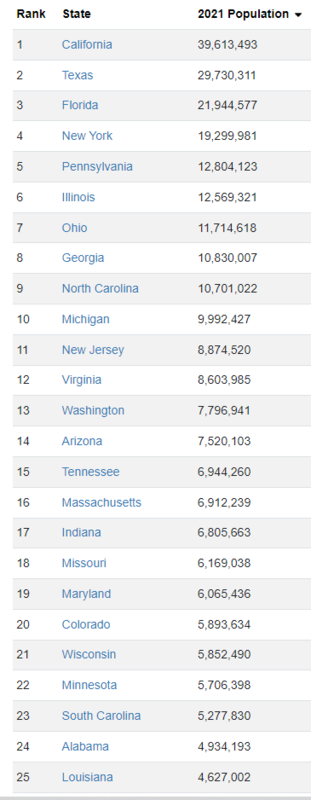
    Here ya go, I will spell it out in Crayola, official list of top 25 states by Population. Minnesota, #22. And "empty" Wisconsin, 21..... And when we rank by population density, Minnesota is 32, Wisconsin is 27. In contrast, MN is MORE densely Populated than Colorado, so is Colorado "empty" ????
  • Real Estate Broker · Minneapolis, MN · Member since 2011 · 5k+ posts · 6k+ votes
    4y
    Originally posted by @Russell Brazil:

    Rates are just about a  full 1% higher than they were a year ago.  Would you say prices went up or down over the last year with those rising interest rates?

     I think the most interesting question to ask/answer is; at what interest rate WILL it start to impact prices/ volume? 

    I personally believe given the relation to supply and demand, that slight rate increases will INCREASE not slow volume, and press prices more sharply up, as a motivator to action. And than, pressing prices up in such, actually act to press those originally not considering selling, into selling for capturing equity gains, thus adding to buying pool and adding fuel to the movement. 

    I believe the slow down will come more as a sudden stop than a decline. And with that, a panic in tenancy side as there is an arguably even larger supply shortage on tenancy side than ownership, driving prices up and with that, driving up investor interest (speaking on institutional investor side of things) thus driving more purchasing and unit demand. 

    I see numerous unit demand measures, very very few in any kind of relent to demand and there in price increases. I think we would need to see rates touching or topping 5/6% before any real impact to stem things and at that inflation level one has to start asking questions of ability for debt service on the dollar, thus "capping" any sizable increase to interest rate. 

  • Investor · Scottsdale Austin Tuktoyaktuk · Member since 2021 · 4k+ posts · 4k+ votes
    4y
    Originally posted by @James Hamling:
    Originally posted by @Account Closed:
    Originally posted by @James Hamling:
    Originally posted by @Account Closed:
    Originally posted by @James Hamling:
    Originally posted by @Account Closed:
    Originally posted by @Lucia Rushton:

    @Michael Johnson personally I think it depends on where the property is. For some markets like DFW we still have a ways to go before we see prices settling. There is too much cash in the market as well.

    You are exactly right. It depends on the market. May I point out that it is over crowded in the USA  and that will cause prices to go up, . . . NOT! That is only a perspective of city dwellers.

    Montana, Wyoming, Idaho, New Mexico, Utah, N. Dakota, S. Dakota, Colorado, Kansas, Oklahoma, Nevada, Arizona, MInnesota, Iowa are mostly . . . Empty. Plenty, Plenty, Plenty of affordable land to build.

    If people want affordable housing they will migrate to smaller towns and create new towns.

    I'd be more concerned about the dollar losing ground against all products. Your income to expense ratio, more so than interest rates, will determine your ability to borrow in the future. Most people's relative income to the market will be dropping.

    HOLD up there buck-a-rooh, Minnesota is "mostly empty", lol. Aaahhhh, I suggest maybe exiting that cave for a moment and looking around a bit. A little FYI on Minnesota being "mostly empty", we have development at MASSIVE scale going, an EPIC level housing shortage, and the economist, quants and builders looking that we "might" achieve parity (supply meeting demand) in best case scenario 7 years, and that was stated as a best case scenario, with no more impactors, and continued GROWTH to building out-put on pace, and relief of supply constraints. Real numbers they are looking at 10 years. 

    If you talking about stacking people like cord-wood sure, plenty of space, but in a reality terms, not so much. 

    As for "mostly empty" Minnesota, I am guessing your not aware that the Twin Cities is projected to soon overtake Chicago. I am not sure how that = "mostly empty". 

    Your Comment: "If you talking about stacking people like cord-wood sure, plenty of space, but in a reality terms, not so much.

    As for "mostly empty" Minnesota, I am guessing your not aware that the Twin Cities is projected to soon overtake Chicago. I am not sure how that = "mostly empty".

    My Response: Have a nice Christmas!

    Not to burst your bubble with this little thing I like to call "reality" but.......

     You should really stop embarassing yourself. It isn't good for your marketing. The comment was that Minnesota has a LOT of empty space, which it does. I don't know why you insist on focusing on a small, small small, part of Minnesota. Open your eyes, it's a big, big world. 

    In fact Minnesota has so much space its density is only 72 peole per square mile, just above Vermont. Waayyyyyy down the list.

    Please, keep talking, I really don't have to say much of anything the more you embarrass yourself. 

     Not only have you been saying how "empty" MN is, but adding a map covered in "empty", even pointing out an area with over 120k population as "empty". I can only assume your idea of a "normal" population level is something like Tokyo Japan, with person stacked upon person? 

    You very clearly without any kind of education, degree, expertise or experience of any kind in anything real estate, all your statements are highlighting that in dazzling clarity. My greatest question is why does, say a Jiffy Lube mechanic, believe after reading A book (ok, let's be honest, the back cover summary of the book) and with that "depth of knowledge" is now an expert in all things real estate, economics etc?? Or was it a La Quinta Inn & Suites stay that entuned the mastery? 

    I can pick very literally any country on earth, any state, province, region, and have no problem picking out areas of sparse population density, these area are commonly referred to as nature Preserves, or Agricultural lands, water sheds etc.. Yes, in theory you could stack humans should to shoulder across the globe, the only cost is no food, no water and no air to breath but hey, yup could stack humans like that. 

    Let's take New York, is new York empty, or densely populated? I can also draw some fancy "empty" lines all over areas of New York also. How about Washington state, how about California cause guess what buddy, L.A. is not the entire state of CA it is also the vegetable capital of the U.S. with acres upon acres of Ag land bud. 

    Minnesota has a population in excess of 5.7 MILLION people, if that's what "empty" looks like, well, I suppose almost everywhere is "empty" by your standards. 

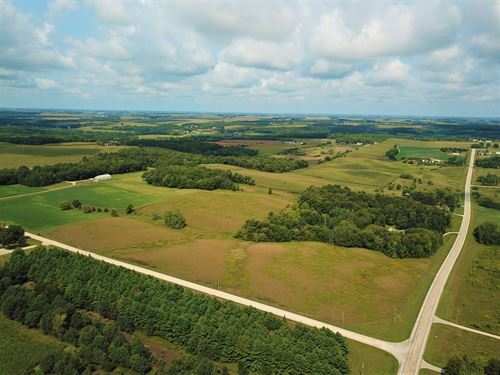
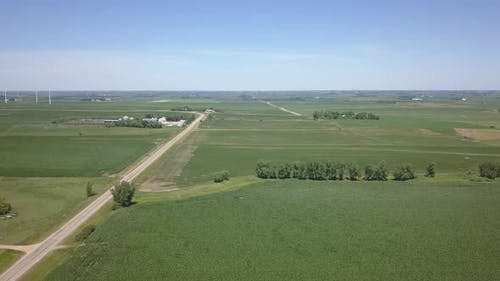
    Quick question, have you ever been outside of Minneapolis? I have. Here is what it looks like  . . . Empty, 

    Pretty but Empty and Pretty Empty. Lots of room to build houses and put cities.
  • Theresa HarrisPro Member
    Member since 2019 · 15k+ posts · 11k+ votes
    4y

    No one knows what will happen.  It comes down to supply and demand.  In Canada they changed the borrowing rules a few years ago to factor in rate increases.  Basically if rates are 3%, you have to be approved as if rates are 5% (I forget what the number is above the actual rates).  It didn't seem to slow down the housing market.  Same thing when some areas introduced heavy taxes 15%) for foreign buyers.  Prices stayed where they were or increased.

    Interest rates will go up as they can't stay this low forever.  enjoy it while it lasts.

Join the conversationCreate a free account to reply, vote on answers and follow this thread.