Thailand Short-Term Rentals 10.25% Yield

Thailand Short-Term Rentals 10.25% Yield

Member since 2023 · 26 posts · 13 votes
International Investors,

The Thai market has opened up with exceptional yield and very affordable. Short-term hotel living rentals under development currently at 8% will have yield of at least 10.25% by April 2024. Prices are USD $80K and less.

Happy to share more info.

--Priti Donnelly
3Reply
303 views

Most Popular Reply

Ryan MoyerBusiness Member
Property Manager · Orlando Kissimmee Davenport Salt Lake City, Park City · Member since 2019 · 996 posts · 1k+ votes
3y

I don't always spend $80K with strangers on the internet from across the world, but when I do it's with a member that has only 11 posts, all of which are them trying to advertise.

No wait, that's not right.

Cosmic Vacations4.9174 Reviews
See this reply in the discussion

62 Replies

Jump to latestLatest
  • Member since 2023 · 26 posts · 13 votes
    3y

    @Mike Lambert let me clarify, under this structure, you would be the owner of the suite, not a lessee. That's the appeal. As such, ROI would come from yield plus capital gain. It's not for everyone, but the units are selling fast.

  • Mike LambertPro Member
    Investor · The Americas and Europe · Member since 2016 · 1k+ posts · 1k+ votes
    3y

    @Priti Donnelly

    I already mentioned from the beginning that this wasn't an investment for me and, even if it was, the selling side telling me "units are selling fast" to make me sign a purchase contract is the biggest red flag against buying for me.

    The BP forums are about helping each other as a community, not about sales pitches. So the only reasons why I've been commenting on this thread is to help people make up their own mind about what's being written, based on my experience investing internationally and, as a result, getting exposed to similar pitches on a regular basis.

    I assumed it's a lease because, a few posts above, that's what you wrote. Remember, you even mentioned it's a 60-year lease. It's difficult for me or anyone else to write anything that makes sense if the story changes every few posts!

  • Mike LambertPro Member
    Investor · The Americas and Europe · Member since 2016 · 1k+ posts · 1k+ votes
    3y

    @Andrew Olmstead

    There's probably a way to make money anywhere when there's an opportunity and you have the possibility to take advantage of it.

    To answer your question and, without hesitation, I'd say Mexico and Spain. And I'd put Portugal together with Spain but bear in mind that prices in Portugal have increased a lot lately so Spain could be a better value.

    Spain/Portugal is to Northern Europe what Mexico is to the US and Canada. Explosion of tourism and remote working (unbeatable combination of location and time zone), snowbirds, retirees. Lots of megatrends converging. Much lower property prices and cost of living, tax advantages, better weather, more relaxed lifestyle, less politics. Think a much cheaper version of Hawaï. And, interestingly, you now observe cross-overs between the two areas, as more and more Europeans go to and buy property in Mexico alongside the ever growing number of Americans and Canadians while more and more Americans and Canadians buy in Spain/Portugal alongside an increasing number of Northern Europeans as well.

    Mexico might be the best option for North Americans and Spain/Portugal for Europeans for obvious reasons but especially if there's a lifestyle component involved as well.

    Don't forget though that these are generalizations as there's no one size fits all so it'll depend on your goals, the location, the type of property,...

    Importantly, unlike in Asia, the standard property title is freehold and foreign buyers have the same rights as their local counterparts so no discrimination there.

  • Member since 2023 · 26 posts · 13 votes
    3y

    @Mike Lambert a lease and leasehold are not the same thing. And my words were, "It's not for everyone, but the units are selling fast," to let you know there is popularity. If you have decided this is not for you, that's fine. But no need to twist my words out of context.

  • Mike LambertPro Member
    Investor · The Americas and Europe · Member since 2016 · 1k+ posts · 1k+ votes
    3y

    @Priti Donnelly Please don't make this personal. I'm not sure what you mean by a lease and a leasehold aren't the same thing. You either own a property freehold or leasehold it can't be both. I thought you'd know better than me. Every source I've consulted clearly says foreigners cannot fully own commercial property or a hotel room in Thailand. So, if ownership can't be freehold and there's a lease, was I twisting your words by thinking/concluding it must be leasehold?

  • Member since 2019 · 7k+ posts · 4k+ votes
    3y
    Quote from @Priti Donnelly:

    @Mike Lambert a lease and leasehold are not the same thing. And my words were, "It's not for everyone, but the units are selling fast," to let you know there is popularity. If you have decided this is not for you, that's fine. But no need to twist my words out of context.


    Hi Priti,

    If you have real actual use case where an average "Joe/Mary" that doesn't have emotional connection in Thailand BUT have invested into one of the commercial class property in (lets say 2008), how's their property appreciate so far with 60 years leasehold ; is there even market for buyer ? would the property FMV appreciate ? Do you have success story ?

    If the property is so good, why not it's being bought over by local ? If the property is located in Bali for example, they're gone even before being advertised after bought by the locals.  Also it is my understanding that most property in Pattaya is owned by Russian, how are they entering these business?

    It's really important to understand the market / risk structure before we even think to invest. 

  • Member since 2019 · 7k+ posts · 4k+ votes
    3y
    Quote from @Mike Lambert:

    @Andrew Olmstead

    There's probably a way to make money anywhere when there's an opportunity and you have the possibility to take advantage of it.

    To answer your question and, without hesitation, I'd say Mexico and Spain. And I'd put Portugal together with Spain but bear in mind that prices in Portugal have increased a lot lately so Spain could be a better value.

    Spain/Portugal is to Northern Europe what Mexico is to the US and Canada. Explosion of tourism and remote working (unbeatable combination of location and time zone), snowbirds, retirees. Lots of megatrends converging. Much lower property prices and cost of living, tax advantages, better weather, more relaxed lifestyle, less politics. Think a much cheaper version of Hawaï. And, interestingly, you now observe cross-overs between the two areas, as more and more Europeans go to and buy property in Mexico alongside the ever growing number of Americans and Canadians while more and more Americans and Canadians buy in Spain/Portugal alongside an increasing number of Northern Europeans as well.

    Mexico might be the best option for North Americans and Spain/Portugal for Europeans for obvious reasons but especially if there's a lifestyle component involved as well.

    Don't forget though that these are generalizations as there's no one size fits all so it'll depend on your goals, the location, the type of property,...

    Importantly, unlike in Asia, the standard property title is freehold and foreign buyers have the same rights as their local counterparts so no discrimination there.


     Is there book or literature somewhere that explain the real estate market in different top destination country ?

  • Member since 2019 · 7k+ posts · 4k+ votes
    3y
    Quote from @Mike Lambert:

    @Priti Donnelly Please don't make this personal. I'm not sure what you mean by a lease and a leasehold aren't the same thing. You either own a property freehold or leasehold it can't be both. I thought you'd know better than me. Every source I've consulted clearly says foreigners cannot fully own commercial property or a hotel room in Thailand. So, if ownership can't be freehold and there's a lease, was I twisting your words by thinking/concluding it must be leasehold?


     This website seems deciphering the whole context we discussed here:
    https://thairesidential.com/buying-a-condominium-in-phuket-t... 

    Seems the answer is "dont buy" for leasehold.

  • Mike LambertPro Member
    Investor · The Americas and Europe · Member since 2016 · 1k+ posts · 1k+ votes
    3y

    @Carlos Ptriawan

    To answer your question/point

    I don't know of any book that explains the real estate market in other countries specifically. Bear in mind that, apart from Canada and some European countries to a certain extent, there's generally a lack of investing in real estate culture among the general population.

    If you absolutely want to invest in a country or place that only offers leasehold "ownership", you'd have no choice other than going for that. If you don't have to do go the leasehold route, I'm not sure why anyone would do it, given that it makes no financial sense whatsoever.

  • Member since 2019 · 7k+ posts · 4k+ votes
    3y
    Quote from @Mike Lambert:

    @Carlos Ptriawan

    To answer your question/point

    I don't know of any book that explains the real estate market in other countries specifically. Bear in mind that, apart from Canada and some European countries to a certain extent, there's generally a lack of investing in real estate culture among the general population.

    If you absolutely want to invest in a country or place that only offers leasehold "ownership", you'd have no choice other than going for that. If you don't have to do go the leasehold route, I'm not sure why anyone would do it, given that it makes no financial sense whatsoever.


    That last part is interesting. I found the answer from the link that I sent. So the two most direct foreign investment in Thailand Real estate are coming from Chinese and Russian. And the Chinese is heavily investing in Thailand is because, all ownership in China is leasehold anyway, they do not recognize concept like Fee simple, hence leasehold concept is not entirely surprising for them.

    But for American, investing in leasehold doesn't make sense , yes, as the ownership in US is Fee Simple.
    There're second aspect as well, the appreciation. Typically the appreciation in US city is better than any Asian country,it has higher cap rate. 

    However, leasehold ownership in other Asia can gain value, even in China, I need to find out in Thai case.

    So in real life, if someone (US Citizen) is willing to buy property in Thailand, most likely the scenario is because it's near their retirement, and would like to retire in Thailand for good. So issue of leasehold not a problem, but then, this is not investment, this is more like primary living.

  • Mike LambertPro Member
    Investor · The Americas and Europe · Member since 2016 · 1k+ posts · 1k+ votes
    3y

    @Carlos Ptriawan

    A leasehold property can temporarily gain value anywhere because what you're actually buying isn't a property, it's a stream of income / cash flow. So, if that yearly cash flow increases significantly, especially at the beginning of the life of the investment, the leasehold property will increase in value alongside the cash flow stream, although the value will eventually go to 0 as the lease expires. It could also temporarily increase in value if there's a shortage of supply vs demand. People have to leave somewhere in those countries and, aside from the Chinese and Russian investment demand, the bulk of the demand is from domestic homebuyers, which, unlike foreigners, can own the property freehold.

    However, the bulk of the value of real estate investing as we know it comes from capital appreciation paid for by the tenants. You can't get that with a leasehold property, which completely defeats the purpose of investing in real estate.

    As for foreigners buying for retirement, it doesn't apply here since we're talking about a commercial / hotel property. If you look at properties in general, foreigners who want to retire in Thailand could buy a condo freehold, provided that it's not on the ground floor and that foreigners don't own more than 49% of the building. This is a less and investment in my book but still not good as you can't own "your" part of the land and the local legal system treats you as "second class" and this isn't compensated by high returns but, yes, that would work as a lifestyle purchase.

  • Member since 2023 · 26 posts · 13 votes
    3y

    @Carlos Ptriawan

    Because this is a commercial asset class, the appreciation of the suites is based on occupancy rates in the area. In this area in Thailand, the average annual capital gain from 2009 to 2020 sat at around 5.43%. What it will be upon completion is speculative, but not likely less than 5.43%. Yes, UK, US, Australia, Canada, would be better for those seeking capital gains, but again highly speculative. This market is more for affordability, higher yield and stable returns. These suites can be used for primary living and when the suite owner is not there, Ramada will rent it out to generate income. Buyers have been a combination of over 50 planning for retirement, average mom and pops, Australians, Japanese, Canadians, Russians. Chinese buying market is now opening up. Yes, it is more of a lifestyle purchase. 

  • Rental Property Investor · Portland, OR · Member since 2019 · 4 posts · 0 votes
    3y
  • Real Estate Broker · Minneapolis, MN · Member since 2011 · 5k+ posts · 6k+ votes
    3y

    For those who know little to nothing on Thailand, which is most likely 99.8% on BP, and understandably so, let me lend some context. 

    The reason why you don't see many South Africans in the U.S. is because it's crazy expensive for a South African not just to come to the U.S., but to stay, eat, go anywhere, do anything in the U.S.. The South African RAND too USD is about 1:20 right now. 

    That's important because the #1 vacation destination for South Africans "on a budget" is Thailand. 

    Now think about that. How profitable does a market seem when a large group who says "U.S., maybe if I win a lotto or inherit some huge $, maybe then one day I could go" also says "Thailand, oh-heck-yeah, no problem, that's CHEAP, let's do that every year". 

    Aside from the very important details @Mike Lambert and @Carlos Ptriawan have already raised, just that 1 fact alone of knowing how "cheap" it is for South Africans, and how crazy impossibly expensive the U.S. is, simple logic should readily show persons that for anyone with USD your not going to make much or anything. 

    What I suspect is most likely here is a savvy developer is building a project and said "hey, Americans are ignorant rich fools, let's tell them they can buy-in at what seems crazy cheap like $80k per unit, and SELL them off, and don't worry, they won't notice our cost is $8k per unit". 

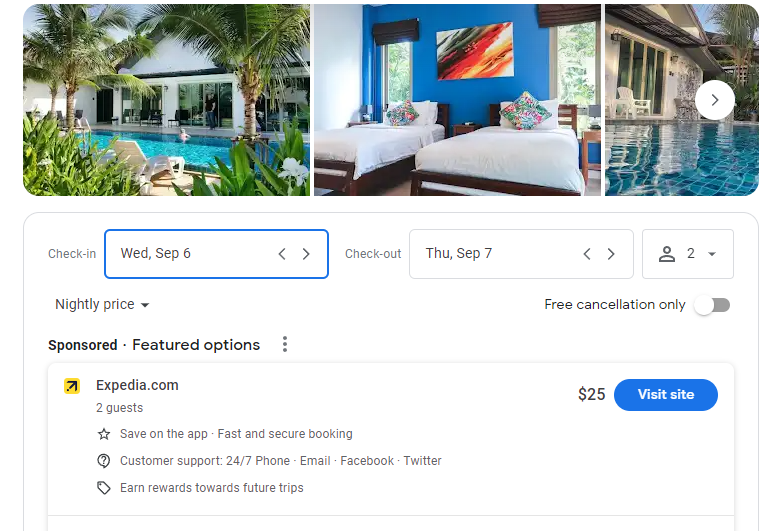
    My brother has gone to Thailand all but annually for more years than I can recall. You can rent a very nice place for, I kid you not, $25 USD and under, per night. Mind-blown? Well, here is a screenshot of all the available rooms in just 1 popular resort area of Thailand, and keep in mind these are with exceptional ratings, not trash. 
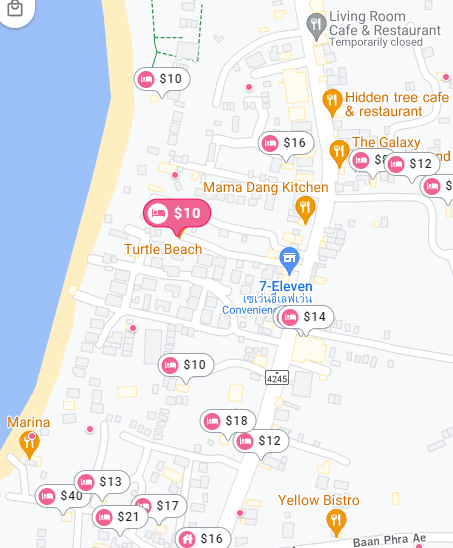
    Too limited you say, ok, let's scroll out: 
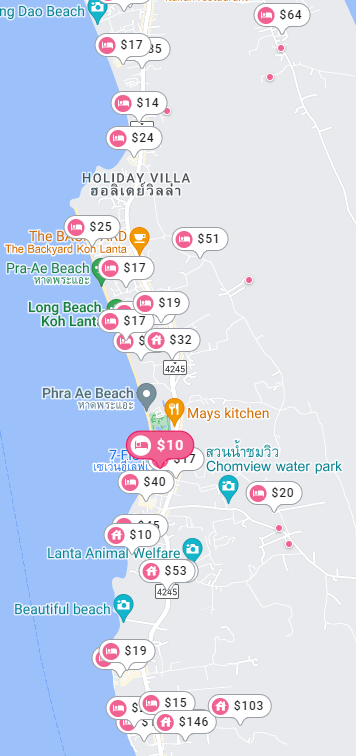
    For myself, not a chance I would ever do any investing in Thailand UNLESS it's DIRECTLY with the (a) owner operator, (b) LEGIT investment capital commiserate with the LEGIT revenue expectations, (c) and they offered a lot more than just rooms. Drink and food service will be the majority revenue generator not "a room". 

  • Real Estate Broker · Minneapolis, MN · Member since 2011 · 5k+ posts · 6k+ votes
    3y
    Quote from @Priti Donnelly:

    @Carlos Ptriawan

    Because this is a commercial asset class, the appreciation of the suites is based on occupancy rates in the area. In this area in Thailand, the average annual capital gain from 2009 to 2020 sat at around 5.43%. What it will be upon completion is speculative, but not likely less than 5.43%. Yes, UK, US, Australia, Canada, would be better for those seeking capital gains, but again highly speculative. This market is more for affordability, higher yield and stable returns. These suites can be used for primary living and when the suite owner is not there, Ramada will rent it out to generate income. Buyers have been a combination of over 50 planning for retirement, average mom and pops, Australians, Japanese, Canadians, Russians. Chinese buying market is now opening up. Yes, it is more of a lifestyle purchase. 


    And protests, political upheaval.... So your just ignoring the MASSIVE political upheaval ongoing and just assuming appreciation? What about the PM issue ongoing? The former PM who just returned due to political upheaval was in exile for 15+ years after being ousted in a military coup in 2006. This does not sound like stability to my western ears. 

    Thailand is anything but stable, so projecting forward earnings and appreciation is ludicrous without HEAVILY weighing this factor to things. It's all in transition, BIG transition, so "results may vary". 

  • Rental Property Investor · Boston, MA · Member since 2019 · 2k+ posts · 1k+ votes
    3y

    Scam alert! 

  • Rental Property Investor · Boston, MA · Member since 2019 · 2k+ posts · 1k+ votes
    3y

    That yield is your opinion. A million variables will go into the accuracy of your "opinion".

  • Member since 2019 · 7k+ posts · 4k+ votes
    3y
    Quote from @Bud Gaffney:

    That yield is your opinion. A million variables will go into the accuracy of your "opinion".


     This is why it's getting interesting, posting like this in BP would invite lot of PhD in Real Estate here :-) LOL I want to see her explanation as well, maybe it's convincing maybe not LOL

  • Member since 2019 · 7k+ posts · 4k+ votes
    3y
    Quote from @James Hamling:
    Quote from @Priti Donnelly:

    @Carlos Ptriawan

    Because this is a commercial asset class, the appreciation of the suites is based on occupancy rates in the area. In this area in Thailand, the average annual capital gain from 2009 to 2020 sat at around 5.43%. What it will be upon completion is speculative, but not likely less than 5.43%. Yes, UK, US, Australia, Canada, would be better for those seeking capital gains, but again highly speculative. This market is more for affordability, higher yield and stable returns. These suites can be used for primary living and when the suite owner is not there, Ramada will rent it out to generate income. Buyers have been a combination of over 50 planning for retirement, average mom and pops, Australians, Japanese, Canadians, Russians. Chinese buying market is now opening up. Yes, it is more of a lifestyle purchase. 


    And protests, political upheaval.... So your just ignoring the MASSIVE political upheaval ongoing and just assuming appreciation? What about the PM issue ongoing? The former PM who just returned due to political upheaval was in exile for 15+ years after being ousted in a military coup in 2006. This does not sound like stability to my western ears. 

    Thailand is anything but stable, so projecting forward earnings and appreciation is ludicrous without HEAVILY weighing this factor to things. It's all in transition, BIG transition, so "results may vary". 


     I know where that PM is hiding but I can't tell in public LOL.

    Btw James and Mike, I really confused by this "the appreciation of the suites is based on occupancy rates in the area".

    How could it be possible ? is it even guaranteed ?

    In Bali for example, the developer of condo project is agressive enough they can say if you don't get 8% from tenant rent, we would pay the diff for you.... Voila 

    But then I read in other Thai investment website , that this offering may not be valid. So there's that.

    Koh Samui is definetely a nice place to "invest", but before even to think into that direction, maybe Priti could explain some succesful story in the past as well, we don't want our 50k investment go to 0 in 60 years LOL


  • Member since 2019 · 7k+ posts · 4k+ votes
    3y
    Quote from @Priti Donnelly:

    @Carlos Ptriawan

    Because this is a commercial asset class, the appreciation of the suites is based on occupancy rates in the area. In this area in Thailand, the average annual capital gain from 2009 to 2020 sat at around 5.43%. What it will be upon completion is speculative, but not likely less than 5.43%. Yes, UK, US, Australia, Canada, would be better for those seeking capital gains, but again highly speculative. This market is more for affordability, higher yield and stable returns. These suites can be used for primary living and when the suite owner is not there, Ramada will rent it out to generate income. Buyers have been a combination of over 50 planning for retirement, average mom and pops, Australians, Japanese, Canadians, Russians. Chinese buying market is now opening up. Yes, it is more of a lifestyle purchase. 


    I hope you have all the patience here Priti :) Posting something like this would invite lot of responds with all the black belt of RE Investing here. 
    So after reading all the materials :
    - Is the 5.4% actual appreciation (5.4% ?) ? Who is the actual buyer when sell at year 5 ? do you have case study ?
    - Is the rental yield of 12% a gross actual cash-flows ? Is it guaranteed ?
    - What is the mechanism of 100% buyback within 7 years ? I meant, if house doesn't perform then Ramada would pay us ? Isn't it too good to be true ?
    - Since when the Thai 100% commercial space is allowed ? Let me know if you have success story
    - In this case, is Ramada would be the front office PM that would rent the room ?

  • Joe S.Pro Member
    Investor · San Antonio · Member since 2020 · 3k+ posts · 3k+ votes
    3y

     I read through this thread. Some of the posters I’m guessing  were at keyboard while they were typing not just an iPhone like me. Lol. 
    I repeatedly voted for several posters, that if they were not rich sure, had a very rich knowledge, vocabulary, and writing skill.

    Even though the original post was designed to be an advertisement, I think it turned more educational than anything else.

    Hopefully the moderators will leave this particular thread up, at least for the educational purposes. I doubt that anyone that reads this thread will be investing in Thailand at the moment. Lol

  • Don KonipolBusiness Member
    Investor · The Woodlands TX / Avon, CT · Member since 2009 · 6k+ posts · 10k+ votes
    3y
    Quote from @Priti Donnelly:

    @Mike Lambert a lease and leasehold are not the same thing. And my words were, "It's not for everyone, but the units are selling fast," to let you know there is popularity. If you have decided this is not for you, that's fine. But no need to twist my words out of context.


     A lease and a leasehold are EXACTLY the same thing; in fact, the term lease is short for leasehold.  You are mistaking the term lease for the term tenancy, which is a very short term right of occupancy.  

    But, here’s the bottom line.  This has happened time and time again.  Someone, relatively new to BP, posts an investment “opportunity” they’re offering as a commissioned agent for the sponsor. The more knowledgeable BP members offer their learned opinions about the value of the offering, the risks of the offering, the validity, the economic assumptions, the returns projected, the structure, etc.  The OP, never expecting to have received anything but positive interest, is all of a sudden finding themselves in a position of having to defend every aspect of the financial, marketing, and legal arenas of the subject property and offering.  In frustration, the OP begins lashing out at the BP members who have posted negative opinions of the offering, asked difficult questions, or pointed out discrepancies in the OP’s presentation.  Finally, the OP no longer posts responses, and then often their name is replaced by “account closed”.  Don’t know if this will happen here, but I’ve seen it many times before.  

    I honestly don’t see why salespeople are needed at all for investment offerings.  If the offering is “good” deal, investors will find out either through websites, word of mouth, past investments with sponsor etc.  Only below average investment opportunities, investments offered by unsuccessful or new sponsors, and maybe “exotic” investments would need a sales”push”.  I and my partner as a two person business have raised $600 million over the last 20 years for our syndicated deals all from an investor pool of less than 100 investors, with most offerings selling out within 12 hours of being offered.  We never used a salesperson, made sales calls or posted on an Internet forum.  We utilize RegD 506c for our offerings.  Quite frankly, we’d be quite concerned with using a salesperson throwing out projections on a public forum with no PPM disclosure, no qualification of accredited investor status, and no accountability for misinformation.  

    So, in my 48 year investing career I have found some things that work for me, and some that don’t. What works for me is investments with small sponsors I know personally, and investments with major intermediaries like vanguard. What doesn’t work for me is syndications being retailed by third party salespeople. Just MY PERSONAL experience.  Hell. If I just want to make 8% I’m not going to take on the political, social and economic risks of a third world country.  For that kind of risk I want 25% return. 

    Private Mortgage Financing Partners, LLC
  • Member since 2019 · 7k+ posts · 4k+ votes
    3y
    Quote from @Don Konipol:
    Quote from @Priti Donnelly:

    @Mike Lambert a lease and leasehold are not the same thing. And my words were, "It's not for everyone, but the units are selling fast," to let you know there is popularity. If you have decided this is not for you, that's fine. But no need to twist my words out of context.


     A lease and a leasehold are EXACTLY the same thing; in fact, the term lease is short for leasehold.  You are mistaking the term lease for the term tenancy, which is a very short term right of occupancy.  

    But, here’s the bottom line.  This has happened time and time again.  Someone, relatively new to BP, posts an investment “opportunity” they’re offering as a commissioned agent for the sponsor. The more knowledgeable BP members offer their learned opinions about the value of the offering, the risks of the offering, the validity, the economic assumptions, the returns projected, the structure, etc.  The OP, never expecting to have received anything but positive interest, is all of a sudden finding themselves in a position of having to defend every aspect of the financial, marketing, and legal arenas of the subject property and offering.  In frustration, the OP begins lashing out at the BP members who have posted negative opinions of the offering, asked difficult questions, or pointed out discrepancies in the OP’s presentation.  Finally, the OP no longer posts responses, and then often their name is replaced by “account closed”.  Don’t know if this will happen here, but I’ve seen it many times before.  

    I honestly don’t see why salespeople are needed at all for investment offerings.  If the offering is “good” deal, investors will find out either through websites, word of mouth, past investments with sponsor etc.  Only below average investment opportunities, investments offered by unsuccessful or new sponsors, and maybe “exotic” investments would need a sales”push”.  I and my partner as a two person business have raised $600 million over the last 20 years for our syndicated deals all from an investor pool of less than 100 investors, with most offerings selling out within 12 hours of being offered.  We never used a salesperson, made sales calls or posted on an Internet forum.  We utilize RegD 506c for our offerings.  Quite frankly, we’d be quite concerned with using a salesperson throwing out projections on a public forum with no PPM disclosure, no qualification of accredited investor status, and no accountability for misinformation.  


    This is the best. Over the years I found the best investment is coming from those GP level master that do not need to advertise or chasing investor, but it's the investor that's chasing them LOL (usually, because they have proven good track record). 

    It's for this reason I avoid most of the crowdfunding.
  • Member since 2023 · 26 posts · 13 votes
    3y

    @Carlos Ptriawan

    I  had a chat with the developer to get more information around capital gain and leasehold. For the record happy to arrange a call if anyone reading these posts are interested.

    To clarify, in Thailand, a foreigner cannot own 100% of residential condos; 51% of the apartments has to be owned by Thais and 49% can be foreign owned. This, however, is not residential. It is a commercial class asset and therefore, exempt from this rule. 100% is allowed.

    The first project is scheduled for completion April 2024. In case of unforeseen circumstances, if the project is not completed by the third year, the developers will return the funds to those requesting it, as stated in the contract. They own the land outright with no debt so have the ability to do so. Also, they have been vetted by Wyndham (Ramada is the brand) for 9 months and granted their licence to all 6 hotels.

    In Thailand, as with anywhere with leaseholds, there is a point at which capital growth will decline. It is more of a market for rental yield, rather than long term capital growth. The 60 year leasehold advantage is that owners of the suites can be certain that the Thailand owned land will not have to be renegotiated before then, with additional fees upon renewal. Just a point of interest regarding your question about Bali. The developer lived there for 7 years. His son is developing 12 pool villas in Bingin Bali, all sold to foreigners, no locals. They paid USD $300k for a 25 year lease. At the end of 25 years, the lease will need to be renegotiated with the land owner for another agreed upon sum.

    Regarding yield, international hotels increase their nightly rate each year, which is why rental yield will continue to rise. Plus, short term rentals with international hotels generate higher returns than residential properties. Most buyers of these suites purchase for cash flow with the intent of owning the suite for 10 years, sell, and reap the rewards of capital growth plus income. Those that are buying for retirement are making more of a lifestyle purchase.

    95% of sales to date are foreign buyers from Australia, Japan, UK, Russians and others, as I mentioned, but Russians do not own most of Pattaya. You would find more Russian ownership in Phuket.

  • Member since 2019 · 7k+ posts · 4k+ votes
    3y
    Quote from @Joe S.:

     I read through this thread. Some of the posters I’m guessing  were at keyboard while they were typing not just an iPhone like me. Lol. 
    I repeatedly voted for several posters, that if they were not rich sure, had a very rich knowledge, vocabulary, and writing skill.

    Even though the original post was designed to be an advertisement, I think it turned more educational than anything else.

    Hopefully the moderators will leave this particular thread up, at least for the educational purposes. I doubt that anyone that reads this thread will be investing in Thailand at the moment. Lol


    I really hope Priti can educate us though why we should invest in Thailand, maybe not just for this particular project.

    But I have long term consideration to invest in Koh Samui LOL , at certain age, it would be better to live in Hawaii  for few months and the rest in South East Asia while working W2 remotely . Lets the tenant paying our travel expense while we can still work remotely as well. Why not if property from Ohio, Hawaii and Phuket could give us positive cash flows.

    Thing is OP has to convince me if I invest lets say 100k in Thailand, in year ten, is that investment going to be 50k or 150k ?? LOL

    There're lot of more advantage investing internationally too, especially related to US tax when selling LOL 

Join the conversationCreate a free account to reply, vote on answers and follow this thread.